Author: Champe

  • Council candidates ready for April 1 elections

    Council candidates ready for April 1 elections

    By Muhanguzi Tola

    tolakofa1@gmail.com

    Aspirants for the upcoming elections pose for a photo with the ECD

    Presidential candidates Marco Laboso and Ian Agina have confirmed their camps’ preparedness following the announcement of the election date by the Vice Chancellor earlier today.

    The elections shall be conducted on April 1 through e-suffrage, according to a communiqué from Prof.  Ayiro.

    “As team forward we are quite confident that we will emerge victorious. We have put in all the effort we can, and have been putting God first in all our actions,” said Marco, who also indicated his camp’s satisfaction in the electoral commission’s work.

    His counterpart Ian Agina thanked the VC for clarifying the election date. He further stated that they “hope for a friend fair election process for a better student leadership that is focused on serving people.”

    On ECD’s preparedness, Agina, popularly known as D’voice, refrained from commenting, but hopes that they are.

    The mentioned date leaves the electoral commission with less than a week to complete the required procedures for conducting the elections. According to ECD CEO Michael Mwanza, the commission is still working on ways of having the debate. He however was not clear on the reasons as to why the debate had been cancelled. The commission is also liaising with an independent contractor to ready the voting system.

    “I’m still working with the person contracted on getting the system ready…concerning the debate, we haven’t decided whether to have it or not, but it is a matter under discussion,” said Mr. Mwanzia.

    The commission’s chair- John Wills Njoroge has assured students that the elections will indeed take place on the mentioned date.

    “The ECD is committed to see that students’ representatives are elected according to the constitution of DUSA. As stipulated, the congress will be elected and thereafter the council within the calendar,” stated the chair.

  • TIPS FOR STAYING AHEAD WITH ONLINE CLASSES

    TIPS FOR STAYING AHEAD WITH ONLINE CLASSES

    By Fatiha Shabir

    (fatihashabz@gmail.com)

    Thumbnail Photo Courtesy of northeastern.edu

    If you take classes online, chances are you probably procrastinate doing your assignments from time to time. 

    Here are four tips that can help students deal better with procrastination when it comes to online coursework.

    1. Manage motivation

    Remote learning can make students feel bored and frustrated therefore, finding ways to stay motivated can prevent procrastination. For instance, instead of viewing the completion of an assignment as a way to fulfill course requirements, you can think about how to turn your coursework into something related to your life or career goals. This will make it more interesting and you will be motivated to get the work done.

    2. Manage task and time

    Getting more organized helps you keep ahead of your deadlines. Breaking your tasks into bits and listing them based on their importance and urgency makes it easier to finish. Using tech tools, such as calendar and task-management apps, will help you manage your time and monitor how much you’re getting done.

    3. Get a little help from friends.

    Friends can hold each other accountable and help one another meet set deadlines. This method is particularly helpful for those who struggle with self-control. Telling your friends about the work you need to do will make you accountable and therefore you will have to do it.

    4. Create a good learning space

    Make sure that the environment you work in is supportive of learning. In your home, try to set up your surroundings in a way that suits your learning habits. For example, make your study area brighter and noise-proof.

    Finishing coursework within set deadlines has been a challenge for most of us during online learning, but these tips together with determination and motivation would make it possible.

  • Locked Counties reopened for Travel Until Sunday

    By: Sumaya Hussein

    (husseinsumaya1@gmail.com)

    Government Spokesperson Cyrus Oguna during a press briefing on March 27 – Magdaline Saya, The Star

    The government has reopened previously locked counties of Nairobi, Nakuru, Machakos, Kajiado and Kiambu for citizens to travel in and out, until Sunday 8pm.

    In a press briefing on Saturday, Government Spokesperson Cyrus Oguna, said that the transition period is for Kenyans who may be stranded away from work places.

    “This is also for students who may want to travel home after the closure of schools,” said Oguna.

    He further added that all travelers with flight and SGR tickets have until Monday 12pm to travel, after which all travels will be suspended.

    Oguna also said that individuals holding curfew passes will continue to use the old passes until the new ones are issued on Tuesday.

    “This applies to healthcare workers and journalists among others,” he said.

    President Uhuru Kenyatta on Friday announced cessation of movement in and out of the five locked counties, terming them as “disease infected areas”.

    Citizens decried the short notice as the announcement left many stranded hence the need to revise the time limit.

  • Daystar Campuses Shut Down, Online Learning to Resume

    By: Sumaya Hussein

    (husseinsumaya1@gmail.com)

    Daystar University Athi River main gate – Emmanuel Laguma

    Daystar University campuses have been closed and students urged to go home following the recent suspension of physical learning in universities.

    “We urge all students to make immediate arrangement to vacate the campuses, as we will be implementing strict restrictions for movement on and off campus to avoid escalated infection,” said the VC Prof Laban Ayiro, in a memo to the school.

    The school is to resume online learning from Monday, for the remaining two weeks of the semester.

    Exams will also be administered online within the period stipulated in the timetable, and the DVC Academic Affairs and University Registrar are yet to give further guidance on the matter.

    The libraries have also been closed but will continue to offer remote access to e-resources.

    Students still at the main campus have been advised to register with the Dean of Students and University Services Department for “further guidance and advice”.

    DUSA elections set for this semester will continue as planned and voting will be done online on April 1.

    The May semester is set to be conducted online as well with orientation of new students to begin on May 3, while ongoing students will resume on May 10.

    The university was previously offering blended learning where both online and physical classes were ongoing. The abrupt change follows President Kenyatta’s announcements on suspension of physical learning and a ban on public gatherings.

  • MEAZA ASHENAFI: ETHIOPIA’S  REIGNING FEMALE ADVOCATE

    MEAZA ASHENAFI: ETHIOPIA’S REIGNING FEMALE ADVOCATE

    In honor of Women’s History Month, the Involvement Newspaper will be featuring African Women Leaders, heroes and activists in a bid to remember their contributions towards a better Africa.

    By Nyokabi Ng’ang’a

    (Leshnyokabi@gmail.com)  

    Thumbnail photo courtesy of en.wikipedia.org

    Difret, a 2014 Ethiopian film, was done in honor of this remarkable woman. Meaza Ashenafi, Ethiopia’s current Chief Justice, is a woman to be held in high esteem. Not only is she the first woman to occupy the seat of Chief Justice in her country, but also, she is the founder of the Ethiopian Women Lawyers Association (EWLA). An association created to offer legal assistance to women; and of note, managed to incept a word in Amharic- Ethiopia’s official language- to describe sexual harassment. “Wesibawi tinkosa” is the Amharic word for sexual harassment: an expression that lacked a name in the country’s lexicon, but got one courtesy of the EWLA. 

    Also, to empower women financially, Meaza cofounded Enat bank, an all first women’s bank in Ethiopia in 2011, where she once sat as the Chair of the bank’s board. 

    Revered as a human rights advocate and a progressive lawyer, Meaza while serving at the EWLA, represented a 14-year-old girl, Aberash Bekele, who was accused of killing a man who had abducted and raped her, all in the name of t’elefa (a cultural practice that allows for the kidnapping of child brides). To Meaza’s credit and that of the entire EWLA team, Aberash won the case placed against her in the court of law and consequently, t’elefa was outlawed in Ethiopia. This case still ranks momentous in Meaza’s career life and also, carries a historical significance in Ethiopia.  

    Photo courtesy of filmfest-frauenwelten.de

    In 2018, when Abiy Ahmed became Ethiopia’s Prime Minister, Meaza Ashenafi was appointed head of the Federal Supreme Court- in other terms, as Chief Justice. She took up the position, though with her publicly placed words to the Prime Minister’s office that: “You might not be happy with the decisions I make in this position.”

    Having served also as one of her country’s high court judge; the human rights adviser to the Ethiopian Constitution committee and adviser on gender and women’s rights in the capacity development division of UNECA among many other positions, it is of no doubt that still in the making, is Meaza’s history of changing the narrative of women in leadership. 

  • VC encourages Daystar to take covid-19 vaccine

    By Fatiha Shabir

    (fatihashabz@gmail.com)

    The Vice Chancellor Professor Laban Ayiro, has encouraged the Daystar community to get vaccinated after receiving his jab of the Oxford-AstraZeneca vaccine on Tuesday at the Kenyatta Hospital.

    “…I encourage members of the Daystar University community, particularly those who are vulnerable and predisposed to get vaccinated,” read a statement from his office.

    “Let us prop our bodies’ defense mechanisms and immunity by taking the COVID-19 vaccine shot even as we pray to God to build a hedge around our community, nation and the world at large.”

    The vaccine is reported to be available in all county government health facilities, and are being administered for free to people in the priority risk groups.

    The Country is now experiencing the third wave of the COVID-19 pandemic with increasing number of cases, hospitalizations and death.

    This had led to the President announcing new Covid-19 restrictions including partial lockdowns and suspension of physical learning.

    Counties of Nairobi, Machakos, Kiambu, Kajiado and Nakuru were declared disease infected areas, and cessation of movement in and out of this zone was announced.

  • President Magufuli Laid to rest at his home in Chato

    By Daniel Nyaga

    (danielnyaga.dn@gmail.com)

    Tanzania’s fifth President John Pombe Magufuli was on Friday given a hero’s send off as he was laid to rest in his ancestral home of Chato, Geita.

    Throughout the week, the late President’s body was being moved through different towns in the country for public mourning and to permit residents to view it.

    President Magufuli’s body arrived at Rumbambagwe Stadium mid-morning today and soon after, there was the singing of both the national anthem and the East African anthem.

    The requiem mass then got underway in Chato, Geita region, North-western Tanzania. The catholic mass was conducted by Archbishop Gervas John Nyaisonga, Tanzania’s Episcopal Conference (TEC) president.

    Magufuli’s body was lowered into the ground by Military generals who followed through with a 21 – gun salute in his honour.

    Military carrying the body of President John Magufuli during his burial ceremony in Chato, Tanzania- BBC

    In attendance were the late President’s family members, close friends, President Samia Suluhu Hassan and ex-presidents Ali Hassan Mwinyi and Jakaya Kikwete, among other dignitaries.

    Tanzanians were able to follow the proceedings of Mr. Magufuli’s burial via live Television and Radio. He was admired by many citizens for his serious approach to corruption and his no nonsense approach to leadership.

    Former President, Jakaya Kikwete delivered a eulogy in Kiswahili stating, “I nominated him for the presidency and I had no doubt,” he said, describing Magufuli as “an honest, hardworking, attentive leader who does not tolerate negligence.”

    Felix Maluma, a trader in the largest city, Dar es Salaam, stated his shock of the late President’s demise as he said, “I don’t think we will have such a good leader,” he said.

    “I pray that the next leader gets the courage to fulfil the promises made by President Magufuli,” added Maluma.

    Mr. Magufuli who passed away on March 17, due to heart complications at Mzena Hospital is the first Tanzanian president to die in office.

  • 5 Counties Under Lockdown, Physical learning suspended – Uhuru

    By Sumaya Hussein

    (husseinsumaya1@gmail.com)

    President Uhuru Kenyatta has today announced cessation of movement in and out of Nairobi, Kajiado, Machakos, Kiambu and Nakuru, by road, rail and air, effective Friday midnight, until further notice.

    Speaking during the 15th Presidential address at State House, President Kenyatta referred to the five named counties as “disease infected areas”.

    “That fully conscious 70% of Kenya’s reported cases of Covid-19 have been recorded in the counties of Nairobi, Kajiado, Machakos, Kiambu and Nakuru, those counties are individually and collectively declared a disease infected area,” said Kenyatta.

    Curfew hours in these counties have therefore been revised to start at 8pm and end at 4am, while the rest of the counties retain 10pm to 4am, from Friday midnight.

    Congregational worship in the zoned counties have been suspended, while other counties will continue to hold worship sessions under the existing Covid-19 regulations.

    Operation of bars and selling of alcohol in eateries and restaurants in the five named counties are prohibited. Restaurants in these counties are to provide take-away services only.

    All public gatherings and in-person meetings have been suspended within the above areas as well, until further notice.

    Operations of bars, restaurants and eateries in the other 42 counties will continue but under strict adherence to Ministry of Health Guidelines.

    Physical learning in all schools including universities have been suspended until further notice, except for the candidates sitting for the national exams and medical training institutions.

    International travel into and out of the territory of the Republic shall continue in accordance with the existing guidelines on Foreign/International Travel.

    All persons coming into Kenya must be in possession of a negative COVID-19 PCR certificate, acquired no more than 96 hours prior to arrival. The certificate must be validated under the Trusted Travel platform, for those travelling by air.

    All sporting activities are suspended together with recreational facilities including member clubs until directed otherwise.

  • Council candidates decry miscommunication from ECD

    By Muhanguzi Tola

    tolakofa1@gmail.com

    From left- Presidential candidates Ian Agina and Marco Laboso

    DUSA presidential candidate Ian Agina has decried the lack of communication from the Electoral Commission that left him and two other candidates stranded at the Valley Road campus.

    “My Vice chairperson, Spencer Okombo, Secretary General, Desmond Mwyne and I camped in valley road campus waiting for the Debate today since morning only for there to be no debate,” reads a statement from the candidate.

    The three were part of the team supposed to participate in the cancelled DUSA elections debate that had been scheduled to take place from 2PM at the campus.

    The debate’s main aim was to offer a platform for the aspirants to air out their manifesto to the rest of the student body. The three, just like the rest of the candidates were “very eager to share our vision with fellow students of what leadership would look like if we are elected in a free and fair process.”

    The reason behind the cancellation of the debate is yet to be officially communicated to students, except for a poster doing rounds on social media. This then raises questions over the preparedness of ECD to conduct the elections. In his statement, Ian further criticised the commission’s failure to issue specific dates for the election process.

    “…Another is lack of official communication on the dates of elections leaving both students and candidates for these posts with more questions than answers.”

    Involvement Newspaper understands that some officials from the current DUSA council were not pleased with the organisers’ decision not to involve them in the planning. The mentioned officials were against the panel of moderators selected to run the event. This, according to a reliable source is the main reason why the debate had to be ‘postponed’.

    Involvement Newspaper has further reached out to ECD, who have yet to respond to our queries.

    More to follow…

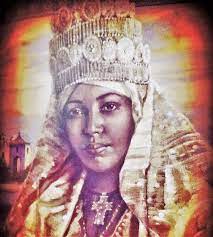
  • TAYTU BETUL-THE ETHIOPIAN EMPRESS

    TAYTU BETUL-THE ETHIOPIAN EMPRESS

    In honor of Women’s History Month, the Involvement Newspaper will be featuring African Women Leaders ,heroes and activists in a bid to remember their contributions towards a better Africa.

    By Kessy Thiauru

    kamathithiauru@gmail.com

    Thumbnail Photo Courtesy of awleadershipnarratives,wordpress.com

    Taytu Betul was the empress of the Ethiopian Empire, under Emperor Menelik II, ruling from 1889-1913. Taytu is speculated to have been born in 1851, the third born of five children.

    She is believed to have been a descendant of a prominent family as it is believed that their family had a ruling foothold in the Northern region of the Empire. It is such growing from such an aristocratic family that might have awakened the leadership abilities in her.

    Although exceptional for women living in her time, Taytu was lucky to get an education. It is believed that this was an opportunity she got after her mother got remarried to an administrator.

    She learned how to read and write Amharic, she learned the language, composed poetry, played chess, and played a begenna (a 10-string musical instrument). It is believed that she was also taught diplomacy, politics, and economics.

    Taytu had been in three other marriages before becoming the third wife to Menelik II, the King of Shoa. She was an important asset to the king as she acted as an advisor during the making of major decisions. She is said to have used her exceptional intelligence to strengthen and extend her power through an adroit blend of patronage, political marriages, and leadership craft.

    In her lifetime some of the remarkable achievements was leading the people, alongside her husband during the war against the Italians. This was after she had torn the treaty between Italians and the Ethiopians, which had intended to make Ethiopia an Italian protectorate.

    When diplomacy failed to settle the conflict over the treaty, Taytu alongside her husband, the emperor marched northwards where she commanded her platoon during the war. Her presence was crucial in the Ethiopian victory at Adwa in 1896, the most significant victory of any African army during the climax of European colonialism.

    She is also remembered as the founder of Addis Ababa, which till to date, is the capital city of Ethiopia.
    As her husband fell ill, she began to concentrate more and more power in her own hands. This eventually provoked public agitation against her and forced her into retirement.