Author: Champe

  • Ang Flies, Mixed up Storylines, and Head-Scratching CGI: A Review of Netflix’s New Avatar Animated Series

    Ang Flies, Mixed up Storylines, and Head-Scratching CGI: A Review of Netflix’s New Avatar Animated Series

    By Joe Aura,

    Look, it wasn’t as bad as you think, but Avatar fans have never really recovered from the Avatar movie made back in 2012. Here is what we had to say about the new Avatar animated series on Netflix.
    When it was announced that Netflix would be bringing the Avatar universe back to life with a new animated series, fans of the original series were understandably excited. After all, the world of bending, intricate characters, and compelling storylines had left an indelible mark on viewers when it first aired. However, as the series premiered and episodes began to roll out, it became evident that this new iteration had its fair share of flaws.
    One of the most glaring issues with the new Avatar animated series is the inconsistent storytelling. While the original series was known for its tightly woven plotlines and character development, this new series seems to suffer from a lack of direction. Plot points are introduced and then seemingly forgotten, leaving viewers scratching their heads and wondering where the story is headed.
    Another aspect that has left fans disappointed is the subpar CGI animation. In a world where animated series like “The Legend of Korra” have set the bar high for animation quality, the CGI in this new Avatar series falls short. Characters move stiffly, and the overall aesthetic feels flat compared to the lush, vibrant world of the original series.
    But perhaps the most divisive aspect of the new Avatar series is the character of Ang. While Ang was a beloved protagonist in the original series, this new iteration of the character feels like a pale imitation. His motivations are unclear, and his actions often feel out of character, leaving fans wondering what happened to the Ang they knew and loved.
    Despite these flaws, it’s not all doom and gloom for the new Avatar animated series. There are still moments of brilliance scattered throughout, from breathtaking bending sequences to moments of genuine emotion between characters. And while it may not live up to the lofty expectations set by its predecessor, there’s still enough here to keep die-hard fans of the Avatar universe engaged.

  • The Deadly Price Tag

    The Deadly Price Tag

    By Rose Maina


    In Kenya, as in many other parts of the world, financial disparity between genders persists. Men, leveraging their economic advantage, often entice vulnerable women with promises of financial security, employment opportunities, or material possessions. These seemingly enticing offers serve as a smokescreen for their ulterior motives, leading unsuspecting women into dangerous situations.


    Picture this: I once landed a gig as a freelance videographer for this company, and let me tell you, it was a rollercoaster ride. The guy in charge, the big boss of production, seemed charming at first glance, but boy, was he sly and downright creepy. He’d dangle job offers like juicy bait, but here’s the catch: you had to play by his twisted rules, meaning, you-know-what. Refuse to dance to his tune, and suddenly, those job calls stopped coming your way. It was like dangling a carrot in front of my nose, only to snatch it away when I wouldn’t play his game. And get this, one time he even had the nerve to threaten to stiff me on payment unless I gave in to his demands. Talk about a nightmare gig!


    For many women, what starts off as a straightforward transaction or invitation rapidly turns into a nightmare. After becoming entangled in the web of deceit, women are left at the mercy of the people who are abusing them, and they are eventually threatened with violence or even death. These criminals use their financial clout to maintain control over their victims, providing them with few options for escape.


    The prevalence of femicide, driven by financial manipulation, highlights the urgent need for comprehensive societal action. This necessitates increased awareness campaigns, education on gender equality, and legal reforms as crucial steps in combating this pervasive issue. Empowering women economically, providing access to resources, and fostering a culture of support and solidarity are essential for dismantling the structures enabling such atrocities to occur.


    Addressing femicide rooted in financial manipulation fundamentally requires challenging deeply entrenched patriarchal norms that perpetuate gender inequality and violence against women. This demands a collective effort involving government agencies, civil society organizations, community leaders, and individuals alike. By challenging societal attitudes and norms prioritizing male dominance and control, we can strive towards a future where women are valued, respected, and safe from harm.


    In Kenya, as in many other parts of the world, financial disparity between genders persists. Men, leveraging their economic advantage, often entice vulnerable women with promises of financial security, employment opportunities, or material possessions. These seemingly enticing offers serve as a smokescreen for their ulterior motives, leading unsuspecting women into dangerous situations.


    Picture this: I once landed a gig as a freelance videographer for this company, and let me tell you, it was a rollercoaster ride. The guy in charge, the big boss of production, seemed charming at first glance, but boy, was he sly and downright creepy. He’d dangle job offers like juicy bait, but here’s the catch: you had to play by his twisted rules, meaning, you-know-what. Refuse to dance to his tune, and suddenly, those job calls stopped coming your way. It was like dangling a carrot in front of my nose, only to snatch it away when I wouldn’t play his game. And get this, one time he even had the nerve to threaten to stiff me on payment unless I gave in to his demands. Talk about a nightmare gig!


    For many women, what starts off as a straightforward transaction or invitation rapidly turns into a nightmare. After becoming entangled in the web of deceit, women are left at the mercy of the people who are abusing them, and they are eventually threatened with violence or even death. These criminals use their financial clout to maintain control over their victims, providing them with few options for escape.


    The prevalence of femicide, driven by financial manipulation, highlights the urgent need for comprehensive societal action. This necessitates increased awareness campaigns, education on gender equality, and legal reforms as crucial steps in combating this pervasive issue. Empowering women economically, providing access to resources, and fostering a culture of support and solidarity are essential for dismantling the structures enabling such atrocities to occur.


    Addressing femicide rooted in financial manipulation fundamentally requires challenging deeply entrenched patriarchal norms that perpetuate gender inequality and violence against women. This demands a collective effort involving government agencies, civil society organizations, community leaders, and individuals alike. By challenging societal attitudes and norms prioritizing male dominance and control, we can strive towards a future where women are valued, respected, and safe from harm.
  • Urgent Safety Measures Issued Amid Devastating Floods

    Urgent Safety Measures Issued Amid Devastating Floods

    By Joe Aura,

    (aurajoe6@gmail.com)

    April 27, 2024

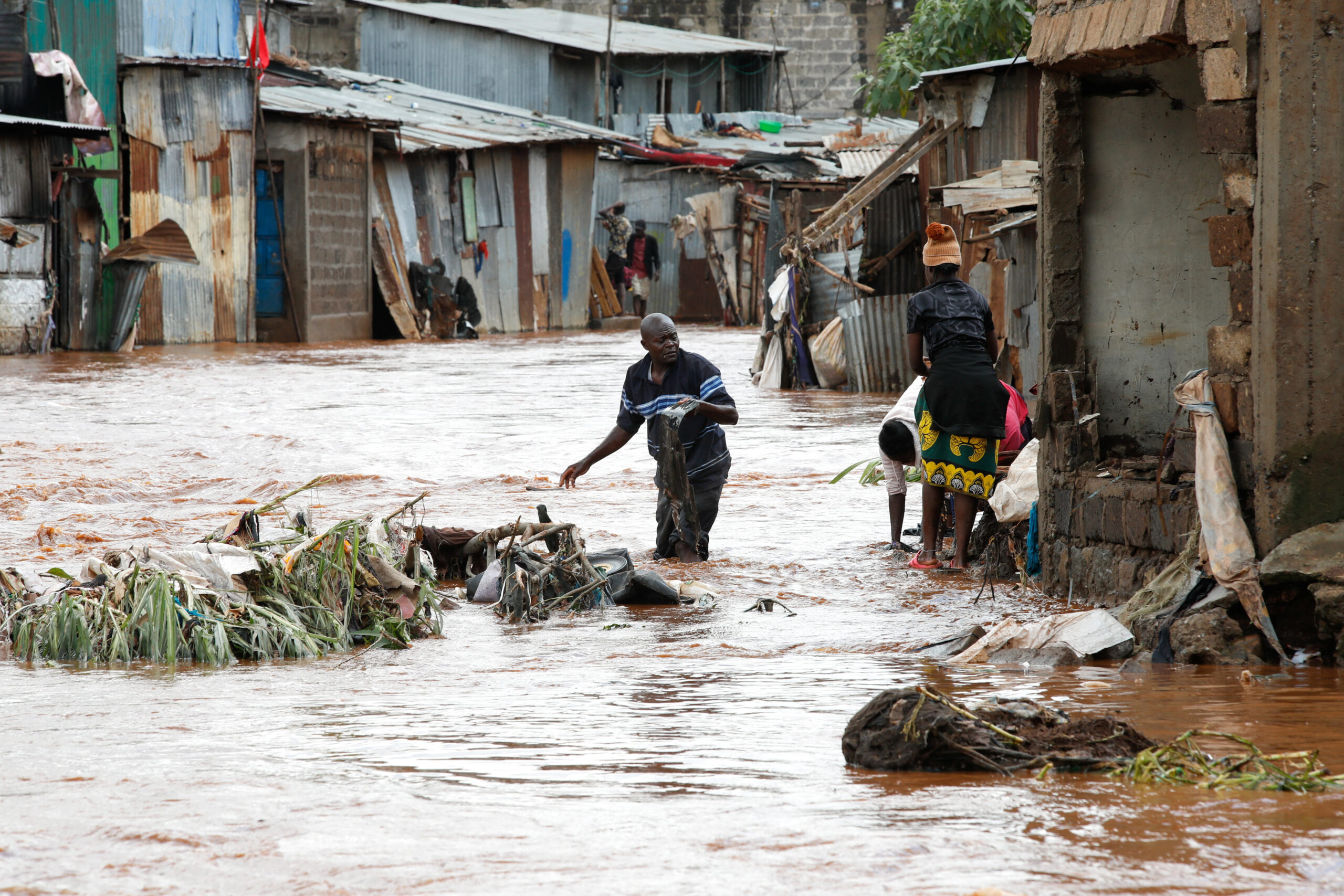
    In the wake of the recent devastating floods that have swept through various parts of Kenya, claiming lives and displacing thousands, urgent safety measures have been issued to ensure the well-being of citizens, including students and locals.
    According to the Mathare Social Justice Center, over 40 Kenyans tragically lost their lives due to the floods in Mathare alone, with many more left homeless and in desperate need of support. The heavy rains have wreaked havoc on communities, causing significant loss of livelihoods, damaging homes, farmland, and businesses.
    The Kenya Red Cross Society reports that over 100,000 people from nearly 21,000 households have been impacted by the floods, with over 40,000 individuals displaced from their homes. In Nairobi County, informal settlements such as Kibra, Viwandani, and Mukuru Kwa Njenga have borne the brunt of the flooding, highlighting the vulnerability of those living in marginalized areas.
    In response to the crisis, authorities have issued crucial safety tips to mitigate the risks posed by the ongoing floods:
    Safety Tips During Floods:
    1. Evacuate immediately to elevated areas: If flooding occurs, seek higher ground immediately to ensure your safety.
    2. Beware of moving water: Just 6 inches of moving water can be enough to knock you off your feet. Avoid walking or driving through flooded areas.
    3. Switch off electricity: If your house is flooded, switch off the electricity at the main switch to avoid the risk of electrocution.
    4. Avoid rivers and streams: Do not park, drive, or conduct activities along rivers or streams during floods, as 1 foot of moving water can sweep your vehicle away.
    5. Watch out for downed power lines: Stay away from downed power lines and muddy waters where power lines may have fallen. Use a stick to test the depth of flooded areas.
    6. Do not drive over flooded bridges: It’s crucial to avoid driving over bridges that are flooded, as they may be structurally compromised.
    7. Stay informed: Keep yourself updated on the latest weather forecasts and flood warnings by listening to radio or TV stations.
    These safety measures are vital for protecting lives and minimizing the risk of further casualties during this challenging time. Let us all remain vigilant, support those affected, and prioritize safety above all else.

  • Clothing the revolution

    Clothing the revolution

    By Susan Majimbo

    &nbsp壯陽藥
    ;

    My heart breaks for Sarah, she was attacked by three men, beaten blue, and stabbed. Her sight is blurry because unfortunately there is bleeding in one of her eyes (According to a report by Usikimye, a Kenyan based revolutionary organization that works towards ending Gender Based Violence). Why you may I ask? She was dressed like a man. The story of Sarah is not new. The masculine rubric in our country is threatened by women like Sarah, who confidently choose to express themselves differently from what defies the expectations that have been kept on women.


    As Oyerunke Oyewumi writes in The Invention of Women, “If gender is socially constructed then gender cannot behave in the same way across time and space.” She argues that it is only logical to assume that gender construction need not have existed at all in some societies, as we must acknowledge the diverse factors such as culture that must have been part of the construction. This is to say that gender transcends societal expectations that are forcefully placed on women particularly.


    Gender is not a rigid concept.


    It is disheartening to acknowledge that modes of dressing among women are reasons that could endanger the lives of women. How women dress does not justify any forms of violence and harm inflicted on them. This has been a notion that has been challenged through slogans such as “my dress my choice” which are reminders that women have the liberty to control their bodies and preferences. Of course, this has been met by counter-narratives such as “how you dress is how you’ll be addressed”, which in my opinion promotes rape culture and violence against women.


    The bottom line is, that there is no justification for any form of violence by choice of dress!

  • Earth Day Every Day: Protecting Our Planet’s Unsung Heroes

    Earth Day Every Day: Protecting Our Planet’s Unsung Heroes

    By Joe Aura,

    [aurajoe6@gmail.com]


    As we celebrate Earth Day (April 22nd), it is essential to remember that our commitment to environmental conservation extends far beyond a single day of the year. Earth Day is every day, and it serves as a reminder that all living beings, including animals, deserve our protection and care. Among these unsung heroes is the donkey, whose history in Kenya is deeply intertwined with the fabric of communities across the nation.

    For centuries, the donkey has been a reliable companion, aiding in transportation, agriculture, and daily tasks that sustain livelihoods in Kenya (source: Brooke East Africa). Its contributions to these communities are immeasurable, yet often overlooked. From the bustling streets of Nairobi to the remote villages of Turkana, the donkey is a symbol of resilience and cooperation, bridging gaps between people and facilitating essential activities of daily life.

    However, the very existence of these noble creatures is under threat due to illegal slaughtering driven by international demand for their skins. This illicit trade not only endangers the survival of donkey populations but also fuels other crimes and health issues within communities (source: KARLO Annual Report, 2019). The high demand for donkey skins in countries like China, where they are used in traditional medicine, exacerbates the problem, pushing these animals to the brink of extinction.

    Recognizing the urgency of the situation, the Kenyan government has taken decisive action to prevent the mistreatment and extinction of donkeys. Measures such as the immediate formation of multi-agency teams across counties, tasked with enforcing operations against illegal slaughterhouses, demonstrate a commitment to safeguarding these invaluable creatures (source: Government of Kenya, Ministry of Agriculture). Furthermore, public awareness campaigns, media outreach, and stringent regulations on meat slaughter, transport, and sale aim to curb illicit activities and promote the ethical treatment of animals.

    As stakeholders and earth lovers, we have a responsibility to treat animals with compassion and respect, not just on Earth Day, but every day. By advocating for animal welfare, supporting government initiatives, and making conscious choices in our daily lives, we can honor the spirit of Earth Day and ensure a sustainable future for all living beings on our planet. Let us pledge to protect and cherish the unsung heroes like the donkey, for they are integral to the delicate balance of life on Earth.


  • General Francis Ogolla’s Last Salute

    General Francis Ogolla’s Last Salute

    By Leeroy Wuone

    General Francis Omondi Ogolla MGH EBS HSC `ndc’ (K) `psc’ (FRA) perished in a fatal helicopter crash on the April 18,2024 that also claimed the lives of 9 others. It was not immediately clear what caused the crash.

    The military helicopter crashed in a remote forested area in Sindar area,Kaben location,Tot division Elgeyo Marakwet county. This is the first time a sitting Chief of Defence Forces(CDF) has passed away while in office since independence times of Kenya. The unsettling trend of chopper crashes now raises concerns for the need of a thorough review of the airworthiness of Kenya’s state-owned aircraft.

    The other 9 victims killed in the fatal chopper crash were Brig Swaleh Saidi,Col Duncan Keittany,Lt Col David Sawe, Maj George Magondu, Capt Sora Mohamed, Capt Hillary Litali, SSgt John Kinyua Mureithi, Sgt Cliphonce Omondi and Sgt Rose Nyawira.

    The late General Ogolla had hoped to accomplish much and was focused on a mission of defending Kenya’s sovereignity as a republic. The late general was also on a mission of modernizing the military, weaponry included,“militaries evolve and threats to national security change everyday. We must keep evolving and equipping ourselves, said the late general earlier on. He was also on a mission to ensure that those under his command were well housed, their families well taken care of and the education of their children taken care of too.

    The late Ogolla joined the KDF on April 24,1984 and was commissioned on May 6,1985 as 2nd Lieutenant having trained as a fighter pilot with the US Air Force and as an instructor at the Kenya Air Force (KAF). He received a first class Honors in Bachelor of Arts in political science, Armed Conflict and Peace studies. He also holds a master of Arts in International studies from the University of Nairobi. The late Ogolla held senior positions in the military, including commanding officer Laikipia Air base Tactical flight wing in 2007, Base commander Laikipia Air base 2008-2014. He was also the chief flying instructor at the Kenya Air Force flying training school, and operations desk officer at Kenya Air Force headquarters (KAF). He was promoted to Brigadier April 10,2012 and subsequently appointed as Deputy Air Force Commander on July,2018,he was promoted to major General and appointed commander of the Air Force.The late General Ogolla was then promoted to Lieutenant General in July 23,2021 and named as the Vice Chief of Defence forces(VCDF) deputizing Ex CDF Rtd General Robert Kariuki Kibochi (2020-2023).

    Upon the exit of General Kibochi, according to the Tonje rules,the CDF position was decided upon rotations among the 3 services the Kenya Army,Kenya Air Force and the Kenya Navy. According to the rules,the two Snr most officers after General Kibochi’s exit were Lt. General Ogolla and Lt. General Mohamed Badi. Former CDF Daudi Tonje was former CDF who served between 1996 and 2001 under the Moi regime. He remembered the late Ogolla as a pilot who trained Kenya Air Force Officers (KAF) where he mentored many young pilots.

    The late General Ogolla was married to Aileen, and blessed with two children and a grandson. Marking his first 100 days in office, he said, “I like to read, I used to love golf, but the day I was appointed CDF I kept my golf clubs aside. I said`let me focus on this job wholeheartedly.”

    Rest in Peace son of the soil, in the final words of General Douglas MacArthur’s an Ex USA chief of Defence,final address to a joint session of the United States Congress recorded in 1951),the old soldiers never die, they just fade away.In the eyes of Kenyans,we would put it as old General Francis Omondi Ogolla never dies, he just fades away.

  • Is femicide deeply rooted in our society?

    Is femicide deeply rooted in our society?

    By Jessica Akinyi


    They say time waits for no man, well, it’s high time to discover the root cause of the rising issue that is affecting women worldwide. When people hear femicide, they most often assume it is tied to feminism therefore looking at it in terms of battle of equality of the sexes. This should not be the case because femicide is any killing of women or girls. It occurs because violence against women continues to be accepted, tolerated and justified.


    The term was first established by Diana E. H. Russell in 1976 during the First International Tribunal of Crimes Against Women held in Brussels. The realization was that femicide is deeply rooted in gender-based discrimination which takes different shapes and forms. Its classification is manifested in three forms; the behavior of the perpetrator, the relationship with victims and context of occurrence of the crime.


    Let’s look at the three major types of femicide.

    • Femicide by an intimate partner – an intimate partner kills the wife or girlfriend due to prior abusive relationship.
    • Femicide by family – this is committed by a family member. One example is “honour” killings whereby if a woman or girl goes against the norms of the family they are killed and also dowry death which is caused by the bride’s family failing to give the grooms family money or other valuables leading to domestic violence.
    • Femicide in war and conflict setting – women are targeted during war and are raped as a form of weakening the opponents.


    From the past to present, it’s time for each and every voice to be heard. The society should be fed up of the deafening news on femicide cases across the country. We must plant the seeds of fraternity.

  • Remembering the Tragedy of the Titanic: 112 Years On

    Remembering the Tragedy of the Titanic: 112 Years On

    By Joe Aura,

    aurajoe6@gmail.com

    15/04/1912 , 112 years ago, one of the most infamous maritime disasters in
    history shook the world: the sinking of the RMS Titanic. With sombre reflection, we
    commemorate the lives lost and the lessons learned from this tragic event.
    The Titanic, a marvel of its time, was constructed at the Harland and Wolff shipyard in Belfast,
    Ireland. Its grand hull, launched into the River Lagan on May 31, 1911, symbolized human
    ingenuity and ambition. Over 100,000 spectators bore witness to its majestic unveiling, unaware
    of the fate that awaited the ship.

    The cost of building the Titanic was staggering, amounting to $7,500,000 in 1912. Adjusted for
    inflation, this figure would be equivalent to approximately $166,000,000 today. Ironically, this
    sum pales in comparison to the budget of the iconic 1997 film adaptation by James Cameron, a
    testament to the enduring fascination with the Titanic’s story.

    Tragedy struck on April 15, 1912, as the Titanic, during its maiden voyage from Southampton to
    New York City, collided with an iceberg in the frigid waters of the North Atlantic. Within hours,
    the unsinkable ship succumbed to the relentless embrace of the ocean, claiming the lives of over
    1,500 souls and leaving a haunting legacy of loss.

    The Titanic carried a diverse array of individuals, totalling 2,224 passengers on its ill-fated
    journey. From wealthy elites in first class to hopeful immigrants in steerage, the ship was a
    microcosm of society, united in both luxury and peril. Among the notable passengers were
    American socialite Margaret Brown and real estate investor Colonel Archibald Gracie IV, their
    stories forever intertwined with the ship’s tragic fate.

    In the annals of cinematic history, James Cameron’s 1997 film “Titanic” stands out as a moving
    tribute to the Titanic’s lasting influence. The film, starring Kate Winslet and Leonardo DiCaprio,
    expertly conveyed the grandeur of the ship, the chaos of its sinking, and the emotional love story
    that emerged amidst the tragedy. The film won 11 Academy Awards, including Best Picture and
    Best Director, ensuring that the Titanic’s memories would live on for future generations.

  • Issue 252

    Issue 252

    Use the link below to access the Involvement Newspaper Issue 251 which features a range of articles written by our writers to ensure that you stay informed on News within and outside Daystar.

    Click here

  • Nasaha za Ramadhan

    Nasaha za Ramadhan

    Na shamim Talla

    Mwezi wa Ramadhani ni mwezi uliojaa juhudi na fadhila tele na nyingi ambazo lau zitatiliwa maanani, Ummah huu utanyanyuka kutoka daraja moja hadi nyengine. Huu ni mwezi wa Qur-aan, kwa kuwa iliteremshwa kwayo. Hivyo ni juu yetu kuisoma kwa kuzingatia na kufanyia kazi amri zilizotolewa ndani yake. Allah (Subhaanahu Wa Ta’ala) Anasema: “Ramadhaan ni mwezi ambao Qur-aan imeteremshwa ili iwe uongozi kwa watu, na hoja zilizo wazi wa uongozi na upambanuzi (wa baina ya haki na batili)” (2: 185).

    Uwiano baina ya masomo na mfungo

    Mwezi mtukufu wa Ramadhani unatoa fursa ya pekee kwa wanafunzi kuimarisha uhusiano wao na masomo yao pamoja na imani yao. Kwa kuzingatia mikakati iliyopendekezwa, wanafunzi wanaweza kukabiliana na changamoto za masomo wakati wa Ramadhani kwa neema na uthabiti, huku wakitafuta maarifa si tu kwa mafanikio ya kitaaluma bali pia kwa maendeleo yao ya kibinafsi

    Hapa kuna vidokezo vichache vya jinsi ya kufanya hivyo:

    1. Panga Ratiba Yako. Anza kwa kuandaa ratiba inayojumuisha masomo, ibada, na mapumziko. Hakikisha unapata muda wa kutosha kwa kila jambo.

    2.Fanya Masomo Mapema. Jitahidi kumaliza masomo yako kabla ya kuanza kufunga. Hii itakupa nafasi ya kujitolea kikamilifu katika ibada.

    3. Tumia Vizuri Muda wa Iftar na Suhoor. Wakati wa kufungua na kufunga, tumia muda huu kusoma Qur’an na kufanya dua. Pia, hakikisha unakula chakula cha afya ili kuwa na nguvu wakati wa masomo.

    4.Tafuta Nafasi za Kufanya Ibada.Shule au chuo chako kinaweza kuwa na sehemu za kufanyia ibada. Tumia nafasi hizi kusoma Qur’an, kufanya sala, na kufanya dhikr.

    5. Usisahau Kujipumzisha. Kufunga kunaweza kuwa ngumu, haswa wakati wa masomo. Hakikisha unapata muda wa kupumzika ili kuepuka uchovu.

    6. Jitahidi Kuwa na Nia Njema. Kumbuka kuwa kufunga ni ibada, na lengo lako ni kumpendeza Mwenyezi Mungu. Jitahidi kuwa na nia njema katika kila jambo unalofanya.

    Kwa kufuata vidokezo hivi, utaweza kuwa na uwiano mzuri kati ya masomo na ibada wakati wa Mwezi wa

    Ramadhani.