Category: Features

  • The Sunday Supper Club: Finding Belonging in a Disconnected Age

    The Sunday Supper Club: Finding Belonging in a Disconnected Age

    By MarieJoy Agoya and Ivy Wafula,


    We were tired of rooms full of people staring at their phones. So we built a space where we could actually look at each other.” — Lydia Mwikali, founding member.

    (Sharing of food, stories, games are central to the Supper Club’s ethos of connection.)

    On a warm Sunday evening in Machakos County, the scent of simmering ginger and garlic chicken wafts through a modest two-bedroom apartment as a handful of young adults slip quietly through the door. Shoes come off, phones drop into a wicker basket near the entrance, and someone calls from the kitchen, “Who brought the ugali this week?”

    This is the Sunday Supper Club, part potluck, part group therapy, part board-game battleground, and for its members, a weekly lifeline.

    What started as three friends trying to beat loneliness has grown into one of the region’s most intriguing new social rituals, a secular gathering that feels, by design, almost sacred.

    “We were tired of pretending we were fine,” says Lydia Mwikali, 25, a public health enthusiast who helped form the club in early 2023. She sits cross-legged on the carpet, balancing a paper bowl of stew on her lap. “We were going out, posting photos, doing all the things you’re supposed to do, yet somehow feeling more isolated than ever.”

    Her roommate, Faith Kinyanjui, nods in agreement. “There’s something uniquely lonely about being surrounded by people who are all staring at their phones,” she says. “We wanted something that felt human again.”

    At first, they simply met for dinner on Sundays as three friends, with borrowed game night card games and a rule to keep phones out of sight. By the fourth week, each invited another friend. By the tenth, the group had grown to 12.

    Now, the Supper Club includes teachers, engineers, small business owners, and freelancers, each arriving with a dish, a story, or a game.

    Every gathering follows three gentle but unwavering rules: no phones or other devices go into the basket at the door. “It’s symbolic,” says Lydia. “We’re choosing each other.” Secondly, share something—a meal, a poem, a playlist, a board game, anything that contributes to the evening—and lastly, full presence, where there is no multitasking, no rushing off, and no pretending.

    “It sounds strict, but it actually frees you,” says Brian Kilonzo, 29, an IT technician and one of the club’s most enthusiastic members. “You’re not thinking about who’s texting back or what’s happening online. You’re just here.”

    He pauses, then adds with a grin, “Also, it turns out people get very competitive when there aren’t phones to distract them. Our Scrabble nights are basically warfare.”

    Kenya, like much of the world, is seeing a quiet shift in how young adults socialize. Bars still bustle on weekends, but a growing number are seeking alternatives that feel less transactional and more nourishing.

    “Post-pandemic, we’ve observed a meaningful rise in what we call intentional community practices,” explains Dr. Robert Wafula, a social Scientist and Educator at Friends Theological College. Though he is not affiliated with the group, he’s fascinated by it. “People are rebuilding social habits that prioritize depth over breadth. The Sunday Supper Club is a perfect example with a clear structure, where each member is allowed to be vulnerable hence fostering a healthy connection.”

    He also points to rising interest in sober meetups, book circles, craft nights, and hiking groups as part of the same movement. “Young adults are asking, ‘How do we find each other again?’ These rituals are the answer.”

    Each Sunday, by 7 p.m., the apartment is alive. In the kitchen, someone is plating chapati while two others debate whether pineapple belongs in pasta salad. On the living room floor, a deck of cards is being shuffled with dramatic flair. A speaker plays mellow blend of Kenyan music.

    Good food, full plates, full presence, and even fuller hearts.

    “This is my favorite part,” says Terry, a soft-spoken graphic designer. She’s one of the newer members and admits she nearly didn’t come the first time. “I’d been feeling disconnected from everyone, like my family, old friends, and even myself. But on my first night, someone asked me, ‘How was your week really?’ And I almost cried. No one had asked me that in a long time.”

    She’s not alone. Several members describe the group as grounding, even healing.

    “I used to have Sunday anxiety,” says Kevin, an accountant who commutes from Nairobi. “Now I look forward to this. It resets me.”

    The magic of the Sunday Supper Club isn’t in the food though the food is good. It’s in the consistency, the safety, and the permission to be unguarded.

    “Friendship takes work,” Lydia says, “but no one teaches you how to maintain it in adulthood. This is our way of choosing each other every week.”

    Brian puts it more simply: “It’s not just a social event. It’s a home.”

    As the night winds down, members trickle out into the cool Machakos air, retrieving their phones not with relief, but with a kind of reluctance. They hug longer than typical friends do. Plans are made for next Sunday.

    Back inside, the apartment is quiet again, except for the sound of dishes being stacked in the sink.

    “It’s funny,” Faith says, wiping the counter. “When we started this, we thought we were just bored. But now I realize, we were starved. Starved for presence. Starved for belonging.” And in a world buzzing with notifications and noise, the simple act of sitting down together every Sunday feels, if not revolutionary, then certainly rare and refreshing. A sacred ritual for a disconnected world.”


  • Ontdek LunaSpins NL – Jouw Nieuwe Online Casino Ervaring

    Welkom bij LunaSpins NL, het online casino dat speciaal is ontworpen voor Nederlandse spelers. Bij LunaSpins draait alles om plezier, spanning en eerlijke kansen. Of je nu een doorgewinterde gokker bent of net begint, dit platform biedt voor ieder wat wils. Van de nieuwste videoslots tot klassieke tafelspellen, de variatie is groot. Bovendien wordt de site volledig ondersteund door moderne technologie, zodat je veilig en snel kunt spelen, waar je ook bent.

    Benieuwd wat LunaSpins NL te bieden heeft? Neem dan snel een kijkje op lunarspins casino. Hier vind je een uitgebreid aanbod aan spellen van topaanbieders zoals NetEnt, Microgaming en Evolution Gaming. Denk aan populaire slots, live blackjack, roulette en zelfs exclusieve spellen die je nergens anders tegenkomt. De gebruiksvriendelijke interface zorgt ervoor dat je direct kunt beginnen met spelen, zonder gedoe met ingewikkelde downloads. Daarnaast kun je rekenen op aantrekkelijke bonussen en promoties, zowel voor nieuwe als bestaande leden. Het loyaliteitsprogramma beloont trouwe spelers met extra voordelen, zoals cashback, gratis spins en VIP-toegang tot speciale evenementen. Kortom, LunaSpins is de perfecte bestemming voor iedereen die houdt van online gokken.

    Bonussen en Promoties bij LunaSpins NL

    Een van de grootste voordelen van LunaSpins NL is het royale bonusbeleid. Nieuwe spelers kunnen rekenen op een welkomstpakket dat honderden euro’s aan speeltegoed en gratis spins kan bevatten. Dit pakket wordt vaak verdeeld over de eerste stortingen, zodat je de kans krijgt om diverse spellen uit te proberen. Maar ook daarna blijft het aantrekkelijk: er zijn wekelijkse reload bonussen, toernooien met prijzenpotjes en speciale acties rond feestdagen of nieuwe releases. Het belangrijkste is dat de bonusvoorwaarden transparant en eerlijk zijn. Je hoeft geen cryptische regels te ontcijferen; LunaSpins legt duidelijk uit wat de inzetvereisten zijn en hoe je je bonus kunt vrijspelen. Zo kun je zorgeloos genieten van al het moois dat dit casino te bieden heeft.

    Veiligheid en Klantenservice

    Bij LunaSpins NL staat veiligheid voorop. Het casino maakt gebruik van de nieuwste SSL-encryptie om al je persoonlijke en financiële gegevens te beschermen. Bovendien wordt de site regelmatig gecontroleerd door onafhankelijke instanties zoals eCOGRA, wat garandeert dat alle spellen eerlijk verlopen. Ook je stortingen en opnames worden snel en probleemloos afgehandeld, met ondersteuning voor populaire betaalmethoden zoals iDEAL, creditcards en e-wallets. Mocht je vragen hebben, dan staat het vriendelijke klantenserviceteam 24/7 voor je klaar via live chat en e-mail. Ze zijn goed thuis in de Nederlandse wetgeving en kunnen je adviseren over verantwoord spelen. Dankzij de handige limietinstellingen kun je bovendien zelf bepalen hoeveel tijd en geld je besteedt, zodat het gokken leuk blijft.

    Kortom, LunaSpins NL combineert een uitgebreid spelaanbod met royale bonussen en een veilige omgeving. Of je nu op zoek bent naar spanning, ontspanning of de kans om groot te winnen, dit online casino heeft het allemaal. Meld je vandaag nog aan en ontdek waarom steeds meer Nederlandse spelers voor LunaSpins kiezen. Veel speelplezier!

  • How Remote Learning is Redefining the University Social Experience.

    How Remote Learning is Redefining the University Social Experience.

    By Joan Kamau and Rosemary  Nyambura,

    Switching to online learning hit university life like a quiet storm. In the beginning, it seemed like a break from the usual rush; no more squeezing into overcrowded matatus or running late for an 8 AM lecture. But with time, the real toll began showing up in ways no one expected. Students I spoke to described it as a slow drain on their energy, where the excitement of university life slowly faded into staring at a screen all day. Amina, a second-year student from a public university in Nairobi, shared her experience in regards to the shift. “Before, campus felt alive. You’d meet friends at the mess, laugh about a bad grade over chapati and beans. But now, it’s just me in my room, camera off most times because I didn’t want people to keep seeing my messy room. I feel invisible.”

    The emotional side is where the real problem lies. Loneliness crept in for many. Kevin, a final-year engineering student, shared how he used to play football with his hostel mates every evening as a form of relief after tough classes. “Online, the motivation is zero,” he said over the phone. “You submit assignments with a button, no high-fives, no group study sessions that turn into all-night debates. I failed two units last semester because it was hard to focus alone. Depression crept up on me.” It’s not just a single story; counsellors note the pattern everywhere. Dr. Jane Mwangi, a psychologist at a private university in the city. She told me her office used to handle almost 10 walk-ins a week for anxiety or stress. Now, even with virtual sessions, the cases tripled. “Students report higher isolation,” she explained. “The lack of face-to-face interaction means no casual check-ins, you can’t see when someone’s down. We’re dealing with more cases of burnout and even suicidal thoughts resulting from this detachment.”

    Practically, routines have fallen apart. Group projects became a nightmare. Sarah, a third-year business student, bitterly laughed when recalling a team assignment. “We’d meet on Zoom, but half the time someone lost connection, sometimes they’re multitasking with house chores. Commitment is really low. I got disappointed by the group and ended up doing 80% of the work myself. Friendships suffer too; distance grows without those random hangouts.” Motivation tanked. Without the buzz of campus events, social clubs or even library vibes, studying somehow feels pointless. A report from the Kenya Universities and Colleges Central Placement Service noted that dropout rates surged by 15% in public universities during the heavy online periods after 2020, associating it directly to social disconnection.

    Counsellors including Dr. Mwangi describe how the pandemic accelerated the psychological fallout, but even now in 2025, with some hybrid options in place, the damage still lingers. “Humans live on connection. University is where lifetime networks are built. Online strips that away, leading to anxiety disorders. One student told me she cries after every class because she misses her squad” Another student, Tom, echoed this during our in-person meet-up at a coffee shop near his off-campus digs. “I came to campus for the full experience—parties, debates, crushes. Now it’s all on screen. I often get irritated, sleep less, and my grades are suffering. Feels like I’m not living anymore, just surviving.”

    The challenges of staying connected are real hurdles. Platforms such as WhatsApp groups help a bit, but they can’t compare to real-life experiences. Kevin mentioned trying virtual game nights, but “it feels forced, lags sometimes, and ends early because everyone’s tired from screen fatigue.” Stress piles up from home distractions too, such as family expectations and unreliable internet connections in rural areas. A study by UNESCO highlighted how remote learning widened mental health gaps in Kenya and across Africa, with 40% of students reporting increased depression symptoms.

    Overall, this shift has bruised many. Students feel unmotivated, counsellors are overwhelmed, and the joy of university has dimmed. It’s not all doom, but ignoring these impacts means losing the human side of universities, the part that makes them more than just places to earn degrees. Student leaders create Telegram and WhatsApp groups that became lifelines for communication. One leader admitted, “It’s not the same as meeting in person, but at least we still have a space to share updates and laugh together.”

    When classes shifted online, students and staff had to quickly find new ways to keep their social lives alive. The campus buzz of clubs, casual hangouts, and shared study sessions disappeared, but people didn’t stop trying to connect. For many, adaptation meant turning everyday tools into social hubs. Final-year students turned Discord into a mix of study room and hangout spot, where group work often ended with games or casual chats. Others leaned on simple acts of care, sending voice notes to friends, checking in, and offering encouragement. “Sometimes we just laugh about how strange everything feels,” one student said, “and that’s enough to make the day lighter.” Administrative staff also stepped in, organizing virtual trivia nights and wellness check-ins. These small gestures gave students a sense of belonging, reminding them that community can exist even through a screen

    Traditional clubs found creative ways to survive, hosting online talent shows and virtual meetings to keep their spirit alive. While none of these innovations fully replace the energy of campus life, they reveal a determination to stay connected. In the face of distance, students and staff are proving that community isn’t defined by physical walls. It is built through effort, creativity, and care. As systems evolve, the need for human connection remains a necessity. Students and lecturers need social interactions to have them fulfilled while going about campus life.


  • F1 (2025) A Hollywood – Sports Film

    F1 (2025) A Hollywood – Sports Film

    By Joe Aura, aurajoe6@gmail.com

    F1 (2025) is a good ‘Hollywood’ fantasy of the sport.

    Visually, it delivers an authentic reconstruction of Formula 1 racing put on film. Narratively, it leans into Hollywood logic so hard that purists may need a neck brace. The result is a movie that is written in perfect script, but in the wrong language.

    The film stars Brad Pitt as Sonny Hayes, a veteran driver making an improbable comeback, partnered with rising star Joshua Pearce (Damson Idris). Filmed during actual Grand Prix weekends, with real cars, real paddocks, and real team principals roaming in the background, the movie achieves a level of realism that traditional sports dramas rarely touch. The seamless integration of real F1 personalities – Toto Wolff, Max Verstappen, and even the Sky Sports commentary crew – gives the film an almost documentary-like immediacy.

    The film soars in its technical execution.

    Director Joseph Kosinski, who elevated aerial cinematography in Top Gun: Maverick, does for motorsport what he previously did for fighter jets. Working with cinematographer Claudio Miranda, he uses custom-built cameras mounted onto modified F2 machines, creating visceral, vibrating close-ups of wheel-to-wheel combat. Unlike the polished, TV-friendly broadcasts fans are used to, the film plunges the viewer directly into the claustrophobic violence of 300 km/h decision-making. The speed feels real because it is.

    The neutral, clean color grade – faithful to some track conditions – gives the film the texture of a modern sports documentary. Meanwhile, Hans Zimmer’s score pulses beneath the chassis like an idling V6 hybrid: restrained when needed, thunderous when unleashed.

    But for all the technical mastery, F1 could not resist Hollywood flair. And this is where some fans slam the brakes.

    Several race sequences rely on physics-defying heroics, impossible overtakes, and a spectacular fireball crash from which a driver recovers with suspicious speed. Strategy is simplified to safety hazard levels – “Plan C for Chaos”- a far cry from the razor-sharp, data-driven realities of modern F1. And while Lewis Hamilton’s role as producer helped elevate accuracy, even his involvement couldn’t prevent the script from leaning into familiar underdog tropes: the aging legend returning to glory, the friction-turned-friendship between teammates, and a subplot romance squeezed into a sport where drivers barely have time to breathe.

    The paddock environment, however, is startlingly believable. I felt like I was in a paddock myself. Kosinski captures the militaristic precision of pit crews, the media storms, the pressure-cooker atmospheres, and the corporate spectacle that surrounds every race weekend. It is the closest the average viewer will ever get to the Formula 1 they watch but do not truly see.

    In the end, F1 (2025) is a dazzling cinematic achievement wrapped in a script that could have taken more risks. It is thrilling, undeniably beautiful, and engineered with obsessive care – yet it asks audiences to suspend disbelief at every narrative corner. Casual viewers will cheer. Hardcore fans will wince. But both will walk out entertained.


    For story pitches, commissioned writing, or collaborations, connect with Joe on LinkedIn: https://www.linkedin.com/in/aura-joe-digitalproducer/recent-activity/articles/

  • The injustice of unequal borders.

    The injustice of unequal borders.

    by Alec Dut,

    For years, the rest of the world has witnessed Africa remain an accommodating continent for foreign expats especially when it comes to immigration requirements. These few and often lenient regulations have allowed a multitude of African countries to welcome in tourists, foreigners and investors from all corners of the world.

    So why is it that when the tables are turned, Africans do not receive the same treatment when travelling to these foreign countries? To start with, applying for a visa to these countries is a time consuming process, almost like it requires blood and sweat. It becomes even more difficult if you hold a weak African passport. And as if that’s not bad enough, you can still pay for the visa and end up being rejected for simple reasons, such as not having strong ties to your home country.

    Perhaps the time has come for Africa to take back it’s power and meet these foreign countries at the same level of treatment when it comes to travel restrictions. Maybe then by taking a step in our shoes, they will finally understand how dehumanizing and discouraging it feels to travel to a place with such strict restrictions.

    Countries like Botswana have been the latest to be hit with the sudden change in visa laws.In the past, it was easy for Batswana citizens to travel to the UK and Ireland without visa requirements but that is all changing because the UK and Ireland have implemented visa requirements for individuals that hold the Botswana passport. This is a result of an influx in asylum seekers and concerns for their border security. So the question remains, Why are they not giving back the same treatment to UK citizens that travel to Botswana? It is not fair that Africa continues to overextend itself while these countries are not even willing to meet us halfway. It is time Africa wakes up and realizes how much power we hold, stand on our own two feet and learn to match actions with actions. We need to teach the other countries that being fair and just comes as a two way street.  This is not a battle of the borders but it is a way to demonstrate that we should reciprocate respect and equality. If Africa welcomes  foreign people in with open arms then their own people should receive the same warm welcome when they visit foreign lands. This would also be an opportunity for our African leaders to show just how much they care about their people and they would achieve this by fighting for our equal treatment when it comes to border laws. This would also highlight the values in which Africans stand for like respect, justice, fairness and kindness. When we stand firm and express our wishes, the western world might also take time to ponder over their strict visa rules for Africans and consider being more lenient.


  • Scoliosis: Uncovering the Curve.

    Scoliosis: Uncovering the Curve.

    By Grace Nthemba, December, 2025.

    In a world obsessed with standing straight and fitting in, those living with scoliosis are flipping the script, proving that confidence has nothing to do with the angle of your spine and everything to do with how you carry yourself.

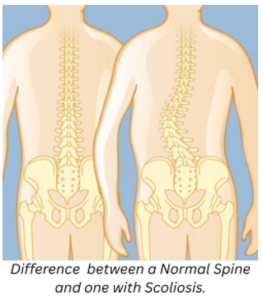
    Scoliosis is a condition whereby the spine curves abnormally to the side. The curve often resembles either a ‘C’ shape or an ‘S’ shape as opposed to being straight.

    Not all scoliosis is created equal. Doctors classify the condition into several categories based on its cause and timing. Idiopathic scoliosis accounts for about 80% of cases. “Idiopathic” is medical terminology for “we don’t know why it happens,” though researchers suspect genetic factors play a role. This type is further divided by age: infantile (0-3 years), juvenile (4-10 years), and adolescent (11-18 years), with adolescent idiopathic scoliosis being by far the most common. Congenital scoliosis is present at birth, resulting from vertebrae that didn’t form properly during fetal development. This rarer form may be detected in infancy or early childhood and sometimes requires earlier intervention.

    Neuromuscular scoliosis develops as a secondary condition in people with neurological or muscular disorders such as cerebral palsy, muscular dystrophy, or spina bifida. These curves tend to progress more rapidly and often require different treatment approaches.

    Degenerative scoliosis affects adults, typically those over 65, as the spine’s discs and joints wear down with age. This “adult-onset” scoliosis can cause significant pain and differs markedly from the curves that develop during childhood.

    According to the Spine Correction Center, research shows that girls are significantly more likely to experience curve progression that boys during the adolescent window, as this is when they experience a growth spurt. The symptoms which are presented may include; one shoulder being higher than the other or one hip being more prominent than the other.

    Treatment for scoliosis isn’t one-size-fits-all. It depends on the curve’s severity, the patient’s age, and whether the spine is still growing. Bracing becomes the standard recommendation for moderate curves (25-40 degrees) in children who are still growing. Modern braces are far less cumbersome than their predecessors, and many can be worn under clothing. The brace doesn’t reverse the curve but can prevent it from worsening during growth. Sarah wore a Boston brace for eighteen hours daily through her teenage years—a challenging experience she describes as “annoying but manageable once I got used to it.”

    Surgery is typically reserved for curves exceeding 45-50 degrees or curves that continue progressing despite bracing. Spinal fusion, the most common surgical procedure, involves fusing together curved vertebrae using bone grafts and metal rods to straighten the spine. While this limits flexibility in the fused area, most patients adapt well and experience significant improvements in appearance and, when present, pain relief.

    Research continues to unlock scoliosis’s mysteries. Scientists are investigating genetic markers that might predict which curves will progress, potentially allowing for earlier, more targeted interventions. New bracing technologies are becoming more comfortable and effective. Surgical techniques grow increasingly refined, with some procedures now performed using minimally invasive approaches.

    Perhaps most importantly, awareness is growing. School screening programs catch curves early when treatment is most effective. Medical professionals better understand the psychological impact of diagnosis and treatment, especially on adolescents navigating an already challenging time of life.

    Scoliosis may cause the spine to take a different path, but it doesn’t prevent people from reaching their destinations. With proper monitoring, appropriate treatment when needed, and support from medical professionals and loved ones, those with scoliosis can thrive—curves and all.

  • Firewalls and Freedoms: Inside Kenyan’s Controversial Cybercrime Law.

    Firewalls and Freedoms: Inside Kenyan’s Controversial Cybercrime Law.

    by Jill Achieng and Duncan Ngetich,

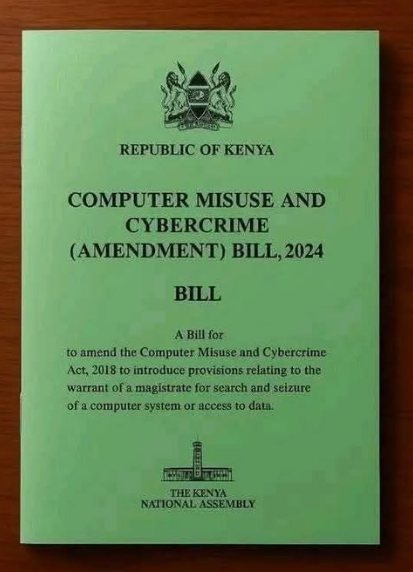
    For James Abihu, a digital rights activist , the internet has always been his platform. a space to express himself , make a living, and share opinions. But with Kenya’s new Computer Misuse and Cybercrimes (Amendment) Act, 2024, that freedom suddenly feels uncertain.
    Earlier this month, Parliament passed sweeping changes to the country’s cyber laws, granting the government broader powers to police the internet. President William Ruto assented to the bill on October 15, 2025, at State House paving way for the far-reaching changes to take effect.
    Yet behind that shield, critics see something more troubling. A growing shadow over free speech and privacy. The provision allowing The National Computer and Cybercrimes Coordination Committee, a body composed largely of security officials, to declare websites inaccessible without court approval is concerning as it is damning. For ordinary Kenyans, implications are stark.
    “The power to block websites though meant to curb harmful online content could easily be misused without strong oversight,” says James a digital rights activist with the Centre for Intellectual Property & Information Technology Law (CIPIT). He warns that the Bill may unintentionally open the door to silencing dissenting voices. Abihu notes that countries with similar laws have seen such tools turned against critics, bloggers, and whistle-blowers, raising fears that Kenya could follow the same path if safeguards are not put in place. He argues that any move to shut down websites must be transparent, legally justified, and used only as a last resort to protect Kenya’s democratic space from unnecessary erosion.
    Abihu insists that Kenya can tackle cybercrime while still protecting digital freedoms. He emphasizes that cybersecurity measures should focus on genuine threats such as fraud and exploitation,Since he has been a victim of cyber fraud and not on silencing uncomfortable opinions. For him, the solution lies in judicial oversight, accountability, and empowering citizens through digital literacy. “A secure digital environment and a free digital environment must coexist,” he says, urging policymakers to strengthen protections so that the fight against cybercrime does not become a fight against free expression.
    Jonathan Chemwoi, a cybersecurity expert in the legal corridors worries that the law’s vague language and lack of of judicial oversight could lead to arbitrary enforcement and criminalisation of legitimate public discourse. In our sit-down interview, he expressed his reservations on the ambiguous nature of the law and the threats it would have on freedom of expression. He had this to say. “The lack of precise definitions in the law particularly around terms like “false information” or “cyber harassment” creates confusion for everyone. Journalists, bloggers, and whistleblowers may self-censor for fear of prosecution, even when their content serves the public interest.” Kenyans on Twitter commonly to referred to as “KOT” have expressed their concerns on why the government is so eager to have these laws enforced without court orders. I posed this question to Mr Jonathan, and he was of the same opinion that lack of a judicial oversight poses greater legal and ethical implications. He expressively stated that court oversights are there to ensure proportionality and fairness in enforcement. Without it, as a country, we risk normalizing arbitrary arrests, and digital profiling all of which violate constitutional rights. “Ethically, it raises questions about consent, privacy, and the balance between national security and civil liberties. The law must be anchored in transparent processes to prevent abuse and protect citizens from state overreach.” He posed.
    A May 2022, expert roundtable, by the Africa Centre for Strategic Studies to discuss Africa’s rising cyber-related security sector governance challenges echoed just as crucially, many of the changes in security provision resulting from government and security actor responses to cyber-enabled threats are undermining the accountability and oversight aspects of security sector governance. For example, some participants recognized that the rapid expansion of security sector surveillance capabilities may offer states a tactical advantage in combatting cyber-enabled threats from non-state actors. However, particularly in countries with limited oversight of the security sector, they are consistently used to undermine press freedoms, invade privacy, and stifle political opposition. State and security sector actors have been able to acquire expanded surveillance capabilities through the acquisition of commercial malware that enable “remote-control hacking” by police, intelligence, military, and other law enforcement officials. The forum found such laws include vague definitions of cybercrime, disinformation, or hate speech that give security sector actors wide discretion in choosing whom to arrest or detain. Similar patterns emerged in Uganda, where vague cyber harassment provisions were weaponised against critics while actual cybercriminals continued operating.
    Besides the cyber laws, Kenyans continue to grapple with cyber fraud. Digital scams have surged in recent years, targeting mobile money users and online businesses. SIM swap fraud has become a pandemic, with Safaricom customers losing million as fraudsters hijack phone numbers to access mobile money. For James, he has been on the receiving end to the unforgiving nature of the online world; one as a digital activist as he earlier alluded and as a victim of cyber fraud. He painfully admits that he has lost money twice through fake investment pages and his MPESA savings account get hacked. He reported the matter to the police but never got any feedback. Repeated follows up, yielded no result. His hope is that the new laws addresses pressing concerns, expressing concern that genuine Kenyans like him, trying to make a living online are being criminalised and harshly penalised for expressing their opinions, yet criminals who run phishing schemes that steal actual money get away leniently.
    For Elizabeth Kwamana, a Kenyan entrepreneur, she believes the cyber laws will make kenyans online be more cautious online with what they comment. “Cases of cyber bullying have been a topic of discussion with the rising of social media. Kids who are below the age of 18 read comments that are not appropriate for their age group.” Elizabeth also insists that the new social media era can be both beneficial and harmful thus the laws. “ Back in my day, say one thing about the president and you’d be in big trouble. You young people are so lucky you get to voice out your opinions and have no consequences. Everything you say online has consequences.” Elizabeth concludes.
    For now, the conversation is far from over. Constitutional petitions challenging the law have been filed in court. These petitions offers a litmus assignment to whether courts will allow this law to stand or strike down its most egregious provisions.
    As Kenya embraces the digital era, the Cybersecurity Bill has drawn mixed reactions seen by some as essential for curbing online harm and by others as a potential threat to free expression. The real test will lie in how the law is implemented. Kenya must strike a careful balance between protecting citizens from cybercrime and safeguarding the freedoms that define its democratic space.

  • Review NL: De Ultieme Gids voor Online Casino Spelers

    Welkom bij deze gastpost over Review NL, een van de meest besproken online casino’s in Nederland. Of je nu een doorgewinterde gokker bent of net begint, Review NL biedt een uitgebreid platform met vele spelmogelijkheden. In dit artikel duiken we dieper in wat dit casino uniek maakt, van de spelselectie tot bonussen en gebruiksvriendelijkheid. Lees verder en ontdek waarom Review NL een populaire keuze is onder Nederlandse spelers.

    Spelaanbod en Software

    Review NL werkt samen met toonaangevende softwareleveranciers zoals NetEnt, Microgaming en Play’n GO. Dit betekent dat je kunt genieten van honderden gokautomaten, tafelspellen en live casino-opties. Of je nu van klassieke fruitautomaten houdt of moderne video slots met boeiende thema’s, er is voor ieder wat wils. Het casino wordt regelmatig bijgewerkt met nieuwe titels, zodat de ervaring fris blijft. Bovendien is de site volledig geoptimaliseerd voor mobiel gebruik, ideaal voor spelers onderweg. Voor degenen die met een beperkt budget willen beginnen, is er een aantrekkelijke optie: 5 euro deposit casino. Deze lage instapdrempel maakt het mogelijk om zonder groot risico kennis te maken met het platform.

    Bonussen en Promoties

    Een van de sterke punten van Review NL is het royale bonusbeleid. Nieuwe spelers worden verwelkomd met een aantrekkelijk welkomstpakket, vaak bestaande uit een stortingsbonus en gratis spins. Daarnaast zijn er wekelijkse promoties, cashback-aanbiedingen en een loyaliteitsprogramma voor trouwe leden. Het is belangrijk om de bonusvoorwaarden goed te lezen, omdat er inzetvereisten gelden. Over het algemeen zijn de voorwaarden redelijk in vergelijking met andere Nederlandse casino’s. De bonussen zijn ontworpen om zowel nieuwe als bestaande spelers te belonen, wat bijdraagt aan een positieve speelervaring.

    Betrouwbaarheid en Veiligheid

    Review NL is volledig gelicentieerd door de Kansspelautoriteit (KSA), wat betekent dat het voldoet aan strenge Nederlandse regelgeving. De site maakt gebruik van SSL-encryptie om persoonlijke en financiële gegevens te beschermen. Spelers kunnen rekenen op eerlijke spellen dankzij gecertificeerde random number generators. Ook is er aandacht voor verantwoord spelen; je kunt limieten instellen voor stortingen, speeltijd en verliezen. De klantenservice is bereikbaar via live chat en e-mail, en reageert doorgaans snel op vragen.

    Betalingsmethoden

    Het casino ondersteunt populaire betaalopties zoals iDEAL, creditcards, e-wallets en bankoverschrijvingen. Opnames worden doorgaans binnen 24 uur verwerkt, wat sneller is dan bij veel concurrenten. De minimale storting is laag, ideaal om te starten. Let wel op: sommige bonussen zijn alleen beschikbaar bij specifieke betaalmethoden.

    Conclusie

    Review NL is een solide keuze voor Nederlandse spelers vanwege de brede spelselectie, royale bonussen en hoge betrouwbaarheid. Of je nu een kleine storting wilt doen of groot wilt inzetten, het platform biedt flexibiliteit. De combinatie van een gebruiksvriendelijke interface, snelle betalingen en een sterke focus op verantwoord spelen maakt het een aanrader. Probeer het zelf uit en ontdek waarom zoveel spelers voor Review NL kiezen. Vergeet niet verantwoord te spelen en alleen te gokken met geld dat je kunt missen.

  • Walking the Talk Kenya’s Journey Toward Disability Inclusion

    Walking the Talk Kenya’s Journey Toward Disability Inclusion

    By Joe Aura, aurajoe6@gmail.com

    December 3, we mark the International Day of Persons with Disabilities (IDPD) – a day to celebrate resilience, push for equity, and reflect on the societies we are building. This year’s theme, “Fostering disability-inclusive societies for advancing social progress,” is deeply personal for many Kenyan families – including mine.

    My grandmother is the definition of grit. As a single mother raising several children, she woke before dawn to milk cows, tend the compound, fetch water, and sell whatever she could to keep her family alive and her children in school.

    One fateful morning, while navigating the slippery rocks of River Yala during her daily routine, she fell and seriously injured her back. Overnight, the woman who once carried the weight of her world could no longer walk unaided. Mobility became a struggle, and without a car or daily help, moving even short distances turned into an exhausting ordeal.

    Her story reflects a truth many Kenyans face: disability can arrive suddenly, uninvited, and society’s response determines whether a life ends in despair – or transforms with dignity.

    Kenya has made important strides. The Persons with Disabilities Act, 2025 replaced the 2003 law with a transformative rights-based framework. It establishes a 5% employment quota, mandates physical accessibility in public spaces and transport, and offers tax incentives to employers who accommodate workers with disabilities. These provisions – if fully implemented – can prevent families like mine from sinking deeper into hardship after an accident or illness. But laws alone don’t remove the rocks from our rivers, repair the stigma in our communities, or ensure mobility for someone like my grandmother. The journey from policy to practice is still steep.

    Beyond legislation, Kenya’s healthcare system is quietly undergoing a revolution in disability support – one that many citizens don’t yet know about. At Kenyatta National Hospital, the Department of Orthopedic Technology, led by the country’s only consultant in orthopedic technology, Dr. Onjei Ondege, has transformed mobility and rehabilitation services.

    Through partnerships between the Ministry of Health, AT-Scale, and the Clinton Health Access Initiative, the department now assembles advanced wheelchairs, walking appliances, and prosthetics using world-class Swiss and Alivio technologies. Their workflow—supported by new rotor machines, an infrared oven that molds materials in 20 minutes, and a state-of-the-art Motion Lab—has reduced patient turnaround times dramatically. A prosthetic leg that once took three days can now be ready in two hours. For people who have suffered accidents, strokes, or congenital conditions, this is life changing.

    And yet—these services mean little if they remain hidden behind hospital walls, or if cultural stigma and lack of awareness keep people from seeking help. Many still believe disability is a personal tragedy rather than a societal responsibility. Abroad, one can easily book accessible hotel rooms, choose disability-friendly travel options, or navigate cities designed with ramps, lifts, auditory signals, and tactile pavements. Here at home, my grandmother must still wrestle with uneven grounds, inaccessible buildings, and public transport that rarely considers wheelchair users.

    A disability-inclusive society is not one where people are simply tolerated – it is one where they are expected, supported, and celebrated. It is a Kenya where a woman injured at River Yala does not lose her independence; where mobility devices are affordable and accessible; where every teacher, police officer, doctor, and public servant is trained in disability rights; where digital government services work for everyone; and where we see disability not as a burden, but as part of the human experience.

    The Kenyan government can become more inclusive by enforcing simpler, clearer laws that prioritize accessibility and by integrating the needs of people with disabilities into all policymaking through disability mainstreaming. This includes implementing specific regulations for accessible infrastructure, such as ramps and accessible public transport, and ensuring access to resources like technology and education. A key strategy is consistently involving people with disabilities in the design and implementation of these laws and services.

    Inclusion isn’t charity. It’s justice. It’s progress. And it is the only path to a Kenya where every person – disabled or not – can live fully, contribute meaningfully, and age with dignity.

    This IDPD, let us walk the talk. Let us build a Kenya where no one’s life ends on a slippery rock.

    #IDPD2025 #AccessibilityForAll #HumanRights #SustainableDevelopment #LeaveNoOneBehind


    For story pitches, commissioned writing, or collaborations, connect with Joe on LinkedIn: https://www.linkedin.com/in/aura-joe-digitalproducer/recent-activity/articles/


  • Why KYC Casinos Are the Safest Bet for Australian Players

    Online gambling in Australia has evolved rapidly over the past decade, and with that growth comes the need for responsible gaming practices. For Australian players, choosing a licensed and regulated online casino is not just a preference—it’s a necessity. One of the most critical features of a trustworthy platform is its Know Your Customer (KYC) verification process. In this guest post, we explore the benefits of KYC casinos for Australian players, how they protect your funds and identity, and what to look for when selecting the best KYC-friendly casino Down Under.

    What Is a KYC Casino?

    KYC stands for “Know Your Customer,” and it refers to the mandatory verification process that online casinos use to confirm the identity, age, and location of their players. In Australia, where online gambling is regulated at the state and territory level, KYC compliance is essential for operators that hold a valid licence. During KYC, you are typically required to submit a copy of your government-issued ID (passport or driver’s licence), a recent utility bill or bank statement proving your address, and sometimes a payment method screenshot. This may sound tedious, but it is the single most effective way to prevent identity theft, underage gambling, and money laundering.

    Some players are tempted to skip KYC altogether and opt for so-called “anonymous” casinos. However, those platforms often operate without proper licensing, meaning your funds and personal data are at risk. If you are looking for a faster withdrawal experience without sacrificing security, consider a no verification withdrawal casino that still follows responsible banking protocols. But remember: legitimate KYC casinos offer peace of mind that your winnings are protected and that the games are fair.

    The Top Benefits of Playing at KYC Casinos in Australia

    First and foremost, KYC verification ensures that you are playing on a platform that complies with Australian law. Licensed casinos like those regulated by the Northern Territory Racing Commission or the Victorian Commission for Gambling and Liquor Regulation mandate strict KYC checks. This means that if you win big, the casino cannot arbitrarily refuse to pay out—they have your verified identity on file and must honour your withdrawals.

    Secondly, KYC protects you from fraud. When a casino knows exactly who you are, it becomes much harder for scammers to open accounts in your name. Your personal and financial data are encrypted and stored securely. Additionally, most KYC casinos offer responsible gambling tools such as deposit limits, self-exclusion, and reality checks. These features rely on your verified profile to be effective.

    Thirdly, KYC casinos often process withdrawals faster in the long run. While the initial verification step may take 24–48 hours, once your account is verified, future withdrawals can be processed within hours. In contrast, anonymous casinos may hide behind slow payout times or outright refusal to pay, citing vague terms and conditions.

    How to Choose the Best KYC Casino AU

    Not all KYC casinos are created equal. When searching for a top-tier Australian KYC casino, look for these key indicators:

    – A valid licence from a recognised Australian or international authority (e.g., Curacao eGaming, Malta Gaming Authority, or UKGC).
    – Transparent KYC procedures—they clearly list what documents you need to submit.
    – Fast withdrawal times—ideally within 24 hours for e-wallets and 1–3 days for bank transfers.
    – A wide range of deposit methods that are friendly to Australian users, such as PayID, POLi, Neosurf, and Bitcoin.
    – Positive player reviews and a strong reputation on forums like AskGamblers or Casinomeister.

    Also, pay attention to the casino’s terms regarding bonus wagering. Some casinos require KYC verification before granting bonus withdrawals. Always read the fine print so you know exactly what is required after you claim a welcome bonus.

    Final Thoughts: Safety Should Come First

    While the idea of instant, no-verification withdrawals may sound appealing, the risks far outweigh the convenience for most Australian players. KYC casinos offer a balanced blend of security, fairness, and speed. They are regulated, audited, and accountable to the authorities. By taking a few extra minutes to verify your identity, you gain access to a safe gambling environment where your winnings are guaranteed.

    Whether you are a seasoned high roller or a casual player, always prioritise licensed KYC casinos. They are not only the legal choice in Australia—they are the smart choice. So next time you sign up for an online casino, embrace the KYC process. Your future self will thank you when that big win is paid out smoothly and securely.