Category: Features

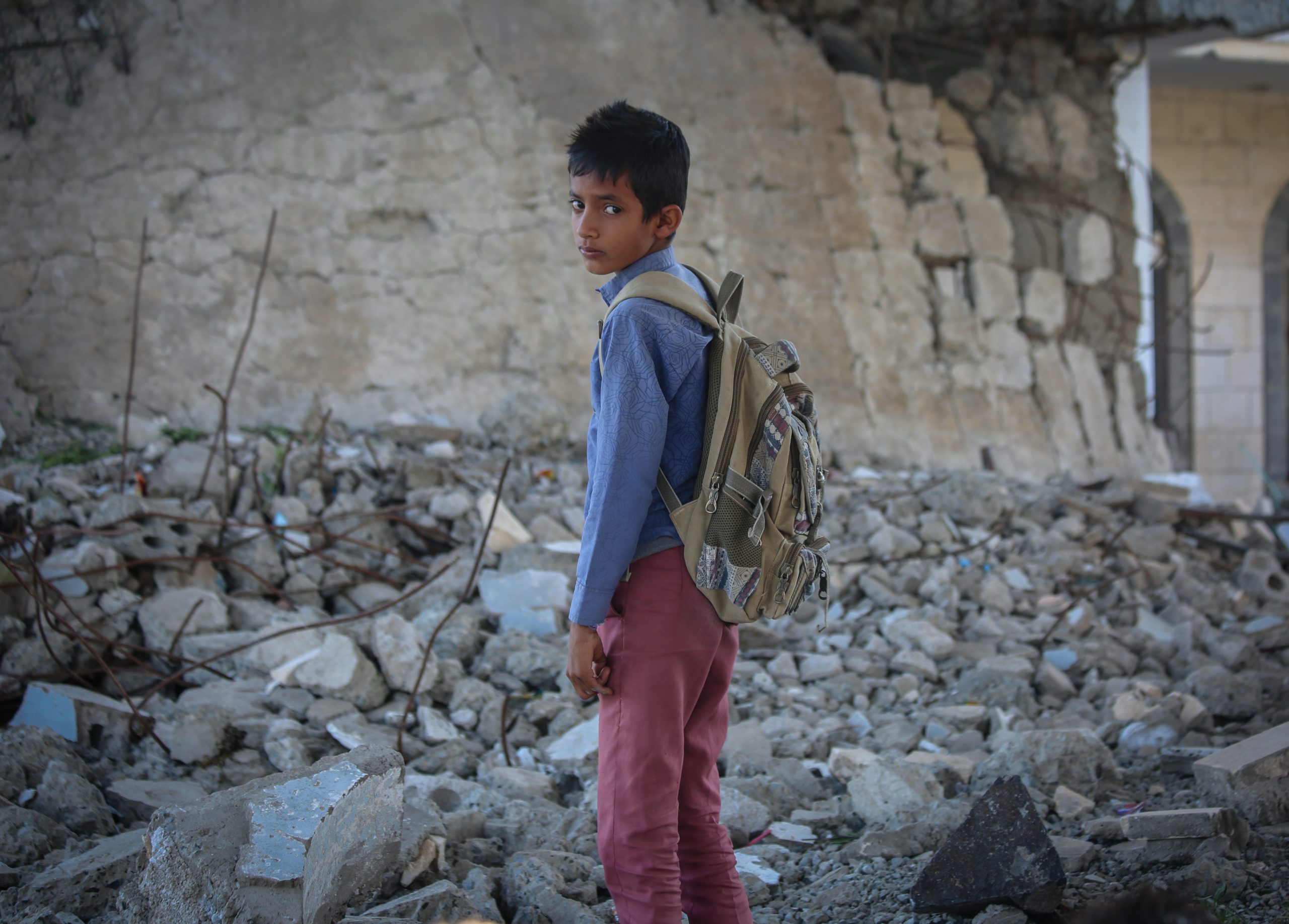
  • EFFECTS OF WAR ON CHILDREN’S EDUCATION

    EFFECTS OF WAR ON CHILDREN’S EDUCATION

    By Samuel Owino

    The current war between Israel and Palestine has history that dates back to 1967.  Israel, during that war in 1967, captured the West Bank, Gaza and east of Jerusalem. The Palestinians want all of the three territories for their future state. There have been no peace talks in over a decade and this brings us to today in which they have gotten the world’s attention. Wars always have severe consequences and one of the consequences is that disruption of education is often ignored.

    War-tone areas affects children’s education in so many ways. For example, the school infrastructure is destroyed during the times of war. When the war is done, the students don’t have a school to go back to. This puts the children in distress while the nation faces financial problems as they have to build back the country. Most political organizations or governments do not care for the welfare of their children and their education. This therefore results in major number of school drop outs as they don’t even have a physical place to learn.

    Sometimes the school infrastructure remains standing or the children can use what they have left. The other problem could be the access to school materials. In most cases, civilians and business people shun away from visiting a place that has recently experienced war. These areas therefore are starved from the resources that they depend on for a comeback or resources from developed and major cities or countries. Even when they are willing to provide goods and services, they have to invest in security that most of the time is vulnerable to exploitation. Roads too are also affected as war usually leaves a place impossible to navigate. The people that would pass by means of foot or any motor find it a major challenge.

    Girls are also affected during the war and after the war. The girls and women are the most vulnerable during times of war. Girls are likely to get married off at an early age, sometimes to cater for the financial needs of the family. The mature women are also at a risk as they are vulnerable to rape or trafficking along with the younger girls. These activities disrupt the education of the women and the girl child. The boy child is not safe too. The boys are mostly forced to join rebel groups and revolutionary movements. They are likely not to go back to school after joining these armies.

    We are all humans who have emotions and are always affected and shaped by the events we go through. War can be traumatic to residents of a war tone area. When a war ends, the residents are usually scarred or traumatized that normal, day to day activities requires more effort and support. In war, there are no counselors or the counselors available could be traumatized too. This makes it very hard even for those that go back to school unable to concentrate in class. Students and teachers tend to be more cautious to incoming danger than what they are being taught or teaching.

    This is therefore a call to peace between Israel and Palestine and any other warring countries. The solution is provision for better educational facilities that can raise our boys and girls to be policy makers, lawyers, diplomats and negotiators that avoid war or handle war in the future in more responsible way.


  • A LOOK INTO WOMEN’S EDUCATION AND GENDER EQUALITY

    A LOOK INTO WOMEN’S EDUCATION AND GENDER EQUALITY

    {Photo courtesy of ThoughtCo}


    By Samwel Owino


    In recent years, talks about female education has been on the rise. Non-Governmental Organizations like the United Nations and the World Bank, have come together to ensure that more and more women are educated. Women’s education has led to the rise of various movements like feminism that have opened doors for their inclusivity in most sectors like the sciences and sports and many others that are generally dominated by men.

    Even though women’s education and empowerment has been and considered in most countries around the world, some countries still have “oppressive” systems that are looked down upon. Is women empowerment really the best idea and should everyone start thinking about it? In this article we take a look at some of the advantages of women empowerment and education.

    Increased literacy is the most obvious one. Countries with higher literacy rates show positive results in terms of development and economic growth. In most African countries women are not prioritized in education, if they are educated, they join the literate people and are considered literate. If women are considered in this bracket of literary persons, a country or region will most likely develop faster because of a large number of literate persons. Literacy also helps people navigate unfortunate situations. For example, most bread winners in Africa are men, who mostly die early and leave their wealth with their wives and children. In this situation if the wife and the children are educated, they can manage the wealth and even improve from it.

    Statistics by World Bank suggest that a girl who completes primary school is very likely to avoid a HIV contraction. The World Bank therefore refers to education as a “window of hope.” Education equips women with the knowledge and understanding on topics such as safe sex, sanitation procedures and their general well-being. These topics are desensitized in most African homes and with this ignorance, the consequences are harsh, quite literally especially to young girls. Education also helps to prevent early marriages of girls. This is a common thing in Africa, in which case, the family does this to support the male’s education instead or even to feed the family.

    Families that have an educated mother tend to survive longer.  In the case of uneducated women, they would not know how to take care of an infant in ways such as immunization for the infant. For educated women, they have an income that they can use to support the family. Due to this, the family survives longer as such things like vaccination that one should be keen on during the early years of a child is taken care of. Even with the rise of many single mothers in Africa, the educated women can take care of the family with ease or they are at a better position than an uneducated woman.

    Political representation for women is also another important factor to consider on why female education is important. Women’s rights are better known to them than to men. A political representative would help empower them more and even their needs can be met better improve a country in the global cause for gender equality. Political representation has been an effective tool in the recent years, in Kenya ,for example, we have seen women rise in politics like Hon. Gladys Wanga, beat Evans Kidero, in the Homa Bay county, gubernatorial seat. The women at the top political seats give women the motivation and direction to pursue their dreams.

    Sex trafficking would reduce in a significant rate if women get an education. Sex trafficking exploits poverty and greed for wealth in that sex traffickers would approach families with women or young girls and promise them a better future and life abroad only to end up in the sex trafficking business. Some families have greed for wealth and therefore sell their girls to slavery. Education helps to control the out-of-control business in that the women can provide for themselves a better future and can also lift up other women who are in the same situation as them.

    Education for women is important and should be taken into serious consideration. The percentage of women in the world is more than that of men. If less of them are educated, then it means there is a small percentage of  people in the world who are educated. This is a disservice in terms of solving some of the world’s biggest problems.

    The former president of the United States, Barrack Obama said while addressing the United Nations General Assembly in 2012, “The future must not belong to those who bully women. It must be shaped by girls who go to school and those who stand for a world where our daughters can live their dreams just like our sons.” We therefore ought to live by these words and strive to create a world where women feel respected and appreciated.

  • MAKING CENTS: REAL CONVERSATIONS ABOUT PERSONAL FINANCE

    MAKING CENTS: REAL CONVERSATIONS ABOUT PERSONAL FINANCE

    BOOK REVIEW: MAKING CENTS: REAL CONVERSATIONS ABOUT PERSONAL FINANCE

    BY: WACEKE NDUATI OMANGA

    By: Nicole Waweru.

    Email: wanjirunicole28@gmail.com

    The author of this book, Waceke Nduati, is a name that is familiar to many if not all. She is the founder and entrepreneurship coach of Centonomy Limited of which she is also the lead trainer. The book talks to us about managing our finances, how to create a budget, the importance of investing, and how to manage debt, just to name a few things. It has a total of seven chapters and in each, the author spills a lot of dos and don’ts on what to do with money and how we can all strive for financial freedom.

    In this book, Waceke uses real-life experiences and people who share their struggles with money and from these stories, we get to see how they were able to learn from their problems and grow. One of my favorite characters in the book was Douglas. I felt connected to him because I could relate to him more than the rest. He grew up in a home where talking about money was taboo and believed that money was only managed by his parents. However, his family was bad at making financial choices and he, therefore, grew up believing that ‘his family, his people were bad at handling money.’

    After high school, he started a business that was successful at the time. However, he would always spend the profits on himself and his friends and at the end of the day, had dissipated all his money. He carried this behavior on to when he got a well-paying job and was fully independent and he would find himself in the same hole over and over again. His answer to this was to believe that he had fulfilled his prophecy of ‘being bad with money like his family.’

    The personal ordeals mentioned in the book are like a slap in the face because they cause you to reflect on how you use your money and how to make better choices moving forward. Chapter 2, ‘Gucci and Versace for your body-o’, really opened my mind since it talks about spending on lifestyle. The main message Waceke tries to put across in this chapter is not to let other people pressure you to a lifestyle that you know very well you cannot live up to.

    The engaging part of this book is also very refreshing. After each chapter, there is a reflection page with questions that relate to the chapter. This to me was a good move for this book; the questions help you analyze your relationship with money deeply.

    Back to Douglas, when he started working, he would earn a monthly salary of 150K. He rented out an apartment worth 16K a month and only furnished it with a bed, TV, radio and three cups of tea. He would then spend the rest of his salary every month in bars and would quickly blow through his salary.

    The author teaches us how to understand what drives our spending behavior and this will in turn allow us to consciously catch ourselves when we make unhealthy choices that are damaging to our financial progress. The book also has a personal workbook and templates of a budget, assets, and liabilities.

    I would recommend this book to anyone who would want to have a deeper understanding of how to manage their money on a long and short-term basis. I think it is important that we create a community where talking about money is not uncomfortable or taboo.

    Is this one of those books which you quickly read and shelf? No. It needs a lot of concentration to be able to understand all the concepts that Waceke has laid out in the book. I would highly recommend that you read it with a pen and paper so that you can scribble down any key points or calculations that you might need to do. The technicality is what makes the book worth your time… or money, you decide.

    The overall rating is 9/10.

    END.


  • Uriithi: A Play about Inheritance, Career, Integrity and Patience

    Uriithi: A Play about Inheritance, Career, Integrity and Patience

    By Joe Aura, Aurajoe6@gmail.com

    Do you love drama, suspense, romance and comedy? Do you want to watch a play that will make
    you laugh, cry, think and learn? If yes, then you don’t want to miss Uriithi, a play that talks
    about inheritance, career, integrity issues and the virtue of patience.

    Uriithi is a Swahili word that means inheritance. The play tells the story of Gerald, a young
    corporate manager who inherits his father’s political ambitions after he is assassinated. However,
    Gerald’s father was a governor who had many enemies and secrets.

    Gerald decides to quit his job and run for office, hoping to fulfill his father’s legacy. However,
    he soon realizes that politics is not as easy as it seems. He faces corruption, betrayal, violence
    and manipulation when he meets a mysterious woman who claims to be his supporter, but who
    has a hidden agenda of her own. ‘Mambo yamechemka!’ Gerald’s life and reputation is set to be
    destroyed.

    Will Gerald fight to succeed in his political career? Will he discover the truth about his father
    and the enemies who are now his? Will he find true love ill he fall for the woman’s trap? What
    will he learn from his experience? Find out the answers to these questions and more in Uriithi, a
    play that will keep you on the edge of your seat.

    Uriithi is a play that will make you think about your own life and choices. It will challenge you
    to reflect on your own inheritance, career, integrity and patience. It will inspire you to follow
    your own path and pursue your own dreams.

    The play will be staged at Daystar University Auditorium on 4th of November 2023. The first
    show will start at 3:00 pm and end at 4:30 pm; the second show will start at 5:20 pm and end at
    7:00 pm. Tickets range from Ksh 400 – 1000 for students, regular and VIP. Come one and all to
    watch this amazing play and learn from it.

    • Uriithi: A Play You Don’t Want To Miss!
      Lead producers’ remarks
      Gordon Oduour – Sema Nami Productions
      Uriithi is not only an entertaining play, but also an educational one. It teaches us important
      lessons about life, such as:
    • • Patience: Gerald wanted to climb up the political ladder fast, but he came down faster
      than he went up. He did not have the patience to learn the ropes and build trust with the
      people. He also did not have the patience to wait for the right time and opportunity. He
      rushed into things without thinking of the consequences. The play shows us that patience
      is a virtue that can help us achieve our goals and avoid mistake
    • • Career: Gerald had a successful career as a corporate manager, but he gave it up for
      politics. He did not follow his passion or talent, but rather his father’s footsteps. He did
      not consider his own strengths and weaknesses, or his own interests and values. He did
      not consult with his family or friends before making such a big decision. The play shows
      us that career choices are important and should be made carefully and wisely.
    • • Integrity: Gerald faced many ethical dilemmas in politics. He had to choose between
      doing what is right or what is easy; between serving the people and serving himself;
      between being honest and being deceitful. He also had to deal with the consequences of
      his actions and choices. The play shows us that integrity is a quality that can earn us
      respect and trust, or lose them.
    • • Inheritance: Gerald inherited his father’s political ambitions, but he also inherited his
      father’s enemies and secrets. He had to deal with the legacy of his father, both good and
      bad. He had to face the past and the present, and decide what kind of future he wants to
      create. The play shows us that inheritance is not only about material things, but also
      about moral values and social responsibilities.
  • THE WORLD IS BOILING UP

    THE WORLD IS BOILING UP

    {Photo courtesy of Washington Post}


    By Joe Aura

    Aurajoe6@gmail.com


    ‘The period of global warming is over; we are now in the era of global boiling,’ These were the sobering remarks of UN Secretary-General António Guterres. Scientists have now confirmed July 2023 as the hottest month ever recorded on Earth.

    The term “global boiling” refers to the current state of the earth as a result of climate change. It is a term used to characterize the extreme heatwaves and droughts that are becoming more common and severe. It sounds like one of those words you’ve heard someplace before. Perhaps on an infographic or a conspiracy theory group discussion. However, it is not a scientific term; rather, a term coined by the U.N that appropriately defines the status of the climate.

    The revelation of Global Boiling by the UN is a grim warning. Temperatures are rising, weather patterns are shifting and we must act even quicker to combat climate change. Global warming’s repercussions are already being seen around the planet. We are experiencing protracted droughts and chilly days, which force everyone to dig out their best winter wardrobe.

    One of the solutions is to cut greenhouse gas emissions and shift to renewable energy sources. Greenspace reports wildfires raging through countries such as Greece, while oil giant Shell just reported quarterly profits of more than $5 BILLION (£3.9 billion). Big oil and gas businesses are accused of benefitting from the climate distraction all around us. In addition to Greece, flames are raging in Algeria. One-third of the world’s droughts occur in sub-Saharan Africa, and Ethiopia and Kenya are enduring one of the worst in at least four decades . So, certainly, Africans are also affected by this.

    But let’s face it, Shell and these big consumer corporations give things that people need. Most industries in the world depend on them for the flow of production. Few, however, have been able to adopt and use their products less. Millennials are the generation making the biggest difference, since 24% of them practice eco-friendly living. But what about the 76 percent who cannot afford electricity or electronic vehicles and automated machines? Even if we are beginning to see green energy enter Africa, I for one don’t think it makes sense to buy a hybrid or electronic car just to drive it on some of the cratered roads within the country.

    The evidence is clear though : extreme weather is increasing the frequency and severity of wildfires, and some economic models are benefiting from it. But as of 2021, 85% of individuals worldwide think sustainably while making purchases, having adjusted their behavior to be more environmentally conscious. It really is to everyone of us to do our share to safeguard the world for future generations.

    God gave absolute power over His creation and assigned dominion over the animals to humanity (Genesis 1:26), yet it appears that humans have done everything but secure the situation here at home. It’s not that our species isn’t capable; we conquer, manufacture, and develop incredible innovations while learning more about ourselves. I mean, just the other day, a bunch of scientists developed a transcriber that allows deaf individuals to read your lips.

    The most catastrophic implications of climate change are still avoidable, according to a group of the world’s leading energy experts, economists, and social scientists, but only if societies take urgent, decisive action to put the globe on a safer course. So you and I are more than capable of treating our world in the manner in which we would like to be treated. Not our mother earth, but the negativity in our planet, should be burned. Everyone has a role to perform. Let us remain calm and work together to save the earth.


  • Alarm Antics: Unleashing Your Inner Snooze Champion

    Alarm Antics: Unleashing Your Inner Snooze Champion

    {Photo courtesy of Pinterest}


    By Janet Wambua


    We’ve all been there folks, the epic battle between you and your alarm clock, a showdown fit for the ages. If there’s one thing students have perfected, it’s the delicate dance of snoozing. Forget dancing like nobody’s watching, I’m talking about snoozing like nobody’s counting.


    Let’s talk about my snooze escapades, shall we? I’ve hit the snooze button more times than I’ve hit the “skip intro” button on Netflix. In fact, I’ve turned snoozing into an art form, a finely tuned dance routine between my finger and the snooze button, as I convince myself that I’ll be able to conquer the world after just five more minutes of sleep.


    Every morning, it’s a battle of wits between me and my alarm. It sounds, I snooze, it sounds again, I snooze again. It’s a timeless symphony of beeping and dreaming. Funny right?


    The initial “BEEP BEEP BEEP” assaults your eardrums, and that’s when the snooze symphony begins. Your half-asleep hand fumbles for your phone like it’s a lifeline, and you’re a sleep deprived sailor lost at sea. A quick tap on the snooze button, and you’re granted a blissful nine minutes of extra sleep. Ah, the sweet illusion that nine minutes can somehow rejuvenate your entire existence.


    But who are you kidding? In the span of three snooze cycles, you’ve transformed from a responsible adult-in-training to a pro-level alarm ninja. As your alarm keeps ringing, you keep hitting snooze, convinced that your snooze reflex has become your second nature.


    And let’s not forget the masterpiece of excuses your half-awake brain concocts. “I’ll wake up at the next snooze. No, seriously, THIS time I mean it!” you declare with the conviction of someone who’s about to start that assignment due in three days. Spoiler alert: you probably won’t.


    By the time you decide to finally emerge from your cozy cocoon, you’re already running late, blaming the universe for conspiring against your noble attempts at punctuality.


    So there you have it, dear students, the tale of the snooze symphony. From hitting the snooze button like you’re playing a life-saving game  to negotiating with your alarm like it’s your last-ditch shot at diplomacy. As funny as this sounds, I must say snoozing is like an art, a science, and an Olympic sport all rolled into one.


    As you venture forth into your snooze-filled mornings, just remember, you’re not alone. There’s a whole world of us out here, stumbling through the snooze button together, one nine-minute interval at a time.

  • Novel Escapes: Embark on a journey of imagination and knowledge at Daystar University

    Novel Escapes: Embark on a journey of imagination and knowledge at Daystar University

    {Photo courtesy of CNA}


    By Janet Wambua


    In the bustling realm of academia, where lectures and assignments dominate our days, there exists a hidden treasure that holds the key to boundless exploration and discovery. Novels, those enchanting vessels of words and worlds, beckon us to embark on journeys that transcend time and space. As a student who has fallen head over heels for the magic of novels, allow me to share my passion, the tales that have captured my heart, and the compelling reasons why you, too, should embrace the joy of reading novels.


    Step into my world, where the pages of novels are my constant companions. My friends can attest to my obsession, you’ll often find me lost in a book, a world away yet right at home. The way words dance across the page, painting vivid scenes and emotions, has become an integral part of my identity.


    Novels have ignited a fire within me, a fascination that only grows stronger with each turn of the page. Imagine the thrill of unraveling mysteries, the joy of experiencing different cultures, and the empathy forged by connecting with fictional characters. Fascinating right?


    Novels are more than ink on paper; they’re a gateway to uncharted territories. I’m often captivated by the artistry of storytelling, the way words weave tapestries of emotions, thoughts, and realities. Whether it’s traversing the magical realms of fantasy, delving into the intricacies of historical eras, or grappling with the complexities of human nature, novels offer an escape that is simultaneously enriching and enthralling and offer a sanctuary for the curious soul.


    Imagine being a detective, an explorer, or even a time traveler ? Novels grant you these roles and so much more. As you set out on your own literary adventure, here are a few novels to ignite your imagination:

    • “The Alchemist” by Paulo Coelho: This enchanting tale follows a shepherd named Santiago on a journey of self-discovery and destiny, reminding us of the importance of following our dreams.
    • “The Catcher in the Rye” by J.D. Salinger: Enter the mind of Holden Caulfield as he navigates the complexities of growing up, offering insights into the struggles and confusions of youth.
    • “To Kill a Mockingbird” by Harper Lee: Join Scout Finch as she navigates the challenges of racial injustice and moral dilemmas, prompting us to examine our own values and prejudices.
    • “Dune” by Frank Herbert: Immerse yourself in a richly imagined science fiction universe, where political intrigue, power struggles, and ecological themes intertwine.
    • “It Ends with Us” by Colleen Hoover: Delve into a powerful exploration of love, resilience, and the complexities of human relationships as Lily confronts her own history and makes life-altering choices; this novel sheds light on the significance of understanding and navigating the dynamics of love and personal boundaries.
    • “Black and Blue” by Anna Quindlen: Follow Fran Benedetto’s courageous journey as she escapes an abusive marriage, igniting conversations around empowerment, self-discovery, and the importance of standing up against injustice; this novel encourages especially us students to become advocates for change and to cultivate empathy towards survivors of domestic violence.


    Now, you might be wondering where to embark on your own literary voyage. The Daystar University library is a treasure trove waiting to be discovered. Here, you’ll find shelves brimming with novels that span genres, cultures, and eras. From timeless classics to contemporary masterpieces, the library holds the keys to worlds you’ve yet to explore. Don’t hesitate to ask the librarians for recommendations tailored to your interests, ensuring your literary journey is nothing short of captivating.


    Dear students, the world of novels is a realm of endless fascination and enlightenment. Embrace the magic that lies within the pages, and you’ll find yourself transported to realms you never imagined. From the library’s shelves to the farthest reaches of your imagination, novels offer a gateway to knowledge, empathy, and sheer enjoyment.


    So, take the plunge, grab a novel, and embark on a journey that promises to enrich your life in ways you could have never anticipated.

  • WORLDCOIN APP BACK UP AFTER TEMPORARY DOWN TIME

    WORLDCOIN APP BACK UP AFTER TEMPORARY DOWN TIME

    {Photo courtesy of World Coin}


    By Benjamin Wanguba


    Earlier on Monday, the Worldcoin app caused a temporary scare to some of its Kenyan users as the app went offline. This particularly had some users shook, as they were expecting a new grant to drop from the crypto company.  The grants are one-time payments issued to the users who enlist onto the Worldcoin platform. The grant is said to be worth 10 WLD with 1 WLD trading for 2.04 USD at the time of this reporting.

    In a statement through their X platform, the World App Support account, reported that the downtime had been as a result of higher than usual traffic. “World App is experiencing higher than usual traffic, if you face any issues please try again later. Thank You for your patience.” A statement they released at around 12:11 pm local time read.

    Hours later, many Kenyans would breathe a sigh of relief as the app resumed its regular functioning. Thousands of Kenyans are set to benefit from the grant worth an estimated 3,000 shillings, with Reuters having previously reported that the app had seen the registration of over 350,000 users in Kenya prior to the suspension of its registration activities in the country.

    Interior Cabinet Secretary, Kithure Kindiki, had last week ordered the company to cease its registration exercise in the country over concerns of data privacy. The ministry further directed that no persons whether Kenyan or a foreign national associated with the entity leaves Kenya without the clearance of the Director of Criminal Investigations who is in charge of the ongoing investigations.

  • Breaking Free: Escaping The Clutches Of Technology Addiction

    Breaking Free: Escaping The Clutches Of Technology Addiction

    {Photo courtesy of Ikostudio}


    By Janet Wambua


    In today’s fast-paced digital world, technology plays an integral role in our lives. From smartphones and social media to online gaming and endless streaming, it’s easy to get lost in the captivating allure of screens. Yet, this incessant reliance on technology often leads to a concerning phenomenon: technology addiction.


    We’ve all experienced it – the compulsion to constantly check notifications, mindlessly scroll through feeds, or lose track of time immersed in virtual worlds. At first, it seems harmless, even convenient. However, as hours turn into days, and days into months, we find ourselves entangled in the clutches of technology addiction.


    The consequences of technology addiction can be profound. Relationships may suffer as genuine connections are replaced by virtual interactions. Sleep patterns may be disrupted, and productivity levels may plummet as distraction becomes the norm. Our mental health may suffer, leading to feelings of isolation, anxiety, and depression.


    Escaping this modern-day trap is not easy, but it is possible. First, it’s essential to recognise the signs of addiction. Do you feel restless without your device nearby? Do you find yourself unable to focus on tasks for an extended period? If so, it may be time to take action.


    Start by setting clear boundaries with technology. Allocate specific times for checking messages and browsing, and stick to them. Engage in activities that don’t involve screens, like reading a book, spending time outdoors, or pursuing a hobby. Prioritise face-to-face interactions and nurture genuine connections with loved ones.


    Mindfulness can also be a powerful tool in combating technology addiction. Practice being present in the moment, observing your thoughts and feelings without judgment. Understand the triggers that lead you to reach for your device and learn to resist the urge.


    Breaking free from technology addiction is an ongoing journey. It requires self-awareness, determination, and the willingness to embrace a life less consumed by screens. By taking deliberate steps to detach from technology’s grasp, you’ll rediscover the joys of genuine human connection and experience the beauty of the world beyond the digital realm. Remember, the power to reclaim control over your life lies in your hands, not in the virtual world at your fingertips.

  • Kenya’s Largest Automotive Distributor Launches Locally Assembled Toyota Fortuner

    Kenya’s Largest Automotive Distributor Launches Locally Assembled Toyota Fortuner

    {Photo courtesy of CFAO}


    By Hilda Kavai


    CFAO Motors, Kenya’s largest automotive distributor and service provider, launched the Toyota Fortuner, the country’s first locally assembled passenger SUV, and announced an additional Ksh120 million investment in the Fortuner assembly line at the Associated Vehicle Assemblers (AVA) in Mombasa County.

    H.E. President Dr. William Ruto commissioned the assembly line investment, which includes technology investments – assembly jigs and fixtures – as well as training and knowledge transfer, resulting in the creation of 100 direct and 500 indirect jobs.
    Aside from direct employment creation, CFAO Motors Kenya will collaborate closely with local parts manufacturers to boost capacity and help them attain global standards through technology transfer and technical know-how.

    CFAO Motors Kenya Chairman, Amb. Dennis Awori, stated at the commissioning event that the automotive firm expected excellent output levels from the assembly line due to the market’s increased demand for passenger SUVs. “We intend to assemble 350 vehicles in our first year, with plans for a gradual increase in line with the National Automotive Policy and rising market demand.”

    The addition of the Fortuner assembly line adds to CFAO Motors Kenya’s locally assembled vehicles portfolio, especially after the recent merger with DT Dobie. At the Associated Vehicle Assemblers, CFAO Motors now locally assembles the Land Cruiser LC79 series, Hino trucks and buses, Hilux single and double cab pickups, and Toyota Hiace (mini-bus); and the Mercedes Benz trucks and buses, Hyundai trucks, and Volkswagen passenger cars at the Kenya Vehicle Manufacturers assembly plant in Thika.

    The Fortuner assembly line features state-of-the art assembly fixtures that are critical for maintaining the highest quality standards during manufacturing.

    The launch of the Fortuner CKD assembly line demonstrates CFAO Motors’ continuous commitment to the Government’s manufacturing manifesto and the ‘Buy Kenya Build Kenya’ strategy. Because locally produced vehicles are exempt from duty, CFAO Motors will be able to offer the new Fortuner 2023 at an affordable price when compared to fully imported large SUVs.

    Arvinder Reel, Managing Director of CFAO Motors Kenya, lauded the government’s efforts to promote the expansion of the local manufacturing industry, noting the National Automotive Policy as a catalyst for the availability of more locally produced automobiles in the country.

    CFAO Motors has implemented a carbon-neutral strategy to reduce greenhouse gas emissions by introducing ecologically efficient hybrid vehicles.