Category: Features

  • YOU WILL FORGET THE CAT SCORE , NOT THE KEYCHAIN

    YOU WILL FORGET THE CAT SCORE , NOT THE KEYCHAIN

    By Chelangat Caren,


    Every student has that one thing at the bottom of their bag or tucked on their desk that makes no sense to anyone else. A chipped keychain from Mombasa, a faded wristband from a music festival, a smooth stone picked up on a random trip home. It is  not valuable in a shop, it does not match your room décor, and if you lost it, no one would notice. But to you, it is a time machine. One glance and you are back to that bus ride with friends, that first taste of independence, and that moment you realized campus life was not just about lectures. A souvenir is never just an object. It is a pause button on a memory, and on campus, where life moves fast and changes faster, those pause buttons matter more than we admit.


    Souvenirs on campus do not look like the polished fridge magnets tourists buy at airports. They are rougher, cheaper, and often accidental. Maybe it is the flyer from the club fair you attended on a whim and ended up joining. Maybe it is  the handwritten note from a friend who graduated and left last semester. Maybe its the coffee mug with a chip on the rim that you refuse to throw away because it was your first “adult” purchase with your first HELB disbursement. These objects survive because they carry weight that is not measured in shillings. They survive campus moves, laundry accidents, and the ruthless cleaning of your room before your parents visit. They survive because when you hold them, you remember who you were in that moment—and who you were becoming.


    What makes souvenirs powerful is that they anchor you. University life can feel like a blur of deadlines, new faces, and constant change. One week you are a part of a tight group working on a project until 2 AM; the next week you’re studying alone for finals and wondering where everyone went. In that blur, a small object gives you something solid to hold onto. It reminds you that the chaotic, sleepless, brilliant years you are living right now are real and worth remembering. Psychologists call this “material anchoring”—the idea that physical items help us preserve emotional experiences. On campus, where emotions run high and goodbyes happen too often, that anchoring is crucial.


    There is  also a quiet kind of storytelling that happens with souvenirs. You will notice it during late-night chats in the hostel. Someone pulls out an old lanyard from a leadership camp, and suddenly a 20-minute story unfolds about getting lost in Nakuru, meeting strangers who became mentors, and deciding to change courses. Without that lanyard, the story might never have been told. Souvenirs become conversation starters, identity markers, and proof that you have lived, not just studied. They tell future employers you have traveled, future friends that you are sentimental, and future you that you did not just survive campus—you collected moments.

    Years after graduation, you will l forget the exact mark you got in that statistics CAT, but you will remember the feeling of holding that souvenir and knowing you were alive in that moment. That is why it is worth keeping the little things, even if they seem useless now. They are not clutter but evidence that you took risks, made friends, got lost, found yourself, and laughed until your stomach hurt in places you might never see again.


    So the next time you pick up a random bead from a market stall, a ticket stub from a play you almost skipped, or a pebble from a trip home, don’t toss it. Put it somewhere safe. Future you will need that reminder that campus was not just a place you passed through. It was a place that changed you—and you have the souvenirs to prove it.

  • SUPERMAN

    SUPERMAN

    By Chelangat Caren,


    For a decade, Superman has been stuck in the awkward space between “godlike” and “unrelatable.” The 2025 reboot finally drags him out of that trap by asking a simple question: what if the most powerful person on Earth was also the kindest? Directed by James Gunn, this new Superman does not waste time brooding in the dark or blowing up cities for spectacle. It drops us into a world where heroes already exist, where the internet argues about them like they are  in a group chat, and where Clark Kent is trying to figure out how to do good without losing himself. The result is a film that feels like a deep breath after years of holding your breath in the theater.


    The movie’s biggest win is its tone. This Superman is earnest without being naïve, hopeful without being corny. David Corenswet plays Clark with a quiet sincerity that makes you believe he’d actually stop to help a cat out of a tree between saving the planet. Rachel Brosnahan’s Lois Lane is sharp, fast-talking, and not just there to be rescued—she challenges Clark in ways that make their relationship feel like a partnership, not a plot device. And Nicholas Hoult’s Lex Luthor is chilling precisely because he is not a cartoon villain. He is a billionaire who genuinely believes humanity does not deserve saving, and he is smart enough to make you almost agree with him for two minutes.


    What sets this film apart is how much it cares about small moments. Yes, there are massive set pieces: Metropolis gets leveled, kaiju-sized threats appear, and the sky lights up with color. But the scenes that stick with you are quieter—Clark talking to his dog Krypto, who is gloriously messy and loyal; Lois and Clark debating journalistic ethics over late-night coffee; Pa Kent’s simple advice about choosing kindness even when it costs you. Gunn understands that Superman works best when you believe he cares about people individually, not just as statistics. The action is clean, fast, and easy to follow, avoiding the shaky-cam, gray-filter fatigue of earlier DC films. The color palette is bright, the score by John Murphy and David Fleming leans into classic heroism without feeling like a nostalgia grab.


    It is not perfect. The plot juggles a lot—multiple villains, political subtext, a packed supporting cast—and sometimes it feels like it is  sprinting to fit everything in. Some side characters could have used more breathing room, and the third act leans a bit heavy on CGI spectacle. But the film never loses its emotional core. At its best, it reminds you why Superman mattered in the first place: he is not inspiring because he is invincible, but because he chooses to care in a world that often does not.


    Superman 2025 works because it refuses to be cynical. In a year of sequels and reboots that play it safe or lean into grimdark, this film argues that sincerity is still a superpower. It is messy, hopeful, a little goofy, and deeply human—just like Clark Kent. You walk out not just entertained, but reminded that choosing to be good, even when it is  inconvenient, still matters. Years from now, we might forget the exact plot beats, but we will remember the feeling: sitting in a dark theater and believing, for two hours, that someone out there still believes in us. And honestly, that is  the kind of blockbuster we needed.

  • The 49 Billion Question

    The 49 Billion Question

    By Chelangat Caren,


    It started with a patient in Kisumu who was turned away from a clinic. “Your SHA is not active,” the clerk said. She had paid her monthly deduction. On paper, she was covered. In reality, she was not. That gap between paper and reality is where the story of Kenya’s Social Health Authority lives right now. And it is a gap worth Sh49.29 billion.

    A damning audit released this month found irregularities worth Sh49.29B at SHA, Kenya’s new public health insurer that replaced NHIF in 2024. For a program sold as “affordable healthcare for all,” the numbers are a gut punch. For millions of Kenyans paying 2.75% of their income every month, it feels like betrayal.

    SHA was meant to be different. No more queues for NHIF cards. No more hospitals rejecting patients over lapsed contributions. The pitch was simple: deduct a small percentage, get covered, and access care anywhere.

    For a while, it worked for some. Mothers accessed maternity services. Dialysis patients got subsidized treatment. But complaints piled up fast. System downtimes. Claims rejected for “ineligible facilities.” Deductions showing on payslips but not reflecting in the system.

    Auditors found payments to ghost facilities, inflated claims, and procurement deals that didn’t follow the law. Sh49.29B could not be accounted for. That’s enough to build 50 county hospitals or to cover primary healthcare for 5 million Kenyans for a year.

    The Ministry of Health called them “legacy issues” from the NHIF transition. Critics called it theft with a new name. Numbers do not bleed. People do.

    In Eldoret, a boda rider with a broken leg was told his SHA cover had not been activated despite six months of deductions. He borrowed Ksh 40,000 for surgery. In Mombasa, a cancer patient’s chemotherapy was delayed three weeks because her hospital said SHA had not paid last month’s claims.

    For informal workers, it is worse. The 2.75% deduction is mandatory, even if you earn Ksh 8,000 a month selling vegetables. If the system fails, you have no NHIF to fall back on. It was shut down. “Ni kama kulipa hewa,” said Aisha, a mama mboga in Githurai. “You pay for air.”

    The SHA board says 14 million Kenyans are now registered. But registration is not access, and access without working claims is just a promise on a card. SHA did not exist in a vacuum. It is tied to the government’s Universal Health Coverage agenda and to the broader fight over public money.

    The audit dropped into a political moment where trust is already thin. Fuel prices hit Ksh 214 a liter. M-Pesa users reported unexplained deductions. The same week, ODM was imploding over its 2027 plans.

    Opposition leaders seized on the SHA audit immediately. “You cannot ask Kenyans to tighten their belts while others loosen the public till,” said one MP in Parliament.

    The Ministry of Health has promised to act. SHA CEO Robert Muthuri said 2,000 claims worth Ksh 1.1B have been flagged for investigation. Seven facilities have been suspended. But Kenyans have heard “investigation” before. The question is whether anyone goes to jail this time. Healthcare is different from roads or stadiums. When it fails, people die.

    That is why the SHA audit hits harder than most scandals. It is not abstract. It is the child who cannot get antibiotics, the mother who delivers at home because the clinic said “system down,” and the diabetic who skips insulin because the pharmacy will not take SHA.

    Trust is the real currency here. And right now, it is devalued. The government says SHA is still the best path to UHC. That fixing it is better than going back. They point to countries like Rwanda and Ghana where national insurance took years to stabilize.

    But patience is wearing thin. Kenyans are paying monthly. They want to see hospitals, not headlines. Sh49.29 billion is more than a number. It is 1.8 million maternity deliveries. It is 400,000 cancer treatments, the difference between a system people believe in and one they avoid.

    SHA was supposed to make healthcare a right, not a gamble. Right now, it feels like a gamble where the house always wins. The audit is out. The names of facilities and officials are with the Ethics and Anti-Corruption Commission. What happens next will tell Kenyans whether SHA is a genuine reform or just NHIF in a new coat of paint.

    Because the truth about public trust: you can lose it in a day, but it takes years to earn back. And every time a patient is turned away at the gate with an “inactive” card, the bill comes due.

    Kenya does not  need another report. It needs people on the ground getting treatment for the money they already paid. If SHA cannot  deliver that, then the most expensive thing about it won’t be the Sh49 billion ,but the e the lives it fails to save.


  • THE HUMAN COST OF FUEL

    THE HUMAN COST OF FUEL

    By Chelangat Caren,


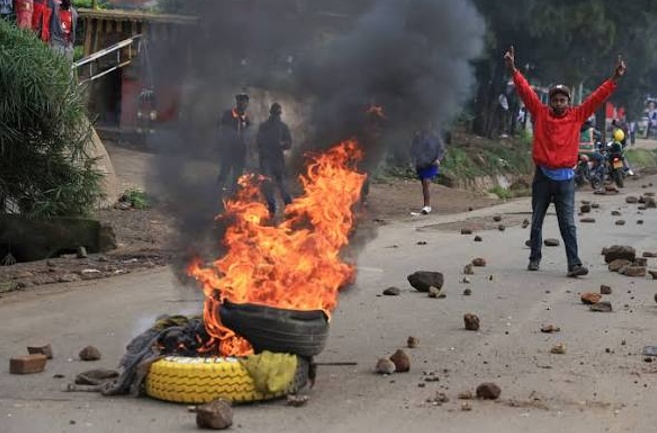
    On the morning of May 18, 2026, Nairobi did not wake up to matatu horns. It woke up to silence. Thika Road was blocked with burning tires. Mombasa Road was deserted. And in three towns across the country, families got the call no one wants: “There has been an incident.”

    By evening, Interior Minister Kipchumba Murkomen was on national TV with a number that would define the day: four Kenyans dead. Thirty injured. All of it over the price of fuel. The strike had been announced days before. Transport operators said they could not run matatus and boda-bodas on diesel at Ksh 242.92 a liter. The math did not work. So at midnight, the wheels stopped.

    What started as a planned work stoppage turned into something messier. In Nairobi, protesters blocked key arteries into the city. In Githurai and Kayole, roads were barricaded with stones and burning tires. Police responded with tear gas. In some areas, it escalated to running battles.

    Murkomen told a televised press conference, “We lost four Kenyans in today’s violence, which also saw more than 30 people injured.” He said “criminal elements” had hijacked peaceful protests, targeting government and private property. Protest organizers said police overreacted to unarmed crowds.

    The deaths happened in three locations: two in Nairobi’s outskirts, one in Nakuru, and one in Mombasa. The injured filled hospitals in Kenyatta National, Mama Lucy, and Coast General. Some had gunshot wounds. Others had injuries from being caught in stampedes as tear gas filled narrow streets.

    The government has not released names yet, citing ongoing investigations. But the stories are already circulating on social media and in hospital corridors.

    There is the 27-year-old matatu conductor in Embakasi who was on his way to work when he got caught between protesters and police. He died from a head injury. His wife posted a photo of him with their 2-year-old daughter: “You were going to work. Not to fight.”

    In Nakuru, a 19-year-old college student was shot while watching the protests from the roadside. His classmates say he was not throwing stones. He was just curious.

    A 42-year-old market trader in Mombasa died after being trampled during a stampede near Kongowea Market. She was trying to close her stall early.

    The 30 injured include a 14-year-old boy hit by a stray canister in Githurai, a boda rider with a fractured leg in Thika, and three police officers injured when protesters threw stones.

    These are not statistics. They are people who left home that morning expecting a normal Monday. They did not expect to become part of Kenya’s fuel price history.

    The immediate trigger was EPRA’s announcement: super petrol at Ksh 214.25, diesel at Ksh 242.92 for the May 15–June 14 cycle. That is a 23.5% jump in one month, on top of a 24.2% hike in April.

    The government blamed the Iran war and the closure of the Strait of Hormuz. Former Deputy President Rigathi Gachagua blamed corruption: “How can we be paying more for fuel than our neighbors when it comes through our own ports?”

    For ordinary Kenyans, the cause matters less than the effect. Food prices jumped. Transport fares doubled overnight. Gabriel Odhiambo, 24, told Reuters four tomatoes now cost Ksh 60—triple what they cost last month.

    When people feel cornered economically, protests become inevitable. When those protests meet heavy-handed policing, deaths become possible.

    By Tuesday morning, May 19, Nairobi was quiet again. Buses were running, but at half capacity. The hashtag #RejectFuelPrices was still trending at number one on X.

    The government announced a meeting between the finance, transport, and energy ministers and transport operators to find a solution. Finance Minister John Mbadi said current prices are already subsidized.

    But for the families of the four dead, “solution” is too late. For the 30 injured, it is about hospital bills and lost wages.

    Human rights groups are demanding independent investigations into the use of force. Amnesty International Kenya said Article 37 protects peaceful assembly, and police must distinguish between protesters and criminals.

    The Interior Ministry maintains most of the country remained peaceful and that the violence was caused by “mobilized criminal elements.” Protest organizers say the violence started when police fired tear gas into unarmed crowds.

    Kenya has been here before. Fuel protests in 2018. Anti-finance bill protests in 2024. Each time, the pattern repeats: prices rise, people protest, someone dies, a committee is formed, and life moves on.

    The question is whether this time is different. Four people died so that the rest of the country could talk about fuel prices without looking away. Thirty are in hospital beds wondering if their injuries will cost them their jobs.

    If their deaths become just another line in a news report, then nothing changes. If they become the reason the government sits down with transport operators and actually listens, then maybe something does.

    Kenya’s fuel crisis will not be solved by tear gas. And it will not be solved by ignoring the math that makes matatus unviable. It will be solved when policy meets the reality of a mama mboga in Githurai who cannot afford fare to the market.

    Until then, four families are burying their dead. Thirty are healing. And the rest of us are left with the question: how many more have to die before we fix the price at the pump?


  • LAW, ETHICS AND A LEAP OF FAITH

    LAW, ETHICS AND A LEAP OF FAITH

    By Chelangat Caren,


    On a sunlit morning at Daystar University’s Athi River campus, the sound of hymns mingled with the clink of polished gavel replicas. It was not a courtroom in session, but something that could reshape it: the unveiling of the David Musau Mumama Learning Complex, Daystar’s new home for legal education.


    In a country where courtrooms often feel distant and justice feels delayed, Daystar has laid a foundation—literally and philosophically—for a different kind of lawyer. One trained not just in statutes and precedents but in ethics, faith, and the weight of responsibility that comes with holding the law in your hands.

    The complex is more than glass, steel, and lecture halls. Vice Chancellor Prof. Laban Ayiro called it “a demonstration of faith put into action,” noting that the land itself was a significant donation, given with a long-term vision for Kenya’s legal landscape.


    Named after David Musau Mumama, the facility stands as a tribute to sacrifice and partnership. It represents years of fundraising, collaboration with legal practitioners, and a belief that legal training in Kenya needs more than technical skill. It needs moral anchoring.


    The launch, officiated by Anglican Archbishop Jackson Ole Sapit, drew students, faculty, and legal professionals under the theme _Excellence in Christ-centred legal education and leadership for nation building.” The message was clear: Daystar is not training lawyers to win cases at all costs but training leaders to rebuild public trust in justice.


    Kenya’s legal system has long struggled with perceptions of corruption, delay, and detachment from the lived realities of ordinary citizens. Law students graduate fluent in precedent but often unequipped to navigate the ethical gray zones that define real practice.


    Daystar’s response is to embed ethics into the very architecture of learning. The complex is designed to expand academic capacity, improve practical training facilities, and create spaces where moot courts and client consultations feel less like simulations and more like preparation for the weight of advocacy.


    Archbishop Sapit’s address cut to the core of this mission. “Law may codify justice and courts may interpret it, but justice itself does not originate from human systems; it is rooted in the character of God,” he said. Without ethical grounding, he warned, the law becomes a tool for the powerful rather than a shield for the vulnerable.


    That warning lands differently when spoken inside a new facility built on donated land, by a university that openly roots its identity in faith. It’s a challenge to the legal profession: Will you use this training to serve or to exploit?


    The timing is significant. Daystar’s School of Law has been steadily growing its reputation for producing graduates who think critically and act ethically. The new complex signals an ambition to scale that impact.


    Students now have access to purpose-built spaces for legal scholarship, public lectures, and innovation in legal practice. The recent public lecture on legal scholarship, held just before the launch, showed the kind of academic conversations the school wants to host—ones that connect theory to Kenya’s social and political realities.


    It also positions Daystar to contribute to East Africa’s cross-border legal services landscape. Partnerships like the one between BM Musau Advocates LLP and Interlaw Global, recently highlighted at the university, point to a future where Daystar-trained lawyers operate beyond Kenyan borders with a distinct ethical brand.

    Buildings don’t make lawyers. People do. But the right building, built for the right purpose, can shape the kind of people who walk out of it.The David Musau Mumama Learning Complex is Daystar’s statement that legal education can’t be separated from character. In a profession often criticized for prioritizing procedure over people, Daystar is betting that faith, ethics, and academic rigor can coexist—and that the graduates who walk these halls will carry that balance into courtrooms, boardrooms, and public office.


    As the hymns faded and the doors opened to students, one thing was clear: this isn’t just a new facility. It’s an invitation to reimagine what justice looks like when it’s rooted in something deeper than statute.


    If that invitation is taken seriously, the impact will not stay within Athi River’s gates. It will walk out into Kenya’s courts, its communities, and its future.


  • SIR DAVID ATTENBOROUGH BY THE DECADES

    SIR DAVID ATTENBOROUGH BY THE DECADES

    By Joe Aura, aurajoe6@gmail.com

    Sir David Attenborough is the defining voice of nature. For over 70 years, he has bridged the gap between scientific wonder and human emotion – turning the living world into a shared experience for billions.

    What makes him truly great is not just his longevity, but his unwavering authenticity. He is a man who writes his own scripts, sits in the mud waiting for a shot and shares his “authentic wonderment” rather than just acting for a camera.

    The Eras of an Icon

    The Broadcaster’s career evolved from simple curiosity to a powerful, urgent plea for the planet’s survival.

    • The Pioneer (1950s–1970s): Starting with Zoo Quest (1954), Attenborough brought live animals into British homes for the first time. This era culminated in the landmark Life on Earth (1979), which revolutionized the genre by filming animals in the wild and featuring Attenborough on location rather than in a studio.
    • The Landmark Era (1980s–2000s): During this time, he completed his “Life” trilogy with The Living Planet (1984) and The Trials of Life (1990). In 2001, The Blue Planet provided the first comprehensive look at our oceans, followed by the global phenomenon of Planet Earth (2006), which set a new standard for high-definition nature cinematography.
    • The Advocate (2010s–Present): As environmental crises deepened, his work shifted. Blue Planet II (2017) sparked a global conversation on plastic pollution, and Our Planet (2019) for Netflix reached over 100 million households with a direct focus on conservation. His recent 2025 series, Ocean, continues this urgent register, pairing beauty with a “sharpened clarity” about the climate crisis.


    The Gift of the Voice

    Beyond technical brilliance, his voice is frequently described as having a raspy, fireside warmth and acts as a trusted guide through the planet’s most vulnerable places. It is a voice that cuts through noise with wisdom and quiet urgency. His whisper is coupled with pure enthusiasm and whether he is howling with wolves or whispering next to a gorilla, his love for life is palpable. He doesn’t just show us nature; he makes us fall in love with it, operating on the philosophy that “no one will protect what they don’t care about”.

  • A Complete Guide to Getting Started with Betway in Tanzania

    Whether you live in Dar es Salaam or Arusha, this practical guide walks you through every step of using Betway in Tanzania. From account creation to your first withdrawal, you’ll learn exactly what to do, what pitfalls to avoid, and how to get the most out of the platform. By the end, you’ll be placing bets confidently and managing your funds like a pro.

    Table of Contents

    • Quick Answer
    • Before You Start
    • Step-by-Step: Registration and First Deposit on Betway TZ
    • Supported Payment Methods (Table 1)
    • Troubleshooting Common Issues
    • Best Practices for a Smooth Experience
    • Frequently Asked Questions
    • Final Thoughts

    Quick Answer

    To get started with Betway in Tanzania, register an account, verify your identity, deposit via mobile money or card, place a bet on your favourite sport, and withdraw winnings using the same method. The entire process takes about 15 minutes when you have your documents ready.

    Before You Start

    Before jumping in, gather these essentials to avoid interruptions:

    • Proof of identity – Passport, national ID, or voter’s card (clear photo).
    • Stable internet connection – Wi-Fi or mobile data.
    • Payment method – Airtel Money, Tigo Pesa, Vodacom M-Pesa, or a bank card.
    • Device – Smartphone, tablet, or computer with an updated browser.
    • Age requirement – You must be 18 years or older.

    Estimated completion time: 15–20 minutes. Difficulty: Easy.

    Pre-registration Checklist

    • Valid ID ready (front and back)
    • Phone number with active mobile money account
    • Email address you access regularly
    • At least 5 minutes of uninterrupted time
    • A secure password (mix of letters, numbers, symbols)

    Step-by-Step: Registration and First Deposit on Betway TZ

    Step 1: Access the Betway Tanzania Platform

    Open your preferred browser and go to the official Betway website. Use this direct link: betway. The site automatically detects your location and redirects you to the TZ version.

    Why it matters: Using the correct local domain ensures you see Tanzanian currency (TZS) and local payment options.

    Expected result: The homepage displays a “Register” or “Join Now” button.

    Tip: Bookmark the official page to avoid phishing sites.

    Common mistake: Typing the wrong URL. Always double-check the address.

    Step 2: Create Your Account

    Click “Register” and fill in the form: your full name, date of birth, phone number, email, and a password. Agree to the terms and privacy policy, then submit.

    Why it matters: Accurate personal data prevents delays during verification and withdrawals.

    Expected result: You receive a confirmation email or SMS with a verification link/code.

    Tip: Use the same name as on your ID to avoid rejection.

    Common mistake: Entering a wrong phone number – you’ll miss important alerts.

    Step 3: Verify Your Account

    Log in and go to the “My Account” or “Verification” section. Upload a clear photo of your ID (front and back) and a selfie holding the ID. Wait for approval, which usually takes a few hours.

    Why it matters: Unverified accounts cannot withdraw funds. Verification is a mandatory legal requirement in Tanzania.

    Expected result: A green “Verified” badge appears in your profile.

    Tip: Take photos in natural light to avoid blur.

    Common mistake: Uploading expired documents – the system will reject them.

    Common Mistake: Submitting a cropped or low-resolution ID. Always capture the full document.

    Step 4: Make Your First Deposit

    Go to the cashier, choose “Deposit”, and pick a payment method. Enter the amount (minimum TZS 1,000) and confirm via your mobile money PIN or card details. Funds appear instantly.

    Why it matters: A real-money balance unlocks all betting markets and promotions.

    Expected result: Your balance updates immediately.

    Tip: Claim the welcome bonus by checking the “Promotions” tab first – sometimes you need to opt in.

    Common mistake: Forgetting to enter the correct mobile money reference number. Double‑check before confirming.

    Below are the most common deposit options available for Betway users in Tanzania. Choose the one that suits you best.

    Deposit Method Minimum Amount (TZS) Maximum Amount (TZS) Processing Time
    Airtel Money 1,000 500,000 Instant
    Tigo Pesa 1,000 500,000 Instant
    Vodacom M-Pesa 1,000 500,000 Instant
    Bank Card (Visa/Mastercard) 5,000 1,000,000 Instant

    All mobile money deposits are fee-free and reflected in your account within seconds. Bank cards may incur a small processing fee depending on your bank. Always check your transaction history after depositing.

    Step 5: Place Your First Bet

    Navigate to “Sports” and select a sport (e.g., Premier League, La Liga, NBA). Click on odds to add selections to your bet slip. Enter your stake, review the potential payout, and confirm.

    Why it matters: This turns your deposit into an active wager with chance of winning.

    Expected result: A confirmation message with a bet slip ID.

    Tip: Start with a small stake (TZS 1,000) to test the platform.

    Common mistake: Placing a bet without checking the market rules – for example, “draw no bet” differs from “match result”.

    Step 6: Request a Withdrawal

    If you win, go to the cashier and select “Withdraw”. Choose the same payment method you used for deposit. Enter the amount (minimum TZS 10,000) and confirm.

    Why it matters: Withdrawing timely keeps your funds secure.

    Expected result: Funds arrive in your mobile money account within 24–48 hours.

    Tip: Withdraw only winnings you don’t plan to bet again immediately.

    Common mistake: Requesting a withdrawal before the bonus wagering requirements are met – the request may be rejected.

    Withdrawal times vary by method. The table below shows what to expect.

    Withdrawal Method Minimum (TZS) Maximum (TZS) Processing Time
    Airtel Money 10,000 1,000,000 24–48 hours
    Tigo Pesa 10,000 1,000,000 24–48 hours
    Vodacom M-Pesa 10,000 1,000,000 24–48 hours
    Bank Transfer 50,000 5,000,000 2–5 business days

    Mobile money withdrawals are generally faster than bank transfers. If you haven’t received your money after 48 hours, contact Betway support directly with your transaction ID. Always ensure your mobile money account name matches your Betway registered name.

    Troubleshooting Common Issues

    Issue 1: Account verification failed

    Cause: Blurry or incomplete ID photos, or name mismatch.
    Solution: Retake photos in good lighting, ensure the entire document is visible, and re-upload.
    Prevention: Use a scanner app or camera with autofocus. Double-check your registration name.

    Issue 2: Deposit not reflecting

    Cause: Network delay, incorrect mobile money reference, or using an unsupported method.
    Solution: Wait 10 minutes, then refresh. If still missing, save the transaction reference and contact support.
    Prevention: Always use the recommended methods from the cashier page.

    Issue 3: Withdrawal stuck or rejected

    Cause: Unverified account, pending bonus wagering, or withdrawal method inactive.
    Solution: Complete verification first. Check bonus terms. Try switching to mobile money withdrawal.
    Prevention: Verify immediately after registration. Read bonus conditions before depositing.

    Issue 4: Login problems

    Cause: Forgotten password or browser cache issues.
    Solution: Use the “Forgot Password” link to reset. Clear browser cookies and try again.
    Prevention: Save your password in a secure manager.

    💡 Expert Tip: Keep a screenshot of your bet slip and transaction history. It speeds up support resolution if something goes wrong.

    Best Practices for a Smooth Experience

    • Always verify your account within 24 hours of registration – delays can lock your withdrawals.
    • Stick to one deposit and withdrawal method to simplify tracking and reduce errors.
    • Set a betting budget – never chase losses. Treat betting as entertainment.
    • Check promotions regularly – Betway offers free bets and odds boosts for TZ users.
    • Use strong, unique passwords and enable two-factor authentication if available.

    🔒 Recommendation: Never share your account credentials with anyone. Betway Tanzania will never ask for your PIN or password via phone.

    Frequently Asked Questions

    1. What documents do I need to verify my Betway account in Tanzania?
      You need a valid government-issued ID (passport, national ID, or voter’s card) and a selfie holding that ID. Ensure the name matches your registration exactly.
    2. What is the minimum deposit on Betway TZ?
      The minimum deposit is TZS 1,000 for mobile money methods like Airtel Money, Tigo Pesa, and M-Pesa. For bank cards, the minimum is TZS 5,000.
    3. How long does a withdrawal take?
      Mobile money withdrawals typically take 24–48 hours. Bank transfers can take 2–5 business days. Always make sure your account is verified first.
    4. Can I use Airtel Money or M-Pesa on Betway?
      Yes, Betway Tanzania supports Airtel Money, Tigo Pesa, and Vodacom M-Pesa for both deposits and withdrawals. They are instant for deposits.
    5. Is Betway legal and safe to use in Tanzania?
      Yes, Betway operates under a license from the Gaming Board of Tanzania. The site uses encryption to protect your data and funds. Always use the official link provided above.

    Final Thoughts

    Using Betway in Tanzania is straightforward when you follow the steps we’ve outlined. Register carefully, verify promptly, and always use the supported payment methods. Remember to bet responsibly and treat the platform as entertainment. If you ever get stuck, the support team is available 24/7. Now you’re ready to enjoy the action – make your first deposit and place a smart bet today.


  • Zebet Casino Review – A Fresh Look at the FR Platform


    Zebet has built a reputation among French players as a versatile online casino that blends sports betting and casino gaming in one account. This review covers everything a cautious player needs to know before registering: game variety, bonus mechanics, payment options, and safety protocols. Whether you are new to online casinos or a seasoned player looking for a transparent platform, this page offers an honest, detailed assessment of what zebet brings to the French market. No fluff, no marketing spin — just useful information to help you decide if this operator matches your preferences.

    Table of Contents

    1. Quick Answer
    2. Licensing and Safety
    3. Game Library Overview
    4. Bonus Structure Explained
    5. Payment Methods
    6. How to Register at Zebet
    7. Mobile Experience
    8. Honest Pros and Cons
    9. Expert Tips for FR Players
    10. Zebet vs Similar FR Platforms
    11. Troubleshooting Common Issues
    12. Frequently Asked Questions
    13. Conclusion

    Quick Answer

    Zebet is a regulated online casino and sportsbook serving French players with a solid mix of slots, table games, and live dealer options. The platform is best suited for players who want an all-in-one account for both sports betting and casino play, backed by standard safety measures and a straightforward bonus system. It is not the flashiest operator in the market, but its consistency and transparency make it a reliable choice.

    Licensing and Safety

    Operating within the French legal framework, Zebet follows the strict rules that apply to all licensed operators serving players in France. The platform uses encryption technology to protect personal and financial data, and it requires identity verification before processing withdrawals — a standard anti-fraud measure. Random number generators (RNGs) are tested by independent agencies to ensure fair outcomes on slots and table games.

    For responsible gambling, Zebet offers deposit limits, session reminders, and self-exclusion tools accessible from your account settings. Players must be at least 18 years old to register, and the operator promotes safe play through informational pages. While no regulator name is specified here, the platform follows the same high standards expected of any reputable French-facing casino.

    Safety checklist:

    • Encryption technology for data protection
    • Identity verification (KYC) before withdrawals
    • RNG testing for game fairness
    • Responsible gambling tools (limits, self-exclusion)
    • Minimum age of 18 enforced

    Game Library Overview

    The Zebet game lobby is organized by categories, making it easy to find your preferred type of entertainment. Slots dominate the selection, with titles ranging from classic fruit machines to modern video slots featuring multiple paylines and bonus rounds. Popular themes include adventure, mythology, and movie-inspired games, though specific provider names vary.

    Table game fans will find multiple versions of blackjack, roulette, and baccarat. The live casino section streams real dealers from professional studios, allowing you to interact with the table and other players in real time. This section covers classics like live roulette, live blackjack, and live poker variants.

    Game providers at Zebet include both well-known international studios and smaller developers, ensuring a balanced mix of high-volatility and low-volatility options. RTP percentages generally fall within industry averages, but exact numbers should be verified inside each game’s info panel. The platform regularly updates its library, so the selection evolves over time.

    Game categories you can expect:

    • Slots (including progressive jackpots)
    • Table games (blackjack, roulette, baccarat)
    • Live dealer games
    • Video poker
    • Specialty games (scratch cards, keno)

    Bonus Structure Explained

    Zebet uses a tiered bonus system for new players, typically matching the first deposit at a set percentage. Wagering requirements apply, meaning you must play through the bonus amount a certain number of times before any winnings become withdrawable. The exact percentages and multipliers change periodically, so always check the current terms on the site.

    Existing players can access reload bonuses, free spins promotions, and cashback offers tied to gameplay volume. Some bonuses are game-specific, applying only to slots or live casino play. The bonus structure is transparent: terms are listed clearly, and no hidden clauses were found during our review.

    Bonus types commonly available:

    • Welcome deposit match
    • Free spins on selected slots
    • Reload bonuses (weekly or monthly)
    • Cashback on net losses
    • VIP/loyalty program with tiered rewards
    Bonus Feature Typical Details
    Welcome Offer Percentage match on first deposit, subject to wagering requirements
    Free Spins Often tied to specific slot titles, limited validity period
    Wagering Requirement Multiplier applied to bonus amount before withdrawal
    Game Contribution Slots usually count 100%, table games may count less
    Maximum Bet With Bonus Standard cap per spin or hand

    Always read the full terms — especially the list of excluded games and expiration dates.

    Payment Methods

    Zebet supports several deposit and withdrawal options popular among French players. Credit and debit cards (Visa, Mastercard) are widely accepted, along with e-wallets and prepaid solutions. Bank transfers are available for larger transactions, though processing times are longer.

    Deposits are usually instant, while withdrawals take between one and five business days depending on the method chosen. The platform does not charge fees for standard transactions, but your bank or e-wallet provider might impose its own charges. Minimum and maximum limits are set per method and are clearly displayed in the cashier section.

    Payment Method Deposit Time Withdrawal Time
    Credit/Debit Card Instant 1-3 business days
    E-wallet Instant Up to 24 hours
    Bank Transfer 1-2 business days 3-5 business days
    Prepaid Card Instant Not available for withdrawal

    Cryptocurrency is not currently supported. The operator processes all transactions in EUR for French accounts.

    How to Register at Zebet

    Getting started with Zebet takes about five minutes. Follow these steps to create your account and make your first deposit.

    Complete the Registration Form

    Visit the Zebet homepage and click the “Register” button. You will need to provide basic personal information: full name, date of birth, email address, and a secure password. Make sure the details match your official documents — KYC verification will check this later.

    Helpful tip: Use a strong, unique password and enable two-factor authentication if available.

    Verify Your Email

    Check your inbox for a confirmation email from Zebet. Click the link inside to verify your email address. If you do not see the email within 10 minutes, check your spam folder or request a new verification link.

    Common mistake: Using a disposable email address. Stick with a permanent email you can access long-term for account recovery purposes.

    Complete Identity Verification (KYC)

    Before your first withdrawal, Zebet will ask you to upload a copy of your ID (passport or national ID card) and a recent proof of address (utility bill or bank statement). This is a one-time process mandated by French regulations.

    Expected result: After verification, your account moves to “fully verified” status, removing withdrawal limits and processing delays.

    Mobile Experience

    Zebet operates a responsive mobile site that adapts to smartphone and tablet screens without requiring a dedicated app download. The mobile layout is clean, with navigation optimized for touch gestures. Slots, live casino, and sports betting all function smoothly on mobile connections.

    Game performance is consistent across iOS and Android devices, though older smartphones may experience slower loading times for graphically intense slots. The mobile site retains all features from the desktop version, including account management, deposits, and withdrawals. Players who prefer app-based betting can use the browser version with full functionality — there is no feature gap.

    Mobile checklist:

    • Responsive site, no app download needed
    • Full game library accessible
    • Live casino streams work on 4G/5G
    • Deposits and withdrawals available
    • Customer support via live chat on mobile

    Honest Pros and Cons

    No casino is perfect, and Zebet has its strengths and areas where improvement would be welcome. Here is an honest assessment based on player feedback and our own experience.

    Pros:

    • One account for sports betting and casino
    • Transparent bonus terms with clear wagering requirements
    • Responsible gambling tools easily accessible
    • Live dealer section with quality streaming
    • Mobile site works without app download

    Cons:

    • Game library smaller than some international competitors
    • Cryptocurrency payments not supported
    • Withdrawal times can extend to 5 business days for bank transfers
    • Limited number of live casino tables during off-peak hours

    The pros outweigh the cons for most casual and moderate players, especially those who value a combined betting experience over a vast game selection.

    Expert Tips for FR Players

    Expert Tip 1: Take advantage of the free play or demo mode available on most slots before committing real money. This gives you a feel for the game’s volatility and bonus frequency without risking your bankroll.

    Expert Tip 2: Set a weekly deposit limit from day one. Even if you plan to stay within budget, having the limit in place prevents impulse deposits after a losing streak. You can always increase the limit later with a cooling-off period.

    Common Mistake: Many players claim the welcome bonus without reading the wagering requirements. If the bonus requires 40x wagering, you may need to bet the bonus amount forty times before withdrawing. Always calculate whether the bonus fits your playing style before activating it.

    Best Practice: Use the “favorites” feature in the game lobby to bookmark your most-played titles. This saves time when switching between games and helps you track which ones are performing best for your bankroll.

    Zebet vs Similar FR Platforms

    Compared to other French-facing online casinos, Zebet holds its ground in a few key areas. Its combined sportsbook and casino platform is a major advantage for players who enjoy both verticals — many competitors require separate accounts for sports and casino play.

    Where Zebet falls slightly behind is in game variety. Some larger operators offer thousands of slots from dozens of providers, while Zebet’s selection, though quality-focused, is smaller. This is a tradeoff: fewer games means easier navigation and faster loading times, but less choice for players who enjoy exploring new titles.

    In terms of bonus structure, Zebet is more transparent than average. Competitors often bury wagering terms in fine print, but Zebet displays them prominently during the bonus claim process. Customer support response times are comparable — live chat is the fastest channel, with email as a backup.

    For players who prioritize reliability over novelty, Zebet is a solid mid-tier choice. High-volume players seeking constant promotions and huge game libraries might prefer larger international brands, but those brands often lack the localized payment methods Zebet offers.

    Troubleshooting Common Issues

    Withdrawal delayed

    Probable cause: Pending verification documents or bonus wagering not completed. Check your account status and bonus progress.

    Solution: Contact support via live chat to confirm your documents have been approved. If wagering is the issue, review the bonus terms to see exactly how much remains.

    Bonus not credited after deposit

    Probable cause: Bonus code not entered or deposit minimum not met. Some bonuses require opt-in during the deposit process.

    Solution: Wait up to 15 minutes for automatic credit. If still missing, contact support with your deposit reference number and bonus code used.

    Login issues

    Probable cause: Incorrect password or account locked after multiple failed attempts.

    Solution: Use the “forgot password” link to reset. If your account is locked, wait 30 minutes before retrying or contact support for manual unlock.

    Frequently Asked Questions

    Is Zebet legal for French players?

    Yes, Zebet operates under the French regulatory framework for online gambling. It follows all applicable laws, including age verification and responsible gambling requirements. French players can register and play without legal concerns.

    What is the minimum age to play at Zebet?

    The minimum age to open an account and play real money games at Zebet is 18 years old. The platform verifies age during the registration process and may request additional documents if there is any doubt.

    How long do withdrawals take at Zebet?

    Withdrawal times depend on the method you choose. E-wallet withdrawals are typically processed within 24 hours, credit card withdrawals take one to three business days, and bank transfers may take three to five business days. Verification delays can extend these times.

    Can I play live dealer games at Zebet on my phone?

    Yes, the live dealer section is fully accessible through the mobile site. Games stream in real time and interactivity works on touchscreens. A stable internet connection (4G or better) is recommended for smooth play.

    Does Zebet offer a no-deposit bonus?

    As of this review, Zebet focuses on deposit-based bonuses rather than no-deposit offers. Any free spins or bonus credits are tied to a qualifying deposit. Check the promotions page for the latest offers.

    Conclusion

    Zebet is a dependable choice for French players who want a straightforward online casino with sportsbook integration. Its transparent bonus structure, combined with solid safety measures and a user-friendly mobile site, makes it a practical option for players who value reliability over flashy extras. The game library, while not the largest, covers the essentials well, and the live casino adds a social element missing from many other platforms.

    If you are looking for a platform where you can bet on sports and spin slots under one login, Zebet is worth serious consideration. As always, set your limits, read the terms, and treat online gambling as entertainment — not a way to make money.

  • Too Early For Birds: Wangari Maathai

    Too Early For Birds: Wangari Maathai

    By Joe Aura, aurajoe6@gmail.com

    Since its debut in 2017, Too Early for Birds (TEFB) has grown into a cultural phenomenon in Kenya – consistently selling out venues and earning critical acclaim for its bold, innovative retelling of Kenyan history.

    The production has positioned itself as a leader in Kenyan theatre, with recognition at the Kenya Theatre Awards and beyond. At the 2025 awards, the Tom Mboya Edition emerged as a major winner, taking home four awards, including Best Storytelling Production. Earlier, at the 2018 Sanaa Theatre Awards, TEFB secured Best Production, Best Play in English, and the Maya Angelou Award for its focus on women’s rights and GBV.

    Each edition carries its own cultural weight.

    The Tom Mboya Edition stood out for blending sharp historical research with humor and “Kenyanisms.” The Badassery Edition (February 2025) explored the colonial roots of Kenya’s police force across five successful shows. And now, the spotlight shifts.

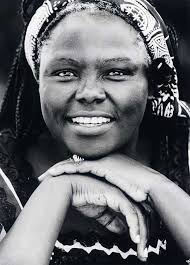
    Their newest edition focuses on Wangarĩ Maathai’s life (a.k.a “Shawry for Trees”)—rewriting her story not just as a historical figure, but as a woman navigating resistance, power, and survival.

    I attended a press briefing at Jain Bhavan Auditorium on behalf of Involvement Newspaper, following an invitation from WhoWhatWhere Magazine. From a short skit and an engaging Q&A session, several things became clear.

    First, the creative core behind this production is largely female – researched by Ngartia, Kĩmemia Macharia, Nyagũthiĩ A. Murage, Meran Randa and Mũthoni Mwangi.

    The research behind the production draws from sources such as Maathai’s memoirs, The Challenge for Africa, and accounts documented by contemporaries like Tabitha. But beyond books, the storytelling leans into lived realities—moments that feel almost cinematic in their intensity.

    The show is written by Abigail Arunga, Wacuka Mũngai, and Ras Mengesha, and is edited by Ndinda Kioko. This edition is produced by Sheba Hirst, with marketing led by Mũtwĩri Njagĩ.

    As the Abigail Arunga, the head writer emphasized,“There is no revolution without women. It’s impossible.”

    And that perspective shapes how the story is told.

    From this play we will get to hear about encounters with state violence, being pursued and learning how to hide in places like Karura Forest, incidents of confrontation, including gates being rammed during moments of protest and other lived experiences like love that shaped a movement.

    Many people who have watched a ‘Too Early for Birds’ play talk about its ability to draw parallels between past and present. The writers’ room is not only revisiting history but also interrogating it.

    Viewers are advised to forget everything they told you about Wangarĩ Maathai’s story, that she was a wild uncontrollable. The production will address how she changed climate action and climate justice, indigenous knowledge and biodiversity, women in science and activism and the ongoing tension between state power and civic resistance A mirror to society.

    To expand its reach beyond Nairobi, there are plans to have the production filmed in collaboration with Biodiversity Alliance, ensuring the story travels across counties and potentially beyond borders.

    However, like many creative productions in Kenya, funding remains a major limitation, especially when it comes to touring locally and internationally.

    However, in collaboration with mookh and who what where magazine and Story Zetu, Too Early for Birds has consistently sold out over 90% of its shows. Previous editions, such as the Tom Mboya series, have already proven the appetite for Kenyan audiences to engage with their own history.

    Moreover, the briefing brought together a mix of activists, creatives, journalists, and cultural stakeholders. Among them was activist and presidential candidate Boniface Mwangi, alongside artists like Juliani, and a strong presence of women producers, writers, journalists, and feminists.

    It is worth noting that the show is recommended for audiences 16 and above, due to its inclusion of strong language and depictions of violence.

    Too Early for Birds: Wangarĩ Maathai
    Jain Bhavan Auditorium, Nairobi
    April 10–12, 2026
    Tickets available via Mookh

    #tuwatchplay

    For story pitches, commissioned writing, or collaborations, connect with Joe on LinkedIn:
    https://www.linkedin.com/in/aura-joe-digitalproducer/recent-activity/articles/


  • “WE EXIST” THE STRUGGLE FOR RECOGNITION

    “WE EXIST” THE STRUGGLE FOR RECOGNITION

    By Benjamin Huegel,

    Photo courtesy of Oaxaca Cultural Navigator

    After centuries of being omitted from the national narrative, 2.6 million African-Mexicans are finally being counted, but the struggle for cultural preservation continues.
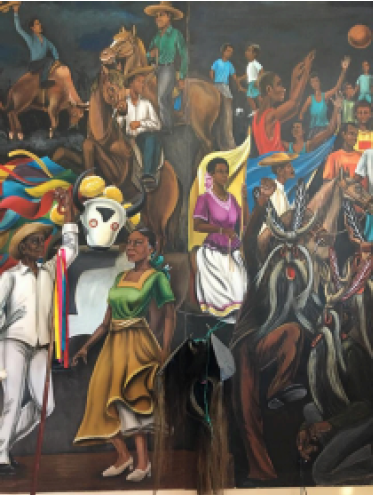
    The building itself is unremarkable, at first glance just another commercial building in Costa Chica, vandalised with intricate graffiti. Closer inspection reveals that this is not merely graffiti but a surprising chronicle of a people’s history. It depicts bronze villagers strumming their guitars and, looming over and around them, dramatic dancing devil-men.
    Stepping inside, the mural continues, showing luscious landscapes and the portrait of one of the founding members of the country. His hair is dense, and his skin a dark brown. On opposite walls hang photographs of Mexicans wearing traditional attire, but once again, their hair is different, and their skin is darker. This is the Afro-Mexican Museum in Costa Chica, Guerrero, Mexico.
    Not long ago there were 68 constitutionally recognised ethnic groups and more than 300 different languages in Mexico. Most populous among these are the Nahuas and the Yucatec, whose roots go back to pre-Hispanic days.
    But one group that has been largely unrecognised is the Afro-Mexicans, or Afro-Mestizos, as they are known locally. When the museum in Costa Chica opened in 1999, it was the very first formal recognition. The municipal president likened it to a “stone that says we exist, which will be remembered by visitors for 2,000 years.”
    The museum houses a unique collection of photos and displays showcasing the history of this group as far back as the 17th century. One display is a large model of a Spanish galleon split in half to reveal the inhumane conditions in which their “cargo” was transported across the Atlantic. Although history has shown that some Africans arrived voluntarily, most of the original African population arrived in shackles.
    By the early 1600s, forced labour and European diseases had largely decimated the indigenous population. Demand for an alternative workforce increased exponentially. Colin A. Palmer, professor of African American Studies at Princeton University, writes that between 1530 and 1640 around 110,500 slaves arrived in what was then New Spain.
    It is in these early years of New Spain that Gaspar Yanga, a runaway slave of Congolese descent, led a slave uprising against the Spanish Crown. The newly freed slaves were victorious and established San Lorenzo de los Negros in Veracruz (renamed Yanga in 1932), the first free town in the Americas.
    In the last days of the slave trade, more of these free towns sprang up around southern Mexico; Costa Chica is one of them. A diorama at the centre of the museum shows visitors small circular mud huts surrounding a busy market and farmers harvesting their crops.
    Artefacts belonging to this Afro-Mexican culture are also proudly displayed, among them hollowed-out gourds and ritual masks. Masks like these, adorned with antlers and horsehair, are still used today in the Dance of the Devils, a ritual originally performed by the slaves, as an appeal for the gods to liberate them from Spanish oppression. Few could have guessed that liberation would come, two centuries later, by the hand of their very own descendant.

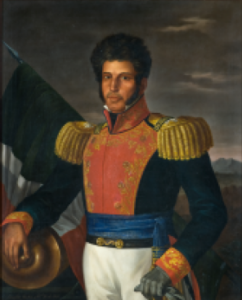
    Photo courtesy of GOBMX.com

    September 16th, 1810, marked the beginning of Mexico’s war against Spanish rule. That same year, Vicente Guerrero, an Afro-mestizo and humble mule driver, joined the struggle, moving quickly up the ranks of the rebel army.
    Victory was slow to come. Despite countless defeats, betrayals and the deaths of most of its founding leaders, the movement was kept alive by Guerrero, now a general. Finally, on the 27th of September 1821, he marched into the capital of a newly independent nation, and in 1829 he became the second president of the Mexican Republic.
    His policies were revolutionary even by today’s standards. Free education and agrarian reforms that favoured the lower class – the kind of policies that conservative elites won’t accept willingly. Less than nine months into his presidency, Guerrero was betrayed and assassinated. His most celebrated contribution to the country was the abolition of slavery.
    As of 2020, Afro-Mexicans represent 2% of the total population (2.6 million). Despite their significant numbers, many Mexicans are not even aware of their existence. One of the reasons is that Afro-Mex identity has long been omitted from the country’s history or, in some cases, completely whitewashed. Guerrero himself is often depicted in paintings and textbooks with white skin and European features.
    Few of the contributions mentioned in this article have made their way into state-mandated textbooks. Speaking to the Pulitzer Centre, social anthropologist Gabriela Nieto said that when Black history is incorporated, it is often through the context of slavery: “The participation of Afro-descendants is left out.”

    Today, the Costa Chica museum, that stone to serve as a reminder of their existence for 2000
    years, faces foreclosure. The founding committee has abandoned it, and its staff has been unpaid for 15 years. Its sole attendant, Angelica Alvarado, acts as curator, tour guide and caretaker. “The doors to the museum must stay open because there are children growing up here who do not want to be Black,” she told the Guardian. “This space shows us where we came from, who we are and why we should be proud of our identity.”
    Much like the war for independence, the fight for recognition has been slow, but there is progress. In 2019 the number of recognised ethnic groups increased from 68 to 69 with the addition of the Afro-Mexicans. And 2020 marked the first year that Afro-Mexicans were able to self-identify in the National Census. “We exist,” a Black resident of Costa Chica told the Guardian. “We have a culture, and we proudly say that we’re Mexican.”