Category: Sports

  • DRC RETURNS TO FIFA WORLD CUP AFTER 52-YEAR ABSENCE

    DRC RETURNS TO FIFA WORLD CUP AFTER 52-YEAR ABSENCE

    By Jacqueline Kitamba,

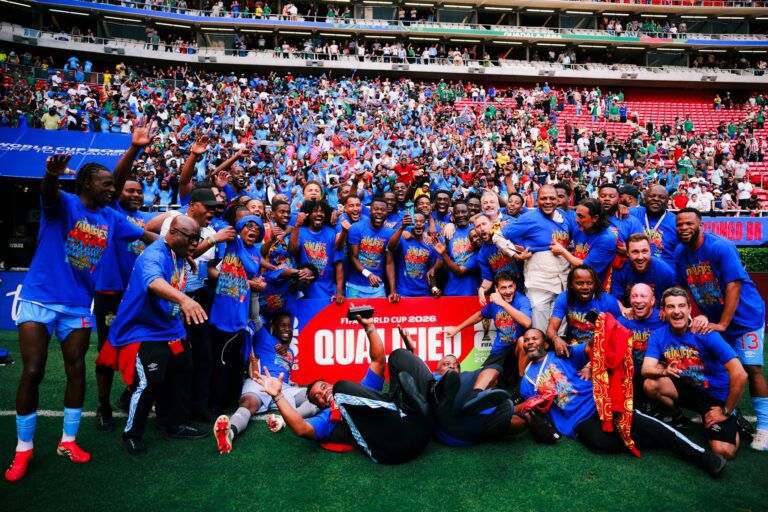
    The Democratic Republic of the Congo (DRC) is making its long-awaited return to the FIFA World Cup, ending a 52-year absence from football’s biggest stage.

    The Leopards are participating in the tournament for the first time since 1974, when the country competed as Zaire. Their return marks a historic moment for Congolese football and a significant achievement for a nation that has spent decades watching the competition from the sidelines.

    DRC’s journey to the 2026 World Cup is characterized by determination and resilience. After failing to qualify for the 2018 and 2022 editions, the Leopards mount a successful qualification campaign to secure their place among the world’s elite teams.

    The team overcomes several major challenges during the qualifiers, including a dramatic penalty shootout victory over Nigeria in the African play-offs. The Leopards also hold their own against continental heavyweights Senegal before booking their World Cup ticket with a hard-fought 1-0 extra-time win over Jamaica in Mexico. Axel Tuanzebe scores the decisive goal that seals qualification.

    Led by captain Chancel Mbemba and head coach Sébastien Desabre, the Leopards enter the tournament determined to make an impact. Their opening Group K fixture pits them against European giants Portugal in what is expected to be one of the group’s most anticipated matches.

    For millions of Congolese supporters, the team’s participation represents more than a football achievement. It symbolizes perseverance, national pride and the revival of a footballing legacy that has remained dormant on the World Cup stage for more than five decades.

    As the tournament progresses, DRC’s return stands as one of the compelling stories of the 2026 FIFA World Cup.


  • The Changing Landscape of the NBA

    The Changing Landscape of the NBA

    By Joe Aura, aurajoe6@gmail.com,

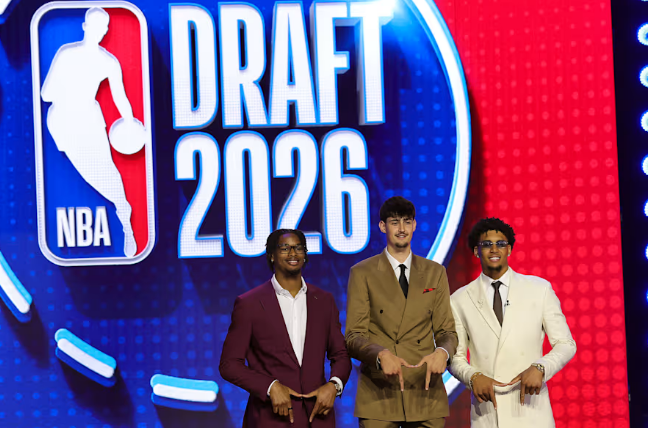
    The era of the Golden State Warriors and Cleveland Cavaliers, which defined a decade of NBA dominance, has firmly shifted. In recent years, the league has seen a resurgence of parity, with a variety of new teams claiming championships and challenging the old guard. This new landscape sets the stage for the upcoming 2026 NBA Draft, as teams look to secure the next generation of talent to compete in this highly open field.
    The 2026 NBA Draft will take place across two days at the Barclays Center in Brooklyn, New York.
    ● First Round: Tuesday, June 23 at 8:00 p.m. ET (ABC and ESPN)
    ● Second Round: Wednesday, June 24 at 8:00 p.m. ET (ESPN)

    The 2026 NBA Draft is scheduled for June 23-24. For the third consecutive year, the event will follow a two-night format.
    Draft Schedule & Broadcast Information
    Both nights of the draft will begin coverage at 8:00 p.m. ET.
    ● Round 1: Tuesday, June 23 at 8:00 p.m. ET. Watch on ABC, ESPN, and the ESPN App.
    ● Round 2: Wednesday, June 24 at 8:00 p.m. ET. Broadcast on ESPN and the ESPN App.
    Key Draft Details
    ● Draft Order: The Washington Wizards won the 2026 NBA Draft Lottery and hold the No. 1 overall pick. The Utah Jazz, Memphis Grizzlies, and Chicago Bulls follow with the remaining top four picks.
    ● Top Prospects: AJ Dybantsa is currently the projected top pick, followed by other high-ranking prospects including Darryn Peterson, Cameron Boozer, and Caleb Wilson.
    ● Pick Time Limits: Teams will have five minutes between selections in the first round and four minutes between picks in the second round.
    For specific draft orders and team picks, you can check the complete NBA Draft Order.


    For story pitches, commissioned writing, or collaborations, connect with Joe on LinkedIn:
    https://www.linkedin.com/in/aura-joe-digitalproducer/recent-activity/articles/

  • Mixed Fortunes for Daystar Falcons in The Kenya Handball Premier League

    Mixed Fortunes for Daystar Falcons in The Kenya Handball Premier League

    And Women secure super cup spot as men fight for survival

    By Teddy Otieno – Sports Editor

    (tedootieno@gmail.com)


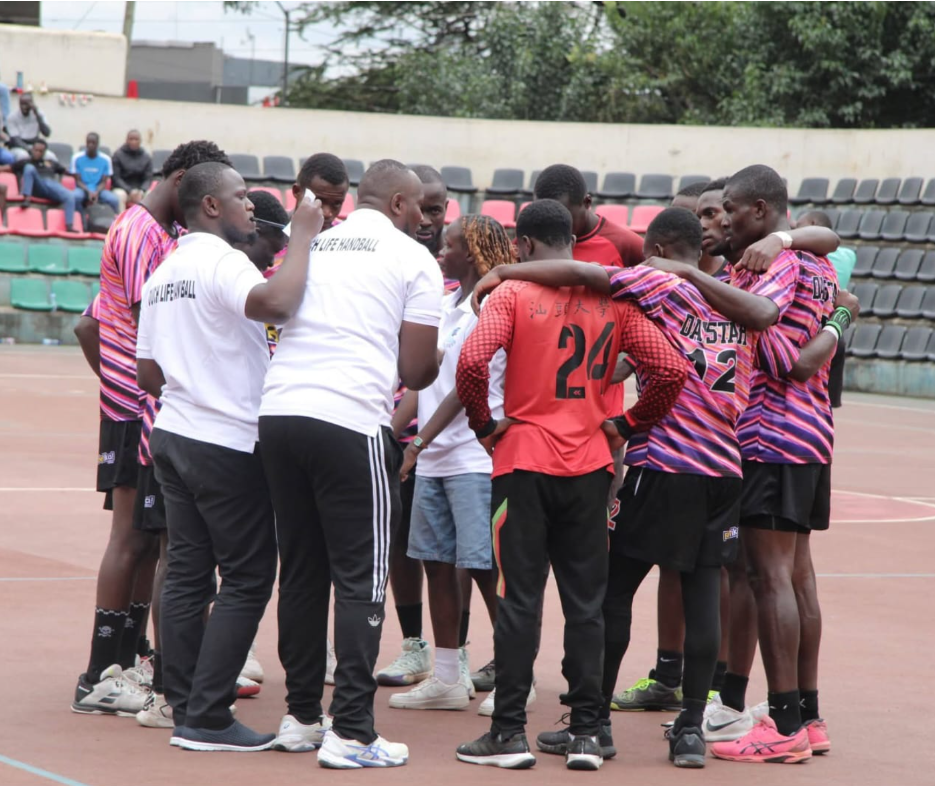
    The Daystar Falcons handball teams experienced mixed fortunes in the 2025/2026 Kenya Handball Premier League season, a reality highlighted during the Madaraka Day league matchday at the Nyayo Stadium Handball Court.

    The Falcons women’s team played their final league match of the season, earning a hard-fought 29-29 draw against National Cereals and Produce Board (NCPB). Leah Nyongesa and Esther Nyangami led the scoring with six and five goals respectively. Impressively, the team’s 29 goals were shared among eight players, underlining the Falcons’ strong team-oriented approach.

    The result sees the Falcons women finish fifth in the league standings and secure qualification for the Super Cup tournament scheduled for August. It marks another impressive achievement for a side renowned for punching above its weight. The team also concludes the season as Federation of Eastern Africa University Sports (FEAUS) champions after winning the tournament in Kakamega during their maiden appearance in April.

    Meanwhile, the Falcons men’s team continues to face a challenging Premier League campaign. This season introduced significant changes to the league structure, with the number of teams reduced to twelve and the bottom two sides facing relegation to the National League. The adoption of a home-and-away format, where teams play each other twice, has further increased competitiveness and improved the overall quality of the league.

    The Madaraka Day fixture saw the second leg of the Falcons’ encounter with Equity at the Nyayo Handball Court. Having narrowly lost the first leg by four goals, the Falcons entered the return match hoping to cause an upset. The Falcons produced a fluid, tactical, and entertaining display. They played confidently against an Equity side that sits second in the table and boasts one of the league’s strongest defensive records.

    The contest was fiercely contested and saw Falcon William Oduor receive a red card in the second half. Equity, who are pursuing their first league title, refused to relent. A brief lapse in concentration by the Falcons allowed a slender one-goal lead to disappear, with Equity scoring three quick goals to seize control of the match. The game eventually ended 27-23 in favour of Equity, handing the Falcons a third consecutive defeat.

    While the result was disappointing, the performance offered several positives. The Falcons displayed excellent tactical awareness and intelligent movement, with an attractive style of play. However, they currently sit tenth in the league standings, just above the relegation zone.

    The team will hope to draw inspiration from the recent national team call-ups of three of its players. Moses Munasi, Brandon Barasa, and John Daniel Hongo recently represented Kenya’s Under-20 national team at the IHF Zone Five Trophy Championship in Addis Ababa, Ethiopia. Falcons coach Martin Kamau also earned his maiden national team call-up, joining the technical bench as part of the coaching staff. Kenya finished third at the championship and secured qualification for the African Championship set to take place in Ivory Coast this September.

    With eight matches remaining, the Falcons men’s team still has plenty to play for. Their focus will be on converting encouraging performances into positive results as they battle to preserve their Premier League status and avoid relegation.

  • LIGHTING IN KENYA, THUNDER ABROAD – NCT DOMINANCE CHALLENGED

    LIGHTING IN KENYA, THUNDER ABROAD – NCT DOMINANCE CHALLENGED

    By Joe Aura, aurajoe6@gmail.com


    As Kenya’s most dominant basketball side, Nairobi City Thunder has rewritten local history with an 82-game unbeaten streak and back-to-back KBF Premier League titles.


    They dominate, often blowing out opponents by over 30 points often emulating the phrase ‘When Thunder Roars, Go Indoors’

    However, as their Basketball Africa League (BAL) journey shows, African competition is a different battlefield altogether.

    Thunder’s BAL debut in 2025 was a reality check. They finished 1–5, struggling against established powerhouses like Al Ahly Tripoli and APR.

    In 2026 A narrow loss to Tanzania’s Dar City and a bounce-back win over Johannesburg Giants highlight a team still finding its footing at the highest level. Having watched a Thunder vs. Thunders exhibition match at Nyayo Stadium, the gap isn’t talent; it is experience, structure, and exposure.

    The challenge begins off the court.

    Thunder have invested in a professional structure that many Kenyan teams still lack. Through sponsorships, branding and better player support, the club has created an environment that allows athletes to perform at a higher level. This includes partnerships with companies like Flutterwave and M-KOPA and a focus on fan experience that makes the team culturally relevant.

    This approach shows that success in modern sport is not accidental but built through planning and investment. Moreover, if NCT or any other teams are to compete in BAL, we need to up the local competition.

    Marcel Awori, who works behind the scenes with the club, explains this clearly. In his interview with GQ, he notes that the talent and passion have always been present in African basketball, but what has been missing is consistent investment and structure. His view reflects the situation in Kenya where players are capable, but systems are still catching up.

    This explains why Thunder can dominate locally but struggle to fully impose themselves in Africa.

    The issue therefore goes beyond one team. Kenyan basketball still faces challenges in infrastructure, governance and professional organization. Many clubs operate without strong financial backing or long-term planning. Facilities are limited and expensive to maintain. Player development pathways are not fully structured, and integration of diaspora talent remains inconsistent. These factors make it difficult for teams to compete at the same level as well-funded African clubs.

    Improving results requires fixing the system, not just the squad.

    Despite these challenges, the support from Kenyan fans continues to grow. At The Beer District, supporters gather to watch Thunder’s BAL matches together. The atmosphere reflects belief in the team and excitement about basketball’s future in the country.

    Fans wearing Thunder merchandise even receive a free beer which adds to the experience and keeps the connection between the team and its supporters strong. This shows that the culture around basketball is growing even if results are still catching up.

    The question now is whether Kenya will build on this model. If more teams adopt professional structures, invest in players and improve organization, the gap with the rest of Africa can close. If not, Thunder may remain an exception rather than the beginning of a movement.

    As fans prepare for the next BAL clash against Al Ahly Ly, Kenya are starting to understand what it will take to even think about qualification.

    For story pitches, commissioned writing, or collaborations, connect with Joe on LinkedIn:
    https://www.linkedin.com/in/aura-joe-digitalproducer/recent-activity/articles/

  • Ninety Minutes, Two Months, and One Appeal Later

    Ninety Minutes, Two Months, and One Appeal Later

    Story by Richard Onyango,

    It was supposed to be over.

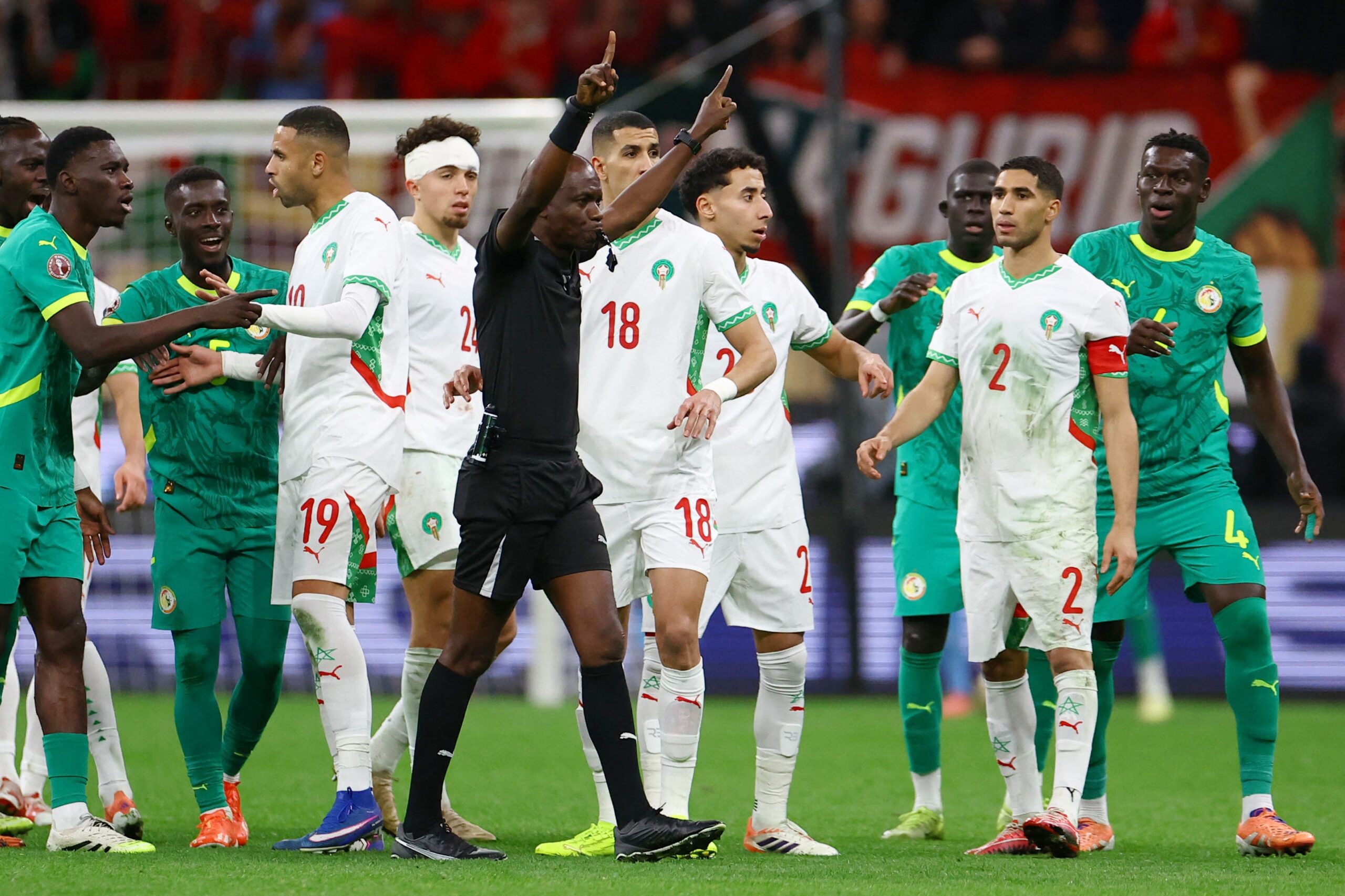
    The final whistle had already blown, the stadium in Dakar had already erupted, and Senegal had already written its name into the golden pages of African football history. Flags waved like restless oceans, drums echoed into the night, and a nation danced with the kind of joy that only football can deliver. The trophy had been lifted, kissed, and carried through the streets like a sacred symbol of triumph.

    And yet, somewhere between the confetti settling and the celebrations fading into memory, a question began to form, quiet at first, almost insignificant. Then it became impossible to ignore. What if the story was not over?

    Weeks passed, and then months and what had once felt like a sealed chapter began to reopen. Documents surfaced, appeals were filed, and conversations shifted from celebration to scrutiny. Morocco, a team that had walked the long road to the final only to fall short, was suddenly backed in the spotlight. Not on the pitch this time, but in boardrooms, in hearings, in the cold, procedural world where football meets law.

    The claim was bold. The implications were even bolder. Could a match already played be undone? Could a winner already crowned be questioned? Could history itself be rewritten? As the days stretched on, the continent watched. Fans argued in barbershops and buses, on timelines and talk shows. Some laughed it off, dismissing it as impossible. Others leaned in, drawn by the sheer audacity of it all. Because football, as it turns out, is not always decided in ninety minutes.

    And then, the unthinkable happened, after weeks of tension and months of waiting, Morocco was declared the rightful winner. Not through goals scored on grass, but through rulings delivered across polished tables. The announcement did not come with roaring crowds or flares lighting the sky. It came quietly, almost clinically. But its impact was anything but quiet.

    Senegal, the champions of the night, suddenly found themselves in a strange and surreal position. Victors, but no longer recognized as such. Celebrations that had once felt eternal now felt suspended in time, like a dream that someone had abruptly interrupted.

    What about Morocco? Their victory arrived not with the rush of adrenaline, but with the weight of controversy. A title won, yes, but wrapped in questions that refused to settle. So what now becomes of a trophy already lifted? Does it change hands like a misplaced artifact? Does it carry two stories, two truths, depending on who tells it? And what of the medals, the prize money, the memories etched into the hearts of players and fans alike?

    Do you return joy once it has already been lived?

    Do you rewrite history once it has already been celebrated?

    And perhaps the most unsettling question of all, who really won?

    Because in the end, football is more than decisions and declarations. It is emotion, it is moments, and it is the sound of a nation believing all at once. And those things, once created, are not so easily taken away. Not in ninety minutes. Not in two months. Not even after one final appeal.

  • Kenya Joins Africa’s Winter Olympics Push

    Kenya Joins Africa’s Winter Olympics Push

    By Joe Aura, aurajoe6@gmail.com

    Kenya has long defined itself at the Olympics through spikes, stopwatches and podium finishes on the track. At the Milano Cortina 2026 Winter Olympics, however, Team Kenya is making a deliberate statement: the country wants to be seen – and counted – beyond distance running.

    That ambition sits within a wider continental shift. Fourteen African athletes from eight countries are competing in northern Italy, more than double the six athletes from five nations who represented Africa at the Beijing 2022 Winter Games. It is a modest number by global standards, but a significant leap for a continent traditionally locked out of winter sport.

    While Kenya remains a global powerhouse in athletics, officials and athletes are increasingly pushing a broader Olympic identity. That message was underlined when marathon great Eliud Kipchoge was named Kenya’s flag bearer for the Winter Games – a powerful signal that Olympic ambition is no longer confined to the track.

    Kenya’s Winter Olympics presence, however, has not been without setback. Austria-based alpine skier Sabrina Wanjiku Simader, the country’s pioneer in women winter sports and a former PyeongChang 2018 Olympian, withdrew from the Milano Cortina Games shortly before competition began. Simader cited financial and mental strain after the government failed to refund approximately Sh12.16 million in allowances and expenses from previous international championships.

    She had come out of retirement in 2025 following assurances of support, including a Sh1.3 million budget request for the Games; support that ultimately did not materialise. Her withdrawal has reignited debate around institutional backing for non-traditional sports.

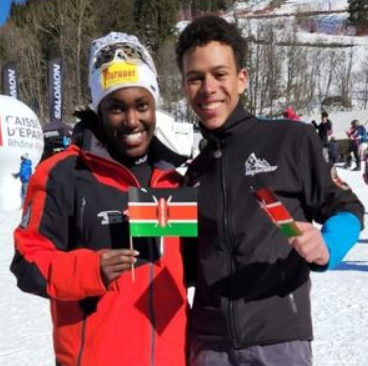
    Kenya’s flag on the slopes will now be carried solely by Issa Laborde Gachiringi, an 18-year-old alpine skier making his senior Olympic debut. Born and raised in France to a Kenyan mother, Laborde previously represented Kenya at the Gangwon 2024 Winter Youth Olympic Games and is scheduled to compete in the giant slalom on February 14, 2026. His appearance continues a legacy that began with Philip Boit, Kenya’s first Winter Olympian, who competed in cross-country skiing at the Nagano 1998 Games.

    South Africa leads the continental charge with a record five athletes, its largest Winter Olympic contingent ever. The country has historically been Africa’s winter sports trailblazer, becoming the first African nation to compete at the Winter Olympics in 1960 and later hosting the 2010 FIFA World Cup. Morocco, another early pioneer, first appeared at the Winter Games in 1968, while Senegal followed in 1984.

    Structural challenges remain stark. Only 15 of Africa’s 54 countries have ever sent athletes to the Winter Olympics. Warm climates, limited facilities and high costs mean most African winter athletes develop their skills abroad, often in Europe or North Africa.

    By contrast, Africa’s dominance at the Summer Games remains overwhelming – at Paris 2024 alone; African athletes won more medals than the total number of Africans who competed at the Beijing 2022 Winter Olympics.

    Still, progress is unmistakable. No African athlete has yet won a Winter Olympic medal, but Milano Cortina is less about immediate podiums and more about presence, pathways and possibility.

    For Kenya, stepping confidently beyond the track is part of a long-term vision – one that signals to Africa and the world that Olympic identity is evolving.

    For story pitches, commissioned writing, or collaborations, connect with Joe on LinkedIn: https://www.linkedin.com/in/aura-joe-digitalproducer/recent-activity/articles/


  • Kenya’s sporting Prowess

    Kenya’s sporting Prowess

    By Chelangat Caren,

    Kenya has been making waves in the sports arena, and it is not just about athletics. The country has produced world-class athletes who have dominated various disciplines, inspiring a nation and leaving an indelible mark on the global sports landscape.
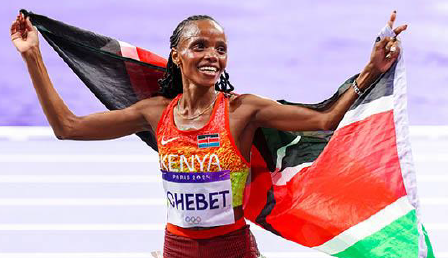
    In 2025, Kenyan athletes shone bright at the World Athletics Championships in Tokyo, finishing second overall with eleven medals, including seven golds. Beatrice Chebet’s double gold in the 5000m and 10,000m events was a highlight, cementing Kenya’s reputation as a distance running powerhouse. Faith Kipyegon also defended her 1500m title, adding to her impressive collection of medals.
    But it is not just about the women; the men are also making their presence felt. Emmanuel Wanyonyi won the men’s 800m gold, while Sabastian Sawe set course records in the London and Berlin Marathons. These achievements are a testament to Kenya’s depth of talent and dedication to sports.
    Beyond athletics, Kenyan teams are making strides in other sports. The Harambee Stars, Kenya’s national football team, delivered a stunning performance at the African Nations Championship (CHAN), earning a spot in the CAF Champions League. Rugby is also gaining popularity, with the Kenya Simbas delivering a spirited campaign at the Rugby Africa Cup.
    The country’s sports success is not limited to the field; it is also about the fans. Kenyans are known for their passion and energy, filling stadiums and cheering on their teams with unwavering support. The “Jaza Stadi” movement, which translates to “Fill the Stadium,” has become a cultural phenomenon, showcasing the nation’s love for sports.
    Kenya’s sporting achievements are a source of national pride, inspiring young athletes and fans alike. As the country continues to invest in sports infrastructure and development programs, the future looks bright for Kenyan sports.
    Some notable Kenyan sports personalities include Eliud Kipchoge, the marathon legend who broke the two-hour barrier; Faith Kipyegon, the middle-distance queen; and Victor Wanyama, the football star who played in top European leagues.
    As Kenya’s sports journey continues, one thing is clear: the nation’s passion for sports runs deep. With talent, dedication, and support, Kenyan athletes will keep pushing boundaries and inspiring generations to come. The baton has been passed; now it is time for the next generation to pick it up and run.
    In the words of Kenyan athletes, “Pole pole, Hatua kwa Hatua” – Slowly, Step by Step, Kenya will conquer the world of sports. Kenya’s sports story is one of resilience and triumph. As the nation celebrates its heroes, it is also paving the way for future champions. The journey is not just about winning medals; it is about igniting a fire that fuels dreams and inspires greatness.

  • Love at First Try: HSBC SVNS Division 2

    Love at First Try: HSBC SVNS Division 2

    By Joe Aura, aurajoe6@gmail.com

    Nairobi will trade roses for rugby this Valentine’s weekend as the HSBC SVNS Division 2 opens its global season at Nyayo National Stadium on February 14–15, 2026, blending elite sevens action with a festival atmosphere under the theme #LoveAtFirstTry.

    The two-day event marks a historic first for Kenya, hosting the opening leg of World Rugby’s second-tier sevens series. Fans will watch top international teams compete while enjoying live music, cultural showcases, food villages and sundowners -positioning the tournament as both a sporting spectacle and a social destination.

    Kenya fields both national sides on home turf: Kenya Shujaa in the men’s draw alongside the USA, Uruguay and Germany; and the Kenya Lionesses facing Brazil, China and Spain in the women’s competition. The Nairobi leg is expected to be pivotal early in the series as teams chase promotion momentum.

    The tournament carries special significance for the Daystar community. Daystar Falcons standouts Patrick Odongo and Clinton Amukwachi are currently in South Africa with the national setup preparing for the home leg. Odongo, a second-year student, has been one of Shujaa’s most exciting performers – making Nyayo a true homecoming.

    Tickets

    Tickets are available via TikoHub and M-Pesa, with student-friendly group options designed to pack the stands:

    • Regular (Advance): KSh 500, Gate: KSh 750
    • VIP (Advance): KSh 2,500, Gate: KSh 3,000
    • Mbogi Offer: Group of 7 for KSh 2,100 (about KSh 300 per person)
      Early-bird tickets from KSh 300 have largely sold out, but the mbogi bundles keep the weekend affordable for squads.

    Off the pitch, the festival feel gets a boost from a KSh 40 million injection by Tusker (Kenya Breweries Limited), promising a bigger music and cultural village. Performances by Jua Cali headline an entertainment lineup tailored for the university crowd.

    Rather than standing alone, the SVNS weekend fits neatly into Nairobi’s growing sports calendar. For students and runners, the Valentine’s rugby festival could serve as a high-energy warm-up ahead of the Laban Ayiro Run, scheduled for March 7, 2026 – extending the city’s momentum from contact sport to endurance challenge.

    For story pitches, commissioned writing, or collaborations, connect with Joe on LinkedIn: https://www.linkedin.com/in/aura-joe-digitalproducer/recent-activity/articles/

  • A Courtside Diary from the ITF W35 in Nairobi, Kenya

    A Courtside Diary from the ITF W35 in Nairobi, Kenya

    By Teddy Otieno tedootieno@gmail.com,

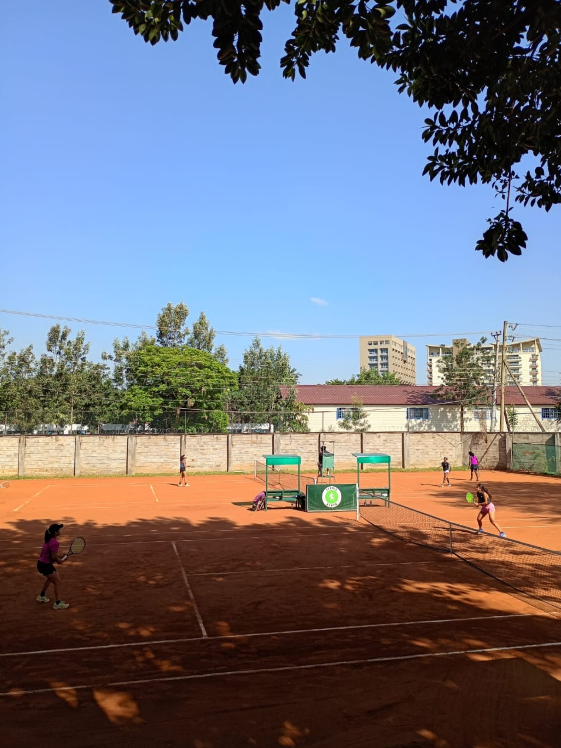
    The ITF W35 Tennis Tournament has been ongoing at Parklands Sports Club since January 5, and Saturday saw a huge turnout as Angela Okutoyi claimed both the singles and doubles titles. Riding on that momentum, I made my way to Parklands Sports Club on Tuesday, January 6, for day two of week two of the tournament. The W35 is part of the ITF World Tennis Tour, attracting rising professionals from across the globe while offering Kenyan players rare, high-level competition on home soil.

    I first went to the Parklands Tennis Courts along Wambugu Road—only to realise I was at the wrong location. The security guard at the gate pointed toward the road and said, “Take a left, then… do you know the police station?”

    I told him I didn’t.

    “Okay, doesn’t matter. Take a left, then a right, and you’ll see the place—Parklands Sports Club.”

    I thanked him and walked for about ten minutes before arriving at Gate B Of Parklands Sports Club. All four courts were busy, with singles and doubles matches happening simultaneously. I settled at Court 2, where Belgian player Valdevende was facing India’s Komal Nagare. Coincidentally, I was wearing the same Nike cap as Valdevende.

    I was on assignment to follow the Kenyan players in the doubles draw. Seventeen-year-old Stacy Yego was partnered with China’s Yan Shihong, facing Isabella Shinikova of Bulgaria and Lexue Xiao of China. Their match was on Court 3, far from the stands, which sit under a tree adjacent to Court 2 and make following the distant action difficult.

    I walked around to the back of the courts and sat behind the fence, right behind the action. A banner indicated the seats were reserved for coaches – a detail I chose to ignore, hoping no one would ask me to move. Beside me sat two Chinese men – one older gentleman I presumed to be Yan’s coach, and another who appeared to be a friend of Xiao. There was also a woman in sunglasses who frequently spoke to Shinikova in a foreign language.

    Shinikova and Xiao dominated the opening set, winning the first few games before play was briefly stopped when Xiao suffered a nosebleed. After receiving medical attention, they resumed and comfortably took the first set 6-1.

    The second set saw Stacy and Yan settle into the match. They played with more confidence, winning the opening two games. However, Shinikova and Xiao showed their experience, regrouped, and closed out the set 6-2 to seal the match.

    Afterwards, I caught up with Stacy and introduced myself as a sports writer. She looked exhausted, so I kept it brief. I ask for her thoughts on the game.

    “We weren’t used to each other, so the first set was tough,” she said. “The second set was better-we got more balls and started playing better.”

    I asked how doubles partnerships are formed at such tournaments, whether they are random.
    “No, it’s not random,” she explained. “You choose for yourself. There are many players here, so you get options.”

    Stacy had earlier lost her singles match on Monday to India’s Sravya Shindani, and the doubles defeat marked the end of her W35 campaign.

    Next up was the doubles match I was most keen to watch: Kenyan teenagers Hadassah Grace (17) and Faith Urasa (19) against India’s Saumya Vig and Yashaswini Panwar. The match was again on Court 3, forcing me to follow from the far side of the stands- an admittedly frustrating experience.

    The Indian pair were dominant, racing to a 6-0 win in the first set. Hadassah and Faith improved in the second, showing better coordination and fight, but ultimately fell 6-2, losing the match in straight sets. The result marked the end of the tournament for the only all-Kenyan doubles pairing.

    I approached Hadassah and Faith after the match. Initially hesitant, they relaxed once I assured them it wasn’t a video interview. Faith joked that I should speak to the winners “over there.” I told her winning or losing didn’t matter-my focus was on Kenyan players.

    “The first set was bad,” Faith admitted. “In the second, we tried to come back, but we lost momentum.”

    I asked why they chose to partner with each other. “We play together a lot,” she said. “That’s why.”

    It was a short conversation with two young players still getting used to media attention. Before leaving, I told Faith we would be rooting for her as she prepared for a tough singles match against Hungary’s Luca Udvardy on Wednesday.

    Although they came up short, players like Stacy Yego, Faith Urasa, and Hadassah Grace represent the next chapter of Kenyan tennis. Competing against seasoned international opponents at just 17 and 19 years old, the experience gained at the ITF W35 may ultimately prove more valuable than any single win.
     

  • Kenyan David Munyua Stuns the World at PDC World Championship

    Kenyan David Munyua Stuns the World at PDC World Championship

    By Joe Aura, aurajoe6@gmail.com,

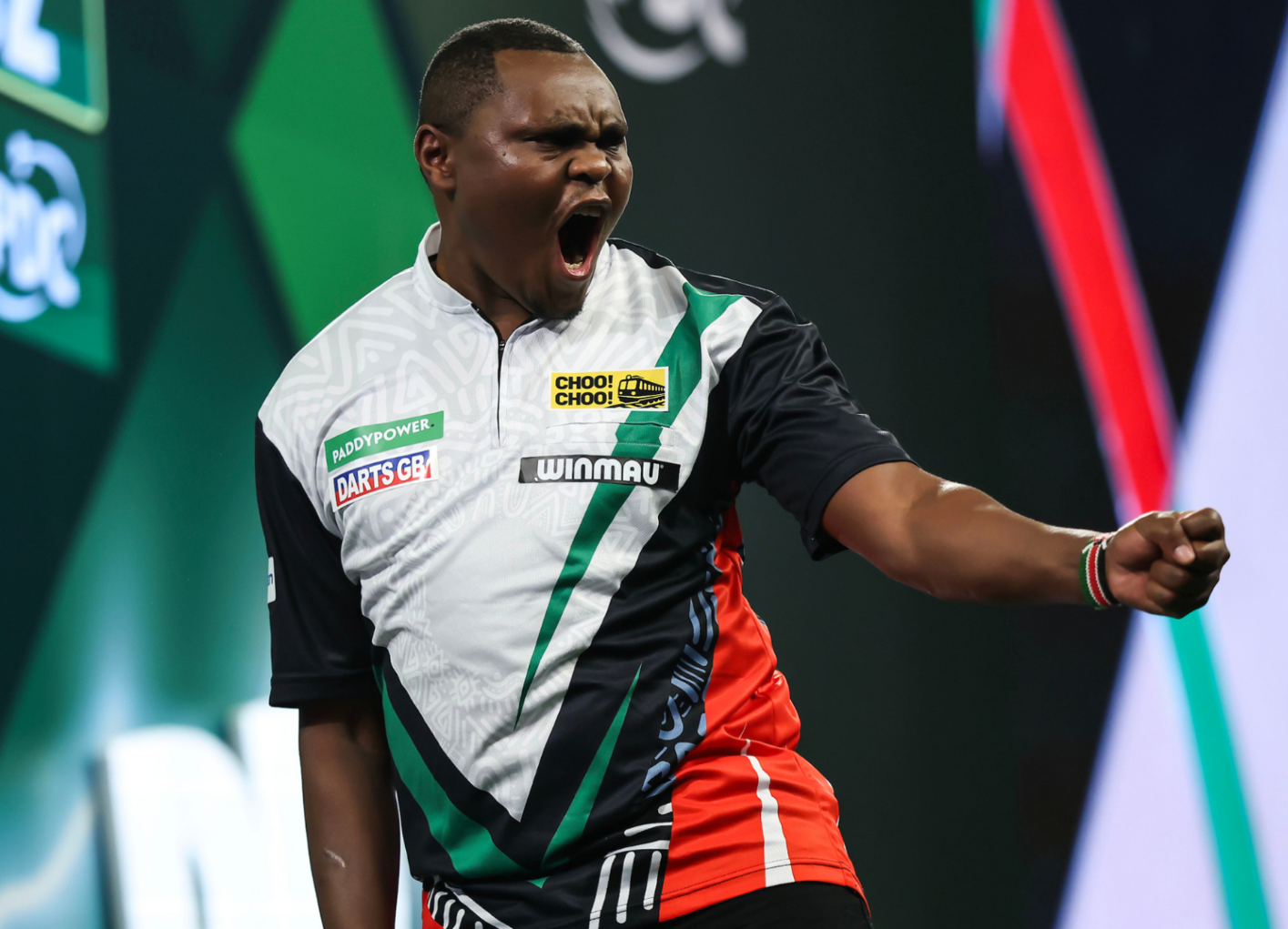
    Kenya announced itself on darts’ grandest stage on Thursday night as David Munyua produced one of the biggest upsets in PDC World Championship history, defeating world No. 18 Mike De Decker 3–2 at Alexandra Palace in London.

    The 30-year-old from Murang’a, a full-time veterinarian and part-time darts player, became the first African to win a match at the PDC Worlds after overturning a two-set deficit against the Belgian star. Munyua dramatically sealed the victory, landing a nerveless 135 checkout on the bullseye in the deciding set, despite De Decker posting the higher match average.

    “It’s a huge moment for Kenya and for Africa,” Munyua said after the match. “Nobody is guaranteed victory beforehand in sports, so I told myself I would give it my all.”

    Munyua’s journey to the world stage is as remarkable as the result itself. Just three years ago, he had never thrown a dart competitively. The introduction came in the most unlikely of places—a local bar, where a friend stepped up to the oche during a casual evening out. Curious, Munyua joined in. The next day, he bought a dartboard. Soon after, his friend encouraged him to try small local tournaments.

    “I was just playing because of friendships and sportsmanship,” Munyua has often said. Professional ambition was not the initial goal.

    Fast forward to 2025, and Munyua is Africa’s leading darts player. He qualified for the World Championship by winning the African Darts Group Qualifier, claiming six consecutive victories, including an 8–6 final win with an average of 83.16. His highest tournament average peaked at 86.82 in the quarter-finals, confirming his growing consistency.

    On the PDC stage, Munyua showed remarkable composure for a debutant. After losing the first two sets to De Decker—the reigning World Grand Prix champion—he did not panic. He survived three match darts in the fourth set, produced a perfect six-dart start in one leg, and steadily clawed his way back into the contest.

    By the time the final set arrived, the Kenyan looked anything but overawed. With the score finely balanced, Munyua stepped up and delivered the decisive 135 checkout, igniting the Alexandra Palace crowd and writing his name into darts folklore.

    “It was do-or-die. I could not feel my hands, but in my mind, I wanted to show the whole world that there is talent in Africa.”

    Statistically, Munyua’s rise has been rapid. Over the past 12 months, he has averaged 75.05, recorded 21 maximum 180s, achieved a highest checkout of 153, and won 56.39 per cent of legs overall—figures that underline his competitiveness at the elite level.

    Nicknamed “Why Not,” Munyua walked out to the oche to Mwaki by Sofiya Nzau and Zerb. He will face Japanese Motomu Sakau next in the second round. As Munyua continues a journey that began in a bar, he has now captured the imagination of a continent. His journey is proof that sometimes, all it takes is the courage to ask, why not?

    For story pitches, commissioned writing, or collaborations, connect with Joe on LinkedIn: https://www.linkedin.com/in/aura-joe-digitalproducer/recent-activity/articles/