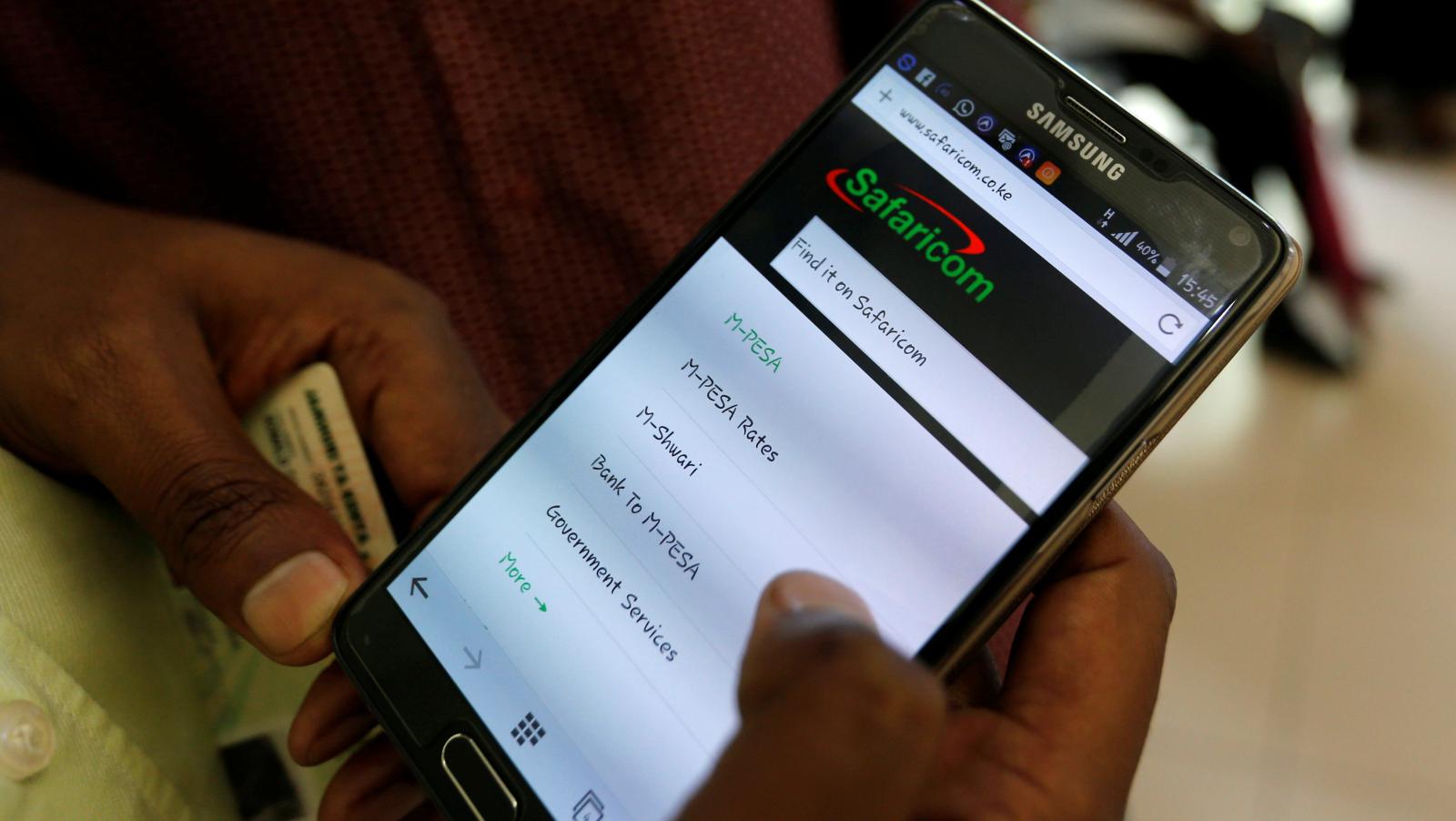
On Tuesday, leading telecommunication company, Safaricom, announced new MPESA charges that are 45% reduced, effective January 1, 2021.
“As guided by the Central Bank of Kenya and taking into account the Principles on the pricing of mobile money services, we have taken the decision to reduce our MPESA tariffs by up to 45% for lower value transaction bands,” the company said in a notice.
The company says that the reductions will affect more than 90% of customer transactions when sending money.
It will cost Ksh.6 to send Ksh.101-500, down from Ksh.11, and cost Ksh.22 down from Ksh.41 to send Ksh.1501- 2500.
All transactions of Ksh.100 and below remain free.
Moreover, customers will continue to enjoy free transactions between MPESA and bank accounts.
Safaricom says this is in consideration of the expiry of COVID reliefs of free MPESA transactions. The company had previously announced the expiry to take place beginning next year.
They have also maintained the Ksh.300,000 limit of amount to transact in a day, which was introduced as part of the COVID reliefs.
According to Chief Executive Officer, Peter Ndegwa, the price cuts are permanent and will enable more than 2.6 million users to enjoy lower costs when sending money.
“Our new, reduced tariffs will equally apply to transactions for micro-Businesses under our new Pochi La Biashara service, and for Lipa Na M-PESA businesses using the Transacting Till to make payments,” he added.
Safaricom CEO, Peter Ndegwa. Photo courtesy of The Star.
The company is betting on volumes to cover for the low fees after the waiver of charges which cost them Ksh.9 billion in the six months to June. This saw the firm report a 6% drop in net profit to Ksh.33.07 billion, the first drop in nine years.
The reliefs on mobile money payments were introduced on March 16, 2020, to encourage cashless transactions and control the spread of coronavirus.
AFRICA’S LEADING WOMEN SERIES: African women who’ve served/are serving their countries in the capacities of: President, Prime minister and/or Vice President.
Know them, appreciate them and remember them.
#THEAFRICANLEADINGWOMENSERIES
Initiated by Nyokabi Ng’ang’a, for The Involvement Newspaper.
PART 8(Final Part of the Series)
By: Nyokabi Ng’ang’a (Leshnyokabi@gmail.com)
Thumbnail photo created by Nyokabi Ng’ang’a
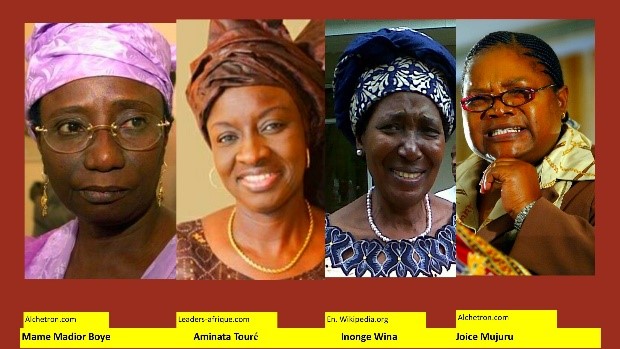
Mame Madior Boye: Senegal’s 1st female Prime Minister.
Photo courtesy of alchetron.com
Mame Madior Boye was born in 1940 in Saint-Louis, Senegal.
A lawyer by profession, she gained an education on her area of expertise from the Faculty of Legal and Economic Sciences in Dakar and the National Center for Judicial Studies in Paris. This paved her way, to become the first female President of the Association of Senegalese Lawyers from 1975-1990.
Later in the year 1990, she took the position of Director of Engagements at the West Africa Banking Company, serving the organization till the year 2000.
After Abdoulaye Wade was elected President of Senegal in 2000, she was appointed Minister of Justice and a year later, following the dismissal by President Wade, Prime Minister Moustapha Niasse resigned and Mame Madior was then appointed the new Premier by the President. This appointment was the first in the country’s history in female occupancy.
However, in 2002, Mame Madior was dismissed as Premier by President Wade, reportedly due to ‘the lack of enough response’ on the Joola maritime tragedy- often referred to as a sea disaster ‘worse than titanic’- that caused the deaths of thousands.
Luck seemingly on her side, she was appointed African Union’s Special Representative for the promotion of the protection of civilians in armed conflicts, two years later, by Mali’s 4th President and then, Chairperson of the African Union Commission- Alpha Oumar Konaré. However, with changing tides, a judge in France issued an arrest warrant on her, alongside other 8 persons, in 2008, in connection to the Joola disaster. Though this didn’t happen, as the Senegalese government casted off the Judge’s arrest warrant issue and instead, prosecuted the judge in mention.
Dr. Aminata Touré: Senegal’s 2nd female Prime Minister.
Photo courtesy of leaders-afrique.com
Dr. Aminata Touré was born in 1962 in her country, Senegal.
A PhD holder in International Business, Administration and Finance from the University of Burgundy, France; her areas of expertise, as publicly recorded, revolve around: Economics, Administration/Governance and Gender Affairs.
Before being appointed Prime Minister by President Macky Sall in 2013, she worked at the United Nations Populations Fund (UNFPA) and of note, as the Director of Gender and Human Rights World Department at the UN subsidiary, in New York, from 2009-2012. Shortly after, she was appointed Minister of Justice by President Sall, where she served for a year or so. As Minister of Justice, she was credited for her anti-corruption campaigns, which saw the arrest of prominent people in Senegal and made her gain the title: ‘The Iron Lady’.
In 2013, as earlier registered, she was appointed Premier and served her country at large, for nearly a year, before her dismissal authorized by President Sall on July 2014, after she failed to win local elections in Dakar.
Nonetheless, she continued working under President Sall’s administration, as his Special Envoy for Internal and External Affairs and on his election observatory team/mission; which missioned in various African countries, to mention: Kenya, Mauritius, Ivory Coast and Liberia.
Joice Mujuru: Zimbabwe’s 1st female Vice President.
Photo courtesy of alchetron.com
Joice Runaida Mujuru was born in the year 1958, in her country, Zimbabwe.
She is a renowned guerrilla war veteran who fought against Ian Smith’s white Rhodesian minority government, alongside other notable persons of/in Zimbabwe’s history.
With a Bachelor’s and a Master’s degree in Management and Entrepreneurial Studies, all gotten from one of her Country’s Universities, she set out to be, as registered, the youngest cabinet minister in post-colonial government, heading the Ministry of Youth, Sports and Recreation, from 1980-1985. Prior to this, it’s noted, she was a Member of Parliament for Mt. Darwin West Parliamentary Seat.
In 1985, she was appointed Minister of State in the Prime Minister’s Office, where she served for five years, and close afterward, chosen as Minister of Community Development, Co-operatives and Women’s Affairs, where she served for four years.
From 1992 to 1996, she became Governor of Mashonaland Central (a province in Zimbabwe) and later, she was appointed Minister of Information, Posts and Telecommunications. In this post, she served Zimbabwe for a year and later took the post of Minister for Rural resources and Water Development in 1997-2004.
After the passing of Vice President Simon Muzenda in 2004, the Women’s league of the Zimbabwe African National Union- Patriotic Front (ZANU-PF) – the country’s leading political party in which the late President Mugabe belonged to-, convened a meeting and pushed forth for the appointment of a woman, Joice Mujuru to this regard, as the new Vice President.
This move, however constrained, was accepted and implemented by the late President Mugabe, causing Joice Mujuru to be the first woman to head such a position in the country’s history. Ten years down the line, however, following plotting suspicions and claims, President Mugabe ousted Ma’am Joice from power. This also resulted to her membership-loss in the ZANU-PF party.
To learn more about Ma’am Joice Mujuru, click here.
Inonge Mutukwa Wina: Zambia’s 1st female Vice President.
Photo courtesy of en.wikipedia.org
Inonge Mutukwa was born in 1941 in her country, Zambia.
A holder of a B.A degree in History and Sociology from the University of Zambia- as her career’s starter- she has featured in many NGO boards and portfolio committees of her government.
In 2001, Ma’am Inonge Wina contested for the Nalolo Constituency Parliamentary seat under the United Party for National Development (UNDP), which to her credit and to that of her then party, she won. Serving in this post for close to six years, she re-contested under the United Liberal Party- a splinter of the UNDP-, and sadly, lost.
Five years later, in 2011, she contested once more and won, but, under the country’s ruling Patriotic Front (PF) Party ticket. In the same year, purportedly, she was appointed by the late President Michael Sata, as the Minister of Chiefs and Traditional Affairs, where she served her country in that post for 3 years, and later in 2014, appointed Minister of Gender and Child Development.
In the year 2015, following the win of President Edgar Lungu, she was appointed the Vice President of the Republic of Zambia, making her the first woman to occupy such a position in her country. However, resignation calls from her post, as of this year, are high following the claims of her old age and COVID-19 contraction.
To learn more about Ma’am Inonge Wina, a Zambian revered human rights activist, click here.
Others who deservingly need a mention for leading their countries, though tentatively, in the aforementioned positions are:
Ivy Matsepe- Casaburri of South Africa, who led her country as acting President twice. One, in 2005, when both the President and Vice President were out of the country, and two, when President Thabo Mbeki resigned and close afterward, Kgalema Motlanthe assumed Presidency. She held these two similar roles for four days and 14 hours, respectively.
Thokozani Khupe of Zimbabwe, who led her country as Deputy Premier in the year 2009 to the year 2013.
Queen Gwamile of the Kingdom of eSwatini, who led her country (Kingdom) as its regent before King Sobhuza the Second, King Mswati the third’s father, become of age and fit to lead the Kingdom as its heir.
Queen Dzeliwe of the Kingdom of eSwatini, who led her country (Kingdom), as well, on behalf of King Mswati the third, who was then young and unfit to occupy the role of King.
If there is anyone who isn’t captured in this series and deservingly needs a mention, feel free to write to us or post their name on the comment box.
Daystar University has today held a career talk on ethical business practices in the market place. The event hosted delegates from connecting business and market place to Christ (CBMC) on what was termed as a pre-convention on the African chapter.
The ICT theatre at the main campus was packed with curious students and staff members ready for insights about the business world, and where the latter meets Christianity and ethics. Godwin Roger, a political science graduate and a serial entrepreneur from the United States of America was the keynote speaker.
“You don’t have to do anything you don’t want to do […] People that say ‘No’ are focused people,” Rogers said as he emphasized the need to finding your passion, talents, and gifts as you venture into business.
Further, he emphasized that Self-awareness, Investing in knowledge, taking action, developing skills and cultivating good habits are imperative traits that individuals need to develop to stay atop the business ladder.
“Build relationships, people are not a transaction, people are people.” Rogers clarified. Being in business for the last 20 years, this serial investor admitted to having had zero budgets on marketing. His secret, he said, was building and maintaining good relationships with people.
“I have never failed my entire life […] failure happens when you stop moving forward.” Said Rogers in response to a question from one of the audiences about handling failure. Setting your priorities right – God, Family, Job/Business, Ministry and Fun was, according to Rogers, the recipe to a balanced.
“Pick whoever you want to work with… and don’t discount your value.” Said Rogers in his parting shot.
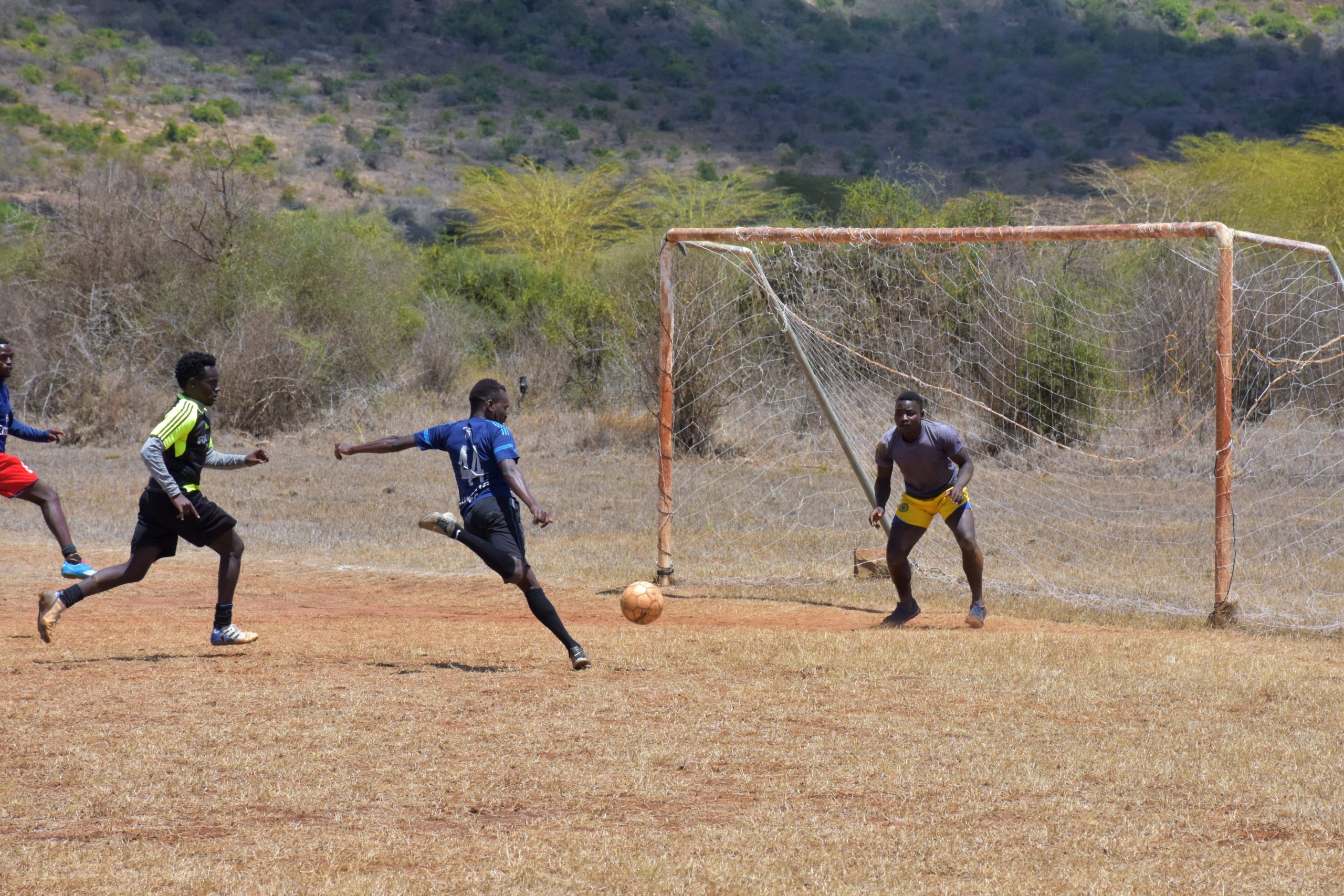
Sikukuu ya Moi chuoni Daystar ilisherehekewa kwa mbwembwe, vifijo na nderemo kwani katika uga wa “Santiago Barna Betheli” kama unavyojulikana na wacheza kandanda wengi, mchuano mkubwa ulikuwa ukiendelea. Mchuano huo uliandaliwa na wanafunzi wacheza kandanda ikiwemo; Walter Nalwa, Nicholas Atulo Snr, Cedrick na Dadiseh Olwaga ambao walinuia kujiburudisha katika mchezo huo wa miguu.
Mchuano huo ulijumuisha timu sita zikiwemo: Blueboys, Rawa, Buffoons, Bomboclats, DCF handball na Fimbu. Timu hizi zilimenyana vilivyo ili kushinda zawadi murwa ambayo ilikuwa ni mbuzi mzima. Timu za Buffoons na Rawa ndizo zilifungua uga huo ambao ulikuwa na utelezi kufuatia mvua kubwa iliyokuwa imenyesha usiku wote.
Timu ya Buffoons ilijikakamua katika dakika za kwanza huku Caleb Msando akiifungia timu hiyo bao la kwanza naye Nicholas Atulo Snr akifunga bao lao la pili. Timu ya Rawa ilijikakamua katika kipindi cha lala salama ambapo John Lemaiyan aliifungia Rawa bao lao la kwanza. Kitengo hicho cha kwanza cha mchezo kilipotamatika, Buffoons walikuwa wamefunga mabao mawili kwa moja.
Mashabiki wa timu ya Buffoons walijaa uwanjani wakiimba nyimbo za ushindi kwani timu hiyo ingemchinja mbuzi kama zawadi ya ufanisi wao iwapo wangewashinda wenzao kwenye semifinali. Baada ya dakika chache za mapumziko, timu ya DCF handball ilijitosa uwanjani kumenyana na wachezaji wa timu ya Fimbu. Uzoefu mkuu katika mpira wa mikono wa timu ya DCF handball ulionekana kuwapa mkono uwanjani. Hata hivyo baada ya dakika kumi na tano Wallace kutoka timu ya Fimbu alifunga bao la kwanza. Baada ya dakika zingine tano, DCF handball ilisawazisha kupitia mchezaji Ephantus.
Baada ya nusu wakati wa mchezo huo, timu ya Fimbu ilifunga bao lingine ambalo liliwawezesha kuibuka washindi katika kitengo hicho kwa mabao mawili kwa moja. Timu ya Blueboys vilevile ilichuana na timu ya Rawa huku wakifunga bao lao la kwanza ambalo lilikuwa la pekee katika mchezo huo hivi basi kuibuka washindi dhidi ya Rawa.
Hata ingawa jua lilikuwa mtikati, wachezaji wa Bomboclat waliingia ugani kumenyana na DCF handball. Yasemekana kuwa wachezaji wa Bomboclat walikuwa wamekesha wakijitayarisha kwa mchuano huo wa kipekee. Katika dakika za kwanza, Bomboclat ilifunga bao lao la kwanza na baadaye kufunga la pili. DCF handball ilijizolea nunge hivi basi Bomboclat kuibuka washindi.
Isitoshe, kabla ya semi fainali, Bomboclat ilichuana na Fimbu na wakailaza Fimbu bao moja kwa nunge. Timu zilizofuzu kwenye semi fainali ni Fimbu, Buffoons, Bomboclat na Blueboys. Mechi ya kwanza katika semi fainali ilikuwa kati ya Buffoons na Fimbu. Buffoons walilazwa bao moja la kufunga virago baada ya kucheza kwa ukakamavu mwingi sana.
Nyuso za wachezaji wa timu ya Buffoons zilijaa simanzi kwani mbuzi alikuwa amewakwepa. Lisilobudi hubidi, Buffoons walidondolewa kwenye mchuano wakabaki kuwa mashabiki tu. “Ni uchungu sana mama kubeba mimba tumboni kwa miezi tisa halafu anampoteza mwana wake. Nasikitika sana kuwa tumeshindwa,” Duncan Olile, kipa wa timu ya Buffoons alisema.
Timu za Bomboclat na Blueboys zilichuana kwenye mchezo wa pili katika semi fainali huku Bomboclat ikiibuka mshindi baada ya kuilaza Blueboys mabao mawili kwa nunge. Washindi wa semi fainali walikuwa Bomboclat na Fimbu. Wakati ukiwa saa kumi na mbili kamili, mchuano kati ya timu hizi mbili ulianza huku Bomboclat ikifunga mabao mawili mida ya dakika za kumi na tano za kwanza. Japo Fimbu iling’ang’ana kiudi na uvumba kujizolea angalau bao moja, jitihada zao hazikuzaa matunda kwani katika kipindi cha pili cha mchezo huo, Bomboclat ilifunga bao lingine. Bomboclat wakafunga mabao matatu kwa nunge.
Mbwembwe na shamrashamra zilijaa uwanjani wakati ambapo wachezaji wa Bomboclat walipokabidhiwa mbuzi wao. Wachezaji waliachwa ugani wakisherehekea ushindi wao huku mashabiki wakiungana nao kushangilia ushindi wao.
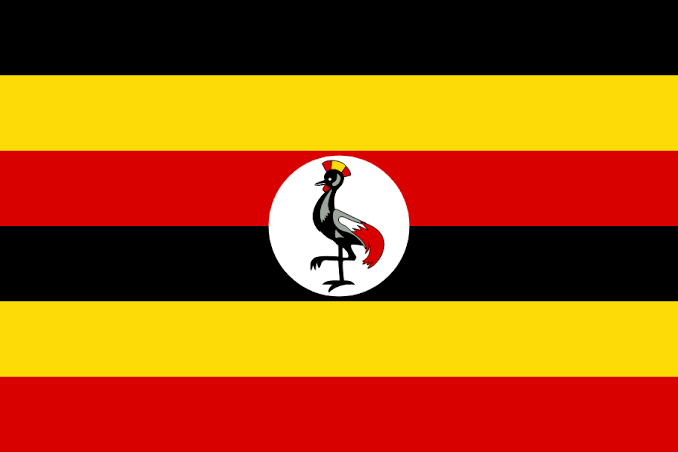
Uganda has been recorded as the country hosting the largest number of refugees in Africa with 1.3 million refugees. It is also the third largest country in the world.
The Ugandan approach towards the refugees has been termed as a good lead especially to the other host countries. According to a new report released by the World Bank Group says that as much these countries are supporting refugees, there is need to improve the social and economic status of the countries hosting the refugees and refugees too.
According to the report given World Bank Group, Uganda has been progressing on helping the refugees, whereby the refugees’ policies with support from humanitarian partners have managed to give equal social services access as the host where sometimes they enjoy more of the services than the host communities.
“The people of Uganda have been incredibly generous towards refugees, and this generosity of the host communities should be recognized by supporting them to have a higher quality of life. This study provides an evidence-based understanding of the living conditions of both refugees and hosts, which we expect will inform policy and programming for the national refugee response,” Tony Thompson, World Bank Country Manager for Uganda said.
The report done by World Bank Group shows that about 95 percent of refugees and 66 percent of the host have access to improved water but the access to electricity for both is 50 percent. However, both can access health facilities as well as improved sanitation, although this is made easier by the Non-Governmental Organization.The report also shows that refugees remarkably contribute to the local economy, by purchasing goods and services in the local markets and operating businesses.
However, both can access health facilities as well as improved sanitation, although this is made easier by the Non-Governmental Organization.The report also shows that refugees remarkably contribute to the local economy, by purchasing goods and services in the local markets and operating businesses.
However, 48 percent of refugees live in poverty this is because more than 50 percent depend on humanitarian support, due to their inability to generate income because they do not have sills or are not taken through trainings.
The report given recommendations on some measures to be taken in order to improve self-support of refugees and also communities that are hosting them improve their living conditions, supporting Ugandan economy as well. This will be achieved by increasing the agricultural productivity by providing inputs as well as creating job opportunities.
Mikoba ya Melina Gold, ninashona kwa kutumia ngozi. Utengenezaji wa mikoba hii ilianza mwaka wa 2019 Februari huku lengo langu likiwa kuutuza usanii na upekee wa vitu vya Kenya. Ushonaji wa mikoba hii hutumia ngozi na mshoni wangu ndiye hukarabati usanii kadha wa kadha.
TUELEZE kwa ufupi kukuhusu
Jina langu ni Melina Gold na mimi ni mwanafunzi wa mwaka wa nne katika chuo kikuu cha Daystar. Ninafanya shahada yangu katika mawasiliano kitengo cha uhusiano wa umma na nyongeza ya masomo katika saikolojia.
NINI kilikuchochea kuupenda kushona mikoba?
Ushoni wangu unanuia kuhamasisha wakenya kupenda na kuonea fahari mikoba ya Kenya kwa hivyo nikachukua jukumu hili kuzitengeneza mikoba ambayo itafifisha uduni wa bidhaa za Kenya. Hali kadhalika, nilitaka kuwazindua wanabiashara kujikita katika utengenezaji wa mikoba ili kuongeza mikoba yenye asili ya Kenya kwenye soko.
NI changamoto zipi unakumbana nazo katika ushoni huu?
Kutompata mshoni ambaye amebobea katika ushoni, kutowajibika kwa washoni ambao aghalabu hutumia ngozi hii kushona bidhaa nyingine zao bali si mikoba yangu, kutopata ngozi hii ya kutumia katika ushoni na kutopata watu ambao wanamaono sawa na yangu katika utengenezaji huu wa mikoba.
MIKOBA yako ni ya aina gani?
Melina Gold ni mikoba ambayo hutumia ngozi.
UNAWASHAURI vipi wanabiashara chipukizi?
Wasitegemee wanadamu kwani aliyemfunza chui kumla binadamu ni mtu. Pili waangaze maono yao kwa kina na wasiangeme. Mwisho wawe wenye bidii katika kuhakikisha biashara zao zimekua.
Welcome to The Involvement online blog for the latest and past Involvement issues. This initiative will enable those who cannot access the print copy to read, comment, give views and opinions concerning our content.