Author: Champe

  • AFRICA’S LEADING WOMEN SERIES:

    AFRICA’S LEADING WOMEN SERIES:

    AFRICA’S LEADING WOMEN SERIES: African women who’ve served/are serving their countries in the capacities of: President, Prime minister and/or Vice President.

    Know them, appreciate them and remember them.

    #THEAFRICANLEADINGWOMENSERIES

    Initiated by Nyokabi Ng’ang’a, for The Involvement Newspaper.

    PART 8 (Final Part of the Series)

    By: Nyokabi Ng’ang’a (Leshnyokabi@gmail.com)

    Thumbnail photo created by Nyokabi Ng’ang’a

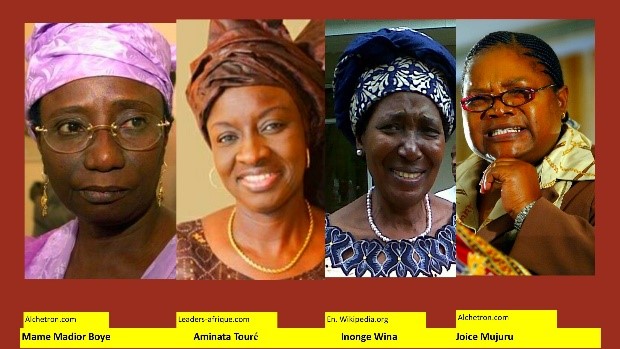
    Mame Madior Boye: Senegal’s 1st female Prime Minister.

    Photo courtesy of alchetron.com

    Mame Madior Boye was born in 1940 in Saint-Louis, Senegal.

    A lawyer by profession, she gained an education on her area of expertise from the Faculty of Legal and Economic Sciences in Dakar and the National Center for Judicial Studies in Paris. This paved her way, to become the first female President of the Association of Senegalese Lawyers from 1975-1990.

    Later in the year 1990, she took the position of Director of Engagements at the West Africa Banking Company, serving the organization till the year 2000.

    After Abdoulaye Wade was elected President of Senegal in 2000, she was appointed Minister of Justice and a year later, following the dismissal by President Wade, Prime Minister Moustapha Niasse resigned and Mame Madior was then appointed the new Premier by the President. This appointment was the first in the country’s history in female occupancy.

    However, in 2002, Mame Madior was dismissed as Premier by President Wade, reportedly due to ‘the lack of enough response’ on the Joola maritime tragedy- often referred to as a sea disaster ‘worse than titanic’- that caused the deaths of thousands.

    Luck seemingly on her side, she was appointed African Union’s Special Representative for the promotion of the protection of civilians in armed conflicts, two years later, by Mali’s 4th President and then, Chairperson of the African Union Commission- Alpha Oumar Konaré. However, with changing tides, a judge in France issued an arrest warrant on her, alongside other 8 persons, in 2008, in connection to the Joola disaster. Though this didn’t happen, as the Senegalese government casted off the Judge’s arrest warrant issue and instead, prosecuted the judge in mention.

    To learn more of Mame Madior, click here.

    Dr. Aminata Touré: Senegal’s 2nd female Prime Minister.

    Photo courtesy of leaders-afrique.com

    Dr. Aminata Touré was born in 1962 in her country, Senegal.

    A PhD holder in International Business, Administration and Finance from the University of Burgundy, France; her areas of expertise, as publicly recorded, revolve around: Economics, Administration/Governance and Gender Affairs.

    Before being appointed Prime Minister by President Macky Sall in 2013, she worked at the United Nations Populations Fund (UNFPA) and of note, as the Director of Gender and Human Rights World Department at the UN subsidiary, in New York, from 2009-2012. Shortly after, she was appointed Minister of Justice by President Sall, where she served for a year or so. As Minister of Justice, she was credited for her anti-corruption campaigns, which saw the arrest of prominent people in Senegal and made her gain the title: ‘The Iron Lady’.

    In 2013, as earlier registered, she was appointed Premier and served her country at large, for nearly a year, before her dismissal authorized by President Sall on July 2014, after she failed to win local elections in Dakar.

    Nonetheless, she continued working under President Sall’s administration, as his Special Envoy for Internal and External Affairs and on his election observatory team/mission; which missioned in various African countries, to mention: Kenya, Mauritius, Ivory Coast and Liberia.

    To learn more of Dr. Aminata, click here.

    Joice Mujuru: Zimbabwe’s 1st female Vice President.

    Photo courtesy of alchetron.com

    Joice Runaida Mujuru was born in the year 1958, in her country, Zimbabwe.

    She is a renowned guerrilla war veteran who fought against Ian Smith’s white Rhodesian minority government, alongside other notable persons of/in Zimbabwe’s history.

    With a Bachelor’s and a Master’s degree in Management and Entrepreneurial Studies, all gotten from one of her Country’s Universities, she set out to be, as registered, the youngest cabinet minister in post-colonial government, heading the Ministry of Youth, Sports and Recreation, from 1980-1985. Prior to this, it’s noted, she was a Member of Parliament for Mt. Darwin West Parliamentary Seat.

    In 1985, she was appointed Minister of State in the Prime Minister’s Office, where she served for five years, and close afterward, chosen as Minister of Community Development, Co-operatives and Women’s Affairs, where she served for four years.

    From 1992 to 1996, she became Governor of Mashonaland Central (a province in Zimbabwe) and later, she was appointed Minister of Information, Posts and Telecommunications. In this post, she served Zimbabwe for a year and later took the post of Minister for Rural resources and Water Development in 1997-2004.

    After the passing of Vice President Simon Muzenda in 2004, the Women’s league of the Zimbabwe African National Union- Patriotic Front (ZANU-PF) – the country’s leading political party in which the late President Mugabe belonged to-, convened a meeting and pushed forth for the appointment of a woman, Joice Mujuru to this regard, as the new Vice President.

    This move, however constrained, was accepted and implemented by the late President Mugabe, causing Joice Mujuru to be the first woman to head such a position in the country’s history. Ten years down the line, however, following plotting suspicions and claims, President Mugabe ousted Ma’am Joice from power. This also resulted to her membership-loss in the ZANU-PF party.

    To learn more about Ma’am Joice Mujuru, click here.

    Inonge Mutukwa Wina: Zambia’s 1st female Vice President.

    Photo courtesy of en.wikipedia.org

    Inonge Mutukwa was born in 1941 in her country, Zambia.

    A holder of a B.A degree in History and Sociology from the University of Zambia- as her career’s starter- she has featured in many NGO boards and portfolio committees of her government.

    In 2001, Ma’am Inonge Wina contested for the Nalolo Constituency Parliamentary seat under the United Party for National Development (UNDP), which to her credit and to that of her then party, she won. Serving in this post for close to six years, she re-contested under the United Liberal Party- a splinter of the UNDP-, and sadly, lost.

    Five years later, in 2011, she contested once more and won, but, under the country’s ruling Patriotic Front (PF) Party ticket. In the same year, purportedly, she was appointed by the late President Michael Sata, as the Minister of Chiefs and Traditional Affairs, where she served her country in that post for 3 years, and later in 2014, appointed Minister of Gender and Child Development.

    In the year 2015, following the win of President Edgar Lungu, she was appointed the Vice President of the Republic of Zambia, making her the first woman to occupy such a position in her country. However, resignation calls from her post, as of this year, are high following the claims of her old age and COVID-19 contraction.

    To learn more about Ma’am Inonge Wina, a Zambian revered human rights activist, click here.

    Others who deservingly need a mention for leading their countries, though tentatively, in the aforementioned positions are:

    • Ivy Matsepe- Casaburri of South Africa, who led her country as acting President twice. One, in 2005, when both the President and Vice President were out of the country, and two, when President Thabo Mbeki resigned and close afterward, Kgalema Motlanthe assumed Presidency. She held these two similar roles for four days and 14 hours, respectively.
    • Thokozani Khupe of Zimbabwe, who led her country as Deputy Premier in the year 2009 to the year 2013.
    • Queen Gwamile of the Kingdom of eSwatini, who led her country (Kingdom) as its regent before King Sobhuza the Second, King Mswati the third’s father, become of age and fit to lead the Kingdom as its heir.
    • Queen Dzeliwe of the Kingdom of eSwatini, who led her country (Kingdom), as well, on behalf of King Mswati the third, who was then young and unfit to occupy the role of King.

    If there is anyone who isn’t captured in this series and deservingly needs a mention, feel free to write to us or post their name on the comment box.

    #THEAFRICANLEADINGWOMENSERIES

    THE END
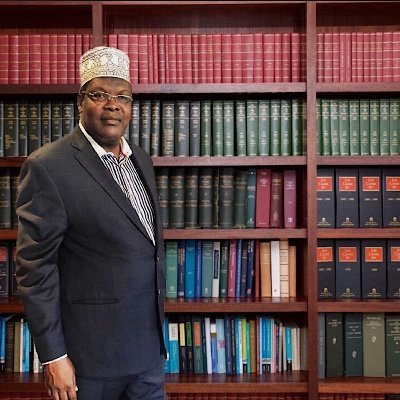
  • Miguna announces gubernatorial candidature for Nairobi by-election

    Miguna announces gubernatorial candidature for Nairobi by-election

    By: Muhanguzi Tola (tolakofa1@gmail.com)

    Thumbnail photo courtesy of Twitter

    Political activist cum lawyer Miguna Miguna on Saturday, December 19 expressed his interest in the Nairobi gubernatorial seat following the impeachment of Governor Mike Sonko.

    The exiled author who had vied for the same seat in 2017 on an independent ticket stated via twitter that the decision comes after receiving legal advice from constitutional lawyer Waikwa Wanyoike.

    “Having received competent legal advice…I Miguna Miguna, a Kenyan citizen by birth and registered voter in Nairobi, hereby declare my candidature for the position of Governor of Nairobi in the upcoming by-election,” he declared.

    The fiery lawyer had on Friday taken to his twitter account to criticize the ousted governor, claiming that the latter had been imposed on Nairobians by President Uhuru Kenyatta, as he quoted his statements from the 2017 gubernatorial debate.

    “My friend Sonko is looting every land in Nairobi. He has a criminal record from Mombasa where he was jailed because of fraud, forgery and drug dealing,” claimed Miguna during the debate held at Daystar University.

    Sonko’s Impeachment

    Former Nairobi Governor, Mike Sonko. Photo courtesy of the-star.co.ke

    The seat fell vacant after the ouster of former Governor Mike Sonko by the senate on December 17, on accounts of gross violation of the constitution or any other law, abuse of office, gross misconduct and crimes under national law.

    Nairobi county assembly speaker, Benson Mutura, takes over as interim governor given the absence of a deputy governor since the resignation of Polycarp Igathe in January, 2018. According to Article 182(4) of the constitution, the speaker of the county assembly shall act as county governor with an election to the office of county governor being held within sixty days after the speaker assumes the office of county governor. 

    The speaker’s swearing-in ceremony that had been scheduled for Friday 18 had to be postponed following the late arrival of the judge assigned to preside over the ceremony.

    Reactions Following Announcement

    Kenyans have taken to twitter to react to offer their thoughts, with most of their sentiments directed towards the self-proclaimed general of the National Resistance Movement (NRM). Notable was blogger Robert Alai’s remarks which warned Nairobians against voting for the ‘general’.

    “Replacing Sonko with Miguna is like replacing Wahome of Helicopter with Kanyari. Mad men! Zero work!” stated Alai.

  • Daystar to Retain Online Classes in January 2021

    Daystar to Retain Online Classes in January 2021

    By: Sumaya Hussein (husseinsumaya1@gmail.com)

    Thumbnail photo courtesy of Daystar University

    Daystar University will continue administering classes online, as a few physical classes will be taking place in the campuses come January 2021.

    In an email sent to the school on Monday, only nursing students, science students and those admitted during the October 2020 physical semester will start face to face learning in January 2021.

    Other courses, according to the email, are to continue with online learning.

    “Save for the programs outlined above, all other undergraduate, certificate and Diploma students will remain online,” read the email.

    All continuing postgraduate students taking PGDE, Master’s and PhD programmes, as well as new postgraduate students from October 2020 and January 2021, will study online as well.

    Students to start physical classes in January include; all nursing students admitted in 2020 and January 2021, all undergraduate students admitted to the October 2020 physical semester, all law students admitted in August 2020 and January 2021, will have physical classes at the Athi River Campus.

    Photo courtesy of Laguma

    For continuing students, all nursing students admitted in 2018 and 2019 will continue with their clinical placements. All Upgrade Nursing students admitted in 2020 and 2021, will have physical theory classes at the Nairobi campus.

    All students taking Biomedical Science, Environmental Heath, Actuarial Science, Applied Computer Science and Bachelor of Education Science (B.Ed Science), will have physical classes at the Athi River campus.

    The 15% fee discount previously offered for online classes has been discontinued due to the government suspension of all tax waivers.

    Physical orientation for new students is set to begin on January 4, 2021.

    The University Portal will be opened for registration of courses on January 4, 2021 once the timetable has been released. Both physical and online classes will begin on January 11, 2021.

  • FDA Authorizes Moderna Vaccine for Emergency Use in the US

    FDA Authorizes Moderna Vaccine for Emergency Use in the US

    By: Sumaya Hussein (husseinsumaya1@gmail.com)

    Thumbnail photo courtesy of Reuters

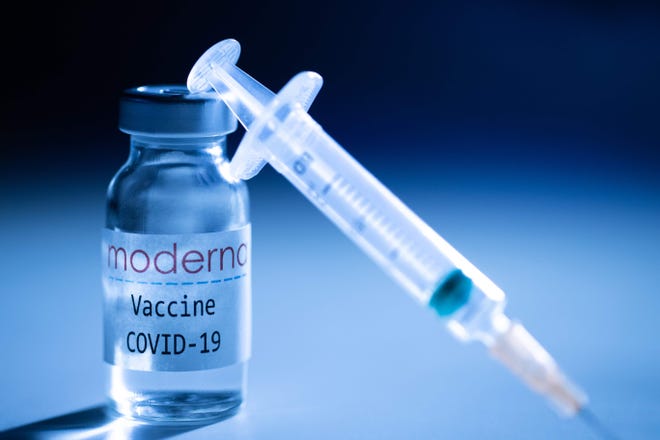
    The Food and drug Administration (FDA) authorized the COVID-19 vaccine developed by Moderna, which joins the Pfizer-BioNTech as the second vaccine available for use in the US.

    The announcement on Friday came a day after a committee of outside experts endorsed the use of the Moderna vaccine across the US, saying the benefits outweigh the risks.

    “With the availability of two vaccines now for the prevention of COVID-19, the FDA has taken another crucial step in the fight against this global pandemic that is causing vast numbers of hospitalizations and deaths in the United States each day,” said FDA Commissioner Stephen Hahn, in a press release.

    Moderna experiemental COVID-19 vaccine. Photo courtesy of Getty Images.

    The vaccine which was 94% effective against symptomatic COVID-19 in clinical trials can now be given to adults 18 years and older. Data presented by Moderna also hints that the vaccine could prevent asymptomatic infection as well.

    Both the Moderna and Pfizer vaccine will be available under Emergency Use Authorization, a designation that lets the FDA sign off on products faster than the normal review process during an emergency like a pandemic.

    The Moderna vaccine can be easily stored compared to the Pfizer vaccine, which requires to be kept at ultra-cold temperatures.

    Moderna can be stored in a refrigerator for up to 30 days, making it easier to distribute to places without the infrastructure to maintain extremely low temperatures.

    “We remain focused on scaling up manufacturing to help us protect as many people as we can from this terrible disease,” Stéphane Bancel, CEO of Moderna said in a press release.

    The United States ordered 200 million doses of the Moderna vaccine, enough to vaccinate 100 million people.

    Patient receiving a dose of the Moderna vaccine. Photo courtesy of the New York Times.

    The first doses will be given to health care workers and residents in long-term care facilities within days.

    Moderna has about 5.9 million doses ready for shipment set to begin during the weekend, according to operation Warp Speed, the US government’s vaccine development program. The first Moderna vaccines are expected to be administered on Monday.

    Moderna has said it plans to deliver approximately 20 million doses to the US government this year, and will provide the 200 million doses by end of June 2021.

  • AFRICA’S LEADING WOMEN SERIES: Part 7

    AFRICA’S LEADING WOMEN SERIES: Part 7

    AFRICA’S LEADING WOMEN SERIES: African women who’ve served/are serving their countries in the capacities of: President, Prime minister and/or Vice President.

    Know them, appreciate them and remember them.

    #THEAFRICANLEADINGWOMENSERIES

    Initiated by Nyokabi Ng’ang’a, for The Involvement Newspaper.

    PART 7

    By: Nyokabi Ng’ang’a (Leshnyokabi@gmail.com)

    Thumbnail photo created by Nyokabi Ng’ang’a

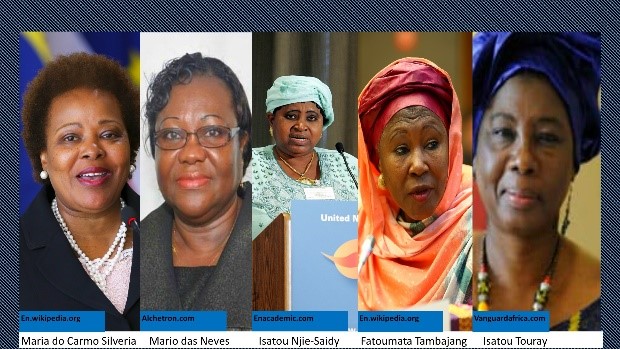
    Maria das Neves: São Tomé and Príncipe’s 1st female Prime Minister.

    Photo courtesy of alchetron.com

    Maria das Neves was born in her country, São Tomé and Príncipe, in the year 1958.

    An economist graduate from Cuba, she worked as a civil servant in her country’s Ministry of Finance and later at the World Bank and the United Nations Children’s Fund (UNICEF).

    In the year 1999, she was appointed Minister of Economics, where she served her country till the year 2001 and later on, in the same year, as Minister of Finance where it’s believed her service lasted a year. In the year 2002, she then took the role of Minister of Trade, Industry and Tourism.

    Under President Fradique de Menezes’ rule, which took course in the year 2001, she was elected Prime Minister in the year 2002 with the mandate of heading the government. Following the economic and power struggles within the country, there was a military coup in the year 2003 and with the absence of the President who was not in the country, Ma’am Maria das Neves, alongside other governmental officials, were arrested on the claims that the government was corrupt. Due to this occurrence, as believed, she was hospitalized after suffering a mild heart attack, causing her to resign from her role as Prime Minister.

    Her resignation came after Fradique de Menezes was reinstated as President, following an internationally- pushed agreement between him and the coup leaders.

    However, as a result of President Fradique’s insistence, she took up the Prime Minister’s role, once more, serving her country till the year 2004, after which, she was dismissed by the former as Premier, on the claims of corruption linkages to her governance.

    To learn more of this lady pace-setter, click here.

    Maria do Carmo Silveira: São Tomé and Príncipe’s 2nd female Prime Minister.

    photo courtesy of en.wikipedia.org

    Maria do Carmo Silveira, was born in the year 1960, in her country São Tomé and Príncipe.

    Educated at the University of Ukraine as an economist, she featured twice as the 3rd and 6th governor of São Tomé and Príncipe’s central bank. This, to mention, was in the years: 1999-2005 and 2011-2016.

    In the year 2005, she was appointed Prime Minister of her country by President Fradique de Menezes. She served in this capacity; concurrently also as Minister of Finance and Planning, for close to an year, with her term halting in April the 21st in the year 2006, after a parliamentary election saw her party defeated by the opposition.

    With no substantial information found on her life before Premiership, click here to have a look at her profile.

    Isatou Njie-Saidy: The Gambia’s 1st female Vice President.

    Photo courtesy of enacademic.com

    Isatou Njie-Saidy was born in Kuntaya, North Bank, Gambia in the year 1952.

    She served as her country’s first female Vice President from the year 1997 to the year 2017. This she did alongside her ministerial role in women affairs. It is believed that she is the world’s longest serving Vice President, having served her country for 10 solid years.

    A holder of a Master of Science in economics from the University of Swansea, Wales, UK; her zones of expertise as featured in her areas of studies, to mention, in broad are: Industrial management, Economics and Teaching.

    In the year 1983, she took up the role of Deputy Executive Secretary of the women’s bureau- the executive decision making body of the National Women’s Council of Gambia. She served in this capacity till the year 1989.

    Later, in 1996, under President Yahya Jammeh’s rule, she was appointed Minister of Health, Social Welfare and Women’s affairs and worked in this capacity for a year, before being appointed Vice President, the first female for that matter, of the Gambia.  

    It’s reported that in 2015, there were established constraints between her and President Jammeh, resulting to her resignation in 2017.

    To learn more of this deeply revered woman of the Gambia, click here.

    Fatoumata Jallow-Tambajang: The Gambia’s 2nd female Vice President.

    Photo courtesy of en.wikipedia.org

    Fatoumata Jallow was Gambia’s former Vice President who served under President Adama Barrow, for nearly a year.

    Born in 1949 in Brikima, Gambia, she was educated in her country alongside Senegal and France. It’s reported that her early University education saw her get a BA in French from the University of Nice Sophia Antipolis in France.

    Prior to her selection as the Secretary of State (Minister) for Health and Social Welfare in 1994, she served as an adviser to President Dawda Jawara- Gambia’s first President who was later ousted.

    Afterwards, she joined the United Nations where she worked as a gender expert in the United Nations Development Program (UNDP). It’s also featured that she worked as the chairwoman of the Gambia National Women’s council.

    Fast-forward to 2016, courtesy of her political routings, she with notable others, formed the coalition 2016- an amalgamation of  opposing political parties- that steered the exit of Yahya Jammeh as Gambia’s president. To her credit, she was regarded as the mastermind behind this plan, and for the worth note, she sat as the coalition’s chairperson.

    After Yahya Jammeh took to exile in Equatorial Guinea, Adama Barrow who was appointed presidential candidate of the coalition, was instated as President in the year 2017- following his win of the 2016 elections- and on his inauguration, he appointed Ma’am Fatoumata as his Vice-president. However, after being appointed, concerns were raised about her age as an impediment to taking office. Nonetheless, her appointment was confirmed by President Adama Barrow and she served her country in this position of the Vice-President till June 2018. Of other importance, she also served concurrently as the Minister of Women Affairs while overseeing the Vice President’s office.

    To learn more of this New African Woman who scooped the 2017 New African Woman of the Year Award by the New African Magazine, click here.

    Dr. Isatou Toray: The Gambia’s current and 3rd female Vice President.

    Photo courtesy of vanguardafrica.com

    Isatou Touray was born in 1955, in her country, The Gambia. She grew up in Banjul, Gambia’s capital, and attended her primary, secondary and start-up tertiary schooling within her country. Later on, after graduating as a teacher of English and Home Economics from The Gambia College, in 1971, she became a teacher and then ventured into the field of community development, afterwards, with a special focus on women and development.

    A PhD holder in Development Studies- with a special emphasis on Gender- from the University of Sussex, UK, Ma’am Isatou Toray’s field of studies are wide and heavily routed within her areas of passions. To mention, she holds a degree in Education and English from Usman Dan Fodio University in Sokoto, Nigeria and a Master’s Degree in Development Studies with specialization in women and development, from the Institute of Social Studies (ISS) in The Hague, The Netherlands.  

    Known widely in her country and substantially in Africa, for being a staunch feminist and a gender and human rights activist, she has featured in many organizations and boards; worth recognizing being: the Inter-African Committee (IAC) – a formed Pan-African Network of over twenty eight African countries aimed at Eliminating Harmful Traditional Practices– where she served as the network’s secretary general from the year 2009-2014. To this regard, she also cofounded The Gambia Committee on Traditional Practices Affecting the Health of Women and Children (GAMCOTRAP) and introduced a Diploma in Gender and Development program and founded the Gender Unit of the Management Development Institute, of which all are situated and running in her country.

    Just for the good mention, she is recognized and credited as both an international and national advocate for the end of Female Genital Mutilation (FGM) in The Gambia, and largely, in Africa.

    In the year 2016, infuriated with President Yahya Jammeh’s exceeding twenty years hard-fisted rule, she alongside others, contested for the Presidential seat. She did so as an independent candidate and notably, as the only woman in Gambia’s history. However, she stepped down to back Adama Barrow as President and to support the Coalition 2016. When Adama Barrow became President, she sat in his cabinet as the Trade Minister and later on, as the Health Minister. In 2019, following a major cabinet reshuffle, she was appointed the Vice President of the Gambia by President Adama, succeeding her predecessor, Ousainou Darboe.

    To learn more of the life story of this deeply revered African- Gambian lady, click here.

    Will your country be the next?                             

    Kindly schedule to read the subsequent article of this series, next week.

    #THEAFRICANLEADINGWOMENSERIES

  • COME…

    COME…

    By: Nyokabi Ng’ang’a (Leshnyokabi@gmail.com)

    Thumbnail photo courtesy of desiringgod.org

    Bring them who haven’t lost their voices amid the noises of our cities
    Bring them who still maintained dignity after the war passed
    Bring them who had no name but acquired one on their exit
    Bring them who still chose their names after their nations broke
    Bring them who didn’t forget where they came and where they belonged
    Bring them who still have a remembrance of the peaceful nights and the deserted days
    Bring them who could smell the roses and distinguish them from the lilies
    Bring them who could differentiate spices of the known fields
    Bring them who knew and maintained a love
    Bring them who forgot hate and kept hope alive
    Bring them whose feet are tired from walking the mileage
    Bring them who know masala tea and serve it from their genial hearts
    Bring them whose dances were not watered away as the rains fell
    Bring them whose smiles light our hearts.

    Bring them who lost their voices amid the noises of our cities
    Bring them who broke away from their dignified lives as our war spread
    Bring them who had names as they became entrants
    Bring them who forgot their names after their nations broke
    Bring them who forgot where they came from and where they belonged
    Bring them who forgot the peaceful nights and the deserted days
    Bring them who cannot distinguish the scent of roses from lilies
    Bring them who can’t differentiate spices of the known fields
    Bring them who forgot and didn’t maintain love
    Bring them who remembered hate and kept anxiety alive
    Bring them whose feet are still wandering as they mile away
    Bring them who forgot to serve masala tea from their genial hearts
    Bring them whose dances were watered away as the rains fell
    Bring them whose frowns remind our hearts…

    Bring them!!

  • Kenya orders 24M doses of COVID-19 Vaccine

    Kenya orders 24M doses of COVID-19 Vaccine


    By: Sumaya Hussein (husseinsumaya1@gmail.com)

    Thumbnail photo courtesy of reuters


    Kenya has joined other countries in securing Covid-19 vaccines and has ordered 24 million doses from Gavi, the Vaccine Alliance. This is enough to cover 20% of the country’s population.
    Acting director-general of health, Dr Patrick Amoth said that each dose will be about $3 (Sh320) and cost the country a total of Sh10 billion.

    The amount is already heavily discounted by Gavi through donations from several developed countries, the World Bank and the Bill and Melinda Gates Foundation, among others. “The first to be vaccinated will be frontline workers, then the vulnerable and the elderly,” said Amoth. He, however, did not specify a timeframe but vaccines are expected early next year.


    Amoth said that Gavi has signed agreements with manufacturers of about nine vaccine candidates. Kenya therefore did not dictate which vaccine to receive, but the Oxford-AstraZeneca vaccine will be ideal for the country because it fits within its cold chain supply system.

    Acting Health DG Dr Patrick Amoth during a past COVID-19 press briefing. Photo courtesy of Citizen TV.


    Kenya also launched clinical trials for the AstraZeneca vaccine in Kilifi in October. An emergency use approval is yet to be granted by the Health Ministry.
    “Once they get approval from the European Medicines Agency and in the UK, then we will also consider granting such authorization in Kenya,” said Amoth.


    The announcement means Kenya has applied for the largest number of doses in East Africa.
    Last week on Thursday, Uganda’s Health Ministry, said it ordered 9 million doses to cover 20% of the country’s population.
    “Plans are underway to secure additional doses of the vaccine to cover more people,” said the Ugandan Ministry in a statement.


    Rwanda’s Minister of Health Daniel Ngamije on Sunday also announced they had applied for either the AstraZeneca or the Moderna vaccine. He, however, did not say how many doses they had applied for but hoped they would be the among the first African countries to receive them.

    VA medical syringe and a vial in front of the AstraZeneca Vaccine. Photo courtesy of Times

    Egypt applied for 20 million doses from Gavi and expected to receive the AstraZeneca vaccine.
    Gavi is supplying Covid-19 vaccines to 92 developing countries including Kenya through a facility called Covax. Covax was created by Gavi, UNICEF and the WHO to deliver two billion doses of Covid-19 vaccines by the end of 2021. The facility says it has already secured millions of ready-made doses of the Oxford-AstraZeneca candidate, ready for distribution to the 92 developing countries.


    Experts say although there won’t be enough vaccines for every Kenyan, getting the shots to the right people could help tame the pandemic.

  • FDA to approve Moderna Vaccine in the US

    FDA to approve Moderna Vaccine in the US

    By: Sumaya Hussein (husseinsumaya1@gmail.com)

    Thumbnail photo courtesy of Getty Images

    Food and Drug Administration (FDA) say that Moderna’s vaccine is safe and 95% effective, clearing the way for US emergency authorization.


    This comes one day after Americans across the country began receiving doses of the Pfizer vaccine.
    Once approved by the FDA vaccine panel, Moderna will become the second coronavirus vaccine to be allowed in the US and shipments could begin within 24 hours.

    A patient receiving a dose of the Moderna Vaccine. Photo courtesy of New York Times

    Moderna’s data was released by the FDA on Tuesday, ahead of the vaccine panel’s meeting to discuss the drug on Friday. The 54-page document said there were “no specific safety concerns” and that serious adverse reactions were rare. The data also suggests that its vaccine begins to prevent asymptomatic infections after the first dose. This is highly effective because this helps significantly slow the spread of the coronavirus. FDA analysts found that the Moderna vaccine was effective “across age groups, gender, racial and ethnic groups, and participants with underlying conditions”. In addition, the research “suggested benefit of the vaccine in preventing severe Covid-19.”


    The issues of effectiveness against severe disease have been raised about the studies of vaccines for Covid. The Moderna study found 30 cases of severe disease in the control group, versus zero in the vaccine group.

    The FDA found no specific safety concerns that would preclude its authorization of the vaccine. Most common side effects included injection-site pain, fatigue, headache and chills.
    Severe adverse reactions were rare but occurred more frequently after the second dose of the vaccine than after the first.


    For instance, about 9.1% of vaccine recipients had an injection site reaction that was classified as “grade 3,”. This the FDA defines as severe of medically significant, but not immediately life-threatening. In comparison, fewer than 1% of the control group had grade 3 injection-site reactions.
    Some 16.5% of vaccine recipients had systemic adverse reactions – such as fever and fatigue- with the severity of at least grade 3 and 3.7% among the control group. Severe fatigue was more common after the second dose after the first. The FDA last week authorized emergency use of the vaccine from Pfizer and BioNTech, which began distribution this week.


    Unlike the Pfizer vaccine, Moderna’s does not require ultra-cold storage during shipping. Instead, it requires temperatures of around -20C for shipping – similar to a regular freezer. The Pfizer vaccine requires temperatures closer to -70C, making transport logistics much more difficult.

    A shipment of the Pfizer vaccine delivered to US on Monday. Photo courtesy of Wall Street Journal.


    The primary goal of the studies of both Pfizer’s and Moderna’s vaccines was to measure whether they prevented symptomatic COVID-19 disease, including severe disease.
    However, people can still become infected affected and transmit the virus without showing any symptoms.

    A Pfizer executive said last week that the company was studying whether its vaccine protects against asymptomatic Covid-19 and hope to complete the analysis early next year.

  • AFRICA’S LEADING WOMEN SERIES: Part 6

    AFRICA’S LEADING WOMEN SERIES: Part 6

    AFRICA’S LEADING WOMEN SERIES: African women who’ve served/are serving their countries in the capacities of President, Prime minister and/or Vice President.

    Know them, appreciate them and remember them.

    #THEAFRICANLEADINGWOMENSERIES

    #31women #8articles

    Initiated by Nyokabi Ng’ang’a, for The Involvement Newspaper.

    PART 6

    By Nyokabi Ng’ang’a (Leshnyokabi@gmail.com)

    Thumbnail photo created by Nyokabi Ng’ang’a

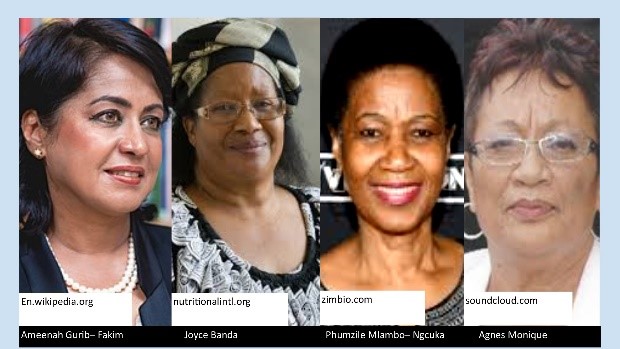
    Agnès Monique Ohsan-Bellepeau: Mauritius’s first elected female Vice President.

    Photo courtesy of soundcloud.com

    Ma’am Agnès Monique was believably born in 1942 in her country, Mauritius. She descends from a political family, with her father featured in Mauritius’s political history as one of the founders of one of the country’s four main political parties-Mauritian Labour Party. To her credit, she led the party as its president, purportedly from the years 2007 to 2010.

    Having studied journalism as her area of profession, she worked as a news announcer at her country’s national television channel- Mauritius Broadcasting Corporation. Thereafter, in the year 2010, she was unanimously selected by Members of the National Assembly in a parliamentary election, as the first female Vice President of the Republic of Mauritius. She took up this elected role following the demise of Vice President Angidi Chettiar.

    Serving under President Anerood Jugnauth, she rose to fill up the ranks of the country’s acting president, after the former resigned in the year 2012. Shortly after, Kailash Purryag was instated as President of the country, making Ma’am Agnès Vice President, once more. Later, on 29th May 2015, President Kailash Purryag resigned, making Ma’am Agnès, again, acting President of the Republic of Mauritius. However, this was short-lived, as, in June of the same year, Ameenah Gurib-Fakim was instated as President of the country.

    In the year 2016, Ma’am Agnès Monique’s reign as Vice President of Mauritius came to a halt.

    To learn more of this lady pace-setter and holder of the prestigious Grand Officer of the Star and Key of the Indian Ocean (GOSK) order, click here.

    Dr Ameenah Gurib-Fakim: Mauritius’s first elected female President.

    photo courtesy of en.wikipedia.org

    Dr Ameenah Gurib was born in the year 1959 in Surinam, Mauritius. She is a certified biodiversity scientist, who holds a doctorate in organic chemistry from the University of Exeter, England, in the year 1987.

    Before becoming the first elected female President of Mauritius in the year 2015, she worked at the University of Mauritius as an organic chemistry lecturer and in addition, Dean of the faculty of science and pro-vice-chancellor. In the year 2009, it is recorded that she opened a research centre in her country, dedicated to the study of the medical and nutritious effects of plant life- where she worked also as its managing director.

    With a high profile status, her works haven’t gone unnoticed as she has been gifted various accolades, some of which include: The African Union Award for Women in Science and L’Oréal – UNESCO Award for Women in Science.

    In the year 2018, Ma’am Ameenah resigned from office over a credit card scandal.

    To learn more of this iconic figure in Mauritius’s history, click here.

    Dr Joyce Banda: Malawi’s first elected female Vice President and consequently, President.

    photo courtesy of nutritionintl.org

    Born in 1950 in her country, Malawi, Dr Joyce Banda has risen to the ranks of the most respected women in the continent of Africa.

    As public knowledge holds, before indulging into the political running of her country, she founded and directed various organizations, which stately are: a garment-manufacturing business; a bakery; the National Association of Business Women of Malawi; the Young Women Leaders Network; the Hunger project; and the Joyce Banda foundation whose main concern is improving the lives of women and children in rural areas.

    As a debut into her political career, in the year 2004, she served her country as a member of the then ruling party- United Democratic Front (UDF) – in the National Assembly. Later on, in the same year, on changing her political party, she was elected Minister of Gender, child welfare and community services by President Bingu wa Mutharika, where she served till the year 2006; after which, she was elected as Minister of Foreign Affairs till the year 2009.

    In the same year (2009), she was chosen as President Bingu wa Mutharika’s running mate, and after elections were successfully held, she emerged to be the first female holder of the Vice Presidential seat in Malawi.

    As a result of the President’s death in the year 2012, she resultantly- though with surrounding obstacles main emanating from her political opponents- became the first female holder of Malawi’s Presidential seat. Her reign saw many changes, with democracy growing and the press freedom dream, being validated. Malawi’s economy also grew, purportedly in double, during her reign.

    On the downside, yet worth all the credit, through her authorization a corruption scandal was revealed. This corruption scandal, well known as the Cash-gate scandal, exposed most of the members of Ma’am Joyce’s cabinet. This led her to dissolve her cabinet and attracting criticism of all sorts from her political opponents.

    In the year 2014, her Presidential reign came to a halt, but she went to the extra mile of campaigning once more for the seat, under her formed party- People’s Party. But after some irregularities experienced in the elections causing for a repeal, she stepped down citing that she wouldn’t feature in the repeated elections.

    To learn more of this iron lady, click here.

    Dr Phumzile Mlambo-Ngcuka: South Africa’s first female Deputy President.

    Photo courtesy of zimbio.com

    Dr Phumzile Mlambo was born in the year 1955 in her country, South Africa. She is globally recognized as the administrative face of the United Nations Women, due to her role as Executive Director of the mentioned UN subsidiary body.

    With a BA in Social Sciences and Education, she set out as a lecturer at Mpumalanga Teacher’s Training College and a teacher, thereafter, at Ohlange High School in the early ‘80s.

    Lauded historically for her efforts, alongside many others, in ending apartheid in her country, she assumed various positions at the party and governmental levels, both during pre and post-independent times.

    In the year 1994, Ma’am Phumzile served her country as a Member of Parliament with a chair- hood at the Public Service Portfolio Committee. Two years later, she was appointed Deputy Minister in the Department of Trade and Industry. Later, in the year 1999, she was appointed Minister of Minerals and Energy, where she served till the year 2005. Momentarily, she also served as Acting Minister of Arts, Culture, Science and Technology in the year 2004.

    Mid of the year 2005, she was appointed by President Thabo Mbeki as Deputy President following the latter’s dismissal of Jacob Zuma- Phumzile’s predecessor. As Deputy Premier, she was credited for incepting various initiatives aimed at solving the issue on lack of skills in post-apartheid and independent South Africa.

    Following the voting out of President Thabo Mbeki as Africa National Congress’s (ANC) leader, in the year 2007, Ma’am Phumzile’s deputy premiership came to a halt. She didn’t stop causing impact however, as closely a year after, she instated a foundation known as Umlambo, to assist schools in impoverished areas through mentorship and coaching their teachers.

    To learn more of this iconic global figure and the efforts she has undertaken to make this world a safer place not only for South Africans but also for the world at large, girls and women to be specific, click here.

    Will your country be the next?                                

    Kindly schedule to read the subsequent article of this series, next week.

    #THEAFRICANLEADINGWOMENSERIES

  • President Kenyatta Orders all schools reopen in January 2021

    President Kenyatta Orders all schools reopen in January 2021

    By Sumaya Hussein (husseinsumaya1@gmail.com)

    Thumbnail photo courtesy of PSCU


    President Uhuru Kenyatta has directed that all schools reopen in January 2021 as the country continues battling the COVID-19 pandemic.


    The Head of State instructed that the Interior Ministry, through all Chiefs and Assistant Chiefs to ensure that all students report to school at the beginning of next year.
    “We remain on course for the resumption of learning in all classes effective the 4th of January 2021, with the safety of our learners being our top priority,” said President Kenyatta during Jamhuri Day celebrations at Nyayo Stadium.
    “In that regard, and in line with the policy of the Government on universal and compulsory basic education for all children up to 18 years, all parents and guardians are required to facilitate their children to resume learning in January 2021,” added President Kenyatta.

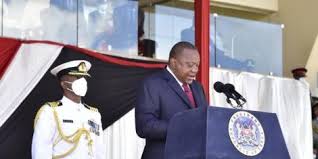
    President Uhuru Kenyatta inspects a guard of honour mounted by the Kenya Defence Forces (KDF) upon arrival at the Nyayo Stadium for Jamhuri Day celebrations. Photo courtesy of PSCU

    The Ministry of Education in consultation with the Health Ministry has developed sector-specific protocols and guidelines to facilitate the reopening of all learning institution.


    The President added that the Ministry of Education shall receive reports from all primary and secondary schools on the identity and details of any student who shall not report to school.
    He also directed that the Education Ministry facilitate the resumption of learning for all learners who had dropped out of school due to pregnancy.
    “That the Ministry of Education shall re-issue and publicize the Education Policy on School Re-Entry, so as to facilitate the re-admission of all those who may not be able to report back due to pregnancies,” said the President. Even with the pandemic, the Head of State assured that no learner will be left behind.


    All schools in Kenya will reopen next month after nine months of closure due to the coronavirus pandemic. The government had already begun phased reopening of Grade 4, Class 8 and Form 4 students returning to school on October 12, 2020.


    Last week, the National Council Churches of Kenya (NCCK) called on the government to review the planned re-opening of all schools citing the recent surge of COVID-19 cases in the country.
    NCCK General Secretary Canon Chris Kinyanjui cautioned the situation risks the lives of teachers, students and parents.
    “We propose that the decision that all learners will resume in-school learning on January 5, 2021, be reviewed and proper measures be put in place to avoid a surge in new infections,” Kinyanjui said last week.