Category: Features

  • Sabasaba Pro Max; A New Era of Protest in Kenya

    Sabasaba Pro Max; A New Era of Protest in Kenya

    By Joe Aura, aurajoe6@gmail.com

    From historical defiance to Gen Z’s digital revolution, Kenya’s protests are louder, younger, and more daring than ever before.

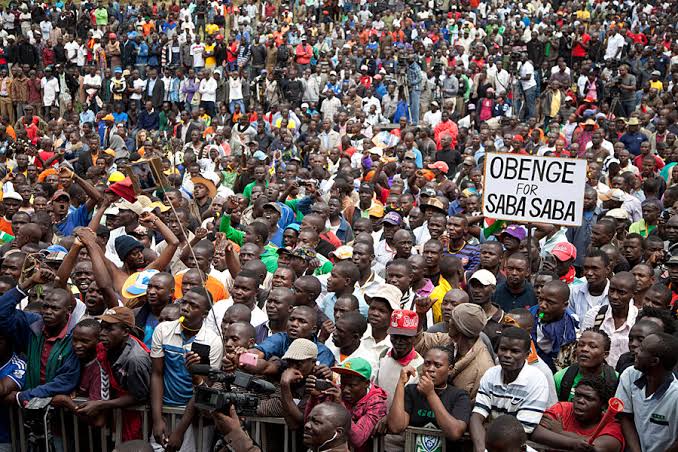
    Every year on July 7, Kenya commemorates Saba Saba – a day that once marked bloodied demands for democracy, but today stands as a symbol of resilience, reflection, and the rebirth of people power.

    What began in 1990 as a courageous revolt against one-party rule has evolved into a generational relay — from the defiant voices of Matiba, Rubia, and Raila to the hashtag-fueled resistance of Gen Z. This article revisits the roots of the movement, the heroes and martyrs who shaped it, and how today’s youth are reclaiming the spirit of Saba Saba.

    The Originals/O.G Era (1990s)

    On July 7, 1990, under the suffocating grip of a de facto one-party state, thousands of Kenyans defied President Daniel arap Moi’s regime by gathering at Nairobi’s Kamukunji Grounds. Their demand was simple but dangerous: the return of multiparty democracy.

    Political dissent was illegal. Press freedoms were nonexistent. And yet, opposition leaders Kenneth Matiba, Charles Rubia, and Jaramogi Oginga Odinga dared to imagine a freer Kenya. Even though Matiba and Rubia were arrested days before the rally, the protest ignited a fire that police brutality could not extinguish.

    According to The Star, over 6,000 Kenyans were arrested, and more than 20 killed in Nairobi and across the country, following protests. That one day of courage shook the foundations of dictatorship. It eventually led to the repeal of Section 2A of the Constitution in 1991, reopening Kenya to multiparty politics.

    The Resistance (2000s–2010s)

    In the 2000s and 2010s, Kenya entered a new phase marked by both democratic reform and widespread disillusionment. Although multi-party democracy had been reinstated, the promise of accountable governance remained unfulfilled. Corruption flourished, elections were plagued by irregularities and violence, and public trust in institutions declined sharply. Opposition leader Raila Odinga emerged as the central figure in challenging the status quo, backed by civil society groups, students, and trade unions.

    Protests became a defining feature of the era — from the No Reforms, No Elections campaigns to mass demonstrations following the disputed 2007 presidential election, which triggered deadly post-election violence. The state responded with force, deploying police armed with teargas and live bullets to quash dissent, while international attention intensified, culminating in the indictment of Kenya’s top political leaders at the International Criminal Court (ICC). Amid the turmoil, however, came a major breakthrough: the promulgation of the 2010 Constitution.

    Celebrated as one of Africa’s most progressive legal frameworks, it devolved power, empowered the judiciary, and expanded civic space. Yet despite this progress, years of repression and broken promises left many Kenyans weary, sceptical, and uncertain about whether protest could still bring lasting change.

    The Gen Z Update (2020s–2025)

    Under President William Ruto’s administration (2022–), Kenya witnessed an unprecedented wave of civic resistance driven by economic hardship and generational frustration. As public debt soared and new taxes threatened livelihoods, young people — already grappling with unemployment and underfunded education — reached a tipping point with the proposed 2024 Finance Bill. According to https://involvement.damugeltd.co.ke/ a proposed 2.5% Motor Vehicle Circulation Tax, was to be deducted directly from insurance premiums, would have disproportionately affected young car owners and online drivers. The 16% VAT on bread, a staple food, hit a nerve among struggling households. The eco levy, despite its environmental intention, was seen as punitive to youth tech consumption — especially with an additional $3 (KES 400) proposed tax per smartphone or tablet.

    What began as online frustration quickly morphed into nationwide demonstrations, marking a dramatic shift in Kenya’s protest culture. Unlike previous movements led by political giants like Matiba or Raila, this uprising was decentralized and leaderless, driven by tech-savvy Gen Z activists. University students, TikTok creators, online influencers, and anonymous Twitter/X users organized through viral hashtags like #RejectFinanceBill2024, transforming smartphones into tools of resistance.

    The state reacted with intimidation — abducting protesters in unmarked cars, harassing journalists, and threatening internet shutdowns. Yet instead of retreating, young Kenyans doubled down, livestreaming events, outing state agents, and rallying global solidarity. Their persistence paid off. For the first time in decades, the government relented, withdrawing the bill and directly engaging with protesters. The moment signified more than just policy reversal — it marked a generational awakening rooted not in tribal allegiance but in shared values, digital unity, and a bold vision for Kenya’s future.

    In a rare reversal, President William Ruto publicly announced on June 26, 2025, that he would decline to sign the controversial Finance Bill 2024 into law, following intense public pressure.

    “Listening keenly to the people of Kenya, who have said loudly that they want nothing to do with this Finance Bill 2024, I concede and therefore I will not sign the 2024 Finance Bill,” he said in a national address from State House, Nairobi.

    He further proposed a 14-day period of multi-sectoral dialogue aimed at addressing not only the bill but also youth concerns around corruption and government spending.

    Fighting Fear with Fear

    With the opposition now appearing co-opted into the very government it once vehemently criticized, its traditional role as the vanguard of public dissent has visibly diminished. The so-called "handshake" politics — once touted as a symbol of unity — may have lulled some into thinking the nation’s problems had been resolved. But for many, especially the youth, the fight is far from over.

    Disillusioned by the political elite's failures and betrayals, Gen Z are no longer waiting for leaders — it’s making them.

    Take Andrew Sakawa Ombeng’i, for instance. A Member of Parliament for Dagoretti North in the Youth Parliament of Kenya, Sakawa isn’t just speaking from behind a podium. He took part in several of the Gen Z-led protests and was even hit by a teargas canister during one of the marches.

    ‘It is good that young people are coming out to fight for their rights,’ he told me. ‘This shows they now want to be part of the change — unlike how they’ve always been perceived as apathetic or indifferent to national affairs.’

    Sakawa is also the chairman of Green Touch Organization, a community-based group championing environmental education and tree planting among young children — a far cry from the tear gas-soaked streets of Nairobi. But he sees both roles as extensions of his civic duty.

    ‘Student leaders today are being paid to keep others from protesting,’ he added, ‘yet remain silent on government injustices. Now, how else would they matter?’

    To him, protests are just one part of a larger civic awakening. ‘When the youth show up,’ he says, ‘they get a chance to be heard not only on the streets but also on the ballot.’

    Perhaps the time has come for widespread civic education, not just for the youth but for the entire nation, to reclaim what it truly means to be Kenyan under the 2010 Constitution. As Stephen Wetheo Musau notes, this new generation understands that Kenya’s crisis is not simply tribal, but deeply classed, entrenched in corruption, exclusion, and state-sponsored violence. Their insistence on constitutional rights — especially Article 37's protection of peaceful assembly — is a powerful reminder of the 2010 Constitution’s unfulfilled promises. As the country continues to grapple with economic inequity, rampant graft, and police brutality, the Saba Saba spirit must endure. Elders who once fought for democracy must now support this new frontline, ensuring history doesn’t repeat itself through betrayal or political opportunism.

    The youth of Kenya, particularly Gen Z, have chosen to confront fear with an even more defiant kind of fear — not one of retreat, but of resolve. Despite watching their peers, and even those younger than them, get arrested, harassed, or disappear without a trace, they continue to march forward, emboldened by the belief that remaining silent now would cost the country another 50 or 60 years of suffering, oppression, and failed leadership. This fear of a wasted future fuels their courage. From being locked in Diani for over 12 hours, to evading abductions and dodging live bullets, many of them understand that the road ahead may lead to death, disappearance, or freedom — but the status quo is already unbearable.

    If the Government is truly committed to constitutionalism, then listening to — and working with — this fearless generation may be the best path forward. Kenya’s hope lies in sustaining this momentum and rejecting the old habits of silence, tokenism, and tribalism. The revolution is no longer waiting for leaders. It has found new stewards.




  • Skills are the new currency of employment.

    Skills are the new currency of employment.

    By Eden Koech


    A four-year degree once opened doors to job opportunities . Now it barely gets you through the front gate or even a call back .This is because the job market has drastically changed and employers have changed with it .These days the person who can solve a problem , build something or create results gets hired regardless of whether they hold a university degree .In a world that’s driven by speed , innovation and flexibility , it’s your skillset that matter most .

    Why Degrees Aren’t Enough Anymore

    General education from university may look good on paper , but it no longer dazzles employers the way it used to .They want proof of skills that are measurable, not lecture notes .

    Employers are realizing that just having a degree does not mean one can do the job . Many graduates lack practical ,job-specific skills especially in a fast-paced and ever changing field like technology. Some applicants come with years of theory–based knowledge with little or no hands-on experience and need to be trained from scratch which leads to a long hiring process and is more costly for the company .This leads hiring managers to move away from looking at transcripts and instead test through tasks. For example , in marketing one can be asked to draft an ad . They can have real world scenarios where a candidate is asked to handle an actual task or solve a problem they would likely face on the job rather than just answering traditional interview questions .Hence even with a clear and comprehensive five-year career plan one needs the right skills since companies want people who can adapt quickly ,learn fast and deliver results . By the time a four-year course is done , the industry tools or platforms might already be outdated .


    In 2025 companies are moving more into skill based hiring meaning that the playing field is slowly being leveled in a very saturated job market . However, to stand out even more there are


    different strategies one can explore like skill stacking or mastering in one high income skill . Indeed describes skill stacking as the concept where individuals make themselves more valuable by gaining a wide range of skills instead of pursuing a single skill or talent. One can strive to pursue complementary skills that may support each other and create a unique new set of skills. Doing this offers a realistic path to success and provides more opportunities in various fields.

    Why is this effective?

    It increases one’s value as an employee, driving them to higher earning potential , encourages entrepreneurship and allows one to pivot in their career path .

    Learning high income skills means investing time and effort to master a practical ability that employers, clients, or the market are willing to pay well for . These skills usually involve solving problems, creating value, or improving results . These skills are in demand and can be learned independently (self-taught ). The benefits are career flexibility since such skills let you work as a freelancer,job security due to its demand and instead of studying for years,some can be learned in a few months ,especially with consistent practice and mentorship.With freelancing one can build a full-time income from a skill .


    Due to the fact that digital access has increased one can work from anywhere or for anyone.Most global platforms like Upwork ask for your portfolios, past projects ,your reviews and your reliability to get the job done .This leads to companies hiring across borders .They are not fixated on traditional requirements as long as you can deliver quality work one is qualified for hire.A solid portfolio of a skill, a laptop, and wifi allow people to create work opportunities for themselves .

    Even better , short online courses on different skills are offered online either free or charged at a very affordable price if one needs certification at the end of it . Short courses can be completed in a matter of weeks or months depending on what one wants to study . They focus only on the essential,job ready skills .There is no filler content, just what one requires to start working. Moreover the courses come with certification that are recognized . With platforms like Coursera,Udemy and edX one can access online learning and receive world class education.

    Especially since it’s within these platformsthat universities such as Stanford, Yale and Havard which are known for their academic excellence offer courses for free or for a small fee and one can be certified enhancing their chances of being picked if they put themselves out in the job market .

    In a world where employment rules are being rewritten , the winners will be those that break through the plateaus . Plateaus of limited opportunities .Plateaus of waiting years to be hired.

    The job market is competitive ,yes but not impossible .Those willing to learn, relearn and unlearn will always be ahead .The opportunity is already online ,flexible and accessible .Degrees still matter, but in today’s world it’s the doers not just the scholars ,who get hired .

    The future of work belongs to those who learn faster, adapt quicker and aren’t afraid to prove themselves. If you can show it you can sell it .


  • “In God’s Name? The Dangerous Rise of Cultism in Kenya’s Churches”

    “In God’s Name? The Dangerous Rise of Cultism in Kenya’s Churches”

    By:Vivian Kisamo  

    I grew up believing that churches were places of peace where people come to heal, connect, and find spiritual purpose. For millions of Kenyans, that belief still holds true. But today, that faith is being twisted by a dangerous reality.Some churches are no longer sanctuaries. They’re traps. Under the guise of religion, cult-like groups are spreading quietly across the country, feeding off people’s trust and vulnerability. What once brought people closer to God is now, in some cases, leading them straight into manipulation, abuse and even death.

    One of the darkest reminders of this truth came in 2023, when Kenyan authorities made a horrific discovery in the Shakahola Forest in Kilifi. Pastor Paul Mackenzie, leader of the Good News International Church, had convinced hundreds of his followers to fast to death in order to “meet Jesus.” What investigators found was beyond shocking: over 430 bodies buried in shallow graves, many of them children. Survivors described a nightmare being locked away, denied medical care, isolated from their families, and forced to give up personal identification. Salama Masha, a survivor, told Nation Africa,“Before we moved to Shakahola, a preacher kept warning us that the end of the world was coming. We were scared and convinced it was the only way to be saved.”. What began as religious devotion became a death sentence.

    And just two years later, in April 2025, history nearly repeated itself. Police raided the Melkio Saint Joseph Mission of Messiah Church in Rongai, Migori County, rescuing 57 malnourished congregants and recovering two bodies from secret graves. Although the case is still under investigation, early findings suggest members were subjected to teachings and conditions very similar to those seen in Shakahola massacre such as isolation, obedience, and the rejection of medical help.

    And it’s not just isolated cases like Shakahola and Rongo. In rural areas across Kenya, there are growing reports of churches urging members to abandon medicine, isolate from their families, and surrender all they have to self-proclaimed “prophets.” These communities often lack oversight, and these groups thrive in the shadows often protected by scripture, fear, and silence.


    But why do people follow such leaders? The answer lies in vulnerability. In regions facing poverty, trauma, and unemployment, many are simply looking for hope. A charismatic leader offering miracles and salvation becomes more than a preacher but they become a lifeline. And slowly, followers are taught to obey without question.

    Dr. Susan Gitau, a counselling psychologist, said in a 2023 interview with The Star: “When people are emotionally wounded or socially isolated, they’re easy targets. Cults offer love and community at first, then twist that into total control.”She emphasized that cults are built not just on lies, but on people’s unmet .

    ESadly, in many churches across Kenya, questioning a pastor is treated as questioning God. The phrase “do not touch the anointed” is used to shut down criticism, even when clear signs of abuse are visible. This mindset allows cult leaders to act with impunity and the consequences can be fatal.

    This is not a uniquely Kenyan problem. In South Korea, the Shincheonji Church was linked to a major COVID-19 outbreak after members defied health guidelines. In Nigeria, “miracle pastors” have caused financial ruin and death. And in the U.S., cults like Heaven’s Gate and the Branch Davidians ended in mass suicides and violence. Across the globe, the pattern repeats: one leader, unchecked authority, blind obedience and tragedy.

    Some argue that government regulation of churches threatens religious freedom. But freedom of worship must never include the freedom to exploit, abuse, or kill. As President William Ruto declared after Shakahola, what Mackenzie did was “terrorism.” Parliament has since begun debating stricter laws to regulate religious institutions, which is a vital step but not the only one. Real change starts with awareness in our families, in schools, and in the pulpits.

    If a spiritual leader demands that you silence your doubts, cut off your family, or surrender your independence that’s not faith. That’s control.Jesus never called His followers to starve, to abandon their loved ones, or to obey blindly. True belief empowers and liberates. Yet, across this country, wolves in robes are hiding in plain sight — and they are burying our people.

    It’s time to wake up because some crosses don’t point to heaven. Some point straight to Shakahola.

  • Kajiado’s lifestyle

    Kajiado’s lifestyle

    By: JENTRICE MUNEI

    1. Drought: The Silent Dropout Catalyst
    ~School one day, homebound the next

    In 2022, a staggering 99% of school dropouts in Kajiado Central cited drought related reasons from fetching water, grazing livestock, to tending to dying herds according to CARE Kenya.

    ~Hollow classrooms and empty desks
    By mid 2025, over 300 learners hadn’t returned to term three, especially in rural areas where livestock sales fund education. In some schools, only one third of students came back after the holidays.

    2. Poverty: Fees, Food, and Forced Choices


    ~No livestock, no lunch
    With herds decimated, parents can no longer pay fees nor feed their children. Many resort to picking up casual work or hawking a short term fix for survival.
    ~Hunger before homework
    Around 84% of attending students suffer from hunger induced fatigue, showing short attention spans and even sleeping in class.


    3. Wild & Wilderness: Learning at the Mercy of Giants

    ~Elephants at the gate
    In 2025, eight schools shut for three weeks after elephant invasions when wild elephants raid compounds, teaching stalls, and safety erodes.

    ~Daily fear, delayed education
    Children wait until mid morning to avoid wild encounters, disrupting learning routines.

    4. Girls at Risk: Pregnancies and Displacement


    ~Alarming dropouts among girls
    Teenage pregnancies have sidelined many girls by 2021, 25% of dropouts in Kajiado South were girls, largely citing early pregnancies and marriage.
    ~Re entry is not simple
    Initiatives by FAWEK engage stakeholders in re entry programs. Safe hubs in Kitengela nurture teen moms before reintegration, yet the road is long and winding

    .
    >Rays of Hope: Community & NGO Solutions
    ~Feeding programs
    Organizations like Light of Hope now feed 79,000 pupils across 210 schools, lifting enrollment from 84% to 97% (2022–2024).
    ~Door to door tracing missions
    Chiefs, elders, and NGOs collaborate to trace and re enroll absent learners through mop up drives initiated after low transition rates.

    ~Parental empowerment workshops
    Through engagements under shade at ECDE centers, parents are learning CBC curricula and actively participating in schooling buying books, attending meetings, and nurturing progress.
    >Closing the Disparity Loop
    Despite policies guaranteeing free basic education, structural dynamics drought, poverty, gender bias, and ecological hazards open cracks too wide for many children to cross. But Kajiado isn’t giving up. From feeding programs to parental empowerment, community patrol teams to wildlife fencing, a mosaic of interventions offers hope.

    ~Ending on a Dare: Can We Make Education Elastic?
    Imagine a system so adaptable that no mattress less Maasai child, no hungry teenager, no rural outlier is left stranded. Education must stretch to meet them the drought stricken grazing lands, the elephant corridors. Because when the classroom becomes a mirage, chasing down every learner is not just a moral duty it’s the foundation of Kenya’s future.
    Kajiado’s hard to reach children are knocking. Will we let them walk away?

  • The Silent Struggle: When Our Digital Lifelines Go Quiet

    The Silent Struggle: When Our Digital Lifelines Go Quiet

    By Tehila Namai

    Byline: In a world built on digital connection, a phone’s silence can be more unsettling than peace for a student.

    That sudden, dreaded silence. Not the peace of a quiet library, but the chilling absence of a notification from your phone after an M-Pesa transfer. Or maybe, the university portal email you never saw. In a world where our lives revolve around digital pings and alerts, the unexpected disappearance of these vital communications can hit even the calmest student hard. For us, staying connected isn’t just nice to have; it’s the hidden thread holding our academic, financial, and social lives together.

    Think about a typical university student here in Kenya. Our days are a constant juggle: lectures, assignments, part-time jobs, and trying to keep a social life. Right at the heart of all this are services like M-Pesa and solid network coverage. M-Pesa isn’t just for sending money; it’s how we pay for matatus, grab a quick meal at the local kibanda, send cash back home, or pool money for group projects. That SMS confirming a transaction isn’t just a receipt; it’s real peace of mind, proof that money went through, and a crucial record in a jam-packed day. When those messages suddenly vanish, even if the transaction itself worked, it throws everything into doubt: Did it actually go through? Am I stuck here without fare? Is my money safe?

    Beyond our finances, our entire academic world runs on digital channels. Lecture notes fly around on WhatsApp, assignment deadlines hit via SMS or the university’s online system, and group work happens in virtual spaces. Missing a key message, whether it’s a network hiccup or our messaging apps secretly filtering things out (which is a real pain for Android users), can have serious consequences. We could miss a deadline, make the wrong call on a project, or simply fall behind. All these small, digital snags add up, piling on stress, wasting precious time, and sometimes even costing us money.

    The recent issues with M-Pesa SMS delivery, especially for certain phone types or those using different messaging apps, expose a real weak spot in our daily lives. It means we have to constantly double-check balances and manually confirm transactions, adding an extra layer of worry to already busy schedules. While there are fixes, like digging through spam folders or switching back to basic apps, it feels like the burden shouldn’t just be on us, the users, to sort out what are, at their core, essential service problems.

    For service providers and our universities, this isn’t just a minor technical issue; it’s a clear sign that they need to understand how fundamental digital communication is to our well-being and our education. Investing in strong, reliable systems and making sure they tell us


    upfront if there are any problems giving us clear instructions and easy ways to get help isn’t a luxury anymore. It’s absolutely necessary.

    Ultimately, the silent phone isn’t just an inconvenience; it’s a glaring reminder of how much we depend on these digital connections that simply have to work. For students navigating the whirlwind of modern life, always being able to access vital digital services isn’t just about making things easy; it’s about creating a space where we can truly succeed, without the added weight of digital uncertainty. Our futures, in so many ways, rest on these invisible, yet incredibly important, connections.

  • WHY AFRICAN LEADERSHIP MUST FOCUS AT ITS HEART MORE THAN ITS HEAD

    WHY AFRICAN LEADERSHIP MUST FOCUS AT ITS HEART MORE THAN ITS HEAD

    By John Ilunga

    Recent documentaries from DW News and International journalist Johnny Harris, stipulate that DRC is a land full of potential. Very wealthy; 24 trillion dollars to be exact. Gold, cobalt, Jewellery, copper and coltan for internal electronics.The Democratic Republic of Congo is said to be a rich country, full of minerals and natural resources that could feed the entire world for decades. If you could estimate what that means in practical terms it would mean the end of global humanitarian crises and a long period of peace and security across borders. Another perspective would be Egypt. Based on research, it once supplied food to many distant lands across the Nile in the Mesopotamian region. So why don’t we see this happening today in Africa?

    The Fattened livestock, favorable climatic conditions and good soils for agriculture all indicate the richness of this magnificent country by the Equatorial belt. We are all strapped in the belt of famine and food shortages across the continent. Food prices in recent times have sky-rocketed due to the increased gas and fuel prices. The Civil wars and brutality amongst nations have taught us a valuable lesson. The increasing wars in Israel; the Russian assault on the Ukrainian people as well as terrors in the political zones are mostly the problem. Let’s not even mention pandemics and USAID.It is evident that the headship of most African countries needs revisions. The greatest issues surrounding the African continent today vastly stream to wars, territorial tribalism and internal insecurity. In one word;greed.

    In the face of all these problems, what can big brother Africa do?
    Something must surely be done. With good leadership and good policies, the pen still remains mightier than the sword. In this case, ballistic enemy missile forces.


    Most policies are aimed at changing the status quo. Making a difference through government resolutions and planning. What if I told you that the solution could well lie within the resources that we have and not entirely upon the shoulders of our leaders. Leadership is critical but we need an educated and working population in Africa. So far, young people are thriving in many spaces in the African context. We have found a voice to air our issues and inform the world of our current financial, political and economical predicaments.

    Africa is slowly but surely progressing towards a masterful; metropolitan, commercial and suburban continent, spanning among the world’s best of inventions and designs. This is the dream we all share of a united Africa. No more dependence on global powers for sustenance. We, however, 1qare still slaves of the past as the horrors done to us in past decades still haunt us. We have become more leaning towards decisions for survival than to thrive. Shall we ever arrive?

    It starts at the heart. We need to deal with not only the social issues but the differences we have one with another so that we can build on new foundations of excellence and sophistication. We are smart but silenced by the systems that rule over us. We mustn’t try to fight but to thrive in outdoing our masters so that we can break free from the bondage they hold on us. As long as we remain veiled to the truths of our potentials, then we are left to reason like our masters and leaders. Our aim should not be war, but peace and union.

    We need to talk these things together and workout how we can harness our own natural resources and produce excess over the surplus which we export and try to control and manage our own businesses. We can harness the power of digital and use it to end social injustices, Political manipulation and corruption. Africa needs to feel more rather than using brainpower all the time. Addressing issues from within through structured systems management can help maintain a good and healthy thriving society where all can become great and impactful. Africa, where do you stand?

  • Friend or Foe? What AI Really Means for the Future of Creatives

    Friend or Foe? What AI Really Means for the Future of Creatives

    By Sheila Wambua

    With an exasperated sigh heard at the end of the call, Joe Musyoki sinks into his office chair at home while clearing his throat and tells of his experience with the use of AI in the creative field as a professional Graphic Designer.
    “Let’s just say I am focusing a bit more on AI, this thing can’t be ignored, either you learn it or you get left behind.” Joe Musyoki, who has decades of experience in the creative world, tells Involvement.
    In the past 2 years, AI has gotten a major traction, with famous works like AI-powered portraits that are hanged in the museum, to the vast amounts of data AI has.
    “I am also learning it on the side, it especially helps me when coming up with copy for poster etc., I suck at writing copies.”
    Burnouts are sadly way too common especially in the creative field. This is commonly seen when deadlines pile up and you run out of inspiration or get too tired to work on any more

    projects. AI tools would be helpful because it would help people to relieve some of the pressure mentally.
    Many of the creative works released on social media today have subtle traces of AI in them. Whether its AI-assisted storytelling, AI prompts on the posters or used in designing a product to AI written projects. Use of AI generators such as MidJourney and Zapier make work easier for the graphic and product Designers. One click is all it takes to compose an illustration which would have taken you hours to sketch out and illustrate on the software. For some, it is a miracle come true, but to others it is a double edged sword.
    “As a designer you have to use it to your advantage, and it’s already replacing some of us. A rough example is the illustrators, honestly I don’t feel very comfortable right now, I need to find other ways to make money other than design.”
    There have been a lot of cases whereby, in an art competition, some competitors would hand in their projects only for it to later be recognized as AI. The AI is already being utilized in place of real professional talent which has taken years to cultivate. Many professionals would cry out that it is foul play for someone to use AI when they themselves had to put in blood, sweat, and tears in their work.
    But is it really foul play to use AI when one of the standards required is a deep understanding and refinement of how to use the AI prompts?
    Elsewhere, Brian Leonard, a Kenyan Graphic designer with Lenny Arts in Nairobi, tells The Star that, “The integration of AI to my workflow has been a great thing! I’m able to put out so much more accurate, near-perfect work with the same energy as I would back before AI. I’m able to come up with awesome scripts as if it’s something I would have done for a very long time.”

    The problem however comes in with the copyright issue. If an artist uses AI to generate a photo, are they allowed to claim it as their own, or is it the machines? Who really gets to “own” it? Who gets to claim that they “made” it?
    If you guide the AI with your imagination, refine the outputs, and curate the result, then are you still the artist? The AI could be your assistant, not your replacement.
    “While AI is both interesting and also a bit scary especially in copywriting, there is a lot of learning that can be got from AI and that AI will also benefit from a human hand.” Leonard Dzoga informs the Newsroom.
    Based on the opinions expressed by the professionals in the creative industry, we should expect AI to play a bigger role in the future as it keeps on adï»żćŁŻé™œè—„
    vancing. It is the reality of how things will unfold, and anyone who wishes to stay relevant in their line of work, has to learn to adapt. AI on its own is not creative, but is a useful assistant if used wisely.

  • The struggle of mental health among students and young people

    The struggle of mental health among students and young people

    By Isaac Biosse

    Picture this.

    You’re out with your friends at your regular chill spot. On this particular day, you went early because you needed to get some work done. You thought you’d be the first one there, only to find almost everyone already seated, enjoying time with the community. Granted, some of them were curating a show that day, so they had to be there early. But then there’s K—who, on a normal Tuesday, would be in the office.

    Anyway, you finish your work early and join the rest as you all wait for the evening show. K is his usual self—full of life. He’s making terrible dad jokes, giving people random hugs, and sipping his favourite tequila. Typical K.

    After the show, you finally decide to head home early because you’re exhausted, and you still have work the next morning.

    The next day comes, and life goes on the usual cycle. You then remember that you had promised K you’d link up again later that evening for a music show, but you weren’t able to make it, and you didn’t even communicate with him.

    Then Thursday comes. You go about your day’s business until around 3 p.m., when the most dreaded phone call comes in. The person on the other end is sobbing. You try to find out what’s wrong. And then they break the news:

    “K is no more. He left us yesterday.” A vibrant student who was chasing after his PhD, A stellar pianist and musician, ‘’No more?” I was heartbroken

    Suddenly, the world comes to a standstill. No more? Left yesterday? I mean, on Tuesday he was just fine, according to how you’ve known him. So what could have triggered him between us going our separate ways on Tuesday night and the morning of Wednesday? So many questions.

    Just like that, a young soul, full of dreams, ambition, and love for others, is gone. What wasn’t visible, though, was the pain. The sleepless nights. Many times he almost gave up hope. But this time, the monster had won. This happened to someone in my circle.

    You see, the concept of mental health may feel foreign to many, but it lives among us daily.

    According to the 2022 Kenya National Adolescent Mental Health Survey (K-NAMHS):

    ● Approximately 10% of adolescents experience anxiety, and 7% experience depression.

    ● Another report shows that 46% of students aged 12–17 are struggling with depression, while 38% are dealing with anxiety.

    ● 80% of young people who struggle with suicidal ideation have an underlying mental health condition.

    ● Around 311 youths die by suicide in Kenya every year—a number likely higher due to underreporting.

    There are many causes of mental health conditions: biological, environmental, psychological, digital influences, and even substance use.

    Mental health is a real struggle. We can’t ignore it. We can’t run away from it. And no one is immune.

    The best we can do is be aware, create safe spaces for our peers, and treat therapy as a lifestyle practice, not just a response to crisis.

    And as many say, “It’s okay not to be okay.”


  • Bill Gates’ $100 Billion Giveaway

    Bill Gates’ $100 Billion Giveaway

    By Joe Aura, aurajoe6@gmail.com

    Imagine waking up one morning and deciding, “You know what? I’m giving away nearly all my money before I die.” That’s not your typical thought—unless you’re Bill Gates.

    On May 8, 2025, the Microsoft co-founder announced plans to give away virtually all his remaining wealth—over $100 billion—within the next 20 years.

    Yes, you read that right. By 2045, the Bill & Melinda Gates Foundation will have closed its doors, having redistributed its massive endowment to causes around the globe.

    This isn’t just a billionaire’s midlife crisis. It’s a major shift in how philanthropy operates. For decades, big foundations have worked on the principle of “give slowly, invest the rest.” Gates is flipping that script.

    Expect a massive boost in funding for global health, education, clean energy, and efforts to tackle poverty. If you’re passionate about solving real-world problems, this is the kind of energy we need.

    What Could This Change?

    1. Global Health Will Get a Shot in the Arm

    From malaria to maternal health, Gates’ money will go where the needs are greatest. This could mean faster eradication of deadly diseases and more resilient healthcare systems—especially in Africa.

    2. The Philanthropy Game Just Changed

    Other billionaires may start questioning whether sitting on giant endowments is ethical when the world is literally on fire—climate-wise, politically, and economically.

    3. A Vacuum After 2045?

    Here’s the catch: once the foundation closes, who keeps these projects alive? That’s where governments, communities, and young changemakers like you come in.

    Why It Matters for Kenyan Youth

    We live in an era where innovation meets inequality. Whether you’re in tech, media, education, or just trying to secure the bag, Gates’ decision indirectly affects you. Kenya, a rising hub for startups, climate action, and health innovation, stands to benefit from some of this funding—either directly or through partnerships.


  • The Digital Dilemma

    The Digital Dilemma

    By Joe Aura, aurajoe6@gmail.com

    In 2024, Daystar University signaled a bold move toward digital transformation by initiating the distribution of KCB smart cards meant to automate cafeteria and transport payments. While the idea promised efficiency and modernization, the implementation remains incomplete—with several students still unaware of the cards’ status or future use.

    This scenario is not unique to Daystar. Across the world, institutions aiming to digitize payment systems often encounter a range of structural and technological challenges that stall or limit their progress. These challenges cut across cybersecurity risks, evolving regulations, infrastructure gaps, and human-centered design flaws—all of which must be addressed to ensure a sustainable rollout.

    One of the most significant concerns is cybersecurity and data protection. As digital systems become more integrated, they become more attractive to cybercriminals. Institutions must guard against data breaches, unauthorized transactions, and potential reputational damage. Fraud prevention mechanisms, including real-time alerts and multi-factor authentication, must be embedded into these systems from the outset.

    Regulatory compliance also presents hurdles. Payment systems are governed by complex, often-changing regulations. Smaller institutions, such as private universities, may struggle with the costs and capacity needed to meet compliance standards—especially when juggling academic and administrative priorities.

    A persistent barrier in such transitions is interoperability. Many digital systems start as closed loops, limiting compatibility with other platforms or banking systems. For a campus payment system to work seamlessly, it must interact with point-of-sale devices, transport platforms, and online service providers—ensuring students can use it beyond just one or two functions.

    From a technology standpoint, outdated infrastructure and legacy systems can hold back progress. Many institutions operate on fragmented or outdated databases that are difficult to integrate into modern payment architectures. In some cases, even basic infrastructure—like stable Wi-Fi, updated hardware, or trained personnel—may be lacking or inconsistently available across campuses.

    Customer experience is another overlooked but crucial element. Today’s students expect instant, intuitive, and secure platforms. If systems are introduced without adequate training, orientation, or user-friendly interfaces, adoption will be slow. Students unfamiliar with how or where to use their cards may opt to continue with manual processes, as seems to have happened at Daystar.

    Interestingly, financial inclusion and digital literacy also play into the equation. While digital systems can empower students by making banking and access to services more inclusive, they can also marginalize those with low digital literacy or inconsistent access to mobile devices and banking networks.

    Institutions must also confront the risk management dimension. Introducing new systems requires contingency plans—what happens when a system fails, a card is lost, or a transaction doesn’t go through? The lack of clear communication around such processes can erode trust and slow adoption.

    All these factors combine to influence public perception. Without clear, consistent communication and trust-building, students may view digital payment systems as cumbersome or unnecessary. And in an environment where students already navigate tight academic schedules, changes need to be well-motivated and visibly useful.

    That said, Daystar has demonstrated capability in implementing large-scale digital transitions before. During the COVID-19 pandemic, the university smoothly transitioned to online learning—enabling students to attend classes, submit assignments, and even defend theses from across the world. This experience underscores that with intentional planning, open communication, and responsive support systems, digital solutions can thrive.

    Ultimately, the goal shouldn’t just be digitization for its own sake. For smart systems to succeed, especially in educational institutions, they must be people-centered, secure, accessible, and seamlessly integrated into the daily experience. With the right approach, Daystar and similar institutions have the potential not only to catch up—but to lead the way.