Category: Features

  • Ontdek BetSixty: Jouw Nieuwe Online Casino Favoriet

    Op zoek naar een online casino met spanning, snelle uitbetalingen en een geweldige spelervaring? Dan is betsixty precies wat je nodig hebt! Met een uitgebreide selectie spellen, fantastische bonussen en een gebruiksvriendelijk platform is BetSixty een topkeuze voor Nederlandse spelers. Laten we eens kijken wat dit casino zo speciaal maakt.

    Gratis Spins en Aantrekkelijke Bonussen

    Wie houdt er nu niet van gratis spins? Bij BetSixty kun je regelmatig profiteren van leuke aanbiedingen. Of je nu een nieuwe speler bent of een trouwe klant, er zijn altijd wel extra draaien of stortingsbonussen te vinden. Het maakt niet uit of je van slots, tafelspellen of live casino houdt – er is voor ieder wat wils.

    Een Breed Aanbod van Spellen

    BetSixty biedt een enorme variatie aan spellen, van klassieke slots tot moderne video slots met gave graphics. Ook fans van blackjack, roulette en poker komen hier aan hun trekken. Het live casino brengt de echte casino-ervaring naar je scherm, met professionele dealers en interactieve mogelijkheden.

    Snelle en Veilige Betalingen

    Niets is vervelender dan lang wachten op je winst. Gelukkig zorgt BetSixty voor supersnelle uitbetalingen, vaak al binnen enkele uren. Of je nu kiest voor iDEAL, bankoverschrijving of een andere betaalmethode, je kunt rekenen op een soepel proces. En natuurlijk wordt alles beveiligd met de nieuwste encryptietechnologie.

    Gebruiksvriendelijk en Betrouwbaar

    Het platform van BetSixty is ontworpen met de speler in gedachten. Of je nu op je laptop, tablet of smartphone speelt, alles werkt vlekkeloos. Bovendien is het casino volledig gelicentieerd, zodat je met een gerust hart kunt spelen.

    Kortom, BetSixty biedt alles wat je van een top online casino mag verwachten. Probeer het zelf en ontdek waarom zoveel spelers hier hun favoriete plekje hebben gevonden!

  • Chaos and Loss: Business Owners Count the Cost After First Anniversary Protest in Nairobi

    Chaos and Loss: Business Owners Count the Cost After First Anniversary Protest in Nairobi

    By Jacqueline Kitamba


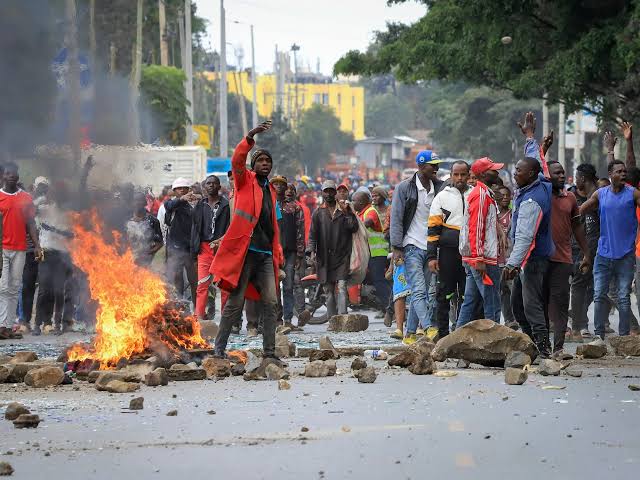
    Protests marking the first anniversary of last year’s anti-finance bill demonstrations took place across various regions in Kenya on June 25, 2025, resulting in extensive damage and significant financial losses for numerous business owners in the CBD area.


    What began as a peaceful gathering rapidly turned into clashes between the police and the protestors, leaving behind massive destruction in key parts of the capital, including the CBD area, Khoja, River Road, Ngara, and Moi Avenue, among others.


    Thursday morning, as the smoke cleared, shop owners arrived at the scene of shattered glass, burned-up buildings, and looted stalls, a reminder of how fast one’s livelihood can be taken away.


    Caroline, who owns a shop at Mithoo House, River Road, said her store was turned upside down by the looters who made away with everything, including the roof of her shop.


    “I was called yesterday, and I almost fainted. Everything in my shop is gone, and I do not know where to start,” said Caroline.


    She additionally urged Nairobi Governor Sakaja, along with the entire administration, to make an effort to assist them. Caroline stated that the police observed as their stores were being robbed and did nothing to intervene


    She does not know where to start and is asking for her landlord to be lenient with her as she gathers herself. Caroline is one of the many small business owners who do not have insurance to cover such losses.


    Over 100 businesses across the nation were seriously affected, many to the point of non-recognition. Most of these businesses were small traders and street vendors who had taken up loans and are now left with the burden to bear as they try to figure out the way forward.


    “I have lost stock worth Sh3.2 million, and because of a lack of insurance, I do not think I will be able to reopen anytime soon,” said Watencia Muthoni, a shop owner at Gatakaini One, Khoja.


    Interior Cabinet Secretary Kithure Kindiki evaluated the businesses the next morning, assuring business owners that the government will investigate the damage and those responsible will be held accountable.


    “Peaceful protest is a constitutional right, but what we witnessed was criminals disguised as protestors. We are working with the security agencies to track down those responsible,” Kindiki said at a press briefing Thursday morning.


    Business owners are seeking compensation to help with the rebuild. Economists in the country are also concerned with this trend of demonstrations turning to violence, and they fear the long-term effect it will have on small and medium enterprises (SME’s), which are the backbone of the country’s economy.


    Business owners, aided by kind-hearted individuals, are tidying up while advocating for discussions and improved planning for future protests, aiming to guarantee that freedom of expression does not negatively impact people’s livelihoods. For entrepreneurs like Caroline and Muthoni, restoring and launching again relies on assistance and additional financing.

  • Sauti Sol: The Soundtrack of a Generation on Pause

    Sauti Sol: The Soundtrack of a Generation on Pause

    By Samuel Mwangi

    Sauti Sol’s final Sol Fest performance in 2023 marked the end of an era, leaving fans hopeful for their return.

    In November 2023, at Nairobi’s Uhuru Gardens Bien Baraza, Willis Chimano, Savara Mudigi and Polycarp Otieno took their last bows as their fans pulsed with emotion singing the song ‘Sura Yako’

    “We didn’t break up; we’re just growing,” Bien said, his voice catching with emotion. It wasn’t just the end of a concert. It was the close of a chapter that had shaped a generation. With over 500 million streams for Midnight Train alone, Sauti Sol had become more than just musicians they were storytellers, cultural icons, and voices of a nation.

    Now, as Kenya’s vibrant but fractured music scene continues to evolve, one can’t help but wonder: will their legacy guide the next wave of artists, or will it drift into silence like the echo of that final note?

    What began in 2005 as a high school a cappella group grew into one of Africa’s most

    influential bands. Sauti Sol, known for their unique fusion of Afro-pop, Benga, and soul,

    captured the continent’s attention with their 2020 album Midnight Train. The record, featuring hits like “Suzana” and “My Everything” with Grammy-winning artist India Arie, racked up 549 million streams making it the most streamed album in East Africa. With lyrics exploring themes of love, identity, and social justice, the band resonated deeply in a nation where the median age is just 19.

    Kenya’s music scene has seen explosive growth in recent years, with local streaming on Spotify jumping by 277% between 2021 and 2024. Leading the charge is Sauti Sol, now the most-followed Kenyan act on the platform, drawing close to one million monthly listeners. Their influence extends far beyond the country’s borders, thanks to sold-out tours across Europe, the U.S., and Africa, and major accolades including the MTV Europe Music Award for Best African Act. One of their most iconic moments came in 2015, when former U.S. President Barack

    Obama danced to their hit “Sura Yako” during a state dinner in Nairobi an unforgettable nod to their global impact.

    The announcement of Sauti Sol’s hiatus in 2023, made shortly after their electrifying performance at Sol Fest, came as a shock to many. For longtime fans, it felt deeply personal. While the group is on pause, the members haven’t disappeared from the spotlight. Bien has found solo success with tracks like “Katam,” a collaboration with Tanzanian star Diamond Platnumz, and maintains that the break is a chance for growth. Meanwhile, Savara’s solo release “Sianda,” rooted in Luo folk traditions, sparked lively debate online proof that even on separate journeys, the bandmates are still shaping the cultural conversation.

    Behind the success, Sauti Sol faced significant hurdles ranging from royalty battles with the Kenya Copyright Board to the immense pressure that comes with fame. These tensions

    eventually tested the group’s bond. Despite stepping back, their legacy lives on through Sol Generation Records, the label they founded to mentor rising stars like Bensoul. Still, with Gengetone and solo careers taking center stage, some wonder if the band’s signature harmony will ever return.

    Sauti Sol’s hiatus isn’t just a pause it’s a wake-up call to Kenya’s music industry. For nearly two decades, their rich harmonies captured the spirit of a generation, fusing traditional sounds with modern flair to reach global audiences. Now, as Bien, Savara, Chimano, and Polycarp pursue solo ventures, their legacy marked by more than 500 million streams and a shift in cultural identity still resonates.

    Their final note at Sol Fest still echoes, asking: will Kenya nurture its next great musical voice, or let a golden era slip into memory? As fans hold out hope for a reunion, one thing is

    undeniable Sauti Sol showed us what was possible. Now, it’s Kenya’s turn to step up. The legacy

    is loud. Who will answer the call?


  • Breaking Barriers: Women Venturing into Kenyan STEM Fields

    Breaking Barriers: Women Venturing into Kenyan STEM Fields

    By Phoebe Wang’ombe 

    Mary Wanjiku, a mechanical engineer, working on a prototype at Nairobi’s iHub, a space that nurtures innovation and technology.


    Kenya’s Science, Technology, Engineering, and Mathematics (STEM) profession has long been the preserve of men, but the dynamics are shifting. Women are claiming their place in a field that was once unthinkable, from Nairobi coding boot camps to cutting-edge scientific research in Kisumu. And this shift is not just about numbers—it’s about the social transformation that enables young girls to dream beyond traditional gender stereotypes.

    At the forefront is Agnes Gathaiya, a 40-year-old software developer who recently developed an app to improve access to maternal health care in rural Kenya. “I grew up seeing women strain to access basic health services,” Agnes explains. “Technology is my gateway to closing that gap.”

    The Ministry of Education, in a report issued in 2023, has said that girls enrolling in STEM courses at the university level are up by 40% over the past five years. Initiatives like AkiraChix, which equips young women with coding skills, and the government’s mentoring programs are cited as significant influences in achieving the change.

    However, challenges remain. “Despite these gains, women still face workplace biases and societal stigma,” says Dr. Jemimah Anyango, a lecturer at the University of Nairobi’s School of Engineering. She recalls a female student being advised to “switch to teaching or nursing,” professions traditionally deemed more fitting for women.

    But there are others who are shattering these stereotypes. Take Wangari Muchiri for example who is an energy planning and policy engineer focused on renewable energy and sustainable building, both locally and internationally. Another great example is one by the name Grace Nzivo who is a civil engineer and STEM ambassador who wants to inspire young girls in rural Kenya to continue dreaming big because it is achievable.

    The push for inclusivity is also making its way to young girls in schools. Organizations like STEM Girl Kenya are holding science fairs and offering scholarships to encourage girls to pursue technical subjects. One of its beneficiaries, 17-year-old Amina Hassan from Garissa, recently emerged the winner of a national robotics competition. “It’s proof that given the right opportunities, anyone can excel,” she says.

    Kenya’s journey toward gender equality in STEM is far from over, but the successes are unmistakable. Each app developed, paper presented, and challenge overcome is a testament to what women can achieve when given equal opportunity. The progress of women in STEM is not only a victory for gender equality —it is a victory for the nation, with a future driven by diverse talent and innovation.


    As most women in this industry loquently put it: “We are not only breaking glass ceilings; we are building a world where there are no ceilings.”


  • Instagram vs Reality: Cost of Soft Life Dreams among the Kenyan Youths

    Instagram vs Reality: Cost of Soft Life Dreams among the Kenyan Youths

    By Immanuela Buruti

    When 23-year-old Juliet scrolls through her instagram feed every morning, she joins the grand holidays, designer shopping springs and five-star food experiences with her peers’ appealing images. “Sometimes I think I am failing,” she confesses. “Everyone is living the life!”

    For many young Kenyan people, the hype that comes the so called “soft life” has become a silent competition fueled by social media platforms such as Instagram and TikTok. An invisible weight lies behind vibrant filters and glamorous photos which in turn increases anxiety, unrealistic expectations, and in some cases, financial waste.

    Rise of soft life culture

    In the Kenyan urban dictionary, “soft life” refers to a luxurious and stress-free lifestyle. It paints a picture of expensive gateways, fancy organizations and enjoyment. For many youths, these pictures are not only entertaining, they become target壯陽藥
    s, often regardless of the person not being financially capable at the time.

    A Daystar University student Abigail suggests that “Social media has redefined how success is considered among the youth. Young people feel that they should accept it”

    Financial stress: image price

    While the lucky ones can afford luxury lifestyles, many others struggle to maintain appearances. This pressure has even made some of the young people to take loans or lead their income to unnecessary expenses, all in the name of fitting in.

    Sean, a 24-year- old university student, shared his experience: “Last December, my friend was going to Diani for the Summer Tides Event which happens annually and everyone was posting about it. I did not want to feel left out, so I took a loan to fund my journey and stay there. I am still paying that loan after months!”

    Reports indicating an increase in youth loans especially from Youth Enterprise Development Fund, and overall increase in advanced credit by commercial banks and non-bank financial organizations have arose. The Central Bank of Kenya has tightened lending policies to curb rising youth debt. Kenyan Bankers Association (CBA) has reported a worrying increase in mobile loans among the youth between 18-30 years. Most of citing social lifestyle, which proves that pressure is one of the leading triggers to borrow beyond their means and needs.

    Mental health toll

    Beyond finance, the emotional toll of pursuing soft life dreams is important. Constantly comparing someone’s life to that of others can lead to one’s insufficiency, low self -esteem and anxiety feelings.

    A 2023 report by Kenya Mental Health Taskforce showed that more than 60% of youth have experienced concern related to social media in comparison directly.

    Beyond pressure as confusion hits in real life

    This has caused a lot of cases. Lawyer Julius Miiri says, “Social media has distorted reality by showing only highlighted reels of people’s lives, not their daily struggle, not their real life. Unfortunately, the youth often forget that what they see online is not a complete picture. Lovers break up because one of them is not living to the other’s expectations. Influencers only show what they want to show.”

    Impressive effect

    Influencers play a big role in shaping this soft life story. Many brands earn adequate income from brands and sponsors. This gives them access to lifestyle that most of their followers cannot tolerate or live up to. However, some affected people influenced fake luxury experiences, hire expensive cars, or platform photoshoots to project a lifestyle that they do not really live.

    Unfortunately, this creates an endless loop where followers feel pressure to catch the standards that, in fact, create a carefully planned confusion.

    Growing change towards realism

    Despite the ongoing craze, a silent movement from the Kenyan youth has begun to push back against the unrealistic demands of the soft life culture. More young people are choosing to prioritize their mental health, personal development, finances and how they will improve their own lifestyle. “I decided to focus on my studies instead of starting my small online business and chasing trends. I will start the small business eventually, but now I just want to give priority to my studies first. The soft life will come when I have created a solid ground for it,” says 22 -year -old Alex, a student Kabarak University in Nakuru.

    Perhaps this is the time to redefine success for young Kenyans, not as luxury at any cost, but as stable growth, satisfaction and peace of mind. The illusion of soft life does not dominate Kenya’s social media place, it is everywhere, but it quietly shapes decisions, shapes a generation’s mental health habits and mental health. As Kenyans pursue to chase after their dreams, the danger is not in ambition but losing the touch with reality. Because behind every perfect Instagram post, there is always a hidden conflict, a filter that will never show.

    💬 Fun Thought:

    Name one little thing that softens your life that does not cost much? 😊


  • WHY GAZA IS THE TROPHY IN THE ISRAELI- IRAN WAR

    WHY GAZA IS THE TROPHY IN THE ISRAELI- IRAN WAR

    By John Ilunga

    Following the October 7th attacks in Israel, till now, the war continues with ever increasing tensions especially in the recent attacks between Israel and Iran. The Iron Dome defense system has been able to intercept many of Iran’s hyper-sonic ballistic missiles. Recently though, these attempts to defend itself seems to be failing.This comes following a recent coverage by APT, stipulating how much the Israeli war is not as cost effective in comparison to Iranian ammunition. The costs of the war against Israel is much cheaper compared to the millions of dollars spent so far by the Israeli defense forces. Most missiles costs for Iran spans around $800, making it very cheap and cost effective for a full on scale assault against its enemy.

    Every war has a goal, either economic, political or global domination. Whether it’s acquiring resources or trying to outdo another territory in conflict, Every war has a motive behind it.

    What did Israel get itself into and why is this war not ceasing. What is the goal?

    The way I see it, It all comes to Gaza. He who controls Israel controls the World. The main reasons behind the war is the religious indifference between the Israelis and the Iranians. The conflict started following Israeli’s Prime Minister Benjamin Netanyahu’s declaration of a new season of peace and safety at the United Nations Headquarters in New York City. This did not sit well with many Palestinians and Iranians; ultimately leading to the October 7th Attacks. Without a shadow of doubt, this whole war began in Gaza.

    The President of the United States; President Donald trump recently tweeted an A.I generated video on X of the U.S influence on Gaza. The video clip shows how the USA will bring peace and prosperity across the region. It is more than just acquiring the temple mount according to CBN News correspondent,…. It is about control of the middle east by elimination. If Israel is eliminated, then it gives room for World powers to massively exploit the region and acquire the bountiful resources legally and constitutionally.

    It is an endless race for power. Opportunistic and greedy leaders rushing in to amass resources at the expense of those who are most vulnerable. Africa had already been partitioned amongst the Europeans and China is a big stakeholder in the African region. Gaza is a new economic landscape that could bring much gains to the political powers. That means, America is Watching, NATO and BRICS are also carefully monitoring the situation as well. The race to remain at the top is certain, as the US dollar still fights to remain at the top and China closely behind the race.

    Many economists are worried that we might be going into a recession both economically and globally. Fears of a World war 3 surge frequently across many news reports. Where are we headed?

    Can the leaders reconsider Prime Minister Netanyahu’s UN peace and safety proposition; the Blessing and the curse?

    Iran will never comply, unless the world comes into the awareness of the need for peace and security across the middle east. On a recent clip of of The US President; His Excellency Mr. Trump said that Iran is willing to negotiate but crossed the line and It is not certain what He is willing or will not do. Gaza is fundamentally the bone of contention. If the world can devise a way to ensure that Israel and the Arabian rulers stop focusing on the many problems rather than the solutions, then they can harness the power of unity. The opportunities are endless for peace and prosperity. Oil pipelines, Across Saudi Arabia, from Asia to Israel, food, Uranium in Iran. However, the Curse is Iran trying to hinder a regime of peace and prosperity. Because they want to control the resources near Syria and Iraq and the entire region.

    Recently the USA has deployed the B-2 Spirit spacecrafts in the sky and we have seen footage of the massive devastation occurring In Iran. Could this be a way for the USA to finally find ground to acquire territory in Gaza?

    Could the USA be seeking a way into the war to gain much control and dominance over the region. A partnership with Israel is a good deal. But at what cost? There have been too many casualties. Men and women of value and influence. No war is pleasant and Human life must always be regarded as sacred In the course of any conflict. The Hope is that the United States of America will finally close a deal with Iran and end the potential anarchy and terror of a global world war. Peace deals in the region must continue on to ensure a place of understanding and satisfaction on both ends. Israel is at the centre of a global world war. It is at the heart of Life or death, Hope or distress. It is time for the War to end peacefully. Pray for the peace of Jerusalem.

  • Student Moms: Raising Children While Earning a Degree

    Student Moms: Raising Children While Earning a Degree

    by Cindy Maloba

    I opened my eyes at exactly 1:47 p.m. to the soft sounds of beeping machines, low voices, and dim lights. A gentle tap on my palm and a soft voice said, “Cindy, you’re in recovery now. The surgery went well.” That’s when it hit me – I had just delivered a baby.

    It was Friday, November 15th, 2024. At 5:30 p.m., my school timetable read: INS-412X – Development of Modern Africa & Christian Values. As a Daystar University student, I was supposed to attend that class and sit for a CAT. Yes – on the same day I had a caesarian section. Daystar is strict about class attendance, and missing the CAT we were to have that night, wasn’t an option I could easily take.

    You can be a good mother and still follow your dreams.

    You totally can, if you so desire.

    _ Serena Williams

    According to the 2024 Kenya Data and Health Survey, 1 in every 5 girls aged 15–19 is either pregnant or already a mother. A 2005 report by Elimu Yetu Foundation confirmed that Kenya’s education policies do not formally discriminate against girls or women (Juma, 2024).

    Being an undergraduate student mom comes with unique challenges. We don’t just attend classes and write assignments—we also raise children. From sitting for CATS, doing group work, and participating in school activities to managing diapers and sleepless nights—it’s a heavy load. Balancing both can be exhausting, and sometimes, you may even forget that motherhood is a blessing.

    The emotional pressure is real too. Many student moms struggle with guilt, anxiety, and fear of judgment. Society often pressures us to focus on school, leaving little room for grace or empathy. A 2022 report by the East African Nature and Science Organization pointed out issues like missed CATs, poor group participation, skipped classes due to clinic visits or lack of childcare, and overall emotional strain as major reasons why young student mothers struggle in school (Mwangi John Munyua, 2022).

    On that evening of November 15th 2024, I missed my class, plus the consecutive Monday. As a mother who had just undergone an emergency Cs, I needed hospital care for 4 days and partial bed rest for utmost 2 weeks as I recover. As all these things happen, classes continue and we are preparing for final exams. There was no way I was going to allow myself to miss exams and re-do these units. 10 days later, my nanny took her Christmas off and the nightmare begun. Luckily for me, I am an evening student. I chose to go to the village and seek help from my mama, expressing milk, letting her take care of my 2 week old baby, as I sat for exams in the evening.

    Kenyan universities like Daystar offer blended learning – combining online and face-to-face learning. This system can be a great help for student moms, but it needs more support and clear policies. Many young mothers might not have parenting experience, but they are doing their best. Many of them manage to study and raise children at the same time – and that’s something to be celebrated.

    In the end, should motherhood be seen as a curse? Absolutely not. It’s a challenge, yes – but not a burden. With the right support, flexible learning options, and understanding systems, student mothers can thrive. We are not asking for special treatment – just a fair chance to chase our dreams, like everyone else.

    To every student mom out there: keep going. You are living proof that it’s possible to hold a baby in one hand and a degree in the other.

    LinkedIn: https://www.linkedin.com/pulse/student-moms-raising-children-while-earning-degree-cindy-maloba-uwq1f/?trackingId=E6G%2BWzzoQ4qz3p0oyK4Lgw%3D%3D


    References

    (n.d.).

    Juma, D. C. (2024). Motherhood in Institutions of Higher Learning: The Case of Public . Mombasa.

    Mwangi John Munyua, D. W. (2022). Influence of Student Motherhood on Academic Performance in Public. East African Journal of Arts and Social Sciences, 114.


  • DISABILITY INCLUSION IS MORE THAN A POLICY—IT’S A PRACTICE

    DISABILITY INCLUSION IS MORE THAN A POLICY—IT’S A PRACTICE

    By Abigael Kirui


    It’s Time to Eliminate the Barriers

    With special schools, disability policies and even an increasing number of assistive programs, Kenya is still moving in the direction of inclusive education. However, one question is still frequently disregarded: why do we still divide students according to their disabilities?

    Real inclusion isn’t about putting people into separate circles-it’s about weaving all students disabled and non-disabled into the same kind of classroom life. When that happens, everyone gets the chance to learn, join in, and grow together; without it, what we call inclusion is just a polite way of keeping some kids outside.


    Special Schools Are Not the Whole Solution

    Special schools absolutely matter, they can provide easy routines and resources for learners with very deep or unique needs. Yet when those schools become the first and only answer for every disabled student, we wind up locking doors and missing chances for ordinary friendships and everyday mixing.

    The Ministry of Education has announced the recruitment of serving teachers for a two-year full-time Special Needs Education (SNE) Diploma course at the Kenya Institute of Special Education (KISE) beginning in 2025.The programme targets current Teachers Service Commission (TSC) employees who wish to specialise in teaching learners with disabilities. Because of that gap, many families are forced into special schools not because it is best for their child, but because the mainstream option is simply unavailable. Special education therefore has to sit inside the regular school system, ready to help, not to fence off.


    Inclusion Means Learning Side by Side

    When students with different abilities share the same classroom, the whole culture grows kinder and more flexible. Everyone learns how to explain, to wait, to adapt, and that preparation gives them the social muscle to move comfortably through a world built for many kinds of bodies and minds.

    Ironically, this separation disappears in the professional world, where disabled and non-disabled individuals are expected to collaborate as equals. This gap highlights a contradiction: schools that fail to integrate learners fully are preparing them for a world that demands inclusion. Why not start that inclusion from the classroom?


    Separate Is Not Equal

    When Kenya signed the UN Convention on the Rights of Persons with Disabilities, the country promised that every child would learn on the same terms as neighbours. Yet when schools isolate disabled children, we break that promise.

    Our Basic Education Act of 2013 and Article 54 of the Constitution also call for equal access and say discrimination has no place in learning. Still, good words mean little without ramps, Braille books, trained staff, and attitudes that treat every child with respect. The purpose of the Act is to ensure that all children in Kenya are provided with a free and compulsory primary education. Both children with and without disabilities should be treated ‘equally’ which involves both the same treatment as well as different treatment based on the need of some children for accommodations.


    Unity in Diversity Starts in the Classroom

    The sooner we put children of every ability in the same room, the sooner society learns to value difference. Inclusion chips away at stigma, makes diversity ordinary, and teaches teamwork from the ground up.

    Picture the professionals Kenya could raise if every graduate carried real experience of studying besides, not out of pity for, classmates who learn differently.


    From Sympathy to Solidarity. Inclusion is not charity. It is justice.

    Getting there calls for solid teacher training at every level like; accessible classrooms, toilets and play areas. Learning materials like Braille books, screen readers and sign-language interpreters.


    Policy implementation with real accountability

    A Closer Look: Daystar University’s Steps Toward Inclusion

    As a Daystar student, I’ve seen the university take some real steps toward including disabled people. By far the most impressive move was the 2021 launch of the Daystar Institute of Disability Studies (DIDS), which now offers a Diploma in Disability Studies and trains future advocates and educators to push for wider inclusion on campus and beyond.

    (DIDS – Daystar University) (https://dids.daystar.ac.ke/about)

    The university is also building a Resource Centre for Visually Disabled Students with help from the Kenya Society for the Blind and tech partner Bitech. The centre will stock new devices and e-learning tools, giving visually impaired learners a fighting chance in an age driven by screens.

    (Daystar Assistive Technology Project) (https://daystar.ac.ke/dccc.html)

    Even so, the road is far from smooth. Most lecture halls, dorms and walkways remain hard to navigate for students who use wheelchairs, crutches or other aids. On top of that, many lecturers still need training in inclusive methods so every learner feels valued long after the ramps are installed.

    Daystar has begun its journey-but real inclusion still costs time, cash, and honesty, and, above all, it asks us to keep pausing and hearing the words of disabled students themselves.


    Conclusion: Inclusion Is Belonging


    We cannot talk about equal education if some students are still learning on the side-lines.

    Whether it is a dusty government primary school in rural Kenya or a tidy private university like Daystar, the future must be plugged together, not pulled apart. Inclusion means every learner, in every classroom, in every subject.

    Let’s not settle for symbolic policies or the odd wheelchair ramp. Let’s build a system where students do not just limp through lessons but feel they own the chairs they sit in.

    Because true inclusion is not about separate tracks-it is about weaving all the tracks together.


    References:

    Ministry of Education Opens Recruitment of Teachers for Special Needs Education Course https://www.kenyans.co.ke/news/111398-ministry-education-opens-recruitment-teachers-special-needs-education-course

    Ministry of Education (2018). Sector Policy for Learners and Trainees with Disabilities. https://planipolis.iiep.unesco.org/sites/default/files/ressources/kenya_sector_policy_learners_trainees_disabilities.pdf

    United Nations (2006). Convention on the Rights of Persons with Disabilities (CRPD). https://humanrights.gov.au/our-work/disability-rights/united-nations-convention-rights-persons-disabilities-uncrpd

    Constitution of Kenya (2010), Article 54. https://www.klrc.go.ke/index.php/constitution-of-kenya/113-chapter-four-the-bill-of-rights/part-3-specific-application-of-rights/220-54-persons-with-disabilities

    Basic Education Act (2013), Government of Kenya. https://www.saflii.org/za/journals/ADRY/2014/2.html#:~:text=The%20purpose%20of%20the%20Act%20is%20to%20ensure%20that%20all,of%20some%20children%20for%20accommodations.

    Daystar Institute of Disability Studies – [https://dids.daystar.ac.ke/](https://dids.daystar.ac.ke)

    Daystar Assistive Technology Centre – [https://daystar.ac.ke/dccc.html](https://daystar.ac.ke/dccc.html)

     

  • REASONS TO VISIT DUBAI 

    REASONS TO VISIT DUBAI 


    By Sophia Kiragu

    From the moment you land in Dubai, you can feel the lavish lifestyle, fast world vibe the thrill of a different culture. Dubai is known for its world class infrastructure a My taxi from the airport was luxurious and unlike the taxi from my house to the Jomo Kenyatta International airport.

    Dubai has a lot to offer, a diverse and cosmopolitan environment that offers you modern luxury and cultural experience. Dubai appeals to tourists, to international students and to the expatriates. It offers career advancement and strong economic opportunities.

    For these reasons I took a chance and travelled for economic reasons and to see this city which sprouted from a desert and against all odds has the most spectacular skyscrapers. My initial plan was to shop for ladies’ clothes and handbags to sell back at home, but there is no way you can travel to Dubai and not experience this treasure.

    There are hotels for different types of travelers in Dubai. If you are looking to shop at wholesale markets, then the best place to stay will be Deira, or Baniyas square area. You can shop every day in the various buildings around this area.

    Dubai has spectacular malls for those who want a mall shopping experience. The shops in the malls mainly attract high-end clients who are visiting for leisure and shopping. There are various malls in Dubai like the mall of the emirates, Dubai festival mall, Deira city center and Dubai mall. These are just but a few of the malls that give you good experience.

    Eating out in Dubai 

    You can never go wrong with the Arabian cuisine. Most of the malls have a food court and a kids play area. The food courts in most cases will offer you diverse restaurants, eg, Indian cuisine, Lebanese, Chinese and Italian. I enjoyed the street food, especially around the Deira area. Food is affordable and served in big portions. The generosity of the people can be shown by the potions served.

    Places to Visit  

    One of the most sort after areas in Dubai is the Dubai marina area. In this area you will find a lot of tourists either going for a swim or water activities like jet skiing and yacht tours with breakfast of dinner. Basically, there are activities to enjoy at any given time of the day.

    The Burj Khalifa was our next stop. This is mega skyscraper that offers you spectacular views, next to Burj Khalifa you get to experience the Dubai mall that houses, the Dubai fountain which is the world tallest dancing fountain, the Dubai aquarium and underwater zoo. All this was exhilarating to see on my third day in Dubai.

    My attention was drawn to one on the latest addition to the magnificent architectural pieces in Dubai. The Museum of the Future is picturesque. It brings out well thought of art, imagination which goes to drive the hunger in you to see what is inside the museum. This building welcomes people of all ages, to see, to envision and feel the world imaginations of the future.


    The Dubai Museum of the future; Where the future lives


    The weather

    Almost every day is summertime in Dubai. This is the pace to be if you are looking for warmth, for some sun away from winter or just to indulge in a different weather zone. The heat outside is harsh, but the government has invested heavily to ensure that the weather doesn’t stop tourists from visiting. All buildings have automated air conditioning, restaurants and most public areas are well aired and hospitable.

    If you are looking for a travel destination, Dubai is worth your while. So many activities, so many things to learn from, smooth transport systems and government services work well. The people in Dubai are friendly and our stay felt short. I will be back to explore more.


  • FEMICIDE: KENYA’S NEW PANDEMIC

    FEMICIDE: KENYA’S NEW PANDEMIC


    By Makena Rachel

    A cry for change. Sign the petition today. Courtesy of Usikimye and Joanna Kinuthia.

    “I am not free while any woman is unfree, even when her shackles are very different from my own.” – Audre Lorde
    Amanda Mutheu, 5, was viciously murdered by her uncle on 11th June 2025. Allegedly intoxicated, he threw her off the second floor balcony of her home in Jacaranda Gardens. She was rushed to Kenyatta University Teaching and Referral Hospital but unfortunately succumbed to her injuries.

    Abigael Wina Wanjiku, 18, was brutally raped, mutilated and murdered in her home in Mwiki on 19th June 2025. Her mother found her naked in a pool of her blood. She was stabbed five times in the stomach and once in the neck.
    The last moments of their lives were filled with a savage brutality that no woman should ever endure. This is femicide. Femicide is the intentional killing of women with a gender-related motivation.
    In Kenya, a woman is killed every 18 hours. In 2024, 579 women were killed according to a National Police Service report. Home, a place that should be a safe haven for women, is where 72% of femicides take place.
    “When you are accustomed to privilege, equality feels like oppression”
    In order to understand femicide, it is important to realize that it is deeply rooted in misogynistic behavior. There has been a disturbing increase of misogynistic content on various social media platforms in Kenya. This is known as the manosphere.
    The manosphere refers to a network of social media influencers and communities promoting male supremacy and antifeminist ideologies. The manosphere claims that men have been disadvantaged by feminism and need to reclaim their power, that feminism has come at the cost of men’s rights.
    According to CNN, Kenya was consistently in the top 10 of countries globally using known manosphere words and phrases across X (formerly known as Twitter) in 2023. Kenya’s ranking rose to third in January 2024, coinciding with a rise in femicide cases. Harmless conversations on relationships, jobs and finances turn into toxic arguments about outdated gender norms

    Victim Blaming
    Alarmingly, young men seem apathetic to the femicide crisis in Kenya. Women are blamed for their own deaths, their stories being subjected to intense scrutiny.
    What was she wearing? Why was she out late? What did she do to provoke him? These are common examples of questions used to invalidate victims’ experiences. Victim blaming shifts accountability from the perpetrator to the victim and perpetuates cycles of abuse.
    What justifies killing women? What justifies the deaths of Amanda and Abigael who were murdered in their own homes? What justifies the brutal manner in which their lives were taken?

    Culture and Gender Norms
    Kenyan culture is inherently patriarchal. Gender roles and outdated traditions rule our society. Women are expected to be subservient and long-suffering while men are seen as dominant and providers.
    This creates and strengthens power imbalances, where women are continuously exposed to violence due to their social standing. The entitlement to women and their bodies is evident when some men cite rejection or spending money on women as their cause for murdering innocent women.
    Femicide should be a crime
    “Femicide is a pandemic” – Njeri Wa Migwi

    Majority of perpetrators of femicide are not apprehended. This sends a message that the killing of women is tolerated, as it is not widely persecuted, leading to further cycles of abuse and violence. For those who face legal action, the delays in prosecution caused by poor investigations leave them distrustful of the justice system
    At the moment, femicide is not criminalized in Kenya. Article 21 of the constitution states that the State shall enact and implement legislation to fulfil its international obligations in respect of human rights and fundamental freedoms. Femicide violates the human rights and fundamental freedoms of women. So why is it that femicide is not a crime?
    The Kenyan government needs to take strides to protect Kenyan women by offering support to victims of femicide, ensuring the apprehension of perpetrators and providing clearly defined legal structures that protect women against femicide.
    Kenya has a femicide crisis. Recognizing femicide as a crime is crucial in order to ensure the protection of women, increase accountability and guarantee justice for all victims. Every woman deserves to live without fear. #endfemicideke