Category: Features

  • The Falcons

    The Falcons

    by Ben Ayuko

    {image by Daystar University Logo}

    “The Falcons”

    This is Daystar University’s team name. As in, the official name of the Daystar Sports teams. Any Sports team. Every Sports Team. And there are about 15 different ones. Let’s talk about that a little.

    Sports have always been an area of pride in Daystar University with many resources being allocated toward developing the sports sector.

    There is a management team that is in charge of running the sports department. This consists of

     Th General Manager- Maurice Masiga

    The Assistant to the Manager- Rachel Njoki Mwaura

    The Head of Activities- John Yidah

    The Head of Statistics- Barrack Khaseke

    The Athi River Campus Sports Secretary- Safari Peter

    The Nairobi Campus Sports Secretary- Daisy Kamau

    These are the people responsible for allocating and maintaining the resources afforded to the sports department.

    So, what are these Resources? Well, there are a variety of Arenas for the games that require them (Football, Rugby, Handball, Volleyball, Basketball, Tennis, etc.), a Gymnasium fully stocked with equipment, Falcons Kits/Jerseys to be worn whenever the school teams are participating in national competition, Transport for the sports teams to travel to and from Nairobi just so all the members can train together, and on game days where they have to travel. Their meals are also catered for by the school on the day.

    That being said, just what are the Sports represented by the Falcons?

    Well, we’ve already heard Football, Rugby (both 7s and 15s), Basketball, Volleyball, Handball and Hockey from the examples above. All of these have both their male and female teams {at the time of writing, Female Rugby is in the works}. Other sports include Lacrosse and Netball. All of these sports are done in the presence of the natural elements or “Outdoors” as they are referred. For the “Indoors” sports, there’s Darts, Athletics, Badminton, Chess, Scrabble, Lawn Tennis, Karate and Swimming. New sports are always being considered for this list. Currently, the word on the street is that Boxing will become the latest addition.   (If you’re reading this in the not-too-distant future, did it happen?)

    Some of these teams are big enough to be registered under KUSA (Kenya University Sports Association); the governing body that oversees sporting in universities in Kenya. This gives them access to the KUSA Leagues but still enables them to participate in the National Federation Leagues. For instance, The Football Falcons play in the University tier under FKF (Football Kenya Federation), Rugby plays under KRU (Kenya Rugby Union), Basketball plays under NBA Kenya (National Basketball Association in Kenya), Hockey under KHU (Kenya Hockey Union) and Handball under KHF (Kenya Handball Federation). These leagues are usually active from late June/early July playing various friendlies in preparation for the season which begins in September and runs up to February/March. The school team training usually happens on Tuesdays, Wednesdays and Thursdays from 5: 00p.m to 7: 00pm. The tournament games are played on Saturdays and sometimes Sundays.

    This year (2024), the Falcons will also be participating in the East African Championship Games starting in December, having qualified for the competition. This is the competition whereby different teams from different Universities from different countries (in East Africa) get the chance to meet and test their mettle against each other. The following teams from Daystar qualified for the East Africa Games:

    Beach Volleyball Falcons 

    Handball (Ladies) Falcons

    Karate Falcons

    Scrabble

    The school also occasionally hosts sporting events. This includes the Floodys – a popular Basketball tournament, The DSL (Daystar Soccer League), Swimming Gala, among others. The “Beyond the Try” initiative is an annual Touch Rugby tournament orchestrated by the men’s Rugby Team Coach Caleb Bosire and his colleagues. Its aim is to promote school rugby and generate money to grant scholarships for talented youths.  There is the “Sports Awareness Week“, a week which is dedicated toward exploring the pros and cons of sport and weigh them against each other, (and also recruitment of new team Falcons).

    Now, the objective of any sporting activity is to determine the winner. Or at the very least, to show off one’s skill and proficiency in said sport. The Falcons of Character Awards (FOCA) Dinner, which is a dinner held exclusively for members of the sports teams, is hosted by the school and it is a way for the Falcons community as a whole to celebrate one another and crown whatever achievements were made in the year.

    If you’re reading this article and you’re thinking about applying to become an honorary Falcon, you should. You don’t even have to know anything about the sport you want to try. The teams are more than happy for you to learn as you go. There are many examples of students who have gone into rugby/tennis/volleyball etc. without even knowing the rules of the game and later emerged as integral members of the squad. So go ahead and contact the Campus Secretary (Athi – petersafari211959@daystar.ac.ke, Nairobi- daisykamau223621@daystar.ac.ke) or the Sports department- Falcons@daystar.ac.ke in order to apply. They are always ready to assist you.

    Falcons Take Matters into their own Hands.


    Oh, I almost forgot, there’s also a ping-pong table in the dining hall and it gets very competitive. Almost as competitive as it gets at the pool table right outside the gym. I mean, these aren’t officially school sports, but you wouldn’t know it if you played a game.
  • The Mace: Symbol of Mayhem and Controversy

    The Mace: Symbol of Mayhem and Controversy

    By Joe Aura, aurajoe6@gmail.com

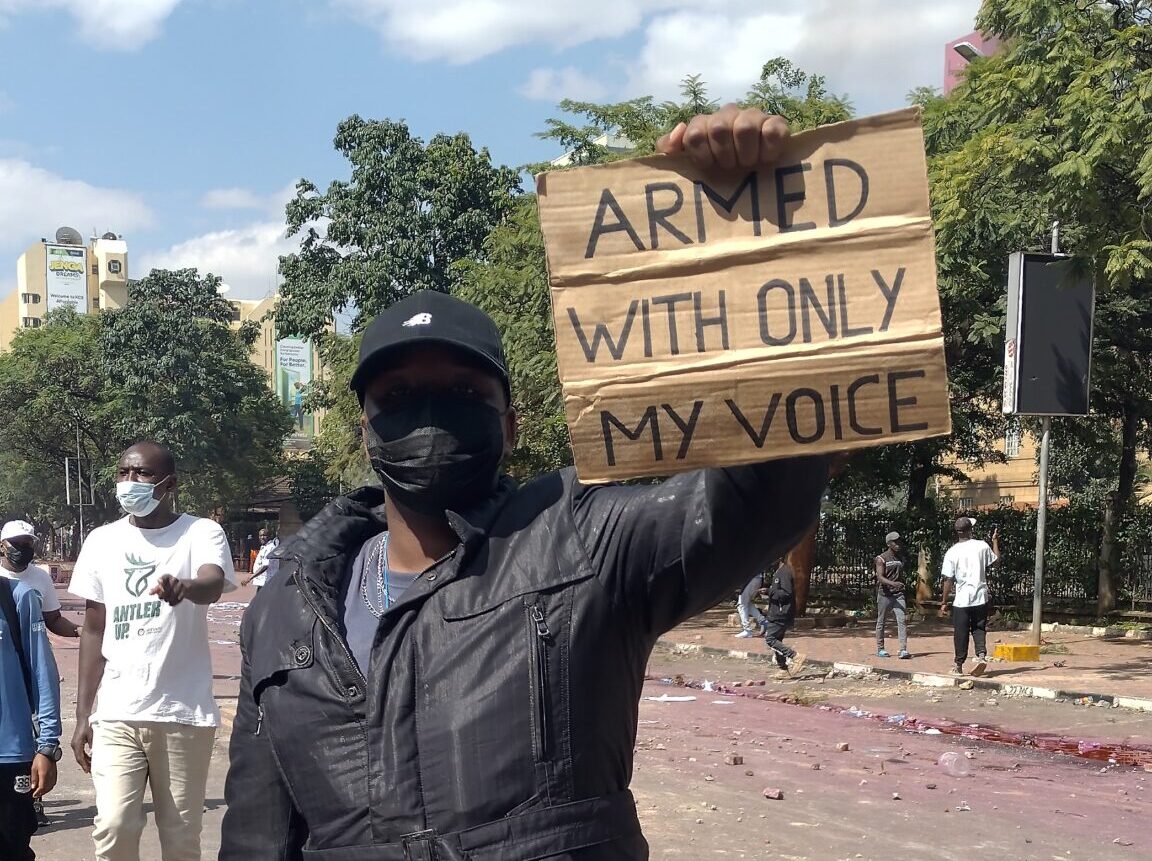
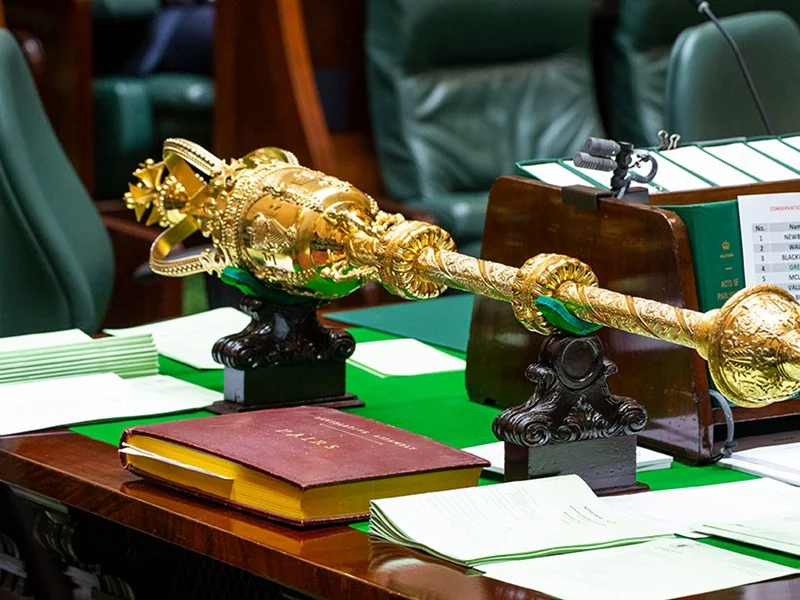
    An unprecedented Tuesday in Nairobi, intended for peaceful protest against a controversial finance bill, devolved into mayhem and bloodshed. The heart of Kenya’s capital was engulfed in violence as police, responding to an increasingly volatile demonstration, opened fire with live ammunition, killing at least five people. The parliament building, a beacon of the nation’s democracy, was set ablaze by enraged protesters who managed to breach its defenses. In a startling twist, the ceremonial mace, the venerable symbol of legislative authority, was stolen amid the chaos.

    Scenes of utter pandemonium unfolded as citizens, driven by frustration over proposed tax hikes, took unprecedented actions. Images of citizens being gunned down outside their parliament evoked a profound sense of loss and outrage. Inside the parliament, protesters turned the hallowed halls into a bizarre tableau—some were seen eating meals, others recording themselves donning the Speaker’s attire. In the streets, the stolen mace became a prop in a disturbing display of defiance, its significance as the emblem of parliamentary legitimacy starkly highlighted against the backdrop of disorder.

    Historical Context

    In independent Kenya, two maces were used by the bicameral House from 1963 to 1966. After that, only one mace was used until 2013, when the new Constitution reinstated the Senate. Former President Jomo Kenyatta officially brought the maces to Parliament on December 14, 1964, symbolizing the constitutional authority of the two houses derived from Kenyans (Parliament of Kenya).

    Symbolism and Function of the Mace

    The mace is an essential part of parliamentary regalia, providing credence and legality to the assembly of Members of Parliament. The Speaker of the Legislative Council, Mr. Cavendish Bentick, received the first mace in 1958 from the Crown Prince. Since then, the mace has been integral to parliamentary proceedings in Kenya (Kahawa Tungu). In Kenya, the mace is symbolic at the National Assembly, Senate, and all 47 county assemblies. The Serjeant-at-Arms, who is responsible for enforcing standing orders and maintaining order and decorum, also performs ceremonial duties, including carrying the mace to and from the House during sessions (Parliament of Kenya).

    Recent Controversies

    The theft of the ceremonial mace from the Nairobi County Assembly has significant implications. The mace is a symbol of authority and legality in parliamentary procedures. Without it, the assembly cannot conduct formal business, as it signifies the Speaker’s authority and the assembly’s legitimacy. Consequently, assembly sittings may be delayed until a replacement is acquired or the original is recovered.

    The Nairobi County Assembly had already faced controversy over its plan to purchase a new 18-carat gold-plated mace for KSh 30 million, a decision defended by the Speaker as necessary for maintaining standard parliamentary protocol. This procurement is part of the county’s budget and has faced criticism for its high cost amidst other pressing needs (The Star, Tuko.co.ke). According to the Annual Development Plan 2023-2024, this acquisition will cost taxpayers a substantial amount of KSh 30 million. The tender documents specify that the mace will weigh between 10 kg and 10.5 kg, with a height of approximately 1.2 meters (The Star, Tuko.co.ke). The plan has faced criticism from various quarters, including MCAs who argue that the funds could be better used for other urgent needs. MCA Robert Alai stated, “It’s wrong for the Nairobi City County Assembly to buy a new mace as if that’s the most urgent thing. There are many things which should be spent on. A mace shouldn’t be a priority” (The Star, Tuko.co.ke). While the purchase of the mace and the Finance Act are related through the county’s budgetary processes, the mace purchase was not explicitly part of the controversial national Finance Bill 2024, which has also faced significant public backlash and protests (Kenyan Wall Street).

    Reflection

    The controversy surrounding the mace highlights the tension between maintaining parliamentary traditions and addressing more immediate fiscal priorities. In a symbolic battle, the Kenyan youth took back what is rightfully theirs—the mace and its power—because their representatives have not used its power to the benefit of the citizens. As the country navigates these turbulent times, the symbolic power of the mace remains a focal point of both legislative authority and public dissent. Chest-thumping, opulence-flaunting state officials have angered their youth, with some opting for a dismissive demeanor towards the struggling population that they rode on to power. Understanding the significance of the mace and its role in parliamentary processes offers crucial insight into the gravity of the current crisis. The events of yesterday are a stark reminder of the delicate balance between tradition and progress, authority and rebellion, in Kenya’s ongoing journey towards democracy. The theft of the mace can be seen as the people reclaiming the power they vested in their politicians and the taxes they pay, emphasizing a profound discontent with how their resources and rights are being managed.


  • Nǐ hǎo, wǒ de míngzì shì

    Nǐ hǎo, wǒ de míngzì shì

    by Ben Ayuko

    contact info: benayuko@gmail.com

    {image by gettyimages}


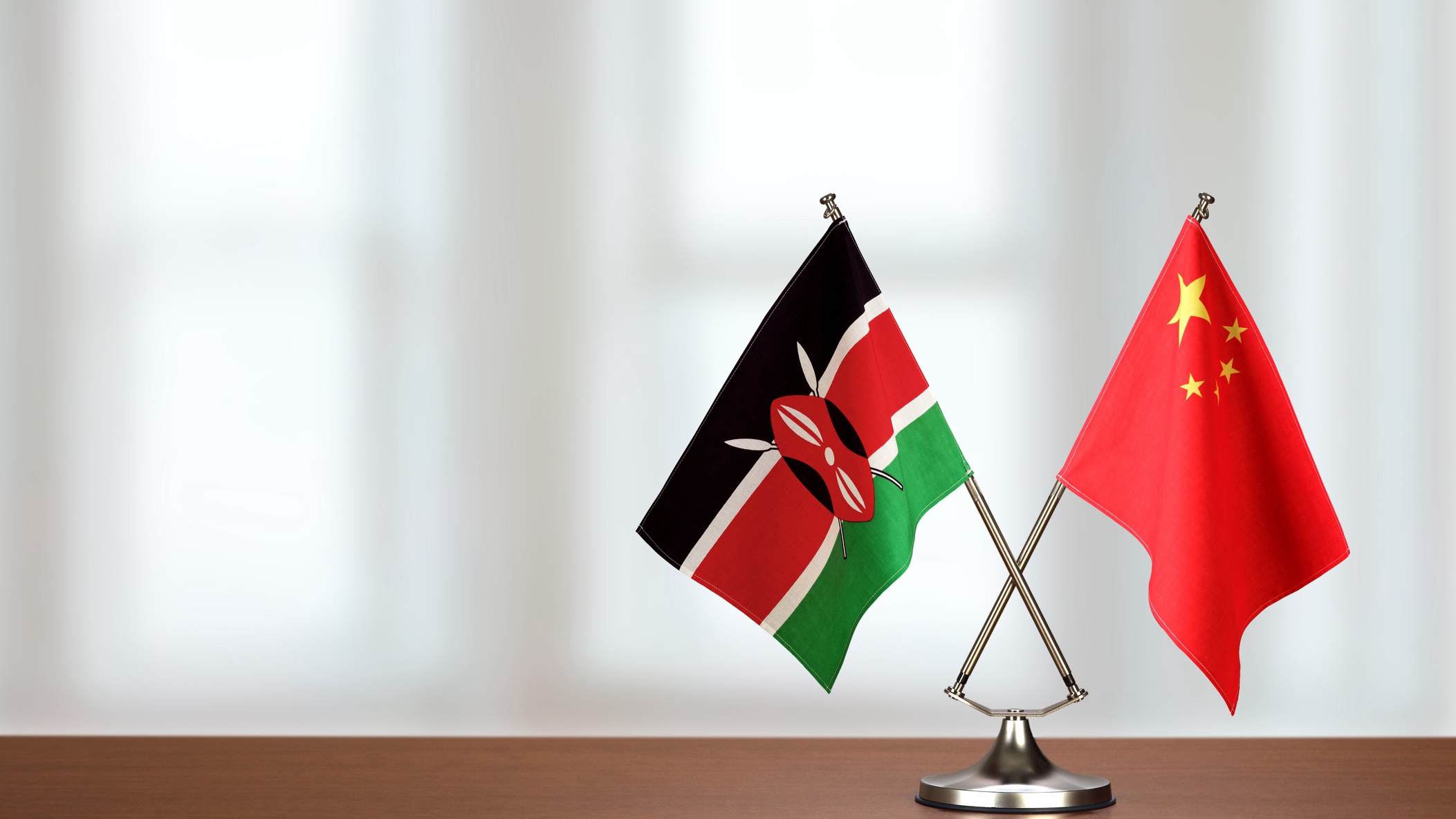
    Over the last decade there has been a very noticeable growth in Chinese presence in our country.

    As Moses Wetang’ula, speaker of the National Assembly, once said, “China is a signatory to almost every major infrastructure project in Kenya…” And well, it doesn’t seem like slowing down any time soon.

    -There is of course the Confucius Institute that launched in 2006 at the University of Nairobi after the then President of China, Hu Jintao, paid Kenay a visit. Its aim was/is to help merge Chinese culture with Kenyan culture. They even teach the students kung fu. {https://www.youtube.com/watch?v=hOtpytrCBGs&pp=ygUpY29uZnVjaXVzIGluc3RpdHV0ZSB1bml2ZXJzaXR5IG9mIG5haXJvYmk%3D}

    -There was the 50km long Thika superhighway in 2012.

    -The construction of the Standard-Gauge Railway line (SGR) in 2017- a billion-dollar project that has become such a normal part of Kenyan Life.

    -The Express Way which was completed in 2022 is probably the latest mammoth project that has been undertaken by Chinese contractors, though there’s definitely more to come.

    Now, obviously, this isn’t everything. These are some of the higher profile projects that Chinese companies such as China Wu Yi, Sinohydro and Shengli Engineering have procured multiple contracts for all over the country, e.g. building apartments, malls and offices in Meru Town as well as the Coloho Mall in Athi River {Zhong-Wu}

    -They are also involved in the automobile industry whereby companies like BYD and NETA are trying to normalize the concept of electric cars in Kenya in order to reduce our carbon emissions and preserve the environment.

    -They are involved in our farming as well. Jianguo Liu {Jack Liu} is the man who introduced the concept of Juncao Grass or Magic Grass as the farmers call it. It earned its name because of the extra-ordinary advantage it has over normal Napier grass. It is a drought tolerant and stress resistant grass that produces almost double the yield in milk and meat on the animals it is fed to. It also has a longer shelf-life than normal fodder that farmers usually feed their livestock. It is also useful in fighting soil erosion. Basically, this grass is slowly revolutionizing how farmers go about managing their product. {Juncao Grass .The Best Solution to Mitigating Fodder Availability @kenyacitizentvContacts 0752600777 (youtube.com)}

    As the years pass, the Chinese influence in our culture is slowly becoming undeniable. Who knows? In 50- or 60-years’ time, Kenya might have 3 national languages.

  • I Know I Shouldn’t

    I Know I Shouldn’t

    by Ben Ayuko

    {image by Cornell Chronicle}


    I feel like if I, acknowledge the past

    it means that it happened, that it will out last

    If I were to hide, from it in a pit

    It wouldn’t have meaning, nothing to admit


    But who it affected, would not just abide

    from out the woodwork, they’d emerge alive

    to keep me accounted, counting my sins

    making me witness, again and again


    If I were to ask, forgiveness from they

    I would be admitting to my past mistakes

    and that would mean, indeed they were right

    how could I sleep with myself tonight


    No, I know better, planned it out well

    I’ll take them out, to dine and to dwell

    a wonderful night, out in the city

    with banter to laugh at, funny and witty


    Till it’s getting late, so get in the car

    I’ll drive them home, ill drive them far

    I’ll take them where, they can’t see no human

    I’ll take them there because they know too much


    Bury them deep, right next to my secrets

    With skeletons rotten and they’re holding them dearest

    And now I can act, like it didn’t happen

    Back of my mind, where they must reside in


  • Fatal Mistake

    Fatal Mistake

    by Ben Ayuko

    {image by Nation Media}


    She was so spent at the end of the day

    She spent it all, with patients and patients

    And patients became, faceless, the same

    screaming in unison, “I need a doctor”


    So, write up a chart, she did this for him in

    Sent him to the back where they’re waiting for him

    “Really? it’s just my hand feeling pain here

    but the doctor’s the doctor, so I have to adhere


    But the doctor’s so tired, from working all day

    He’s feeling so drowsy, really needs to lay

    Stripping him down so in scrubs she can dress him

    To get him to surgery for his hand swelling


    Enter the theatre, the doctors are ready

    Give him anesthetic, he sleeps like a baby

    Envious, when feeling, they get down to drilling

    and sawing his skull open for the revealing


    “This guy is clean, are we sure he’s sick”

    “Yeah, they said that the clot was this thick”

    “Where is his chart, where was it again?”

    “DOCTOR, STOP OPERATING ON HIM!”


    In rushed the nurse, too late she was

    The man’s skull cracked open, bleeding on the floor

    “This man on the table, who you’re addressing

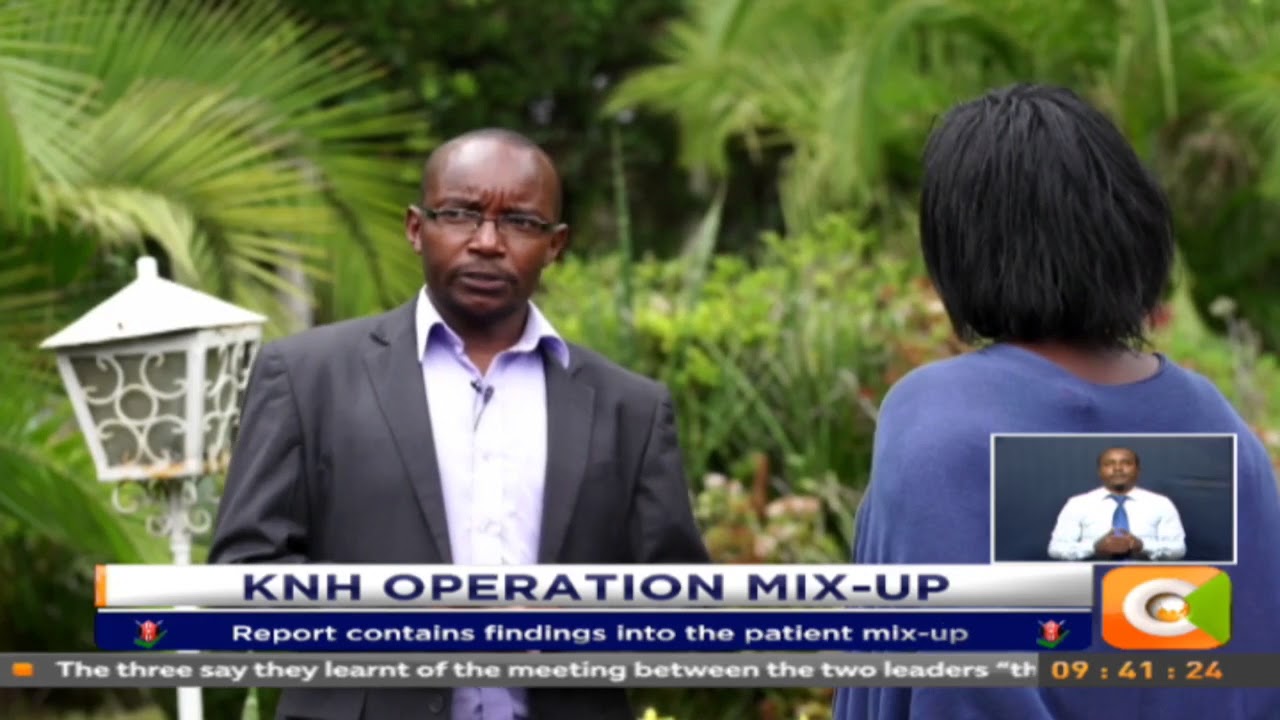
    He came to hospital only for a swelling”


    “What do you mean? So where is my patient?”

    “Recovering. Now. On his own. It’s amazing

    Seems like he won’t even need operating”

    “Jesus, we’ve cut this man open for nothing”


    Patching him up, and sending him home

    They waived the fee, that’s what he was told

    He couldn’t remember, not a lot of it

    Of course, this was just the start of this habit


    3 years of pain, delusion and memory

    lapse, of way too many episodes that

    remained after the incident

    And they didn’t know no-one reached out to them


    Not till it was too late, were they to have found

    Not till his future was buried in the ground

    Not till he’d succumb to the consequence of it

    Did they find the truth of what really had happened


    Family of patient wrongly operated on at KNH want justice for their son (youtube.com)


  • Nairobi Today

    Nairobi Today


    by Ben Ayuko

    contact info: benayuko@gmail.com

    {image by Ben Ayuko}


    So, once again it repeats

    The people, they want to speak

    We didn’t like it before

    Now we just don’t believe


    The reason we roam the streets

    In t-shirts and ripped up jeans

    And sweaters in sweltering heat

    And boots with laces thick


    And blouses with purses hanging

    The music it could be banging

    The blaring horns are wilding

    In combat with constant sirens


    “Enough is enough,” we’re crying

    Holding up and waving our signs in

    The middle of cityscape, no escape

    You will listen this time


    Canisters, they blow up so loud

    To try and deafen the crowd

    Blowing them up to chunks

    Separating their body parts


    But the spirit is still intact

    “You’ll have to bring more than that”

    You try to stifle the people

    The people they will react


  • Our Own Bolt

    Our Own Bolt

    by Ben Ayuko

    {image by Pulse Sport Kenya}

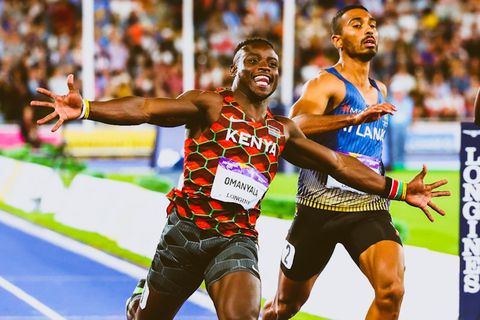
    Ferdinand Omanyala, Kenya’s very own answer to Usain Bolt, once again dominated the track in the 100m, this time at the Olympic Trials held in Nyayo Stadium. He clocked an impressive 9.79s which is the fastest time recorded in the world in this calendar year (2024). He is clearly a special talent, and it shows in his ability to consistently deliver in these events.

    There may have been some doubt regarding his standing with the rest of the world, which in some parts of the Kenyan athletics fandom still exists, but that is no longer in question after witnessing him go blow for blow against the current best sprinters in the world time and time again, and time and time come out in the mix at the top end of the field. He’s come out on top once or twice in these competitions, but more often than not, he comes up short against the best. Surely it’s only a matter of time though

    The Diamond League track meet in Monaco on June 2nd is a good example. Omanyala came up against the American, Christian Coleman, who was the 100m world champion in 2019. Coleman is a sprinter with pedigree having gone up against the likes of Usain Bolt and Justin Gatlin multiple times, coming out on top. He is literally at the spearhead of the new age sprinter’s generation. This is no ordinary match up. Omanyala put his best foot forward, as he often does, but he could only muster up a 2nd place finish…by 3/100ths of a second. That’s not a lot.

    Now, obviously he did suffer heartbreak in Budapest, 2023 world championships when he came 7th. I’m sure that must have hurt his confidence in himself a lot. But it was his debut season in the championship. Getting to the final was impressive in and of itself.

    As a Kenyan interested in athletics, it’s a bit of an anomaly to see one of our own competing on such a grand stage in this event. Kenyans are usually known for long distance running so seeing him break the Mould in such dramatic fashion is thoroughly entertaining to watch and everyone should be behind him as he attempts to do what no other Kenyan has really done in our history.


  • Wake Up

    Wake Up

    by Ben Ayuko

    {picture by JADOKAR}


    If spaceships were real, and they could fly

    Why would I bother flying out in the sky

    When no other drug could compare to this high

    No type of relief could make me this sigh

    No shining celestial, no moon or stars

    Could ever shine brighter than my mind in the dark

    No galaxy far a away or nebula cloud

    Could glisten as brilliant as what I’m seeing now


    Then I wake up, I’m feeling fine

    But I sense something deep inside

    Is this real? Is it in my mind?

    I can’t stop counting all the times

    I’ve tried to get myself to see

    This stuff I’m doin isn’t good for me

    I’m trapped inside this world of slime

    This world of old, this world of mine

    This world on hold, is out of time

    And I need to get to get out of this lie

    It’s Ever present , was always here

    From Time started and still it’s here

    But Chaos streaming now through the sphere

    The bubble burst, out came the tears

    The captain jumps ship, oh my dear

    The eyes unveiled, the truth is here

    The illusion broken, the blood is near

    This IS real, This’ real fear

  • 4 Reasons why you should play God of War (2018)

    4 Reasons why you should play God of War (2018)

    {by Ben Ayuko}

    {image by Rabstol}


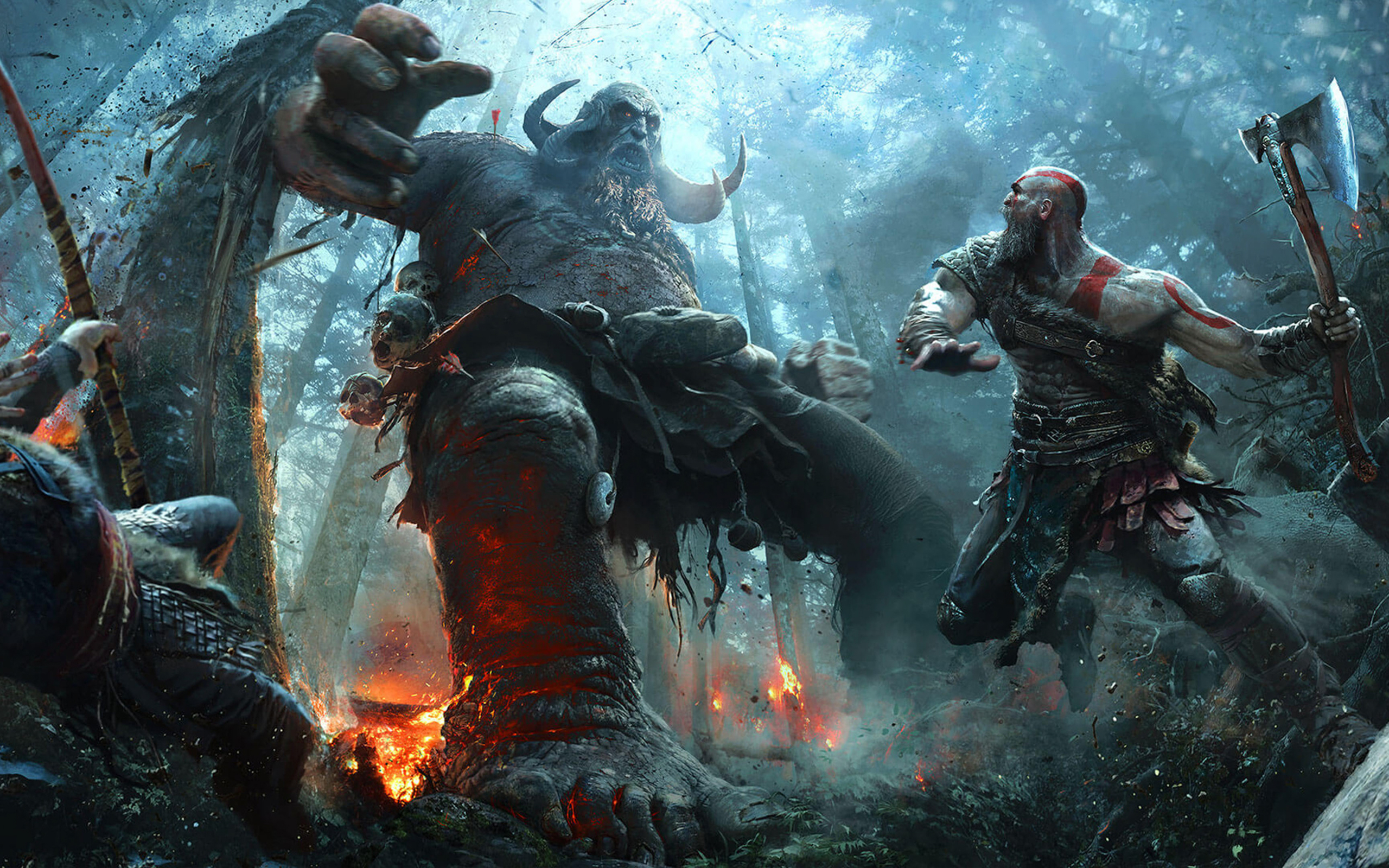
    God of War is a game created by David Jaffe at the Santa Monica Studio in America, and 6 years ago, in 2018, they released the 4th installment of the game titled “God of War”

    These are some of the reasons I liked playing it.

    The Story

    This is probably the best thing about the game, and that is saying a lot. Kratos, the protagonist, has been the bane of the gods for a fare many years. Based in Greek mythology, he has gained a reputation for his propensity to communicate through his anger using his blades of chaos. in this, the fourth installment of the franchise (with regard to console gaming), Kratos finds himself in Midgard, of Norse Mythos as he attempts to navigate and balance being a god with being a father.

    After Kratos’ wife, Faye, passes away, she leaves behind her dying wish: for her ashes to be scattered from atop the highest mountain peak in all the 9 realms.  This sets Kratos and his son, Atreus, on a journey across the 9 realms, e.g. Alfheim, Muspelheim, Niflheim, etc., where, for the first-time, we witness Kratos having to show a vulnerability we had yet to see as he attempts to connect with son as they mourn the passing of their wife/mother

    The Gameplay

    This being God of War, it stays true to its roots with the visceral combat as Kratos shows no mercy cutting down all manner creatures down to size. This includes Trolls, Ogres, the undead, the dark elves, dragons and even the Valkyrie.

    All this is done with his new weapon, the Leviathan Axe. A powerful axe which can be recalled to the thrower producing a similar effect to a boomerang. Atreus also helps out with the combat using his archery skills taught to him by his mother and later, his father.

    There is also all manner of puzzles one has to solve, in true god of war fashion, without any hand holding. Sometimes you don’t even realize where or when the puzzle begins. There are no hints whatsoever apart from Atreus occasionally going, ‘What’s that over there?” or “That looks interesting”.

    The Lore

    The lore of the game gets very deep as you come across various different characters, both dead and alive, who are either malevolent or benevolent. Characters like Freya- the witch, Mimir- the talking head would help you on your journey whereas others like Baldur- son of Odin, and Magni and Modi- sons of Thor, would hunt you down for some nefarious purpose.

    There are many Giant murals (as in murals made by Giants) scattered across the land that tells of their history on earth as well as many stone carvings that exposit the tales of the travelers who came there before and maybe were not as equipped or as fortunate.

    Get to know of Jormungandr, the world serpent whose coils wrap around the world and the dwarves whose architecture was so advanced, Odin felt threatened enough by it to be compelled to destroy it, forcing them all into hiding.

    Yggdrasil, the world tree connecting all nine realms, is also a feature in the game you employ in order to travel across the realms.

    The Graphics

    God of War is a very beautiful game. Whether its the magic emanating from your armor/weapons. Or the scenery you get to see from the Mountain tops. The forests you travel into. All of these, of course, being entirely unique in each of the different realms you journey into.

    And it seems they knew this too because they added a ‘photo mode’ feature in the pause screen which enables you to take screenshots whenever you deem necessary and saves them directly onto your machine for you to look at whenever you please. These are some of my own examples:


    There are so many reasons to play this game, I could go on and on about it. This is barely the top of the tip of the iceberg.

    There’s a reason it won the award “Game of the Year” in 2018.


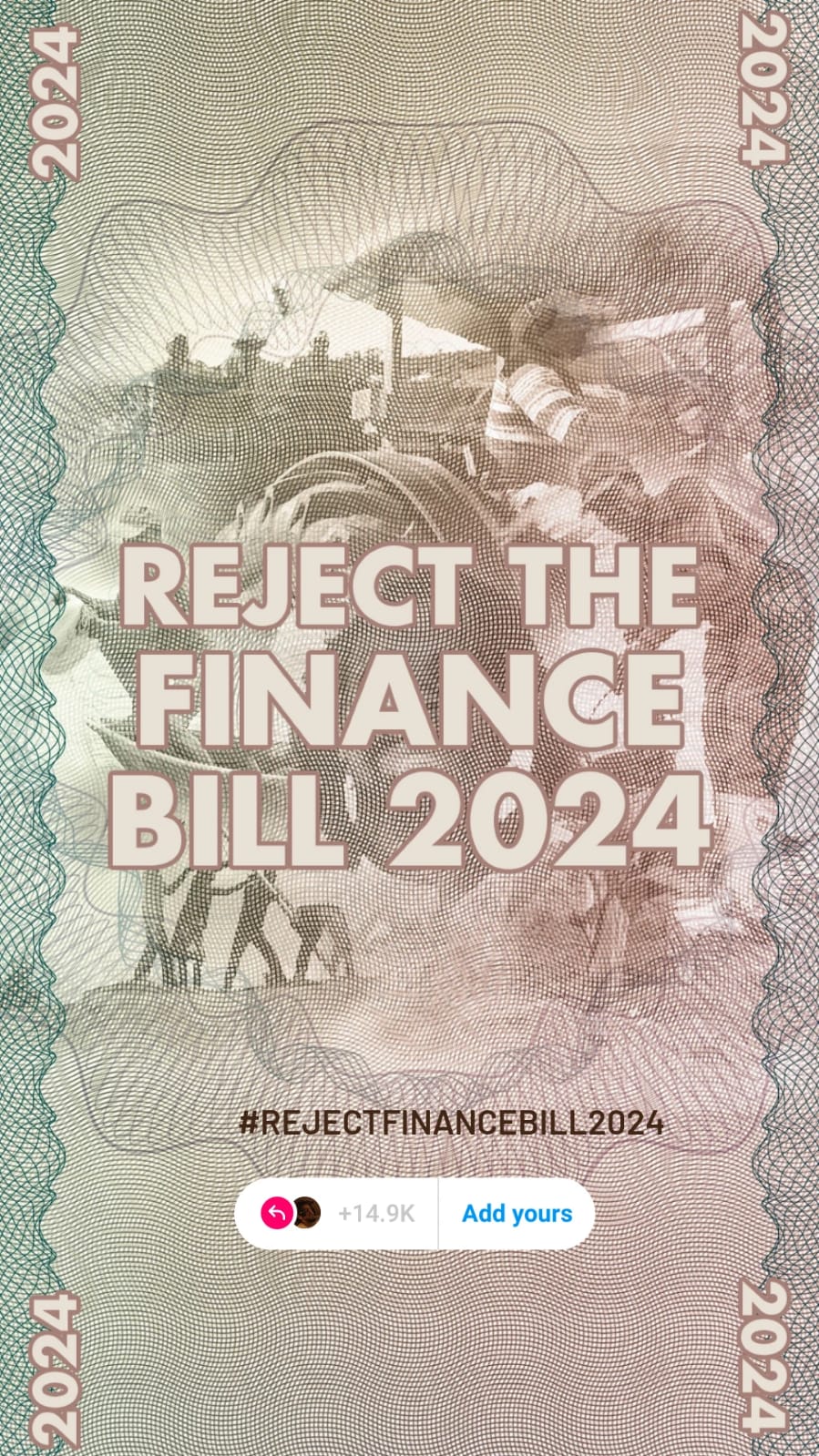
  • Understanding the Finance Bill 2024: A Baddie’s Perspective

    Understanding the Finance Bill 2024: A Baddie’s Perspective

    By Joe Aura

    As the clock struck 3 pm on June 13th, 2024, all eyes and ears across Kenya turned to Treasury Cabinet Secretary Prof. Njuguna Ndung’u, who was set to deliver the highly anticipated 2023/2024 National budget. This annual practice of Kenya’s fiscal policy, carries immense weight, especially this year, as the government outlines its plans to tackle the nation’s pressing economic issues. For students at our university and the youth at large, the Finance Bill 2024 poses critical questions about our financial futures and the broader economic landscape.

    In the hours leading up to the budget announcement, social media platforms buzzed with speculation and hope. Many Kenyans, particularly those in agriculture and small businesses, hoped for measures to ease their economic burdens. The government’s anticipated expenditure of Ksh.3.9 trillion, up by Ksh.200 billion from the previous year, had everyone questioning where this additional funding would come from and who would bear the impact of the increased spending.

    Critics and supporters alike saw this budget as a pivotal moment for President Ruto’s administration. His Bottom Up Economic Transformation Agenda (BETA), which promised to lower the cost of living, is under scrutiny. The stakes are high, and for university students and the youth, the implications are both immediate and long-term.

    The Budget Process: From concept to reality

    Understanding the budget process provides a clearer picture of how these decisions are made. According to Citizen TV (https://www.citizen.digital/opinion-blogs) it begins with the Medium Term Expenditure Framework (MTEF), a three-year outlook on government revenue and expenditure, guided by the Public Finance Management Act (PFMA). Sector Working Groups then prioritize key policies, which are reviewed and included in the Budget Review and Outlook Paper (BROP). This comprehensive document is submitted to the Cabinet for approval by September 30th each financial year, incorporating public participation and feedback along the way.

    The Role of Social Media in Public Participation

    This year, public participation has taken new forms, with social media platforms playing a crucial role. On Twitter (now X), influential personality Amerix spearheaded the #RespectMyHustle campaign, urging Kenyans to call their Members of Parliament and demand the rejection of the Finance Bill. His message was clear and resonated deeply: “60% of your income goes to the taxman. Whom are you working for? You are working for the state. You are a slave. Refuse to be a slave.”

    The movement quickly gained traction, with thousands of Kenyans sharing phone numbers of MPs, flooding their lines with calls and messages demanding action. Influential figures like Kiharu MP Ndindi Nyoro found their contact details widely circulated, with citizens urged to remind them of their duty to represent the people’s interests.

    The Bill’s Impact on University Students and Youth

    For university students, the Finance Bill 2024 is more than just numbers on paper—it directly affects our wallets and our futures. One of the most contentious aspects is the proposed tax on digital content monetization. With the digital economy flourishing, many students earn income through platforms like YouTube, Instagram, and other social media channels. The proposed 20% tax on non-residents and 5% on residents threatens to slash our earnings, stifling creativity and entrepreneurship among young digital content creators.

    Moreover, the bill includes a housing levy and increased NHIF contributions, adding to the financial burden. For a fresh graduate earning Ksh.50,000, here’s a stark breakdown:

    Gross Salary: Ksh.50,000

    Deductions:

    PAYE: Ksh.14,280

    NHIF: Ksh.1,620

    NSSF: Ksh.1,080

    Housing Levy: Ksh.1,428

    Take Home: Ksh.29,192

    Living expenses—rent, food, transport, and utilities—quickly consume this amount, leaving little for other essentials like clothing, recreation, or emergencies.

    According to Natalie Cowling’s report (Sep 22, 2023) on university enrollment in Kenya from 2017-2023, around 563,000 students registered for the academic year 2022/23. New taxes will apply to graduates above the age of 25 who do not have their own income or live with the contributor. The proposal highlights , these persons will be compelled to pay KSh 300 every month.

    The Finance Bill 2024 forces us to confront some uncomfortable realities. Some students and their care givers are already juggling tuition, accommodation, and daily expenses. Adding new taxes and levies makes us question how we will survive and thrive in this challenging economic climate. The visible anxiety is evident in the heartfelt posts and tweets from our peers.

    For instance, one user lamented, “Kitambo baddies walikua wanajua tu President, Deputy wake, Raila na Najib Balala kwa government. Siku hizi wanajua hadi CS wa agriculture juu ya incompetence,” highlighting how deeply economic issues are now understood even by those previously disengaged from politics.

    Moving Forward: What Shall We Do?

    As we navigate these difficult times, it is critical that we remain informed and engaged. Platforms such as Kelvin Onkundi’s Finance Bill GPT (https://chatgpt.com/g/g-JBq7D0E5x-finance-bill-gpt) enable us to learn more and engage in important discussions. There are even creative story themes expressly designed for folks who believe their Instagram pages are too visually appealing to post about social activism and collective action. Understanding the bill’s ramifications allows us to better fight for our interests and hold our legislators responsible.

    It is important to highlight that today’s proceedings were simply reading the budget. The Bill will not be voted on until a later date, and it must include public engagement before being passed. According to a publication by the National Council for Population and Development, Kenya has a young population, with more than 80% of the population aged 35 and under. We have the power to influence the policies that affect our lives, whether through social media activity or direct contact with our MPs. The Finance Bill 2024 may seem overwhelming, but it also provides a chance for us to band together and demand a more equitable, inclusive economic future.