Category: News

  • Daystar University Commissions New Gate House and Opens Hope Centre Parking

    Daystar University Commissions New Gate House and Opens Hope Centre Parking

    By Serena Kwena,

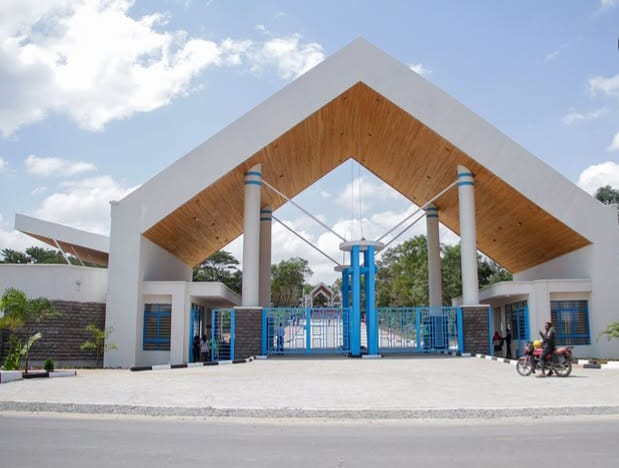
    ATHI RIVER, Kenya – Daystar University has officially commissioned a new Gate House and opened the Hope Centre Parking at its Athi River Main Campus in a move aimed at enhancing security, accessibility, and convenience for students, staff, and visitors.

    The commissioning ceremony brought together members of the Daystar community, including the University Management, Senate, staff, students, and invited guests, to celebrate the completion of the new facilities.

    Speaking during the event, Vice Chancellor Prof. Laban P. Ayiro said the new Gate House is more than just an entrance to the university. He noted that it symbolizes the institution’s identity, purpose, protection, and commitment to new beginnings. He added that the facility reflects Daystar University’s Christian heritage and its mission of nurturing graduates of character, wisdom, and purpose.

    The new Gate House is expected to improve access control and strengthen campus security, while the Hope Centre Parking will provide additional parking space and improve convenience for members of the university community.

    The infrastructure project forms part of the university’s continued efforts to modernize its facilities and create an environment that supports learning, safety, and efficient service delivery. As the university continues to grow, such developments are expected to improve the overall campus experience for students and staff.

    The commissioning of the two facilities marks another milestone in Daystar University’s commitment to investing in infrastructure that supports its vision of academic excellence and holistic student development.


  • Policing Gotham: Inside Nairobi’s New Metropolitan Police Unit

    Policing Gotham: Inside Nairobi’s New Metropolitan Police Unit

    By Joe Aura, aurajoe6@gmail.com

    For many Kenyans, insecurity has become an everyday concern. Stories of muggings, violent robberies, organised criminal gangs and attacks on businesses have become increasingly common, particularly within Nairobi and its surrounding metropolitan region.

    While official government data shows that reported crime fell in 2025, public perception fueled by video evidence from social media tells a different story. Many residents feel less safe in their neighborhoods.

    Against this backdrop, President William Ruto has announced the rollout of the Nairobi Metropolitan Police Unit (NMPU), a specialised policing framework designed to improve security through technology, intelligence sharing and stronger community involvement.

    The initiative, expected to begin in the coming days, represents one of Kenya’s most ambitious attempts to modernise urban policing.

    A New Way of Policing Nairobi

    Unlike traditional policing models that largely react after crimes have occurred, the Nairobi Metropolitan Police Unit is designed to anticipate and prevent crime before it happens.

    According to President Ruto, the framework will bring together the National Police Service, Nairobi County Government, community leaders, businesses and residents to jointly identify crime hotspots and develop local security solutions.

    Interior Cabinet Secretary Kipchumba Murkomen has described the project as being in its final stages, noting that technical teams are developing the unit’s operational procedures before deployment.

    The framework draws heavily from policing systems used in major cities including New York, London, Rome and Tokyo, where Kenyan officials recently conducted benchmarking visits.

    Technology at the Centre

    One of the biggest shifts introduced by the NMPU is its reliance on technology.

    Government officials say the unit will integrate artificial intelligence, surveillance cameras, analytics and intelligence-led policing to improve response times and identify criminal patterns more quickly.

    The long-term vision is to create an interconnected security network where public CCTV systems, and potentially privately owned surveillance cameras, can assist police in responding to incidents in real time.

    Rather than relying solely on routine patrols, officers will increasingly use data to determine where crimes are likely to occur and deploy resources accordingly.

    This mirrors a growing global trend where predictive policing technologies are being used to allocate officers more efficiently, although such systems also continue to generate debate around privacy and accountability.

    Beyond Nairobi

    Despite its name, the Nairobi Metropolitan Police Unit will not be limited to Nairobi County.

    Its jurisdiction is expected to extend across the wider metropolitan region, including Kiambu, Machakos, Kajiado and Murang’a counties, recognising that criminal networks often operate across county boundaries.

    The multi-agency approach is intended to improve coordination between national security agencies and county authorities while reducing operational gaps that criminals sometimes exploit.

    Can It Solve Kenya’s Insecurity Problem?

    The announcement comes at a time when insecurity remains one of Kenya’s most discussed public concerns.

    Although the Economic Survey 2026 reported a decline in recorded criminal cases during 2025, incidents involving kidnapping, violent robberies, organised gangs, political unrest and isolated terrorist threats continue to shape public opinion.

    As public anxiety grows, leaders from both the government and the opposition are actively shifting accountability. The government now believes the new policing framework can address several longstanding challenges.

    Experts have also cautioned that technology alone cannot eliminate crime. Many of the drivers of insecurity, including unemployment, poverty, drug abuse, organised criminal networks and corruption, require broader social and economic interventions alongside improved policing.

    What Do You Think?


    For story pitches, commissioned writing, or collaborations, connect with Joe on LinkedIn:
    https://www.linkedin.com/in/aura-joe-digitalproducer/recent-activity/articles/
  • DAYSTAR REUNITES WITH FORMER STAFF MEMBER KEN SHINGLEDECKER

    DAYSTAR REUNITES WITH FORMER STAFF MEMBER KEN SHINGLEDECKER

           Courtesy visit by the former employee and his family highlights the university’s growth in infrastructure, academic programs and student population

    By Serena Kwena,

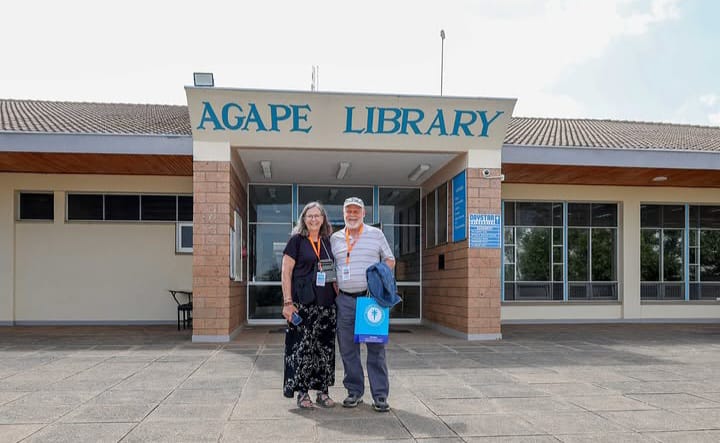
    Athi River — Daystar University recently welcomed former staff member Mr. Ken Shingledecker and his family for a courtesy visit and reunion at the institution’s Main Campus, in an event that celebrated the university’s heritage, growth and enduring relationships with those who have contributed to its development.

    Mr. Shingledecker served at Daystar University between 1981 and 1996. His return to the university offered an opportunity to reconnect with the institution’s history while witnessing its significant transformation over the years in terms of academic programmes, student population and infrastructure.

    During the visit, Mr. Shingledecker and his family toured several key facilities at the Main Campus, including the poultry farm, water treatment plant, Agape Library, the School of Nursing and the School of Law. The tour showcased some of the university’s developments and its continued efforts to expand learning resources and improve service delivery to students.

    The reunion also served as a moment of reflection on the role former staff members have played in shaping the university’s journey. By hosting the visit, Daystar underscored the importance of maintaining ties with individuals whose work and dedication contributed to the institution’s growth in its formative years.

    The university described the visit as a meaningful occasion that not only honored Mr. Shingledecker’s service, but also reaffirmed Daystar’s appreciation of its heritage and the people who have been part of its story.

    As the university continues to grow, the reunion highlighted the value of preserving institutional memory and celebrating relationships that have remained strong over the years.


  • Daystar University Wins KES 17.5M Grant for Kenya Child Labour Study

    Daystar University Wins KES 17.5M Grant for Kenya Child Labour Study

    By Chelangat Caren,


    Daystar University has secured a KES 17.5 million national grant to lead one of Kenya’s most comprehensive studies on child labour to date, placing the institution at the centre of policy conversations on children’s rights and education.

    The project, awarded in May 2026, will map the scale, drivers, and regional patterns of child labour across all 47 counties. It is being conducted in partnership with the United Nations Office on Drugs and Crime  and the International Labour Organization .

    “Research for Action”

    Daystar University Vice Chancellor Prof. Laban P. Ayiro is serving as the Principal Investigator. Speaking during recent university engagements, Prof. Ayiro has emphasized the link between culture, virtue, and human formation in tackling systemic social issues , a framework he says will also guide this study.

    “Child labour is not just a statistic. It’s about children who should be in classrooms, not in hazardous work,” a member of the research team noted. “This grant allows us to move from assumptions to evidence that can shape county and national policy.”


    Why It Matters Now

    Kenya has made strides in education access, but pockets of child labour persist, especially in informal sectors, agriculture, and urban street economies. By covering all 47 counties, the Daystar-led study aims to provide county-specific data that policymakers, NGOs, and faith-based organisations can use to target interventions.


    The research will also assess how factors like school fees, household income, and migration influence child labour trends ,findings that tie directly to Daystar’s focus on family, education, and community welfare.


    A University-Wide Commitment

    The grant adds to Daystar’s growing research profile. In June alone, the university hosted an Entrepreneurship Expo for student-led businesses, launched academic excellence awards, and strengthened international partnerships in nursing education with Taylor University.


    For students, the project opens doors to field research, data analysis, and advocacy experience. Several School of Business and Social Sciences students are expected to support data collection and dissemination in the coming months.

    Fieldwork is set to begin this trimester, with preliminary findings expected before the end of 2026. The final report will be shared with the Ministry of Labour, county governments, and UN partners to inform Kenya’s next phase of child protection strategies.


    As Prof Ayiro put it during the KESSHA Conference: building strong schools and communities requires both virtue and evidence. With this study, Daystar is contributing both.


  • DRC RETURNS TO FIFA WORLD CUP AFTER 52-YEAR ABSENCE

    DRC RETURNS TO FIFA WORLD CUP AFTER 52-YEAR ABSENCE

    By Jacqueline Kitamba,

    The Democratic Republic of the Congo (DRC) is making its long-awaited return to the FIFA World Cup, ending a 52-year absence from football’s biggest stage.

    The Leopards are participating in the tournament for the first time since 1974, when the country competed as Zaire. Their return marks a historic moment for Congolese football and a significant achievement for a nation that has spent decades watching the competition from the sidelines.

    DRC’s journey to the 2026 World Cup is characterized by determination and resilience. After failing to qualify for the 2018 and 2022 editions, the Leopards mount a successful qualification campaign to secure their place among the world’s elite teams.

    The team overcomes several major challenges during the qualifiers, including a dramatic penalty shootout victory over Nigeria in the African play-offs. The Leopards also hold their own against continental heavyweights Senegal before booking their World Cup ticket with a hard-fought 1-0 extra-time win over Jamaica in Mexico. Axel Tuanzebe scores the decisive goal that seals qualification.

    Led by captain Chancel Mbemba and head coach Sébastien Desabre, the Leopards enter the tournament determined to make an impact. Their opening Group K fixture pits them against European giants Portugal in what is expected to be one of the group’s most anticipated matches.

    For millions of Congolese supporters, the team’s participation represents more than a football achievement. It symbolizes perseverance, national pride and the revival of a footballing legacy that has remained dormant on the World Cup stage for more than five decades.

    As the tournament progresses, DRC’s return stands as one of the compelling stories of the 2026 FIFA World Cup.


  • The Changing Landscape of the NBA

    The Changing Landscape of the NBA

    By Joe Aura, aurajoe6@gmail.com,

    The era of the Golden State Warriors and Cleveland Cavaliers, which defined a decade of NBA dominance, has firmly shifted. In recent years, the league has seen a resurgence of parity, with a variety of new teams claiming championships and challenging the old guard. This new landscape sets the stage for the upcoming 2026 NBA Draft, as teams look to secure the next generation of talent to compete in this highly open field.
    The 2026 NBA Draft will take place across two days at the Barclays Center in Brooklyn, New York.
    ● First Round: Tuesday, June 23 at 8:00 p.m. ET (ABC and ESPN)
    ● Second Round: Wednesday, June 24 at 8:00 p.m. ET (ESPN)

    The 2026 NBA Draft is scheduled for June 23-24. For the third consecutive year, the event will follow a two-night format.
    Draft Schedule & Broadcast Information
    Both nights of the draft will begin coverage at 8:00 p.m. ET.
    ● Round 1: Tuesday, June 23 at 8:00 p.m. ET. Watch on ABC, ESPN, and the ESPN App.
    ● Round 2: Wednesday, June 24 at 8:00 p.m. ET. Broadcast on ESPN and the ESPN App.
    Key Draft Details
    ● Draft Order: The Washington Wizards won the 2026 NBA Draft Lottery and hold the No. 1 overall pick. The Utah Jazz, Memphis Grizzlies, and Chicago Bulls follow with the remaining top four picks.
    ● Top Prospects: AJ Dybantsa is currently the projected top pick, followed by other high-ranking prospects including Darryn Peterson, Cameron Boozer, and Caleb Wilson.
    ● Pick Time Limits: Teams will have five minutes between selections in the first round and four minutes between picks in the second round.
    For specific draft orders and team picks, you can check the complete NBA Draft Order.


    For story pitches, commissioned writing, or collaborations, connect with Joe on LinkedIn:
    https://www.linkedin.com/in/aura-joe-digitalproducer/recent-activity/articles/
  • Former Chief Justice David Maraga Arrested at Nairobi National Park Protest

    Former Chief Justice David Maraga Arrested at Nairobi National Park Protest

    By Chelangat Caren,


    Nairobi, Monday June 8, 2026— Former Chief Justice David Maraga was arrested on Monday morning outside Nairobi National Park, minutes after launching a protest against proposed infrastructure construction within the park.

    Eyewitness accounts indicate Maraga was with members of his campaign team near the park’s main gate when police officers moved in to disperse the gathering. He was later placed in a police vehicle and driven away from the scene. The protest was organized to oppose plans to fence and build new structures inside the park, which conservation groups argue would block wildlife corridors critical for elephants and other animals.

    Maraga, who served as Chief Justice from 2016 to 2021, has been leading public campaigns in recent weeks to stop excisions and new developments in Nairobi National Park. The park, located 7km from Nairobi’s central business district, is the only wildlife reserve in the world with a city skyline. It previously lost over 2,000 acres to the Standard Gauge Railway project in 2017.

    Organizers described Monday’s procession as peaceful. Police intervened shortly after it began. As of 12:30pm, authorities had not released an official statement detailing the charges or legal basis for the arrest.

    The arrest occurred on the same day the High Court delivered its long-awaited ruling on petitions challenging the October 2024 impeachment of former Deputy President Rigathi Gachagua. Both events have drawn significant public and media attention in Nairobi.

    Conservationists have warned that further fencing and construction within the park could sever migration routes linking Nairobi National Park to the wider Athi-Kapiti ecosystem. Government officials have previously cited infrastructure needs and land use planning as reasons for proposed developments.

    Maraga is expected to be arraigned as police finalize statements on the arrest. The development adds pressure on Parliament and the Ministry of Tourism and Wildlife, which are already facing petitions and public submissions over the park’s boundaries. With both the Gachagua impeachment ruling and the park protest dominating headlines, the courts and security agencies face renewed scrutiny over how they balance public assembly, conservation, and state authority. This story will be updated as court documents and official statements are released.


  • Daystar University Hosts Opening of ICA 2026 Nairobi Regional Hub Conference.

    Daystar University Hosts Opening of ICA 2026 Nairobi Regional Hub Conference.

    By Richard Onyango

    Daystar University officially opened the 2026 Nairobi Regional Hub Conference of the International Communication Association (ICA) today, bringing together scholars, researchers, students, and communication professionals for conversations centered on communication and inequalities in society.

    The conference, running from June 4–6, is part of the 76th Annual ICA Conference taking place in Cape Town, South Africa, under the global theme, “Communication and Inequalities in Context.” The Nairobi Regional Hub is among several hubs organized worldwide to expand participation and create opportunities for scholars and students unable to attend the main conference physically.

    The opening session featured virtual addresses from international communication scholars and ICA leaders who emphasized the urgent need for inclusivity, collaboration, and mentorship in addressing global inequalities through communication. Speaking during the opening session, incoming ICA President for 2026–2027, Professor Ingrid Bachmann of Pontificia Universidad Católica de Chile, described ICA as a growing and increasingly diverse organization that still has room for broader inclusion.

    “This has become a diverse organization which still needs to grow,” she said.

    Professor Bachmann noted that inequalities around the world inspired this year’s conference theme and challenged communication scholars to intentionally create spaces that include more voices and perspectives.

    “ICA can deal with these inequalities by being aware of these inequalities and differences and being intentional about including other people and more people,” she added.

    Outgoing ICA President 2025–2026, Professor Dr. Thomas Hanitzsch of LMU Munich, commended the work being done within the African communication landscape and acknowledged the importance of regional hubs such as Nairobi in shaping global academic conversations.He also emphasized that inequality remains a major global challenge and encouraged ICA to deliberately mentor future leaders from underrepresented regions and countries.

    At the local level, Dr. Robert Aswani, Dean of the School of Communication at Daystar University and Chair of the ICA Kenya Chapter, highlighted the role the conference continues to play in advancing communication scholarship in Africa. Dr. Aswani noted that while ICA has already made tremendous progress globally, there is still room to strengthen its impact through greater interdisciplinary collaboration among scholars and researchers.

    He further described the conference as an important breakthrough platform that allows scholars, students, and practitioners to network, share research, and contribute toward addressing communication inequalities.

    The conference continues to position Daystar University as a leading center for communication scholarship in Africa. Over the years, the university has hosted several editions of the ICA Regional Hub, attracting participants from universities across Kenya and international presenters from around the world.

    This year’s conference features live sessions, research presentations, panel discussions, and breakout engagements focusing on media, digital communication, artificial intelligence, journalism, public relations, and emerging communication technologies.

    For students pursuing communication and media-related courses, the conference offers an opportunity to engage directly with scholars and professionals shaping conversations around communication in Africa and beyond.

    As discussions continue throughout the three-day event, participants are expected to explore how communication research, innovation, and collaboration can help address both global and local inequalities in an increasingly digital world.

    The conversation continues tomorrow with more panel discussions, research presentations, and collaborative engagements expected to further examine the role of communication in addressing inequalities across different contexts.


  • Mixed Fortunes for Daystar Falcons in The Kenya Handball Premier League

    Mixed Fortunes for Daystar Falcons in The Kenya Handball Premier League

    And Women secure super cup spot as men fight for survival

    By Teddy Otieno – Sports Editor

    (tedootieno@gmail.com)


    The Daystar Falcons handball teams experienced mixed fortunes in the 2025/2026 Kenya Handball Premier League season, a reality highlighted during the Madaraka Day league matchday at the Nyayo Stadium Handball Court.

    The Falcons women’s team played their final league match of the season, earning a hard-fought 29-29 draw against National Cereals and Produce Board (NCPB). Leah Nyongesa and Esther Nyangami led the scoring with six and five goals respectively. Impressively, the team’s 29 goals were shared among eight players, underlining the Falcons’ strong team-oriented approach.

    The result sees the Falcons women finish fifth in the league standings and secure qualification for the Super Cup tournament scheduled for August. It marks another impressive achievement for a side renowned for punching above its weight. The team also concludes the season as Federation of Eastern Africa University Sports (FEAUS) champions after winning the tournament in Kakamega during their maiden appearance in April.

    Meanwhile, the Falcons men’s team continues to face a challenging Premier League campaign. This season introduced significant changes to the league structure, with the number of teams reduced to twelve and the bottom two sides facing relegation to the National League. The adoption of a home-and-away format, where teams play each other twice, has further increased competitiveness and improved the overall quality of the league.

    The Madaraka Day fixture saw the second leg of the Falcons’ encounter with Equity at the Nyayo Handball Court. Having narrowly lost the first leg by four goals, the Falcons entered the return match hoping to cause an upset. The Falcons produced a fluid, tactical, and entertaining display. They played confidently against an Equity side that sits second in the table and boasts one of the league’s strongest defensive records.

    The contest was fiercely contested and saw Falcon William Oduor receive a red card in the second half. Equity, who are pursuing their first league title, refused to relent. A brief lapse in concentration by the Falcons allowed a slender one-goal lead to disappear, with Equity scoring three quick goals to seize control of the match. The game eventually ended 27-23 in favour of Equity, handing the Falcons a third consecutive defeat.

    While the result was disappointing, the performance offered several positives. The Falcons displayed excellent tactical awareness and intelligent movement, with an attractive style of play. However, they currently sit tenth in the league standings, just above the relegation zone.

    The team will hope to draw inspiration from the recent national team call-ups of three of its players. Moses Munasi, Brandon Barasa, and John Daniel Hongo recently represented Kenya’s Under-20 national team at the IHF Zone Five Trophy Championship in Addis Ababa, Ethiopia. Falcons coach Martin Kamau also earned his maiden national team call-up, joining the technical bench as part of the coaching staff. Kenya finished third at the championship and secured qualification for the African Championship set to take place in Ivory Coast this September.

    With eight matches remaining, the Falcons men’s team still has plenty to play for. Their focus will be on converting encouraging performances into positive results as they battle to preserve their Premier League status and avoid relegation.

  • JERRICANS OVER SPEECHES

    JERRICANS OVER SPEECHES

    By Chelangat Caren,


    The honking started at 9 a.m. on Kenyatta Avenue. Not the impatient honk of Nairobi traffic, but a slower, deliberate one. A crowd had gathered around comedian Eric Omondi as he dragged a long chain of empty yellow jerricans down the road. Each plastic container clattered against the tarmac, a sound that felt louder than any slogan.

    It was May 18, 2026, and Nairobi was back on edge over fuel prices. Two days earlier, EPRA had announced another hike. Super petrol rose by Ksh 16.65 per liter and diesel by Ksh 46.29. For most Kenyans, that was not just a number on a board. It meant matatu fares going up overnight, food getting more expensive at Gikomba, and boda-boda riders thinking twice before taking a long trip.

    Omondi’s protest was simple and theatrical. He pulled dozens of empty jerricans behind him near a petrol station, a visual jab at the reality many face: showing up at the pump with no money to fill them. “We are tired of promises. Kenyans cannot afford fuel anymore; this is crippling everything: transport, food, and business,” he told the crowd.

    Dressed in his “Sisi Kwa Sisi” hoodie with heavy chains across his shoulders, Omondi framed it as a movement for the common mwananchi. People stopped and filmed; some joined in carrying jerricans. Others just watched, nodding. By noon, police had cleared the road, but the video was already circulating on TikTok and X with thousands of shares.

    This was not Omondi’s first time turning personal frustration into public spectacle. He has protested over unemployment, taxation, and the cost of living before. But fuel cuts deeper because it touches everything else. When diesel goes up, so do school fees, vegetables, and the fare to visit your mom in Nakuru.

    Inside the studios, the tone was different. On Citizen TV’s Daybreak, Deputy Speaker of the National Assembly Gladys Shollei urged calm. She told viewers that Kenyans needed to “be patient” because the rising prices were linked to global factors like the Israel-Palestine war and the weakening of the shilling.

    She pointed to the government’s Fuel Stabilization Fund as evidence that it was trying to shield people from worse hikes. Her message was clear: the pain is real, but it was not entirely homemade, and street protests will not change the global oil market.

    Shollei has taken a hard line on protests more broadly. In Parliament she criticized former Chief Justice David Maraga for joining the June 25 demonstrations, saying they turned violent and hurt ordinary people trying to make a living. “Your rights end where the other person’s rights start,” she said.

    That is the tension playing out now. On one side are activists like Omondi, who say silence is complicity when the cost of living bites. On the other hand, leaders who argue that patience and policy are the only way through a crisis driven by forces outside Kenya’s control.

    In the middle are people like Amina, a mama mboga in Westlands, who told a reporter she now spends Ksh 200 more daily just to get her greens to the market. Or Kevin, a matatu driver in Embakasi, who says he is parking his vehicle two days a week because diesel is eating his profits.

    The government has tried cushioning the blow. In April, it cut VAT on petroleum products from 16% to 8% for 90 days after opposition leaders threatened mass action. But with global oil prices still volatile, the relief feels temporary.

    For now, Nairobi is quiet again. But the empty jerricans are a reminder that for many, “tightening your belt” does not mean much when there is nothing left to tighten. The next EPRA review will tell us if the streets stay calm or if those jerricans come back out.