Category: News

  • How AI Will Help Combat Online Bullying and Support Kipchoge’s Pursuit of GOAT Status

    How AI Will Help Combat Online Bullying and Support Kipchoge’s Pursuit of GOAT Status

    By Joe Aura

    contact info: aurajoe6@gmail.com

    {image by GettyImages}


    Eliud Kipchoge, the legendary Kenyan marathon runner, is on the brink of making history once again.

    With the Paris 2024 Olympics approaching, Kipchoge aims to achieve a remarkable feat: becoming the first man to win three Olympic gold medals in the marathon. Beyond personal glory, Kipchoge seeks to inspire a global appreciation for running and promote a healthier, more active lifestyle. Notably, Kipchoge has expressed his support for the use of artificial intelligence (AI) by Olympic organizers to tackle online abuse, demonstrating his commitment to athletes’ well-being.


    Challenges in Athletes’ Social Media

    Kipchoge has faced challenges, including becoming a target of online abuse following the tragic death of fellow Kenyan marathon runner, Kelvin Kiptum. These experiences shed light on the darker side of social media, where anonymity emboldens harmful behavior. This kind of online abuse not only impacts athletes’ mental and emotional well-being, but also poses a threat to their safety and professional careers.

    Kipchoge’s resilience in the face of adversity has been a source of inspiration, showcasing his unwavering spirit and commitment to his goals. “These faceless people are posting bad things and are really dangerous,” he said, “If you report some accounts then it takes time for them to delete those accounts. “They should act fast, get the facts, delete accounts. People [should] know that if you say something which is not good then your account will be deleted.” [B.B.C News]

    To address the severity of online abuse, the International Olympic Committee (IOC) has announced a proactive approach to protect athletes during the Paris 2024 Olympics. Leveraging AI, the IOC aims to monitor and mitigate abusive behavior on social media platforms.


    Understanding the Cyber Abuse Protection Service

    The cyber abuse protection service was developed specifically for the sports sector and is a leading global solution for safeguarding athletes from online abuse. This AI-driven service uses forensic investigation techniques and a specialist methodology for identifying and addressing abuse. It has gained traction in the sports sector, being utilized by clubs, leagues, players’ unions, federations, and global sports event organizers.

    The service will prioritize the safety and well-being of athletes across the Olympic and Paralympic Games, offering greater insight into the scale and nature of online abuse specific to athletes at the Games. It will also provide evidence to expedite takedown action against abusive content on social media platforms and protect the community around the event.

    For the Paris 2024 Olympics, any accredited athlete with a public-facing social media account will be automatically covered by the initiative. Athletes can opt out if they choose, and entourage members and technical officials can opt in to benefit from the services. Kipchoge has welcomed this announcement, emphasizing the need for swift and effective action against online abuse to protect athletes’ mental and emotional well-being.

    I think it’s actually the right direction,” he said. “They are now stamping their authority and their function as an organisation handling the athletes to safeguard them from abuse.” He believes that social media companies should act fast to delete abusive content and hold wrongdoers accountable.


    AI’s Impact on the Olympics

    AI’s role in the Olympics extends beyond combating online abuse. The technology will assist athletes in various aspects, including training, performance analysis, and injury prevention. For fans, AI promises to enhance the viewing experience through improved broadcasting and interactive features, making the Games more engaging and accessible. This integration of AI represents a significant step forward in the evolution of sports and the Olympic experience.

    The anticipation for the Paris 2024 Olympics is palpable, particularly among African athletes who are making their final preparations with high hopes. The goal of winning 50 medals for the first time at the Olympics highlights Africa’s growing prowess in various sports.

    As the world eagerly awaits the start of the Games, Kipchoge’s journey serves as a beacon of inspiration. The advancements in AI and their application in sports not only promise to enhance the Olympic experience, but also contribute to the evolution of sports.
  • 2024 USA Basketball Team vs. the 1992 Dream Team

    2024 USA Basketball Team vs. the 1992 Dream Team

    By Joe Aura

    contact info: aurajoe@gmail.com

    {image by FadeawayWorld}


    The 1992 Dream Team is considered iconic in basketball, known for redefining the sport and inspiring many. As the 2024 Olympic Games begin, attention turns to the current USA Basketball Team.

    This article seeks to compare these two legendary teams and analyze the current state of USA basketball as they face tough competition in Paris.


    The 1992 Dream Team

    (credit: FadeawayWorld)

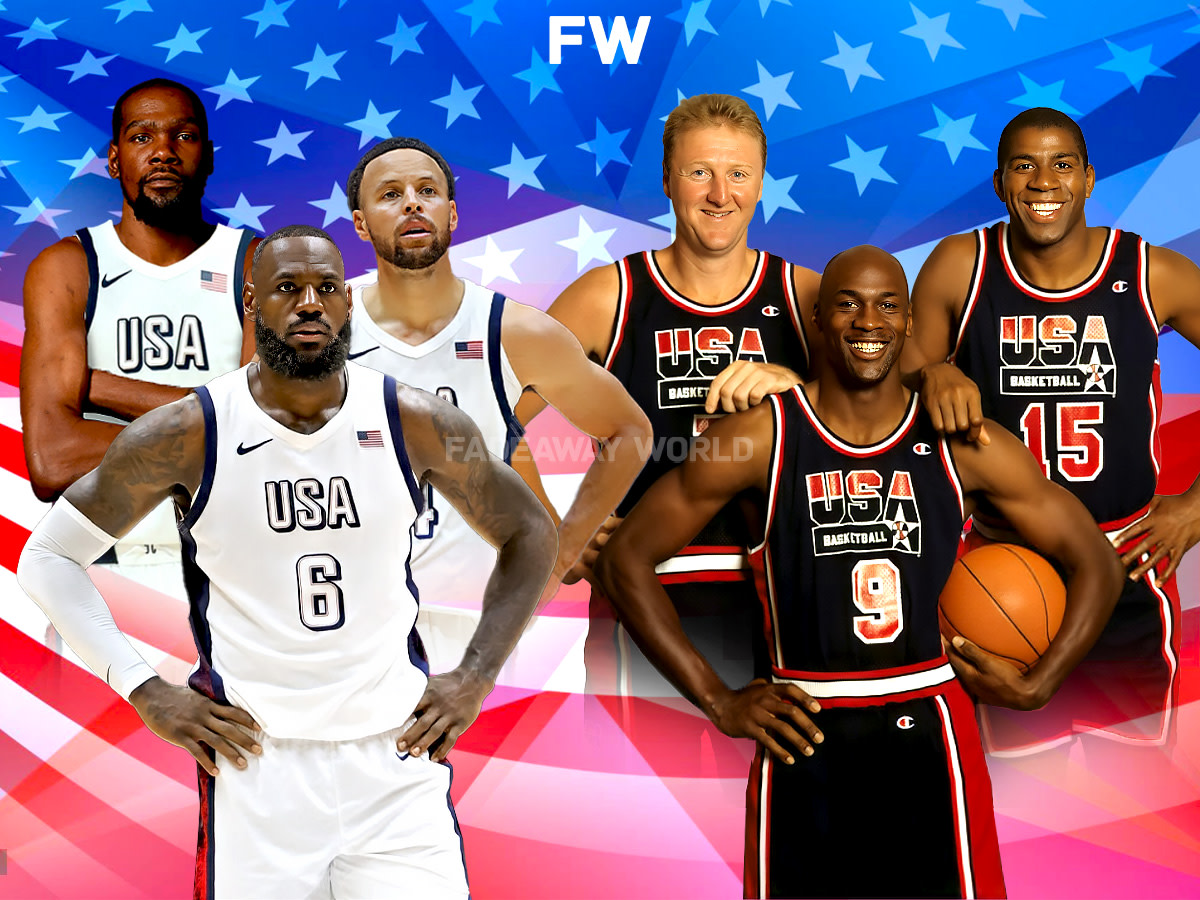
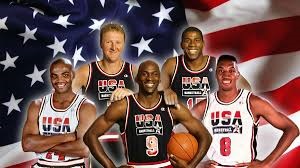
    In 1992, the USA formed a basketball team unlike any other, comprising NBA legends at the peak of their careers. Players like Charles Barkley, Larry Bird, Michael Jordan, Magic Johnson, and Scotty Pipin (from left: pictured above) came together to create the Dream Team.

    The decision to include NBA players was groundbreaking and aimed to showcase the best of American basketball on the global stage. The Dream Team’s performance in the 1992 Olympics was exceptional. They dominated their opponents, winning games by an average margin of 32 points. Their closest game came in the finals, where they still triumphed comfortably. Beyond their on-court success, the Dream Team played a pivotal role in popularizing basketball worldwide, inspiring countless young athletes globally and boosting the NBA’s international appeal.


    The 2024 USA Basketball Team

    (credit: Benjamin Cremel/AFP/Getty Images)

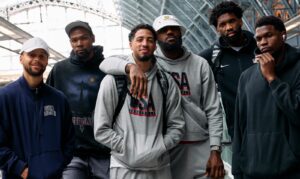
    In 2024, the USA Basketball Team once again features NBA superstars such as Stephen Curry, Kevin Durant, Tyrese Haliburton, Lebron James, Joel Embiid, and rising star Anthony Edwards (from left: pictured above) prepare to board the Eurostar from London to Paris for the Olympics. Coached by Steve Kerr, this team faces high expectations as they compete in Paris.

    Despite the star-studded lineup, the 2024 team faces significant challenges. The competition is tough, with nations like Canada, Australia, Spain, France, Germany, and Serbia fielding formidable teams. Unlike the Dream Team, the current squad has had limited time to gel, with their first collective games being recent warm-up matches. The adaptation to FIBA rules, which include smaller courts and shorter games, adds another layer of complexity to their quest for gold.


    Section 3: Comparing the Two Teams

    The 1992 Dream Team’s strength lay in their overwhelming talent and experience, with every player being a proven star in the NBA. Their dominance was also a result of their superior teamwork and chemistry. In contrast, the 2024 team, while equally talented, faces challenges in building cohesion quickly. The modern game’s emphasis on three-point shooting and the diverse playing styles of the international competition present unique hurdles. The Dream Team’s impact on basketball was profound, as they introduced the sport to a global audience and set a standard of excellence. The 2024 team, on the other hand, operates in a different landscape where basketball is already a global phenomenon. Their challenge lies in maintaining America’s dominance amid a rapidly improving international field.

    Historically, the USA has been the gold standard in Olympic basketball, winning the most gold medals in the sport. The Dream Team set a precedent that subsequent teams have strived to uphold. However, the landscape of international basketball has evolved significantly since 1992. Today, there is a growing sentiment that USA Basketball’s dominance is waning. The influx of international talent in the NBA and the cohesive play of other national teams have made the competition fiercer. While the USA remains a powerhouse, the days of absolute dominance are being questioned. Experts and fans alike debate whether the current team can live up to the legacy of their predecessors and continue to secure gold in an increasingly competitive environment.


    Reflections

    The 1992 Dream Team will always be remembered as a transformative force in basketball, setting an unparalleled standard. The 2024 USA Basketball Team, while immensely talented, faces the challenge of maintaining this legacy in a new era of global competition. As we watch the games unfold in Paris, the question remains: Can the 2024 team uphold the tradition of excellence? Or will this be the year an upset redefines the landscape of international basketball? We invite you to share your thoughts on this comparison. Follow the basketball events in the Olympics, support your favorite teams, and witness history in the making. As we celebrate the rich legacy of the Dream Team, let’s also appreciate the evolution of the sport and the thrilling competition that lies ahead.

  • Wrestling is…Real?

    Wrestling is…Real?

    by Ben Ayuko

    {image by AP}


    We all know that wrestling is Fake.

    Two, or more, superstars enter into the ring and, after screaming at each other for a bit, proceed to perform various stunts in order to elicit various oohs and aahs from the crowd.

    It literally sounds like a circus show.

    The story is often very dramatic, akin to a soap opera. If the soap was heavily punctuated with wrestling matches in between every cliff hanger.

    It may, therefore, come as a surprise to know that many professional fighters rank, not MMA, nor Boxing, not the Slap Olympics. but pro-wrestling as the most injury inducing sport in the world.

    Yes, WWE (World Wrestling Entertainment) with all your favourite superstars like John Cena, The Rock, Stone Cold (am I showing my age) the Undertaker, his brother Kane (I still can’t believe they’re not actually brothers) and so on and so forth.

    Turns out, it’s not that it’s fake, it’s just that the storylines are scripted. The stunts? They are very real.

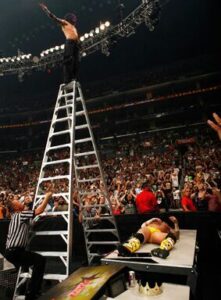
    When Jeff Hardy jumps off a 20ft ladder straight to ground to land on the Big Show, he is risking maiming himself, in real time, just for your entertainment. It’s crazy when you think about it. He almost has to pick someone as big as the Big Show, or Mark Henry, to land on, otherwise he’d be risking serious injury for himself, as well as whoever is waiting for him down there.


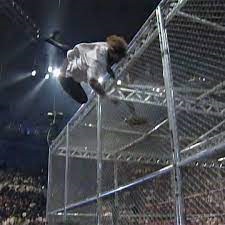
    That famous Hell in a Cell match between Mick Foley and the Undertaker which set the standard for death defying stunts, is remembered so iconically because it was the first time anything like that had happened. That is to say, it’s not normal, even in WWE, to just throw somebody off a 30+ ft structure while aiming for a small table as the only thing that could break his fall. Should he miss, it would be curtains for him.

    In fact, the older you get, the more you realize that it isn’t the guy who threw the punch who is the hero, it’s the guy who took the fall. This is because, not only do you have to be able to sell an injury to the audience and convince them that you’re actually hurt, in a natural way like Dolph Ziggler, but you also have to avoid actually getting injured. It’s like a middle ground you have to find. Get hurt just enough to use it in your performance, but not so much that you can’t continue the show.

    Ken Shamrock, a retired fighter who once dabbled in both MMA and WWE, in an interview said, “…Pro Wrestling is where I get more damage. “

    This is mostly due to the frequency of the matches. Whereas boxers and MMA fighters book a fight once every so often (some can do as little as 2 fights a year), WWE is scheduled to air once a week at the minimum, with fights that can last anywhere between 10min and 1 hour, regardless of the state of the wrestler.

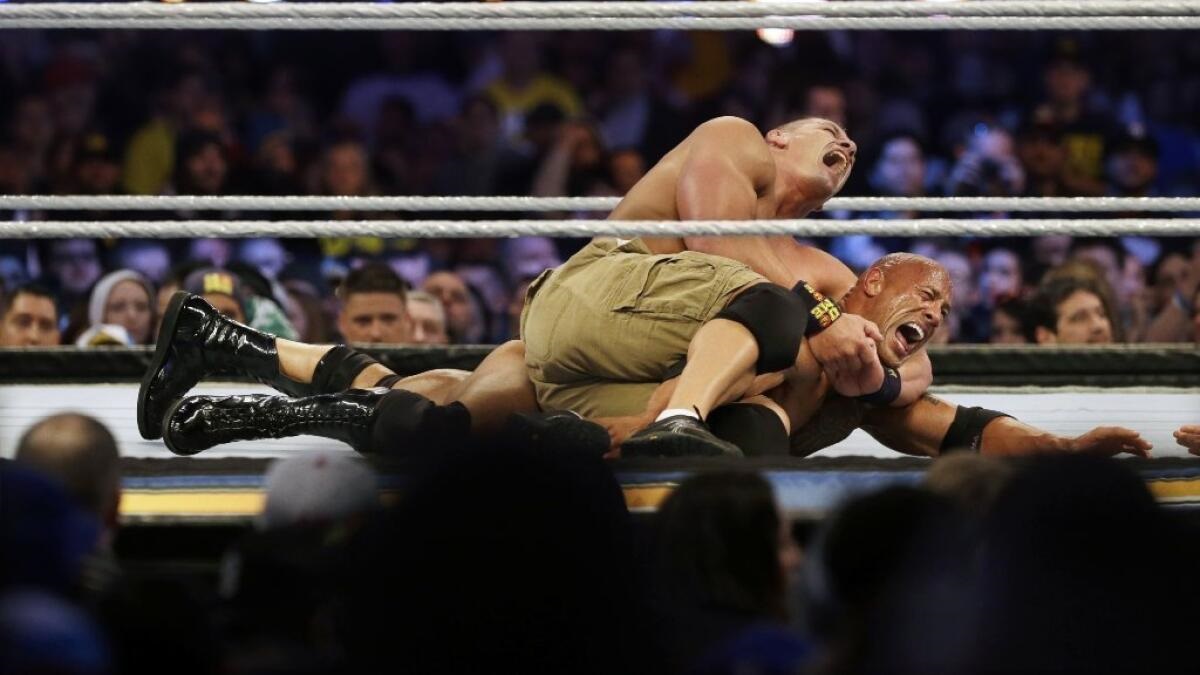
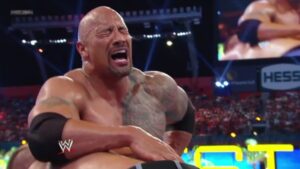
    In 2012, Dwayne ‘The Rock‘ Johnson once gave an interview where he said, “…in the latest WrestleMania against John Cena…” “…10 minutes into the match, I tore the top of my quad (quadricep muscle) and my adductor (muscle) from my pelvis (pelvic bone).” At that point, there was still a good half an hour left in the match. By the end of the match, he had proceeded to tear his abdomen in 3 separate places, needing emergency surgery to restore it. Despite this, he managed to finish the match which become one of the most memorable match ups in recent history. And why? Why put himself through such physical abuse while enduring so much pain? For the people of course. Because the show must go on.

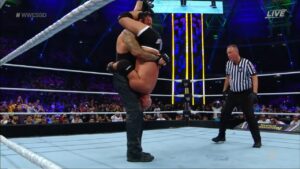
    In 2019. the Undertaker faced off against Goldberg. This was a very anticipated, very nostalgic match because it was going to be the first time they ever faced each other in the ring, despite both of them being involved in pro wrestling for over 20 years. This would turn out to be probably the realest match I have ever seen. Why? You have to remember; these guys have been in the business for over 20yrs. There is not a spring chicken to be found between the two of them. That is to say, despite the wealth of experience they may have, their bodies are not as agile as they used to be.

    Goldberg ran into the corner post and concussed his head pretty early on. After that, every single punch, kick, piledriver, body slam, you name it…every single one connected. Even when the Undertaker hit his signature move ‘The Tombstone Piledriver‘ he ended up actually driving an already-concussed-Goldberg’s head into the mat. People were worried. He could have down a similar path to Owen Hart, or worse yet, turned out like Chris Benoit

    Thankfully, he was fine. They were all fine. Though there are some wrestlers who aren’t always so lucky, majority of them are able to recover after some time off.

    So, in summary, I found out about wrestling, found out it isn’t real, and then found out just how real it actually is.

    Maybe that should be the next plot line.


  • Can Kenya’s Protests Change the Status Quo?

    Can Kenya’s Protests Change the Status Quo?

    By Joe Aura

    contact: aurajoe6@gmail.com

    {image by Getty Images}


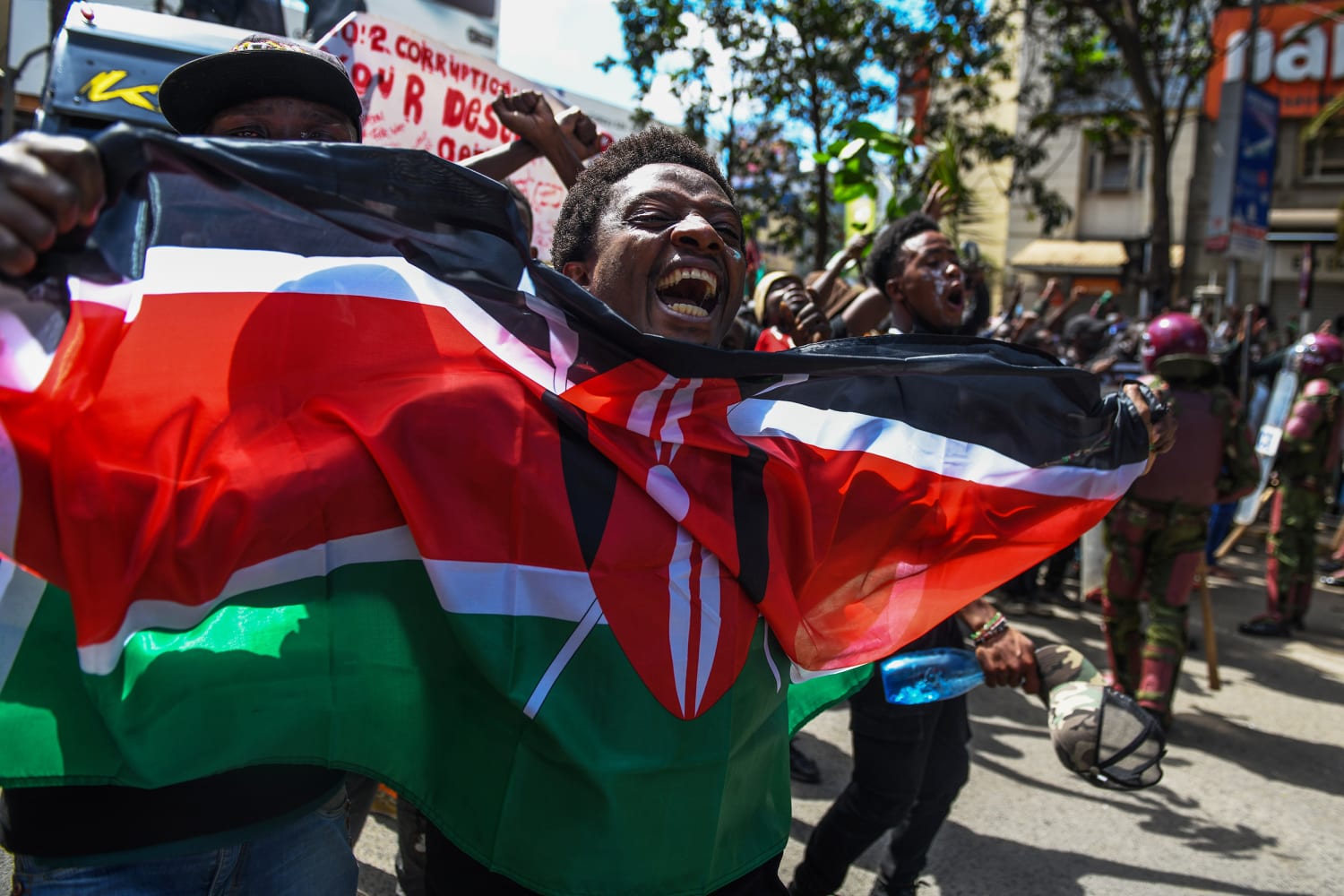
    As a budding storyteller and writer, I love having meaningful conversations about Africa and the world, especially those that offer diverse perspectives. Our different cultures and viewpoints can educate, inform, and entertain the public, helping us learn from our mistakes, gain new experiences, and look forward to a better tomorrow. Recently, I came across an intriguing interaction by DW titled “Can Kenya’s Protests Change the Status Quo?“—a thought-provoking review that is definitely worth sharing.

    The 77 Percent” is a magazine dedicated to Africa’s youth, as approximately 77 percent of Africans are younger than 35, making them a dynamic and politically active demographic. However, they are also the least represented group across the continent. The magazine aims to give these young voices a platform to discuss critical issues, share personal stories, and shape Africa’s future. From hard-hitting reports to lively discussions, “The 77 Percent” covers topics like tradition, culture, sports betting, beauty trends, and more.

    Check out this excellent review of DW’s episode “The 77 Percent” focusing on Kenya’s protests! This episode has been making waves, climbing to #18 on Trending with over 110,000 views! It delves deep into the youth-led protests in Kenya, sparking a nationwide movement for change.

    Overview of the Episode

    In an era where media plays a pivotal role in shaping societal narratives, DW’s “The 77 Percent” stands out as a vibrant platform for Africa’s youth. The recent episode titled “Can Kenya’s protests change the status quo?” encapsulates the dynamic energy and pressing concerns of young Kenyans as they strive for a better future.

    The episode, which premiered on July 23, 2024, and quickly climbed to #18 on Trending with over 110,000 views, dives deep into the heart of Kenya’s burgeoning youth movement. It traces the evolution of protests that began in June 2024 against controversial tax hikes, which soon escalated into a broader demand for systemic change and President Ruto’s resignation.

    Key Discussion Points

    Background and Trigger: The initial protests were instigated by the #RejectTheFinancebill movement, which contested severe tax proposals. This fiscal dissatisfaction rapidly transformed into regular demonstrations demanding government transparency and reform.

    State Response: President Ruto’s administration faced significant pressure, prompting certain changes in the cabinet. However, the reinstatement of specific individuals further fueled the protesters’ ire, as they advocated for integrity and governance guided by technological expertise.

    Protest Outcomes: With over 50 casualties and numerous detentions, the protests have highlighted the pressing necessity for substantive dialogue between the government and the younger generation to address long-standing grievances.

    Audience Engagement

    The episode has sparked significant discussion, drawing over 402 contributions in the comments section. This episode not only captured the essence of the protests but also deeply resonated with its target audience, as evidenced by the diverse array of perspectives shared in the comments. Viewers’ reactions highlighted the show’s impact, with many praising Edith Kimani’s return and her exceptional journalistic skills.

    The comments section revealed a strong engagement from international viewers, demonstrating the show’s wide-reaching influence. For instance, a 79-year-old viewer from Texas expressed solidarity with the youth’s fight against corruption, stating, “I am 79 and mzungu but I love how these young gens are about ending the tyranny of the corrupt class.” This sentiment was mirrored by viewers from Nigeria and Bangladesh, showcasing a global support network for the Kenyan protests. One comment from a Bangladeshi viewer stated, “After 6 days of nightmare, I’m here to support Kenyan local people. Love from Bangladesh.

    Critiques of specific individuals involved in the discussion also emerged, with the former Police Spokesperson facing significant backlash. Viewer @The_BrandNyamodhi commented, “That clown in the name of former Police Spokesperson has no moral authority to speak! He’s rotten to the core.” Another comment by @patrickwambura6082 emphasized systemic issues, stating, “Police in Kenya don’t have proper training to handle demonstrations; they still have that colonial mentality.”

    The engagement revealed the audience’s shared frustration with systemic issues in Kenya, such as police brutality and government corruption. However, it also showcased a sense of pride and hope in the youth’s drive for change. Viewer @joela87485 expressed this sentiment powerfully, “It’s grievous to see such people being ready to fight the good course by young people who are our backbone tomorrow. My spirit and strength are with you, behind every youth.”

    Reflections

    The forum offered a raw and unfiltered look at the feelings of young Kenyans. The outdoor setting, along with the passionate expressions of the participants, created an engaging and authentic atmosphere. Among the notable voices was Edith Kimani, the host, whose adept handling of the discussion stood out. Her ability to fact-check participants while giving them space to voice their opinions highlighted her professionalism and journalistic integrity.

    This review not only documents a significant moment in Kenya’s history but also provides valuable insights for content creation, making it a must-read for students and professionals. The episode is a testament to the power of media in amplifying important conversations and youth activism.

    DW’s “The 77 Percent” episode on Kenyan protests is a powerful example of how media can foster important conversations and spotlight youth activism. The production team’s effort to create a lively and professional forum succeeded in engaging and educating viewers. The episode not only documented a significant moment in Kenya’s history but also provided a platform for young voices to be heard, thereby contributing to the broader discourse on Africa’s future.

    This review aims to provide both academic and professional insights into the episode, making it suitable for students and professionals on LinkedIn. It appreciates the forum for giving Kenyans a platform to air their views and commends the production team for creating engaging and relevant content.

    Edith Kimani: A Profile

    Edith Kimani is a seasoned journalist with a decade of experience. Joining DW in 2015, she has since become a prominent figure, known for her work on environmental issues and high-level debates. Her role in “The 77 Percent” showcases her commitment to amplifying African voices and addressing critical issues on the continent.

    During the show, I was profoundly inspired by Edith Kimani’s exceptional poise and professionalism. She seamlessly managed the discussion, giving her audience the space to express their views while meticulously fact-checking them like a seasoned journalist.

  • Shujaas Bow Out of the Olympics

    Shujaas Bow Out of the Olympics

    by Ben Ayuko

    {image by Supersport}


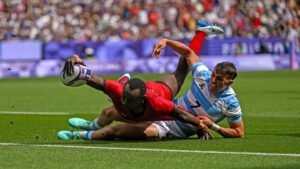
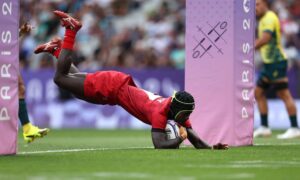
    The Rugby 7s Olympic circuit in Paris began on the 24th of July. 2024 and honestly, it is not looking good for Team Kenya.

    There were 2 games played on the first day.

    First up was Argentina.

    Kenya actually started off well with an early try, after 3 minutes, after some individual brilliance from Chrisant Ojwang.  Argentina hit back before the break to level the score, save for missing their conversion.

    It was a relatively tentative first half and the second half started in more or less the same fashion as both teams were not looking to give the other an inch. It was, however, only a minute into the second half when Argentina struck again, after some good play down the wing. Kenya was not to be outdone though as we hit straight back a minute later. A good turn over in midfield saw the Shujaas launch a counter-attack, Kevin Wekesa showing some good hands to hold onto an offloaded pass by Ojwang and touch down in the try box.

    This is when the game changed though, as a series of unnecessary errors allowed Los Pumas to attack constantly and eventually overcome our defensive line.

    31-12 the final score as Kenya started off the Olympic games on the back foot.


    The second game against Australia…

    …did not fare any better.

    Australia began proceedings, running into the try box after some individual brilliance from the attacker.

    Kenya hit back after some quick thinking from Anthony Omondi, first to kick the ball into space behind the Australian defensive line. And second to take a quick penalty while the Australian defense was still readjusting and sailing over the tryline to level the score.

    Australia hit again just before halftime to go into the break with the lead.

    The Shujaas mounted a serious challenge to Australia in the second half but could not break their defenses. Australia managed to keep us at arms length and then, just before the final whistle, they hit us again guaranteeing their victory.

    21-7 the final score, leaving Kenya with it all to do in our last game against Samoa.


    The last game was against Samoa

    This one was difficult to watch.

    We needed a hefty score line against the Samoans in order to book a place in the next round of fixtures. But it was not to be. We looked tired, uninspired and devoid of ideas.

    The game had only just begun before Samoa went over for their first try.  We picked ourselves up and tried to take the game to Manu Samoa, but they held us at arm’s length. Things were made worse by the concession of a thoroughly avoidable yellow card for a needle offense, just before halftime. 5-0 at the break.

    Samoa came out energized and their one-man advantage proved pivotal as they scored their second try with barely a minute on the clock. Things were looking dire.

    Kenya tried to fightback with the likes of speedster Patrick Adongo and try scorer, Chrisant Ojwang, but to no avail. And because of the desperation in our attack, we left ourselves open to counter attacks.

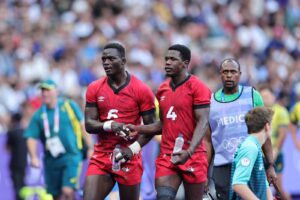
    2 more tries for Samoa and one more yellow card for Kenya as the game ended 26-0, condemning the Shujaas to an early flight back home.

    That also made it 3 losses out of 3 for Team Kenya.

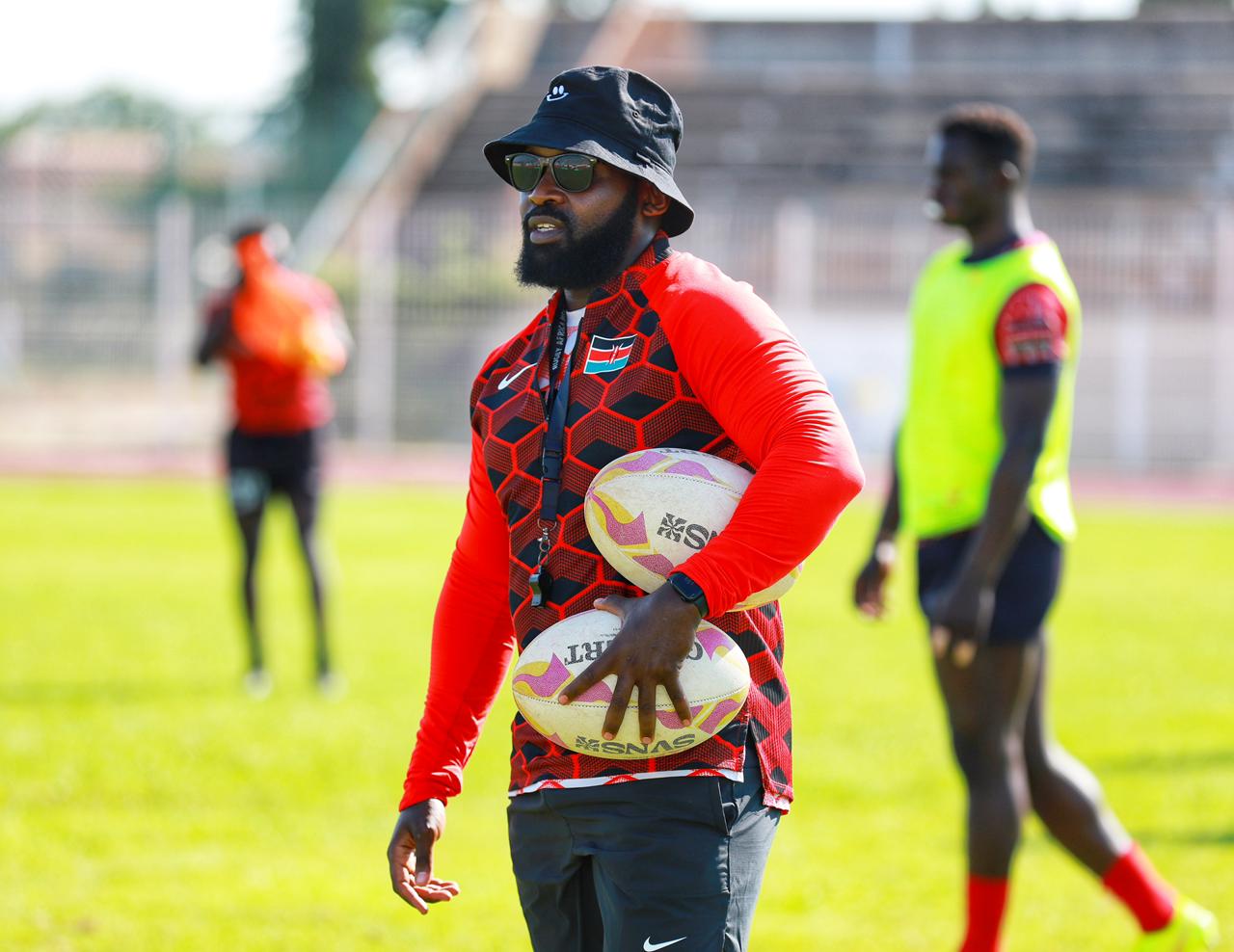
    It was a tough tournament for us. All that’s left now is for head coach, Kevin Wambua (dp), to regroup with the troupes and prepare for the next outing.


  • VAR Controversy at the Paris Olympics

    VAR Controversy at the Paris Olympics

    by Ben Ayuko

    {image by TheCable}


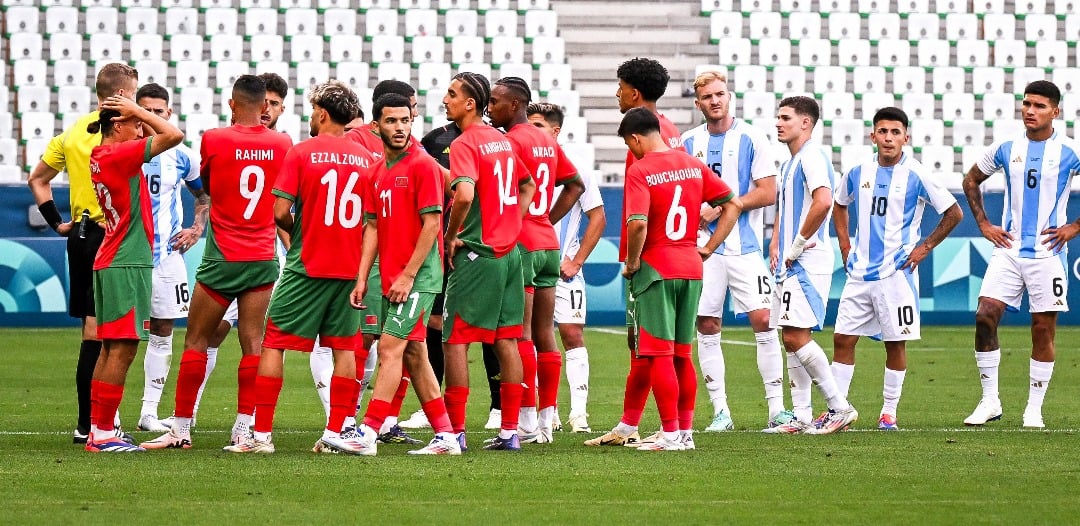
    Argentina took on Morocco in what is sure to be remembered as one of the most controversial games since the Video Assisted Technology (VAR) was introduced.

    It was a tentative start but some neat interplay down the right wing just before the half-time break saw Bilal el Khhannouss send a low cross into the box for Centre Forward Soufiane Rahimi to tap into the Argentina net. 1-0 to Morocco going into half time.

    Morocco flew out of the traps at the start of the second half and it took only 5 minutes for them to double their lead. An incident in the Argentina penalty box saw the referee award Morocco a penalty, which Rahimi calmly dispatched to increase Morocco’s lead. 2-0 to the good.

    Argentina hit back in the 68th minute when Giuliano Simeone diverted a wayward shot by Julio Soler into the Moroccan net.

    There was about 15 minutes of added time given and Argentina did not intend to waste it. They made attacking substitutions and waited for their moment. And in the last minute of injury time, their bravery was rewarded.

    Commotion inside the box after shot saw desperation creep into the minds of the Moroccans. They lunged and chased after the ball as it bounced around in the box. Finally, the ball bounced off the crossbar and right onto Cristian Medina’s forehead who couldn’t miss from point blank range.

    2-2 the final score, Argentina rescuing a draw from the jaws of defeat.

    Or so we thought.

    This prompted a raucous reaction from the Moroccan fans as they ran onto the pitch and began hurling coins and bottles at the pitch, as any sore loser would do. Because of the risk toward the players, the lay was put off until the fans had calmed themselves. Seeing as this was the last action of the game anyway, the stadium emptied, with the players now in their changing rooms.

    Important to note that, the referee still hadn’t blown his whistle at full time meaning, effectively, the game was still on going.

    Sure enough, he called the players back onto the pitch and informed them of a VAR review that had been analyzing Argentina’s goal. The verdict was that the goal scorer was in violation of the Offside law and therefore the goal was null and void.

    Cue the celebrations from the Moroccan players as the referee then blew the final whistle to end the game.

    Oh, and this happened more than an hour after the game had been initially suspended.

    Heartbreak for Argentina.

    Argentina coach Javier Mascherano did not mince his words at the decision.

    I have not been a coach for long, but never in my career as a player have I seen a situation like that,” said Mascherano, who won gold with Argentina in 2004 and 2008. “It is a circus. But that is how it is. We cannot control it…” “It is a disgrace that this should happen and poison the tournament. This wouldn’t even happen in a neighbourhood tournament. It’s pathetic…

    A statement from the tournament organisers said: “The football match between Argentina and Morocco at the Saint-Etienne Stadium was suspended due to a pitch invasion by a small number of spectators.” “The match then restarted and was able to conclude safely. Paris 2024 is working with the relevant stakeholders to understand the causes and identify appropriate actions.

    Major controversy at the Paris Olympics, and we haven’t even seen the opening ceremony yet.

  • Nottingham Forest make Marquee Signing

    Nottingham Forest make Marquee Signing

    by Ben Ayuko

    {image by Alamy}


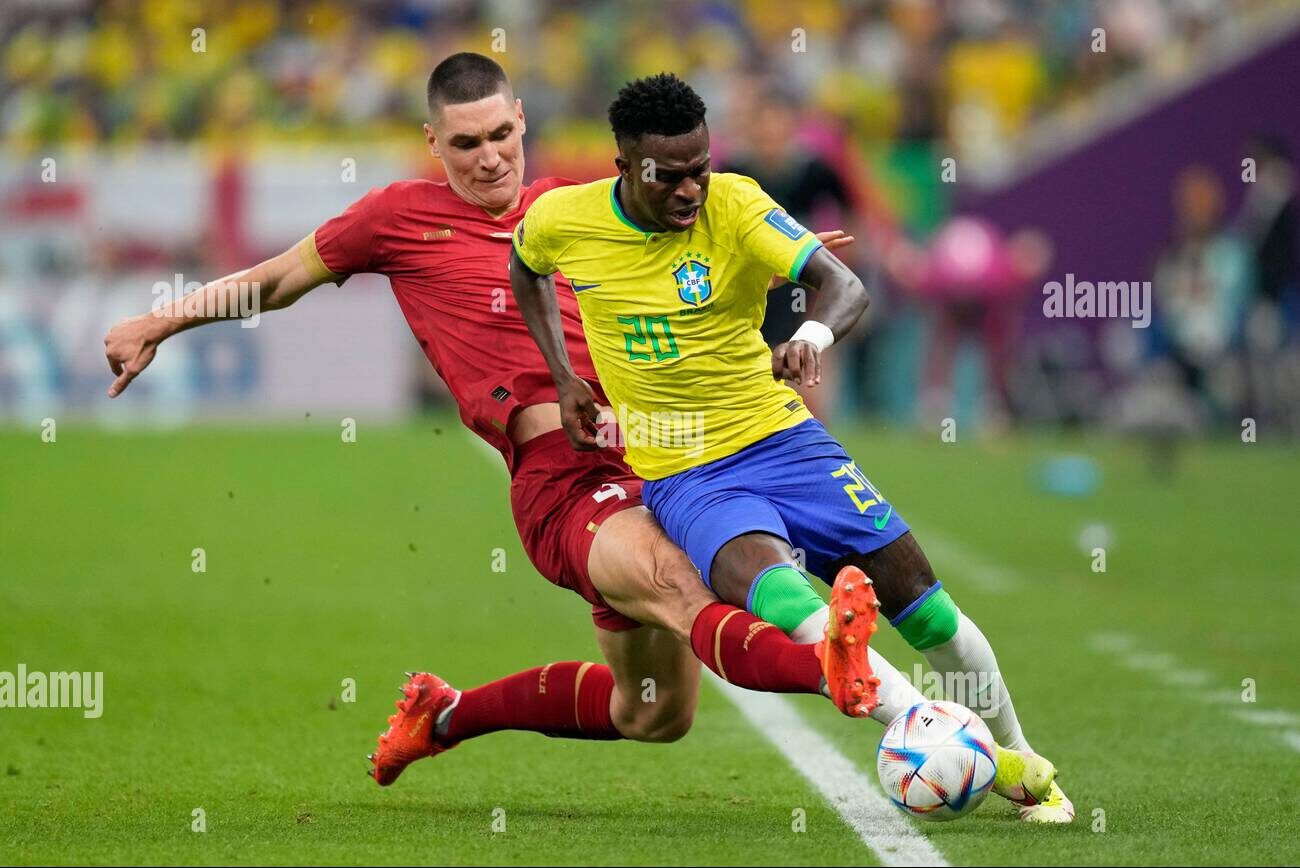
    Serbia international, Nikola Milenkovic has completed a £12m move to Nottingham Forest.

    The former Fiorentina Captain was previously heavily linked with a big money move to some big premier league teams, including Arsenal, Chelsea and Tottenham Hotspur, before, for whatever reason, the links died out. Obviously, none of these clubs opted to sign, preferring new targets, the likes of William Saliba, Benoit Badiashile and Micky van de Ven respectively.

    This has opened the door for Nottingham Forest to swoop in and seal the deal on a quality centre-back as Forest look to improve their status in the premier league going into the new season.

    The 26yr old Serbian is known for his aerial dominance, no doubt attributed to his a 6ft4in frame, his strong tackling and his composure on the ball. Also, having been the captain of his former club, Fiorentina, he has leadership qualities that are sure to benefit Nottingham Forest as they look to avoid another relegation battle come the end of the season. He can also be a bit of a goal threat at set pieces, having found the back of the net 17 times during his time at Fiorentina.

    He is a key part of our squad planning this summer and I know how enthusiastic he has been to join the club,” said Ross Wilson, Nottingham Forest’s Sporting Director. “We have long admired his performances with the Serbia national team and in Serie A and European competitions for Fiorentina.

    It is undoubtedly a promising signing that is sure to excite the Nottingham Forest faithful.

    All that remains is to see whether Nuno Espirito Santo, Forest Manager, can get the be犀利士
    st out of him.


  • Anti-Graft Protests in Kampala

    Anti-Graft Protests in Kampala

    by Ben Ayuko

    {Image by QFM_LIRA}


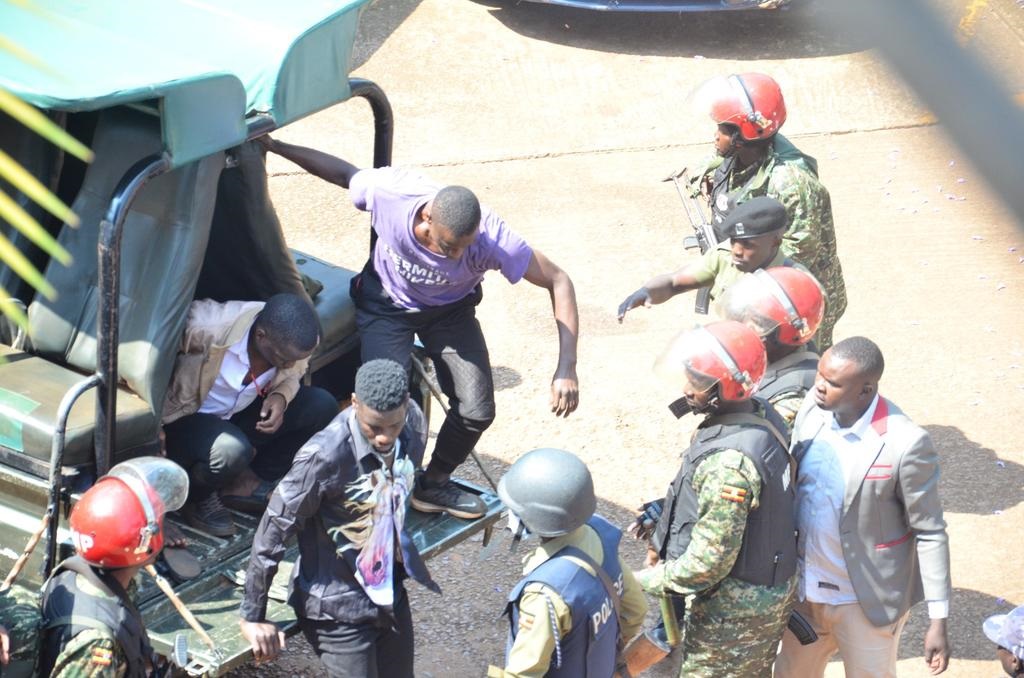
    Armed Officers took to the streets of Kampala to arrest young protestors who were trying to speak up against the corruption of public officials.

    These youthful protestors were marching toward the Parliament building in Kampala, demanding for the resignation of the Speaker to the National Assembly, Anitah Among, when they were intercepted and arrested.

    This comes after Ugandan President, Yoweri Museveni, had issued a warning to those planning to protest, saying that they were, “Playing with Fire.”

    What right… do you have to seek to generate chaotic behavior? … We are busy producing … cheap food, other people in other parts of the world are starving… you here want to disturb us. You are playing with fire because we cannot allow you to disturb us…”, Museveni said in a three-hour-long wide-ranging address.

    This, of course, in the wake of the Anti-Finance Bill Protests seen all over Kenya whereby dozens-on-dozens-on-dozens of people were killed by Police sanctioned by President William Ruto, makes Yoweri Museveni’s words all the more ominous in nature as it is yet unclear what the words “Playing with Fire” are meant to imply.

    Ugandan Opposition Leader, Bobi Wine, gave a statement in support of the protests which he made a point to claim were “organized by the young people of Uganda” and not his national party. The former musician, just a few years ago, was arrested amidst forming a campaign to challenge Museveni’s rule. His arrest led to protests in Uganda which were met with law enforcement. Dozens-on-dozens died on the day trying to push for his freedom.

    He is back, this time, not at the forefront. but as part of the movement that would defy Museveni’s long-standing government.


  • Ajali Barabarani!

    Ajali Barabarani!

    by Ben Ayuko

    {image by X}

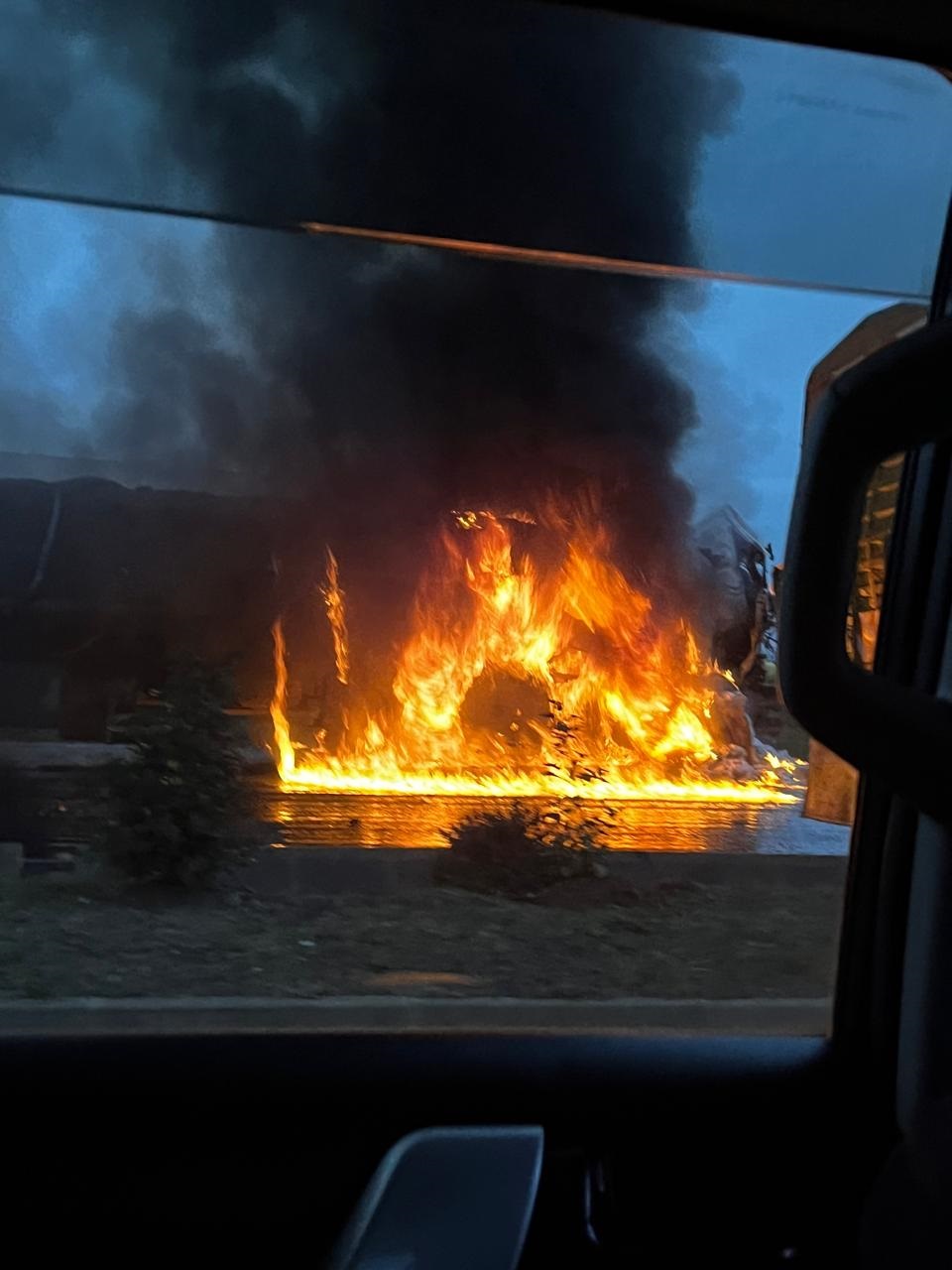
    There was an accident on the Southern Bypass near Ole Sereni Hotel at 6:30a.m on Tuesday morning, July 23rd, 2024.

    A Lorry and a Trailer were headed in opposite directions (one coming from Kikuyu, the other going toward Kikuyu respectively) on opposite sides of the road when the Lorry driver suddenly lost control of the vehicle, barreling right into the trailer. It is, as of yet, not known what caused this sudden mishap but the consequence of it can only be described as severe.

    Both drivers lost their lives on impact as the trailer then proceeded to catch fire and erupt into flames. The driver’s body was burnt beyond recognition.


    Practitioners from a Multi-Agency Response Team arrived on the scene quickly and were able to pull 3 passengers from the wreckage and take them to the hospital for treatment as per statement by the Kenya Red Cross, i.e. “Three people have been taken to hospital, thanks to the efforts of a multi-agency response team,”- Kenya Red Cross.


  • All Blacks Annihilate Faltering Fijians

    All Blacks Annihilate Faltering Fijians

    by Ben Ayuko

    {image by PlanetRugby}


    Fresh off beating England in their first round of test matches, the New Zealand All Blacks set their sights on their Oceania “brothers“, Fiji.

    As usual, the game started with each side issuing a war cry to their opponent. The roar of the Fijian ‘CIBI’ was met with the defiance of the New Zealand ‘HAKA’. 2 sets of warriors, on opposite sides, ready to leave it all on the line.

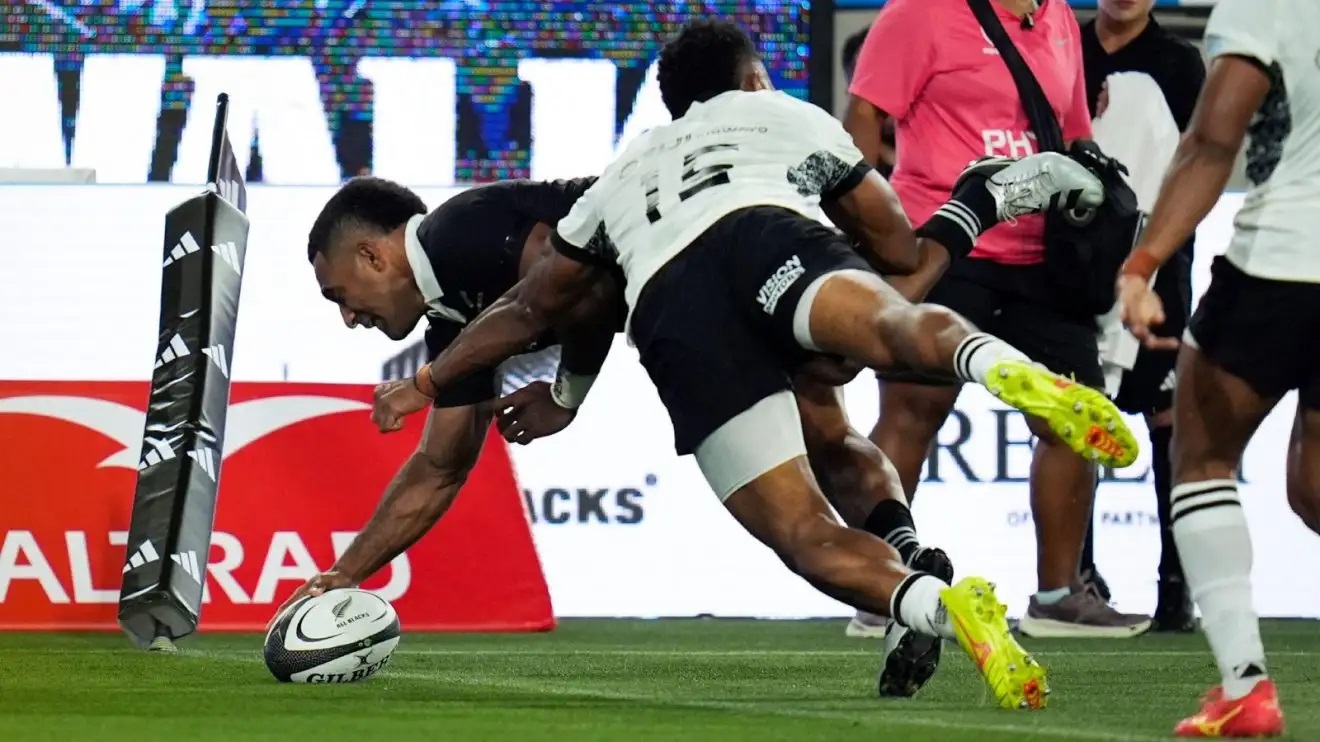
    No sooner had the game started than New Zealand soared over the try line for the first points of the game. Good play from Damien McKenzie saw him break through the Fijian defensive line and send the ball out wide. Caleb Clarke was on the end of the move, and he side stepped 2 defenders before touching down for New Zealand. McKenzie converted his kick.

    Literally 5 minutes later, scrumhalf Cortez Ratima increased the advantage for the All Blacks. A strong carry from Centre, Anton Lienert-Brown set up a ruck just underneath the Fijian posts. Ratima took advantage of a stumbling Fijian backline, picking the ball up straight from the ruck and sailing into the try box. Sadly, this would be his last meaningful contribution to the team as he went off after suffering a shoulder injury. McKenzie converted his kick give his team a 14-0 lead 14minutes into the game.

    This seemed to spark Fiji into gear, seeing as how they enjoyed their best spell of the half for the next period of the game. Flyhalf Isaiah Armstrong-Ravula started looking to influencing the game using his kicking ability. He sent a kick to the air that was knocked on by a New Zealand defender who failed in his attempt to catch the ball. From the resultant scrum, Armstrong-Ravula received the ball once more, this time sending a carefully aimed kick over to the blindside right into the arms of veteran Fijian winger, Semi Radradra. He climbed highest to catch the ball and then, skillfully tossed it back to his inside just before being taken out by the defender. The ball landed right into the arms of the fullback, Vilimoni Botitu who had a clear run into the New Zealand try box and touched down to get Fiji on the score board. A textbook exhibit of Fijian Rugby at its best.

    This would prove to be the last cheerful moment for Fiji in this game as tries from Billy Proctor, Ardie Savea, Sevu Reece, Ethan de Groot and George Bell aided by McKenzie‘s conversions for all but one, meant that Fiji didn’t stand a chance on the day. The spectators were treated to some special moments from their players, though. Something to give them inspiration and spark a response in the 2nd test match.