Category: News

  • Daystar Introduces Problem-Based Learning

    Daystar Introduces Problem-Based Learning

    By: Sumaya Hussein (husseinsumaya1@gmail.com)

    Thumbnail photo courtesy of Moses Wafula


    Daystar University has changed its learning system to a problem-based and collaborative learning approach, beginning with the first and second years this January 2021 semester.
    Problem-based learning (PBL) is a student-centred approach in which students learn about a subject by working in groups to solve an open-ended problem.


    Speaking during the Parents’ Welcome on Monday’s orientation, the Vice-Chancellor, Professor Laban Ayiro, called for students to “enhance the intellectual rigour of the university”.
    “We have decided in management, and we are taking this to the senate, that we are overhauling the way we teach completely,” said Prof Ayiro.
    The VC argued that the University cannot continue teaching students the same way it did thirty years ago. He added that the goal is to make students “have the ability to learn and relearn constantly.”

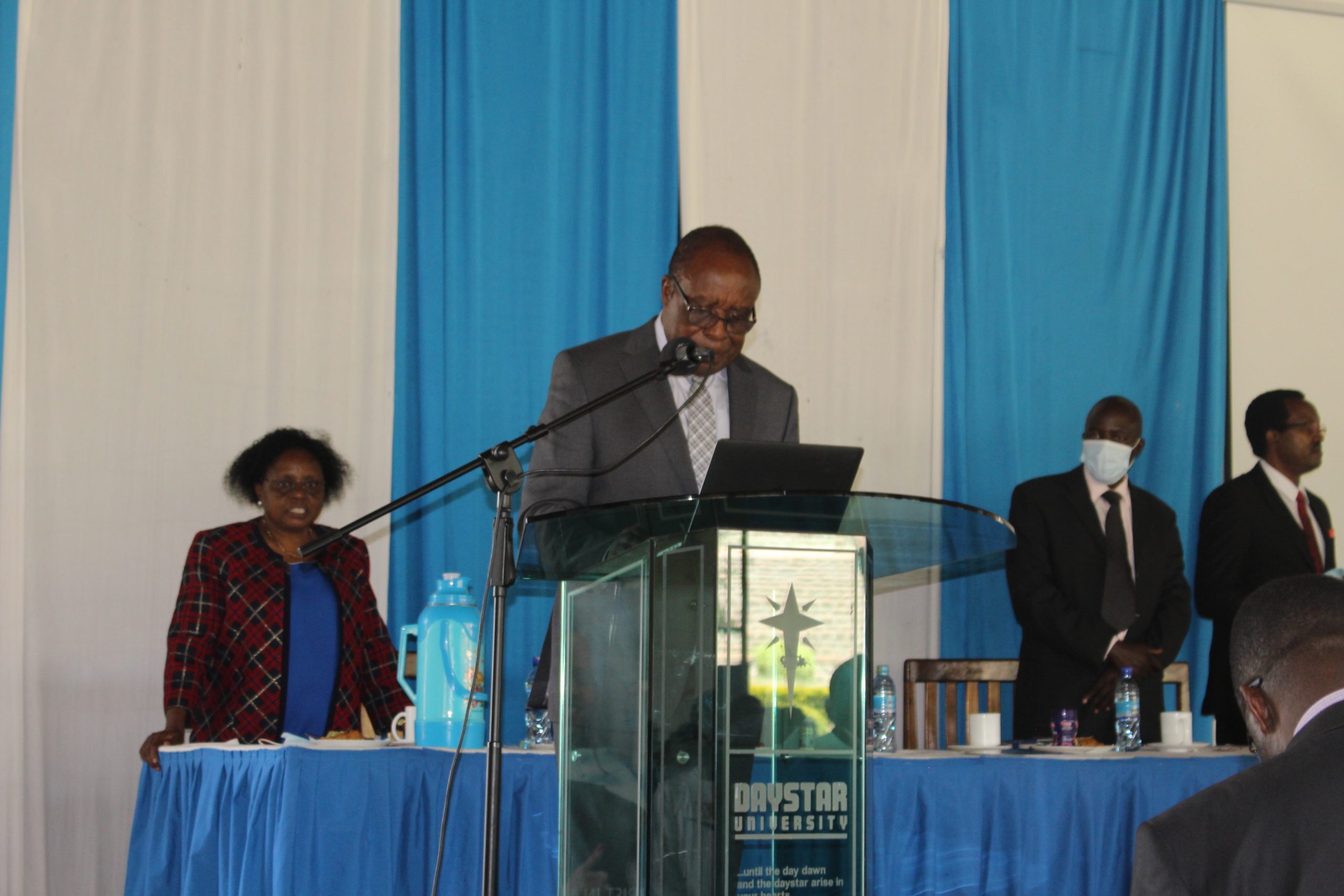
    Vice-Chancellor, Professor Laban Ayiro, during his presentation at the Parent’s Welcome. Photo courtesy of Moses Wafula.


    Problem-based learning includes self-directed learning strategies and team participation that will allow students to be more active in learning processes. Students will engage in collaborative learning and turn out to be more skilled, competent and have a competitive edge.


    “This is an ideal Ayiro is prepared to die for,” said the VC. “It must happen. If there’s something I’m going to leave behind in Daystar, is that we are going to produce students who are problem solvers.”


    In the new learning approach, students will be able to acquire 70% of their grade during the semester and therefore, the tension of final examinations will no longer exist.
    Prof Ayiro, who was a former Vice-Chancellor in Moi University, acknowledged that Problem-based learning was adopted in its school of Medicine, which saw their doctors stand out today.


    The VC added that Daystar will no longer be a passive institution whereby students come for lectures, write notes and go. Rather, they will be engaged with their faculties in case studies, debates, discussions and models. Students will also pursue solutions to authentic problems by asking and refining questions.

    Parents, staff and freshmen observing social distancing during the Welcome. Photo courtesy of Moses Wafula.

    “I want my students to debate ideas, to make predictions, to design plans and experiments, to collect and analyze data, to draw conclusions, to communicate ideas and findings, and ask questions, and above all create products,” said the VC.
  • The UK Approves AstraZeneca Vaccine

    The UK Approves AstraZeneca Vaccine


    By: Sumaya Hussein (husseinsumaya1@gmail.com)

    Thumbnail photo courtesy of The Times.


    The Oxford-AstraZeneca vaccine has been approved by the UK medicines regulator, Medicines and Healthcare products Regulatory Authority (MHRA). This makes it the second vaccine to be approved in the UK after Pfizer.


    The approval by the body of the came after weeks of examining trial data by experts and it was concluded that the vaccine met its strict standards of safety, quality and effectiveness.
    The vaccination programme will start on Monday and will aim to reach millions of people in at-risk categories as quickly as possible.


    The new variant of the virus causing high rates of infection has made vaccination much more urgent. The government’s joint committee on vaccination and immunization (JCVI) has advised that priority should be to give as many at-risk groups their first dose of either the Oxford or Pfizer vaccine, other than providing two doses in four weeks.

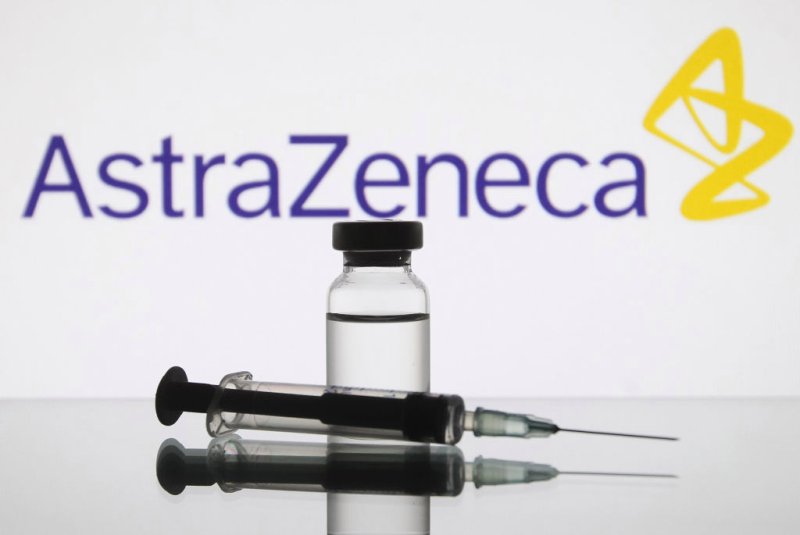
    AstraZeneca PLC company. Photo courtesy of EPA.


    “Everyone will still receive their second dose and this will be within 12 weeks of their first. The second dose completes the course and is important for long term protection,” said a spokesperson for the Department of Health and Social Care (DHSC).


    AstraZeneca said its vaccine would be made available to some of the poorest regions of the world at low cost and not being manufactured for profit. CEO of the company, Pascal Soriot, said AstraZeneca could provide the UK with up to 2 million doses a week and would start shipping the first doses “today or tomorrow”.


    “The good news with this is we are going to be able to inject a lot of people with one dose very quickly, provide them with a reasonably good dose of protection until they get their second dose two to three months later. That will enable us to protect more people because we can wait two to three months for the second dose,” added Soriot.

    Pascal Soriot, AstraZeneca CEO. Photo courtesy of EPA.


    The UK has ordered 100m doses of the vaccine and eventually, all adults will be offered, according to Matt Hancock, the UK health secretary.
    “Because we’ve got enough of this vaccine on order to vaccine the whole population – we’ve got 100m doses on order- add that to the 30m doses of Pfizer and that’s enough for two doses for the entire population,” he said in an interview on BBC Breakfast.
    “So I can now say with confidence that we can vaccinate everyone except of course for children because this vaccine has not been trialled on children and anyway children are much less likely to have symptoms from the disease,” he added.

    Prime Minister Boris Johnson, celebrated the news as “truly fantastic news and a triumph for British science”.
    “We will now move to vaccinate as many people as quickly as possible.” he tweeted.

  • Speaker Mutura Sworn in as Nairobi’s Acting Governor

    Speaker Mutura Sworn in as Nairobi’s Acting Governor

    By Sumaya Hussein (husseinsumaya1@gmail.com) 

    Thumbnail photo courtesy of Capital FM

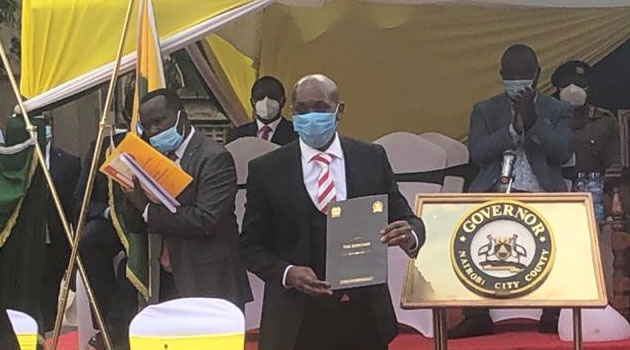
    Nairobi County Assembly Speaker, Benson Mutura, has been sworn-in as the county’s acting Governor by Judge Jairus Ngaah at City Hall, Nairobi.

    Mutura said that his first order of business would be to bring back on track the delivery of crucial services that have been stalled due to lack of funds. This was occasioned by the failure of former governor Sonko to assent to the finance Bill.

    “When Nairobians went to the polls in 2017, what they expected is service delivery. We therefore have no choice but to deliver. Today would have never occurred had we focused on service delivery,” said Mutura.

    Owing to this, Mutura signed the Governor’s warrant that gives the Treasury the green light to release money to the county. The governor’s warrant is a document that authorizes withdrawal of funds from the County Revenue Funds (CRF).

    Mike Sonko had refused to sign the warrant, thereby paralyzing operations in the county since October.

    By Mutura signing the warrant, this means that once the money has been released from the CRF, county and assembly staff will be paid their salaries. 

    Mutura will be assuming the role of governor in an acting capacity for 60 days, following Sonko’s impeachment on Thursday.

    He was to be sworn in last week but the event was postponed after the presiding judge failed to show up on time.

    Given that Nairobi County currently has no deputy governor, the speaker will serve for the next two months, as the Independent Electoral and Boundaries Commission (IEBC) sets a date for a by-election.

    Residents of Nairobi will then go back to the polls to elect a new governor who will serve the remainder of the term that ends in 2022. 

    Nairobi Deputy Governor Polycarp Iagthe resigned in January 2018, citing Sonko’s lack of confidence in him.

    Mutura said he will work with all Members of the County Assembly (MCAs), despite the recent impeachment having left the members divided.

    “My assumption to the office of the Governor is temporary and is meant to guide transition to the next government. I want to assure you that in the 60 days, I will be at the helm of this County, I will provide the required leadership to ensure smooth transition,” he said.

    Mutura signs the Governor’s warrant immediately after his inauguration. Photo courtesy of Capital FM

    Sonko was impeached by the county assembly over charge of abuse of office, a gross violation of the law, committing a crime under the national and international laws and lacking the capability to run the county.

    Senate Speaker Kenneth Lusaka gazetted Sonko’s impeachment in less than an hour of his removal.

    “On Thursday, December 17, 2020, the Senate resolved to remove Hon. Mike Mbuvi Sonko, the Governor of Nairobi City County, from office by impeachment,” read a gazette notice signed by the speaker.

    According to the Constitution of Kenya, Article 182, Clause (4) says if a vacancy occurs in the office of county governor, and that of the deputy, or if the deputy is unable to act, the speaker of the county assembly shall act as county governor.

    “If a vacancy occurs in the circumstances contemplated by Clause (4), an election to the office of county governor shall be held within sixty days after the speaker assumes the office of the governor.”

    “A person who assumes the office of county governor under this Article shall, unless otherwise removed from office under this Constitution, hold office until the newly elected county governor assumes office following the next election under Article 180 (1).”

    Director- General of the Nairobi Metropolitan Services (NMS), major-General Mohamed Badi and a few elected Nairobi leaders were present during Mutura’s inauguration.

  • Miguna announces gubernatorial candidature for Nairobi by-election

    Miguna announces gubernatorial candidature for Nairobi by-election

    By: Muhanguzi Tola (tolakofa1@gmail.com)

    Thumbnail photo courtesy of Twitter

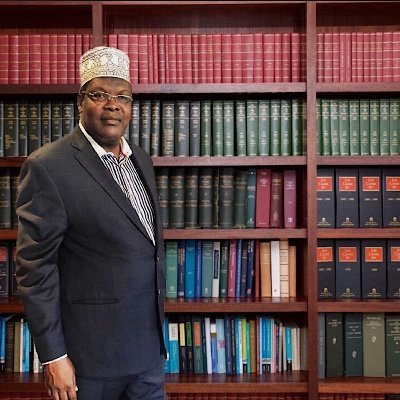
    Political activist cum lawyer Miguna Miguna on Saturday, December 19 expressed his interest in the Nairobi gubernatorial seat following the impeachment of Governor Mike Sonko.

    The exiled author who had vied for the same seat in 2017 on an independent ticket stated via twitter that the decision comes after receiving legal advice from constitutional lawyer Waikwa Wanyoike.

    “Having received competent legal advice…I Miguna Miguna, a Kenyan citizen by birth and registered voter in Nairobi, hereby declare my candidature for the position of Governor of Nairobi in the upcoming by-election,” he declared.

    The fiery lawyer had on Friday taken to his twitter account to criticize the ousted governor, claiming that the latter had been imposed on Nairobians by President Uhuru Kenyatta, as he quoted his statements from the 2017 gubernatorial debate.

    “My friend Sonko is looting every land in Nairobi. He has a criminal record from Mombasa where he was jailed because of fraud, forgery and drug dealing,” claimed Miguna during the debate held at Daystar University.

    Sonko’s Impeachment

    Former Nairobi Governor, Mike Sonko. Photo courtesy of the-star.co.ke

    The seat fell vacant after the ouster of former Governor Mike Sonko by the senate on December 17, on accounts of gross violation of the constitution or any other law, abuse of office, gross misconduct and crimes under national law.

    Nairobi county assembly speaker, Benson Mutura, takes over as interim governor given the absence of a deputy governor since the resignation of Polycarp Igathe in January, 2018. According to Article 182(4) of the constitution, the speaker of the county assembly shall act as county governor with an election to the office of county governor being held within sixty days after the speaker assumes the office of county governor. 

    The speaker’s swearing-in ceremony that had been scheduled for Friday 18 had to be postponed following the late arrival of the judge assigned to preside over the ceremony.

    Reactions Following Announcement

    Kenyans have taken to twitter to react to offer their thoughts, with most of their sentiments directed towards the self-proclaimed general of the National Resistance Movement (NRM). Notable was blogger Robert Alai’s remarks which warned Nairobians against voting for the ‘general’.

    “Replacing Sonko with Miguna is like replacing Wahome of Helicopter with Kanyari. Mad men! Zero work!” stated Alai.

  • Daystar to Retain Online Classes in January 2021

    Daystar to Retain Online Classes in January 2021

    By: Sumaya Hussein (husseinsumaya1@gmail.com)

    Thumbnail photo courtesy of Daystar University

    Daystar University will continue administering classes online, as a few physical classes will be taking place in the campuses come January 2021.

    In an email sent to the school on Monday, only nursing students, science students and those admitted during the October 2020 physical semester will start face to face learning in January 2021.

    Other courses, according to the email, are to continue with online learning.

    “Save for the programs outlined above, all other undergraduate, certificate and Diploma students will remain online,” read the email.

    All continuing postgraduate students taking PGDE, Master’s and PhD programmes, as well as new postgraduate students from October 2020 and January 2021, will study online as well.

    Students to start physical classes in January include; all nursing students admitted in 2020 and January 2021, all undergraduate students admitted to the October 2020 physical semester, all law students admitted in August 2020 and January 2021, will have physical classes at the Athi River Campus.

    Photo courtesy of Laguma

    For continuing students, all nursing students admitted in 2018 and 2019 will continue with their clinical placements. All Upgrade Nursing students admitted in 2020 and 2021, will have physical theory classes at the Nairobi campus.

    All students taking Biomedical Science, Environmental Heath, Actuarial Science, Applied Computer Science and Bachelor of Education Science (B.Ed Science), will have physical classes at the Athi River campus.

    The 15% fee discount previously offered for online classes has been discontinued due to the government suspension of all tax waivers.

    Physical orientation for new students is set to begin on January 4, 2021.

    The University Portal will be opened for registration of courses on January 4, 2021 once the timetable has been released. Both physical and online classes will begin on January 11, 2021.

  • FDA Authorizes Moderna Vaccine for Emergency Use in the US

    FDA Authorizes Moderna Vaccine for Emergency Use in the US

    By: Sumaya Hussein (husseinsumaya1@gmail.com)

    Thumbnail photo courtesy of Reuters

    The Food and drug Administration (FDA) authorized the COVID-19 vaccine developed by Moderna, which joins the Pfizer-BioNTech as the second vaccine available for use in the US.

    The announcement on Friday came a day after a committee of outside experts endorsed the use of the Moderna vaccine across the US, saying the benefits outweigh the risks.

    “With the availability of two vaccines now for the prevention of COVID-19, the FDA has taken another crucial step in the fight against this global pandemic that is causing vast numbers of hospitalizations and deaths in the United States each day,” said FDA Commissioner Stephen Hahn, in a press release.

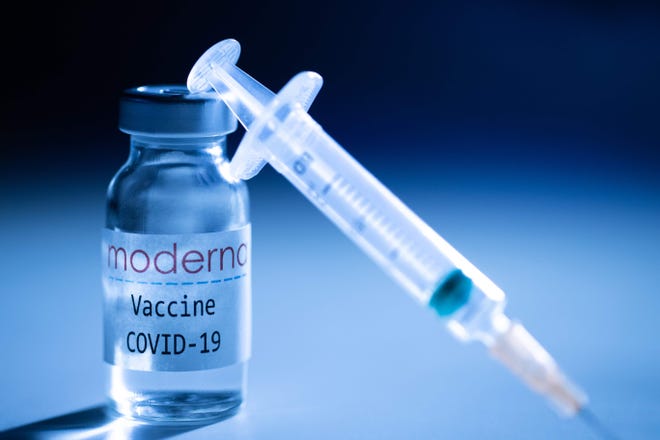
    Moderna experiemental COVID-19 vaccine. Photo courtesy of Getty Images.

    The vaccine which was 94% effective against symptomatic COVID-19 in clinical trials can now be given to adults 18 years and older. Data presented by Moderna also hints that the vaccine could prevent asymptomatic infection as well.

    Both the Moderna and Pfizer vaccine will be available under Emergency Use Authorization, a designation that lets the FDA sign off on products faster than the normal review process during an emergency like a pandemic.

    The Moderna vaccine can be easily stored compared to the Pfizer vaccine, which requires to be kept at ultra-cold temperatures.

    Moderna can be stored in a refrigerator for up to 30 days, making it easier to distribute to places without the infrastructure to maintain extremely low temperatures.

    “We remain focused on scaling up manufacturing to help us protect as many people as we can from this terrible disease,” Stéphane Bancel, CEO of Moderna said in a press release.

    The United States ordered 200 million doses of the Moderna vaccine, enough to vaccinate 100 million people.

    Patient receiving a dose of the Moderna vaccine. Photo courtesy of the New York Times.

    The first doses will be given to health care workers and residents in long-term care facilities within days.

    Moderna has about 5.9 million doses ready for shipment set to begin during the weekend, according to operation Warp Speed, the US government’s vaccine development program. The first Moderna vaccines are expected to be administered on Monday.

    Moderna has said it plans to deliver approximately 20 million doses to the US government this year, and will provide the 200 million doses by end of June 2021.

  • Kenya orders 24M doses of COVID-19 Vaccine

    Kenya orders 24M doses of COVID-19 Vaccine


    By: Sumaya Hussein (husseinsumaya1@gmail.com)

    Thumbnail photo courtesy of reuters


    Kenya has joined other countries in securing Covid-19 vaccines and has ordered 24 million doses from Gavi, the Vaccine Alliance. This is enough to cover 20% of the country’s population.
    Acting director-general of health, Dr Patrick Amoth said that each dose will be about $3 (Sh320) and cost the country a total of Sh10 billion.

    The amount is already heavily discounted by Gavi through donations from several developed countries, the World Bank and the Bill and Melinda Gates Foundation, among others. “The first to be vaccinated will be frontline workers, then the vulnerable and the elderly,” said Amoth. He, however, did not specify a timeframe but vaccines are expected early next year.


    Amoth said that Gavi has signed agreements with manufacturers of about nine vaccine candidates. Kenya therefore did not dictate which vaccine to receive, but the Oxford-AstraZeneca vaccine will be ideal for the country because it fits within its cold chain supply system.

    Acting Health DG Dr Patrick Amoth during a past COVID-19 press briefing. Photo courtesy of Citizen TV.


    Kenya also launched clinical trials for the AstraZeneca vaccine in Kilifi in October. An emergency use approval is yet to be granted by the Health Ministry.
    “Once they get approval from the European Medicines Agency and in the UK, then we will also consider granting such authorization in Kenya,” said Amoth.


    The announcement means Kenya has applied for the largest number of doses in East Africa.
    Last week on Thursday, Uganda’s Health Ministry, said it ordered 9 million doses to cover 20% of the country’s population.
    “Plans are underway to secure additional doses of the vaccine to cover more people,” said the Ugandan Ministry in a statement.


    Rwanda’s Minister of Health Daniel Ngamije on Sunday also announced they had applied for either the AstraZeneca or the Moderna vaccine. He, however, did not say how many doses they had applied for but hoped they would be the among the first African countries to receive them.

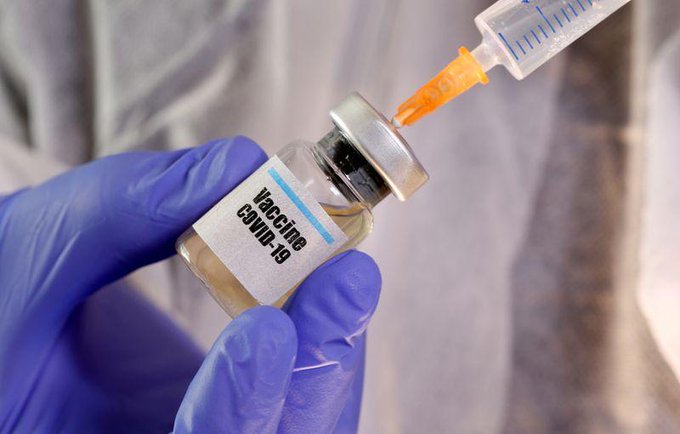
    VA medical syringe and a vial in front of the AstraZeneca Vaccine. Photo courtesy of Times

    Egypt applied for 20 million doses from Gavi and expected to receive the AstraZeneca vaccine.
    Gavi is supplying Covid-19 vaccines to 92 developing countries including Kenya through a facility called Covax. Covax was created by Gavi, UNICEF and the WHO to deliver two billion doses of Covid-19 vaccines by the end of 2021. The facility says it has already secured millions of ready-made doses of the Oxford-AstraZeneca candidate, ready for distribution to the 92 developing countries.


    Experts say although there won’t be enough vaccines for every Kenyan, getting the shots to the right people could help tame the pandemic.

  • FDA to approve Moderna Vaccine in the US

    FDA to approve Moderna Vaccine in the US

    By: Sumaya Hussein (husseinsumaya1@gmail.com)

    Thumbnail photo courtesy of Getty Images

    Food and Drug Administration (FDA) say that Moderna’s vaccine is safe and 95% effective, clearing the way for US emergency authorization.


    This comes one day after Americans across the country began receiving doses of the Pfizer vaccine.
    Once approved by the FDA vaccine panel, Moderna will become the second coronavirus vaccine to be allowed in the US and shipments could begin within 24 hours.

    A patient receiving a dose of the Moderna Vaccine. Photo courtesy of New York Times

    Moderna’s data was released by the FDA on Tuesday, ahead of the vaccine panel’s meeting to discuss the drug on Friday. The 54-page document said there were “no specific safety concerns” and that serious adverse reactions were rare. The data also suggests that its vaccine begins to prevent asymptomatic infections after the first dose. This is highly effective because this helps significantly slow the spread of the coronavirus. FDA analysts found that the Moderna vaccine was effective “across age groups, gender, racial and ethnic groups, and participants with underlying conditions”. In addition, the research “suggested benefit of the vaccine in preventing severe Covid-19.”


    The issues of effectiveness against severe disease have been raised about the studies of vaccines for Covid. The Moderna study found 30 cases of severe disease in the control group, versus zero in the vaccine group.

    The FDA found no specific safety concerns that would preclude its authorization of the vaccine. Most common side effects included injection-site pain, fatigue, headache and chills.
    Severe adverse reactions were rare but occurred more frequently after the second dose of the vaccine than after the first.


    For instance, about 9.1% of vaccine recipients had an injection site reaction that was classified as “grade 3,”. This the FDA defines as severe of medically significant, but not immediately life-threatening. In comparison, fewer than 1% of the control group had grade 3 injection-site reactions.
    Some 16.5% of vaccine recipients had systemic adverse reactions – such as fever and fatigue- with the severity of at least grade 3 and 3.7% among the control group. Severe fatigue was more common after the second dose after the first. The FDA last week authorized emergency use of the vaccine from Pfizer and BioNTech, which began distribution this week.


    Unlike the Pfizer vaccine, Moderna’s does not require ultra-cold storage during shipping. Instead, it requires temperatures of around -20C for shipping – similar to a regular freezer. The Pfizer vaccine requires temperatures closer to -70C, making transport logistics much more difficult.

    A shipment of the Pfizer vaccine delivered to US on Monday. Photo courtesy of Wall Street Journal.


    The primary goal of the studies of both Pfizer’s and Moderna’s vaccines was to measure whether they prevented symptomatic COVID-19 disease, including severe disease.
    However, people can still become infected affected and transmit the virus without showing any symptoms.

    A Pfizer executive said last week that the company was studying whether its vaccine protects against asymptomatic Covid-19 and hope to complete the analysis early next year.

  • President Kenyatta Orders all schools reopen in January 2021

    President Kenyatta Orders all schools reopen in January 2021

    By Sumaya Hussein (husseinsumaya1@gmail.com)

    Thumbnail photo courtesy of PSCU


    President Uhuru Kenyatta has directed that all schools reopen in January 2021 as the country continues battling the COVID-19 pandemic.


    The Head of State instructed that the Interior Ministry, through all Chiefs and Assistant Chiefs to ensure that all students report to school at the beginning of next year.
    “We remain on course for the resumption of learning in all classes effective the 4th of January 2021, with the safety of our learners being our top priority,” said President Kenyatta during Jamhuri Day celebrations at Nyayo Stadium.
    “In that regard, and in line with the policy of the Government on universal and compulsory basic education for all children up to 18 years, all parents and guardians are required to facilitate their children to resume learning in January 2021,” added President Kenyatta.

    President Uhuru Kenyatta inspects a guard of honour mounted by the Kenya Defence Forces (KDF) upon arrival at the Nyayo Stadium for Jamhuri Day celebrations. Photo courtesy of PSCU

    The Ministry of Education in consultation with the Health Ministry has developed sector-specific protocols and guidelines to facilitate the reopening of all learning institution.


    The President added that the Ministry of Education shall receive reports from all primary and secondary schools on the identity and details of any student who shall not report to school.
    He also directed that the Education Ministry facilitate the resumption of learning for all learners who had dropped out of school due to pregnancy.
    “That the Ministry of Education shall re-issue and publicize the Education Policy on School Re-Entry, so as to facilitate the re-admission of all those who may not be able to report back due to pregnancies,” said the President. Even with the pandemic, the Head of State assured that no learner will be left behind.


    All schools in Kenya will reopen next month after nine months of closure due to the coronavirus pandemic. The government had already begun phased reopening of Grade 4, Class 8 and Form 4 students returning to school on October 12, 2020.


    Last week, the National Council Churches of Kenya (NCCK) called on the government to review the planned re-opening of all schools citing the recent surge of COVID-19 cases in the country.
    NCCK General Secretary Canon Chris Kinyanjui cautioned the situation risks the lives of teachers, students and parents.
    “We propose that the decision that all learners will resume in-school learning on January 5, 2021, be reviewed and proper measures be put in place to avoid a surge in new infections,” Kinyanjui said last week.

  • Elderly UK Woman Becomes First in World to Receive Pfizer Vaccine

    By Sumaya Hussein (husseinsumaya1@gmail.com)

    Thumbnail photo courtesy of Sky News


    The beginning of the end of the pandemic has begun as the first person in the world has been vaccinated outside a clinical trial.


    Margaret Keenan, 90, received the Pfizer-BioNTech vaccine at University Hospital in Coventry, as the NHS launched its biggest ever vaccine campaign on Tuesday. Mrs Keenan, who will turn 91 next week, said being the first was a “privilege” and the “best early birthday present one can wish for”. According to her, having the vaccine meant she could spend time with family and friends in the New Year after being alone for most of 2020.


    “My advice to anyone offered the vaccine is to take it – if I can have it at 90, then you can have it too!” She added.


    Mrs Keenan will receive a booster shot in 21 days to ensure she has the best chance of being protected against the virus.

    Mrs Keenan receives COVID-19 vaccine at the hospital. Photo courtesy of Sky News.


    The UK became the first country in the world to approve the Pfizer vaccine last week. The government has secured 40 million doses of the vaccine which studies have shown is 95% effective in preventing COVID-19 infections in all age groups.


    During the weekend, the vaccine began arriving in batches at a hospital in South London, ahead of the country-wide rollout. At least 800,000 doses enough for 400,000 people were received in the first batch. Vaccinations will be given at dozens of hospital hubs from today called “V-Day” by Health Secretary Matt Hancock. People aged 80 and over together with home care workers will be among the first to receive the vaccines.

    Mrs Keenan getting applauded back to her ward by nurses. Photo courtesy of Mirror UK


    Mr Hancock told Sky News he felt “quite emotional” watching Mrs Keenan have the vaccination.
    “It has been such a tough year for so many people and finally we have our way through it – our light at the end of the tunnel,” he said.
    “And just watching Margaret there- it seems so simple having a jab in your arm, but that will protect Margaret and it will protect the people around her,” he added.


    Mrs Parson, the nurse who gave Mrs Keenan the vaccine, said it was a “huge honour” to be the first in the country to deliver the vaccine to a patient.
    “The last few months have been tough for all of us working in the NHS, but now it feels like there is light at the end of the tunnel,” added Mrs Parson.

    Margaret Keenan walks with nurse Mary Parsons. Photo courtesy of Mirror UK.


    First Minister of Scotland Nicola Sturgeon said she “got a lump in her throat” watching the video of the first COVID-19 vaccination being administered.
    “Feels like a milestone moment after a tough year for everyone. The first vaccines in Scotland will be administered today too.” She tweeted.


    NHS England medical director Stephen Powis said on Sunday that beginning COVID vaccinations “feels like the beginning of the end”, but warned the campaign will be a “marathon, not a sprint”.