Blog

  • Africa’s First Woman President- Ellen Johnson Sirleaf

    Africa’s First Woman President- Ellen Johnson Sirleaf

    In honor of Women’s History Month, the Involvement Newspaper will be featuring African Women Leaders, heroes and activists in a bid to remember their contributions towards a better Africa.

    By Winnie Barake

    winniemoraa6232@gmail.com

    Thumbnail photo courtesy of britannica.com

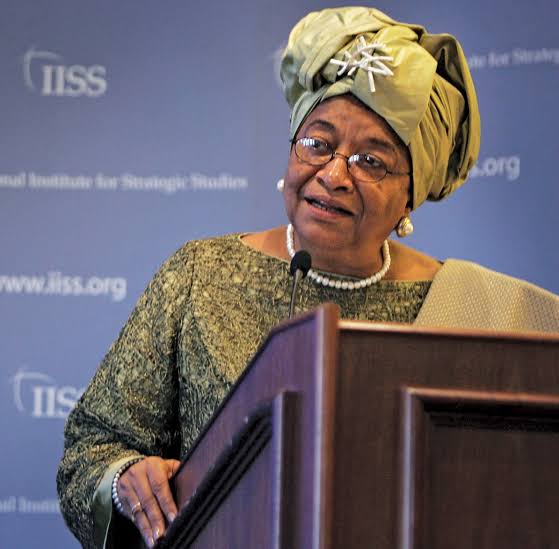
    Ellen Johnson Sirleaf (born Ellen Eugenia Johnson, 29th October 1938) is a Liberian politician who served as the 24th President of Liberia from 2006-2018.

    Sirleaf was the first elected female head of state in Africa. Sirleaf was born in Monrovia to a Gola father and Kru-German mother. She was educated at the College of West Africa and completed her education in the United States, where she studied at Madison Business College and Harvard University.

    While in college, she became a member of the Alpha Kappa Alpha sorority, and she is an honorary member of the Links Incorporated. In 1956, Ellen Johnson married James Sirleaf. They had four sons together before their divorce. She grew up as a Presbyterian, but later joined her husband’s Methodist faith. Through her sons, she has been blessed by ten grandchildren. After her stay in the United States, Ellen returned to Liberia to work in William Tolbert’s government as Deputy Minister of Finance from 1971-1974. Later she worked again in the West, for the World Bank in the Caribbean and Latin America.

    In 1979, she received a cabinet appointment as Minister of Finance, serving to 1980. After Samuel Doe seized power that year in a coup d’état and executed Tolbert, Sirleaf fled to the United States, where she worked for Citibank and then the Equator Bank. In 1985, she retuned back to Liberia to contest a senatorial seat for Montserrado County, an election that was disputed.

    At the beginning of the First Liberian Civil War in 1989, Sirleaf supported Charles Taylor’s rebellion against Doe. She helped raise money for the war and founded the National Patriotic Front of Liberia; with Taylor and Tom Woewiyu. Because of this, Doe’s government recommended that Sirleaf be banned from politics in Liberia for 30 years. But she later opposed Taylor’s handling of the war and his treatment of rival opposition leaders such as Jackson Doe.

    By 1996, the presence of Economic Community of Western African States (ECOWAS) peacekeepers led to a cessation of hostilities. The nation held the 1997 general election, where Ellen returned to Liberia to contest. She ran as the presidential candidate for the Unity Party and placed second in a controversial election, getting 25% of the vote to Charles Taylor 75%. After controversy about the results and being accused of treason, Sirleaf left Liberia and went into exile in Abidjan, Ivory Coast. After the end of the Second Liberian Civil War and the establishment of a transitional government, Sirleaf was proposed as a possible candidate for chairman of the government.

    Ultimately, Gyude Bryant, a political neutral, was chosen as chairman, while Sirleaf served as head of Governance Reform Commission. Sirleaf stood for president as the candidate of the Unity Party in the 2005 general election. She placed the second in the first round of voting behind George Weah, a former footballer. In the subsequent run-off election, Sirleaf earned 59% of the vote versus 40% for Weah, though Weah disputed the results.

    The announcement of the new leader was postponed until further election investigations were carried out. On 23rd November 2005, Sirleaf was declared the winner of the Liberian election and confirmed as the country’s next president and the first woman to be elected as president of an African country. Her inauguration took place on 16 January 2006.

    It was attended by many foreign dignitaries, including; United States Secretary of State Condoleezza Rice and First Lady Laura Bush. As Africa’s first democratically-elected female head of state, she has led Liberia through reconciliation and recovery following the nation’s decade-long civil war, as well as the Ebola Crisis, winning international acclaim for achieving economic, social, and political change.

    Recognized as a global leader for women’s empowerment, President Sirleaf was awarded the prestigious Nobel Prize for Peace in 2011. She is the recipient of The Presidential Medal of Freedom the United States’ highest civilian award—for her personal courage and unwavering commitment to expanding freedom and improving the lives of Africans.

    Her many honors also include the Grand Croix of the Légion d’Honneur, France’s highest public distinction, and being named one of Forbes’s “100 Most Powerful Women in the World.”

  • Professionals VS Influencers: Blurred lines in media!

    Professionals VS Influencers: Blurred lines in media!

    By Hilmelda Tenkeu

    (hilmeldatenkeu@gmail.com)

    Thumbnail Photo Courtesy of http://hi.photoslurp.com/

    Gone are the days were having a formal education and obtaining a degree was the goal. With evolution and globalization, the goal is making money and “living the life”. Therefore, it is not surprising to see a TV host dressed by popular designers, with 1 million+ followers on Instagram or social media at large.

    Different social media apps used by influencers. Photo courtesy of http://yourstory.com/

    A professional in a particular field conforms to the technical and ethical standards of a profession. They go through a defined period of training aimed at acquiring a skill that will be applied to solve a problem, in exchange for payment (although not always). On the other hand, an influencer is a person or group that can influence the behavior, actions and/or opinions of others.

    Influencers are hired and paid according to their degree of impact on the population, that is, via the number of followers and likes/views that they have on social media. Therefore, they create content frequently in order to entertain and keep their followers. They trade their experiences and lifestyles for visibility. The more visibility, the more money they are paid to advertise a product, be a brand ambassador, and many other gigs. Professionals on the other side, are hired to offer a particular skill for which they have trained and obtained a certificate of learning. Thus, they have to acquire a skill, prove that they master it by practicing, and lastly, practicing it over a long period. The longer the experience, the more expensive their service becomes. This is especially true with media.

    In media, especially in front of the cameras, experience is absolutely rewarding. For instance, Caroline Mutoko is a media icon in Kenya today but she has been practicing for more than 15 years. She has now mastered what to say or not, what the audience wants to hear or not, how to approach a technical topic and other critical aspects of hosting a show or talking on TV and radio. However, there is a new tendency of hiring influencers to host TV and radio shows.

    It seems like the focus has changed from doing the job well and informing the audience while making money, to solely making money. The new focus involves hiring influencers that have a huge following on social media and using that already established visibility to set the trend. This completely changes the cycle. Yesteryears, media would determine the trend: what was acceptable or not, what music to consume or not, and what movie to watch or not. But these days, the followers set the pace and this is not always right or moral at all.

    Also, hiring influencers as media personalities trivializes the job. When a person who has not trained and mastered the art of transmitting information in a way that is pleasant to the ears takes that job, it makes it look easy. Being fluent and eloquent is not enough to work in media. There are technicalities that one has to learn. There are regulations that have been put in place by different regulatory bodies that need to be respected. Owning a youtube channel or indulging in live videos on social media are not near similar to talking on TV or radio. In the former situation, influencers are often their own producers and editors whereas, in the latter situation, they have to adhere to principles of media and talking to a diverse audience.

    Another important point that is often neglected is lifestyle. Influencers can often afford to live a lifestyle that professionals cannot. A Cameroonian influencer once said, “ in one month, I can make money that a trained journalist will never make until the dawn of his career”. As heavy as the statement is, it is true. Influencers are endorsed by brands based on the number of followers. If they have a great reach, they are paid a good deal as well. Hence, when they are hired as media personalities, their salary is not the same as that of the professional. The professional feels undermined as though they made a wrong choice to spend 4 years and more studying and training for this profession. This can be frustrating and therefore, explains why some professionals have become influencers. For instance, Jeff Koinange, “the voice” who works at Citizen TV, now calls himself an influencer. He is endorsed by huge brands for ads.

    Moreover, less than a year ago, a new TV channel was launched in Cote d’Ivoire. Five of the news anchors and hosts are influencers with hundreds of thousands of followers. This is clearly a strategy from the owners of the TV channel to; have a ready-made viewership and immediately be the top channel in the country. Well, several conventional viewers and professionals of the field have condemned this, terming it “too easy”. But the question is: how much are they paid? This amount should be enormous, given that these influencers have altered their schedules and have had to reject some endorsement opportunities.

    In Kenya however, hiring influencers as media personalities has not worked so well. Recently, a radio host was fired for going against company policies in speech. When asked about this happening, Berna Akang, a communication student, said “well, these are the results of hiring non-trained people to do a job that demands time, watching what we say and how we say it… I prefer going through the training, getting the job, and building my brand so as to become an influencer, instead of starting as an influencer. It just does not cut it for me”. Clearly, the world is now digital, and technology has the final say.

    Media actors and decision-makers have to sit and redefine who a journalist is and is not. The structure and principles of being a media personality have to be rethought as well, taking into consideration the introduction of influencers. What started as including comedians as co-hosts for fun interviews, has taken another turn.

  • Parents Adopting Children to get Paid Leave

    By Fatiha Shabir

    (fatihashabz@gmail.com)

    President Uhuru Kenyatta at State House, signing a bill into law – PSCU

    President Uhuru Kenyatta on Tuesday, signed into law the Employment (Amendment) Bill of 2019, which will allow parents who apply for adoption of children to be granted one-month pre-adoptive leave with full pay.

    The signing happened at State House, Nairobi and was attended by National Assembly Speaker Justin Muturi, majority Leader Amos Kimunya and Head of Public Service Dr Joseph Kinyua.

    The new Bill amends the Employment Act of 2007 and states that an employee who is an adoptive parent of a child below the age of two, is entitled to an adoption leave of one month inclusive of full pay.

    The Bill also includes paternity leave where a male employee, immediately after the delivery of his child, shall have the right to a paternity leave for a period of 14 days with full pay.

    The President also signed into law the Business Laws (Amendment) Bill of 2021 which amends several statutes to facilitate the ease of doing business in Kenya.

  • Recognise the status of the African woman for progressive development

    By Winnie Barake,

    (winniemoraa6232@gmail.com)

    Kamba women, Courtesy singingwells.org

    The culture, evolution, and history of women of African descent reflect the evolution and history of the African continent itself.

    Numerous studies regarding women’s history in African nations have been conducted, focusing on their historic roles and status in specific countries and regions, such as Egypt, Ethiopia, Morocco, Nigeria, Lesotho, and sub-Saharan Africa. Recently, scholars have begun to look at the evolution of women’s status in African history; focusing on less common attributions such as songs from Malawi, weaving techniques in Sokoto, and historical linguistics.

    African women have always been active in agriculture, trade, and other economic pursuits, but a majority of them are in the informal labor force. In 1985, women’s share in the African labor force ranged from 17 per cent, in Mali, to 49 per cent in Mozambique and Tanzania (1989). African women are guardians of their children’s welfare and have an explicit responsibility to provide for them materially. They are the household managers, with the responsibility to provide for their families, as well as taking care of them.

    As a mother, a woman has a privileged relationship with her son, regardless of who/how he turns out to be. This privileged ascendancy enjoyed by the son is long-lasting and the mother can use her prerogative to advise or even command her son. In most cases, the son listens to his mother more than he does to his father. She is the foundational pillar upon which all family and community structures rely. The African mother is more than a domestic cook; in charge of managing the household. In a way, she manages the entire community and is more efficient than any “First Lady.”

    The African mother indirectly exercises her power through her motherly attributes. There is an African depiction of decision-making processes where the role of the woman as mother is omnipresent, as opposed to the Western traditions of power relationships. In her capacity as the most influential person in society, she is respected, and feared, as well as, honored and admired. In traditional Africa, the role played by queen mothers in the foundation of the empire and the establishment of civil peace is noticeable. Nowadays, socially empowered women still play a deciding role in the structuring and development of their society. Similarly, some African societies are represented/recognized by matriarchy where the obvious political influence of a mother, as the source and principle of power, is recognized.

    As a spouse, the African woman is not just a “female”, but also, a partner equally involved in the process of building the family as the nucleus of the community. The subjugation she suffers from today on the grounds of her being the “weaker sex”; is falsely determined by the difference in the so-called gender roles.

    The third specific attribute of the African woman is her role as an educator. Education entails not only the teaching of human and cultural values but as mothers and educators, women lead their sons and daughters on the road to a good life. Genuine education involves the shaping of character through the example of the educator. This challenging aspect of the role of the African woman requires that she lives a life worthy of imitation. In African tradition, women are the first pedagogues in the sense that they are the first to lead their children. It is this attribute that explains why African women are capable of doing anything they can to sustain a disrupted family.

    Traditional organizational structures have changed so much in African society due to colonial legacy. Women, traditionally in the shadow of power, can no longer play the discreet but efficient role assigned to them. Nowadays, they are too often overshadowed by powerful men known as dictators. Their presence must be more visible.

    Their status, claim some rights to be recognized as favors for the woman. Most importantly, what matters is the question of recognition de facto of the prevailing situation: There can be no development of African societies when women who are the agents of this policy of well-being are left out.

    The role of African women in the context of violence is to restore peace. The survival of African societies depends mostly on women in recognition of their role as life-givers and peacekeepers.

    Only women can champion developmental policies by scrutinizing whether the proposal of a better life by development theorists does promote life in Africa. Therefore, the argument is to provide for African women socio-political structures and spaces where they can result in conflict resolutions.

    Because they know the price of life more than anyone else, they would do whatever they can to protect fragile lives. And in times of peace, when development is possible, women manage the dying organizations with their practical marketing skills for the benefit of the whole national community.

    Women can use their ability as peacekeepers to play other important roles only if their places as a mother, spouse, and educator are recognized. It is only by recognizing the feminine role with its specific primacy on life issues that the development of African nations will be effective.

  • How To Write A Good Article

    How To Write A Good Article

    By Daniel Nyaga 

    (danielnyaga.dn@gmail.com

    Thumbnail Photo Courtesy of kenyayote.com

    Article writing is an art that not everyone can pull off. At the end of the day, people often write because they have to communicate or ensure that some things are put to paper. However, few individuals pay attention to the flow and flavor of a piece. 

    Below are some tips on how to write a good article:

    The Headline Should Be Attention-Grabbing 

    Just like the title of a book, the headline of your article should stand out. The title of an article has the potential to make or break you. Therefore, as a writer, your title must be creative as it tells a lot and will dictate whether you shall get people to read and finish what you have written or not. Your headline should also guide your readers and give them a sense of wanting to go on and leave them anticipating for more.

    Research On Your Topic 

    If your writing is to be associated with credibility, you should have sources that can back what you are saying. Depending on what you are writing, the forms of research may vary. Some works will require in–depth research and there are others that you may require very little research. Always look for extra sources of information to add to the background knowledge that you possess. 

    Be Succinct

    No writer wants their readers thinking, “Gosh I have to read all of this?” a few sentences in the paragraph. If you can communicate in a few words do so. It is important to eliminate the unnecessary words from your writing to ensure your reader does not have to fight through jargon before getting to the core of the article or even halfway through. Being brief and to the point is helpful as your readers shall be encouraged to read your work. 

    Proofread Your Work 

    Proofreading your work goes beyond spotting the grammatical errors in a text. It also involves sentence structure and the words that are used to illustrate your message. Read through your work once you are done and the appropriate changes that are required. Can you use a different word in place of what you have used? Can you communicate your points in fewer words? Is the punctuation okay? These are some of the questions that you can ask yourself. 

    Start with a Summary

    Let your readers know what they are going to find in your article with the first two sentences or the first paragraph. This enables them to get the information faster since people are busy and some will not have time to go through the whole article.

    Paint A Picture 

    Lastly, creativity, consistency, and chronology are some of the characteristics of a fantastic article. Your choice of words, timing, and prioritization of your events will have a great impact on whether your reader will finish your article or they will get bored with the first paragraph. Creativity is an important aspect when it comes to article writing. Let your readers be able to go on an adventure as they read your article.

  • Safaricom Launches 5G in 4 Kenyan Cities

    Baraka Mboya

    (barakamboya700@gmail.com)

    Safaricom CEO Peter Ndegwa (centre) and Communications Authority of Kenya acting Director-General Mercy Wanjau (left), and ICT Cabinet Secretary Joe Mucheru during the launch of Safaricom’s 5G services – DIANA NGILA, NMG

    Safaricom has become the first telecommunications operator in East Africa to offer 5G services to its subscribers. The firm launched the upgraded network in major towns of Nairobi, Kisii, Kakamega and Kisumu, on Friday.

    According to Business Daily, the operator aimed to offset a decline in voice revenue by cashing in on growing demand for mobile data.

    “At Safaricom, we are proud to be the first in the country and the region to bring the latest innovation to both our retail and enterprise customers empowering them to start exploring new opportunities that 5G provides,” said CEO of Safaricom, Peter Ndegwa.

    In a statement with Mobile World View, the firm stated that it partnered with Nokia and Huawei for the rollout.

    As part of its trial, Safaricom will expand to 150 new sites across nine towns in the next 12 months. The decision to launch 5G in the first 4 towns was to test if its users will be able to enjoy its amazing speed of 700 megabits per second(mbps) and 1000 as time goes on.

    The 5G supports heavy internet usage and one million devices in a square kilometer unlike 4G which supports 100,000 per square kilometer.

    However, Mr. Ndegwa acknowledged that the cost will be a barrier to entry since to access 5G network, you need a device that can support 5G which are expensive to buy, going for at least Ksh60,000.

    “With new technology, the uses could be fewer at the beginning but as we test and expand use cases, we expect the experience to be better and the cost will come down,” he said.

    He also mention that the firm has in the recent past, has been trying to increase its number of 4G users since only 20% of registered Safaricom users have 4G devices.


  • Thierry Henry Quits Social Media over racism

    Thierry Henry Quits Social Media over racism

    By Daniel Nyaga

    danielnyaga.dn@gmail.com

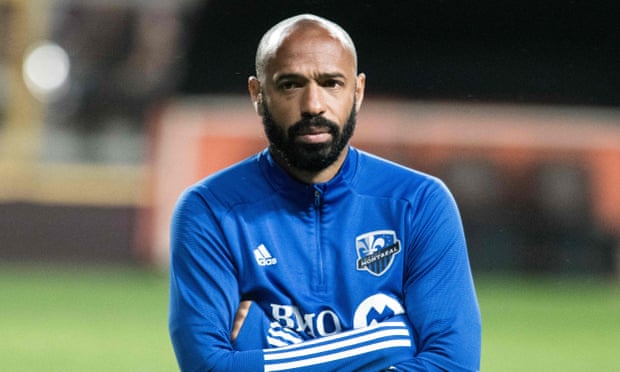
    Thierry Henry gives a press conference at the Ricardo Saprissa Stadium in San Jose. 
    Ezequiel Becerra. PHOTO| AFP

    Former Arsenal striker Thierry Henry announced that he shall be quitting all social media until there is more done to tackle racism and harassment online.

    In a statement shared with his combined 14.8 million followers on Facebook, Instagram, and Twitter, the French striker said he would quit the platforms until a solution is found to the on-going harassment.

    “Hi Guys, from Saturday morning I will be removing myself from social media until the people in power are able to regulate their platforms with the same vigour and ferocity that they currently do when you infringe copyright.” read his message.

    According to the former world cup winner, the sheer volume of racism, bullying and resulting mental torture is too toxic to ignore. He further called for greater “accountability” online.

    “It is far too easy to create an account, use it to bully and harass without consequence and still remain anonymous,” he added. “Until this changes, I will be disabling my accounts across all social platforms. I’m hoping this happens soon.”

    Recently, Twitter has been under increasing pressure for allowance of abusive language and harassment on its platform. Users have been victims of bullying and harassment on the platform mostly from anonymous accounts.

    Henry, France’s all time top goal scorer has been vocal on racism in football as well as citing his struggles against racism as a high profile black footballer. Thierry Henry is the latest celebrity to quit social media citing abuse as the reason.

    Twitter released a statement last week highlighting, “there is no room for racist abuse” on its platform and that it was working to ensure that users who are guilty of the above should face dire consequences.

  • Time to sober up and get it right- Nalwa

    By Muhanguzi Tola

    tolakofa1@gmail.com

    Campus Governor aspirants. From Left- Michael Odula and Walter Nalwa.

    DUSA council aspirant Walter Nalwa has advised congress members and students to remain woke and vote in leaders who not only listen to them, but also understand their grievances.

    The campus secretary (Governor) candidate urged congress aspirants and other students to consider who they put in power, during a meeting between members from his camp and the students today at the Athi River campus.   

    “We need to think whether we need services or we need someone who doesn’t understand our problems,” said Walter, stating that some positions such as Secretary General are key and require a leader from the main campus.

    The candidate further stated that actualization of requests by leaders based in the main campus happens promptly.

    His remarks were echoed by council vice chair candidate Monicah Gitau, who advised the students to choose leaders they can relate with.

    “We need people who value you students…There are some people who are only waiting to convince you through a meeting or a debate,” said Monica, taking a dig at candidates who have never been to the campus for campaigns.

    Presidential candidate Ian Agina however believes that intellect is key in choosing leaders, but shares Walter’s sentiments that indeed the Sec Gen office requires operation from Athi.

    “…Sec general is an important position that not only requires its headquarters in Athi but a very intellectual mind,” said Ian.

    Interim sports secretary Barrack Khaseke was also present during Walter’s address, and has insisted that congress aspirants need to be very independent. He further stated that it’s not about power, but provision of resources to students, hence the importance of giving the congress a chance to make their own decision.

  • UNINTERRUPTED REFLECTIONS ON COVID 19

    UNINTERRUPTED REFLECTIONS ON COVID 19

    This is an article that I wrote last year during the COVID period. It contains perceptions of life then (last year) and the life now (this year). The article supposes that no stark differences have been established between these two years, with regards to the COVID situation. 

    By Nyokabi Ng’ang’a

    Leshnyokabi@gmail.com

    Thumbnail photo courtesy of lovethispic.com

    Nobody expected that such a calamity will hit our world this big, apart from God and perhaps, our world masters. Nobody saw that such a time like this, children would be confined in their homes with their parents, with these two parties left wondering who will be fending for the other. 

    Life has become a distant friend, whom we will call when everything comes back to normalcy. 

    Instead of books, our social media life has become our new order of the day. Instead of our future hopes, our now challenges have become our life’s determinants. The line has been drawn afresh and the divide has been established a huge. The digital, social, cultural, religious, and economic divide has been our world’s landmarks.

    The devastation has been our new embrace, but many of us are yet to admit this is so. Our lives are being blinded, blinded by the uneasiness we feel and the comfort we seek. While some can afford their next meal, others can afford their empty sleep. It has become a new race of who can survive and who cannot survive this pandemic. 

    While some knocked their heads off in school and made it a point of note that their futures were bright, others in the same environment, chose a kick to the door of failure. But, as of now, our world has placed us on the same footing: an economic downturn, a challenging future, failing systems, and weak foundations. This then leaves us wondering: “Shall we come out victorious?”

    While victory is always established by defeated failure, our true victory will only be established by changed systems. After this pandemic, we will desire new things, we will desire a change. This could be a lifestyle change, a change in belief, a change in practice, a change in order, and perhaps, a change in leadership; be it in self-leadership or institutional leadership. And by stating leadership, I don’t mean leaders. Just as argued by Dr. Allan Bukusi in his book Thinking Leadership in Africa, leadership means the act and art of harnessing resources and mobilizing people towards a common goal. Leadership according to Dr. Allan, incorporates four things: systems, structures, leaders, and people. So, by stating a change in leadership, it could mean an independent change in either of the four aforementioned things/variables or a holistic change, of the four, in our lives.

    The only thing that can lead us to that next level is leadership. Our weak systems, failing structures, and unprepared selves have all been exposed. No tables have been left unturned. While we are trying to wear a smile amid this havoc, our deepest hearts and souls are deeply sinking. 

    We are on the verge of death. Death not only seen and presented physically but also manifested inwardly. Our inward deaths are characterized by curtailed dreams and hopes, changing mindsets, and negative and depressive thoughts. For the young, we are still in wonderment of the realizations of our future and for the old, we are in the questioning of the placement of our next lives. We are all caught up in a puzzle, a puzzle of who has the right piece to solve this labyrinth of life. Sadly, even the biggest of the fish have no right puzzle. We are all in the same boat together, with the hopes of a safe shore-landing which can only be determined by who is steering and paddling our world boat and who is seated on the back row of our seemingly sinking water vehicle. 

    Are those taking the captain’s lead wise and caring enough? Are those paddling our world boat strong and skilled enough? Are those taking the back-bencher’s seat weight-conscious enough?

    These are the questions racing my mind when picturing our world boat and the battles we are facing as we try to reach the safe shoreline.

    For this world boat to travail the tempestuous waves and tides of the sea and the scares of the storm and the cries within the passenger-body within this boat, one thing is needed- Coordination.

    In context, for our world to drive back to normalcy, all nations have to be included as this virus has taught us that we could be many a nation but basically, human. It is not our nationhood that should override the cause of humanity but humanity overriding the cause of nationhood. With this in mind, one country cannot re-embark on living life while the other/s is still grappling with this pandemic.

    For one country to fully reroute back to normalcy, it will not only take a helping hand from other nations but also security provided by its army quarters and most importantly, neighboring countries. This is not to mean that a country cannot resurface from the claws of this virus at their own chosen and appointed time, but it is to mean that no amount of self-help can overrule the importance of world security and the good state of all the citizens of this globe. After all, it’s only a healthy individual who can fully help a sick person.

    Leadership and coordination are the moral imperatives of this article. Think of it!

  • A FEMINIST LEADER: HUDA MOHAMMED SULTAN

    A FEMINIST LEADER: HUDA MOHAMMED SULTAN

    In honor of Women’s History Month, the Involvement Newspaper will be featuring African Women Leaders, heroes and activists in a bid to remember their contributions towards a better Africa.

    By Sharon Jerotich

     (jerotichsharon096@gmail.com

    Thumbnail Photo Courtesy of alchetron.com

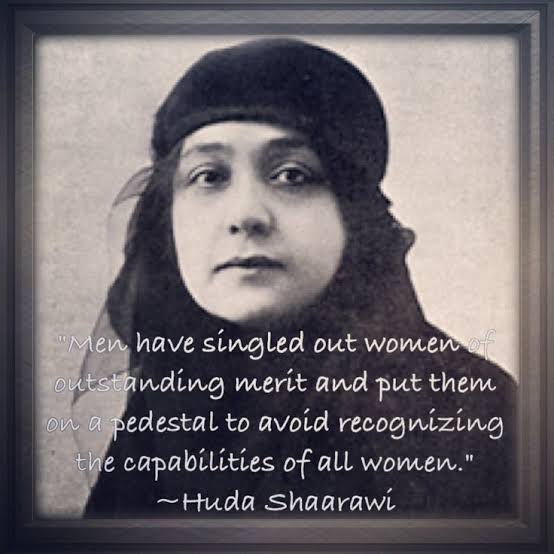
    There are not many people whom we can confidently say have changed the course of history for any select group of people however, this one woman changed the course of history for Arabic women everywhere. When the word feminism is mentioned, her name comes to mind.

    Born on 23rd June 1879, Nour Al-Huda Mohamed Sultan started on a path that would be celebrated by women for years to come. She is a feminist leader and founded many organizations, one of them being the Egyptian Feminist Union (EFP) IN 1923. The union sought to reform laws restricting personal freedoms e.g., marriage, divorce, child custody, etc. 

    Huda was educated from an early age in Quranic Arabic and Islamic subjects; this she was taught by female instructors. She was married off to her cousin Ali Pasha Shaarawi at the age of 13. In 1908, Huda founded the first philanthropic society run by Egyptian women. They offered services to poor women and children. She believed that having women run such projects would challenge the view that women are created for men’s pleasure and in need of protection. 

    In 1919, Huda played a key role in the Egyptian revolution, leading women protestors advocating Egyptian independence from the British and the release of male nationalist leaders. 

    Her husband was elected vice president of the nationalist liberal Wafd party and kept her informed on the developments taking place during the revolution. He did this so that she would take his place in the instance he was arrested. With this information, she formed the Wafdist Women Central Committee (WWCC) in 1920 and became its first president. In 1924, she led WWCC in airing their demands, which were ignored. This led her to resignation from the committee. 

    Huda’s biggest fight was with the Harem system where women were secluded and veiled. Those who came from wealthy families had separate buildings and eunuchs who guarded them and also acted as messengers to the outside world. Women also had to go outside veiled. 

    Huda is most known for defying this rule. She once removed her veil in public and trampled on it. Women were shocked but later began to cheer; some even followed suit. 

    Although she passed away on 12th December 1947, her legacy lives on. She deserves to be celebrated for being brave and setting the stage for women all over the world. From Huda, we learn to help other women, defy traditions that are oppressive for women, learn to air our demands, and go for what we want. Nour Al-Huda Mohamed Sultan, we celebrate you!