Blog

  • A LITANY FOR CELIBACY

    By Nyokabi Ng’ang’a

    Leshnyokabi@gmail.com

    Photo courtesy: redubble.com


    Lord, I pray for a strong back not a light load,

    But in this prayer lies the fears of this heart!


    Lord, I pray for a good life,

    But in this life of good,

    Marriage lacks!


    Lord, if it’s not a good and honest man,

    Give me strength for celibacy.

    If it’s not a man of my expectations,

    Give me grace for celibacy.


    If it’s not a man worth my salt and coat,

    Lord, give me strength for celibacy.

    If it’s not a man of stature, reasoning and understanding,

    Lord guide me through celibacy.


    Lord! If his heart speaks of dirt and mouth of romance,

    Strengthen me for celibacy.

    If he is of no full awareness of your existence,

    Lord make me celibate.


    If he speaks of love,

    And acts out of wrath,

    Lord prepare me for celibacy.


    If he is ashamed of my weakness

    And emasculated by my strengths,

    Lord speak me into celibacy.


    Lord, if he sees not me for me,

    But me for him,

    Lord! Drive me into celibacy.


    Lord, I have searched and found that all have fallen short,

    That’s why I crave for celibacy.

     

  • Six protective hairstyles for the rainy season.

    By: Bernice Grace (Bgrace494@gmail.com)

    Photo courtesy: ewoodshomepics.site

    The umbrella and jacket season is a time for cultivation. It’s a time for hibernation not just to ensure survival but to ensure a stronger return in the warmer seasons. It’s no different for your hair. This season should be a time for your hair to get strength and growth, free from frequent manipulation and styling, which is where protective hairstyles come in.
    Other than masking and moisturizing, protective styling should be a prioritized part of your autumn and winter hair care. The science behind protective styling is going for protective hairstyles that you will keep for six to eight weeks (or more!) that way your hair is free from manipulation during that part.

    Box Braids
    When it comes to protective hairstyles, box braids are a classic! Not only are they a statement-making hairstyle, but they are also affordable, and a low maintenance hairstyle. Box braids and twists are perfect as they will allow you to play around with size, length, and texture – and if you work in an accommodating work environment, you can experiment with color too.

    Faux Locs
    Faux Locs (or goddess braids) have been enjoying a moment in the past two years and it’s not about to slow down. As the name suggests, faux locs resemble dreadlocks but they give you the look, not to mention the length, without the years of commitment.
    Faux locs are also a great way to keep a bit of tropical inspiration with you as you go through the cold months – forget flowy “beach waves,” faux locs are the look and feel of summer.

    Cornrows
    Cornrows can be the simplest of the protective hairstyles but that isn’t to say they can’t be creative and versatile. Cornrows are the easiest to pair with other styles. So, you can protective style your hair with cornrows but wear a wig in that final week when the hair is in its ripest stage. Or add a puff or ponytail (depending on your hair’s texture). Cornrows can be dressed up or down, it all depends on what you’re aiming for.
    Wigs the simplest of the protective hairstyles but that isn’t to say
    Wigs are currently having a moment in Africa and there’s no better time to wear one than in the chilly season. The wig can be the main act of your protective styling or it can act as a reprieve from your other style. The thing to remember when using wigs as your protective style is that you will still have to take the step of braiding your hair under the wig – be it cornrows or matuta.

    Bob cut braids
    The bob cut braids are a classic yet edgy 1990s throwback hairstyle that all your style icons and idols from the 1990s had. The bob cut braids are a perfect protective hairstyle for someone who has grown tired of box braids and is looking to try something new.

    The Sho Madjozi
    This is a South African hairstyle where braids and cornrows meet at the top of the head. All your nieces have probably had this style in recent time and there’s no denying its relevance. Both playful and cute, this style is where cornrows meet braids and it can be versatile in execution.
    As long as you take care of the hair beneath your protective style and keep an eye on your hairline, you will thank yourself for protective styling during the cold months come summer.

  • Fun at the Fair

    Fun at the Fair

    By: Mercie Njoki (mercienjoki12@gmail.com)

    Image courtesy of: http://clipart-library.com

    On Wednesday 24th July, Daystar University held a spotlight career fair at Valley Road Campus. The career fair focused on the film industry boasting a large number of professionals from the industry who were invited to talk to the great number of students who attended the fair.

    The industry professionals who were invited to give a talk on the film industry are none other than Writer and Director Mona Ombogo, Award-Winning Executive producer Quincy Wandera, Actor and Director Mugambi Nthiga, Director Ezekiel Onyango and last but not least, Comedian, law consultant, and Singer June Gachui. The career fair was sponsored by trademarks like Aspire and Empire International and it focused on the theme of building brands.

    Since these industry professionals are very familiar with the film industry, they have a huge understanding of different people’s capabilities in film. One of the speeches that stood out and resonated with the audience full of students was Ezekiel’s speech. He talked about how millennials are people who rely on technology and film plays a key role. He emphasized on how millennials have the most energy and they should use it in creating useful content.

    These industry professionals also emphasized on utilizing our skills in the film digital space. June Gachui talked more about this, she added that in her role on the award-winning film ‘Nairobi Half-Life’, she used her skills intellectually and she goes on to encourage her audience to tell themselves they are great and they can accomplish anything they want. As a law consultant, June deals with copyright and trademarks. She went on to say “if you create your content you own it and if you are employed they own it. Therefore, be careful with whom you collaborate so that the beauty of the product comes out.”

    To sum it all up, the career fair was quite educative and inspiring. The talk enabled the creatives in the room to open their mind further by creating not only great content but also revolutionizing the Kenyan film industry. It was truly an honor to have had the pleasure of listening to these great people as they shared their wisdom and experiences with the future of the Kenyan film industry.

  • Day of the African Child

    Day of the African Child

    By: BY Nyokabi Ng’ang’ a, Claudine Otieno
    Leshnyokabi@gmail.com, otienoclaudine@gmail.com

    Photo courtesy: pin.it/aodvrosnrngw33

    “To every child- I dream of a world where you can laugh, dance, sing, learn, live in peace and be happy,” these are the words and the hope of Malala Yousafzail, an activist from Pakistan, that every child should be given an opportunity to dream and dream big for that matter.
    The Day of the African child is one that is set apart for celebrations every June, the 16th, in a bid to celebrate the African child while commemorating the thousands of children who died in the Soweto uprising. Sarafina, a potent film production created in 1992, was one that resonated well with many, especially those of the African descent, on the issue and importance of liberating education as a measure of unchaining Africa from the bonds of colonization and foreign dominance. Just like the film Sarafina gestures, in 1976 the 16th of June, thousands of students took to the streets of Soweto in protest to the decision that was made on having Afrikaans, as the officiated language of instruction in all local schools. This decision was a move deemed racist hence imploring the thousands of students to counter it.
    It is reported that 176 students-with an estimation made of up to 700 students died in the protest as a result of being gunned down by the then brutal police force, with thousands them injured in the events of the protests. This led to the adoption of 16th June as the ‘youth day’ in South Africa, by its government, and the ‘Day of the African child’ by the African Union in 1991. The Day of the African child, presently, commemorates the brave students who took part in the protest but also seeks to raise awareness of the situation of the Children in Africa and on the need for continuing to improve the education of the African children as reported by the World Health Organization.
    It seeks to unite all the African children and build on the interests and the issues facing the African child. Annual celebrations of this day are themed by the African Union. This year, the Day of the African child was themed; “Humanitarian Action in Africa: Children’s rights first, in an effort to call forth for the attention of the issues of children who are at the risk of being manipulated by the virtue of being in a vulnerable state in the event of being displaced, being orphaned or being a refugee.
    It has been a struggle to liberate African children. In a continent where their rights are heavily exploited, little is being done to ensure that children actively and continuously know their rights. It has not been rolled out as a class or clubs in a majority of the schools to educate our young ones on their rights, not only for purposes of their own protection but also to bring up leaders who fully understand their position and influence they have in the society at large. The education system has not supported the uprising of African children into what we keep telling them to be. Rather, the system has been used as a form of control with no room for them to counter or raise questions on ongoing events in our countries. We are still witnessing cases of deaths involving student leaders. Students protesting for their own rights and reasons are faced with brutality, guns, and bullets. Even the license to protest or age as a young member of society does not separate you from the wrath of the harsh reality of African streets. Many rules have been formulated to protect the African child such as the Agenda 2040 developed by the African Committee of Experts on the Rights and Welfare of the Child, that expands ten aspirations made in a bid to make an ‘Africa fit for children.’
    It is high time that all Africans realize there is a need to modify our education system. Education is a tool used in enlightening all Africans, whether young or old. If we do not let ourselves and those to come to be taught of justice, be taught of transformation, be taught of freedom, to be taught of excellence or even on the culture of ‘ubuntu’ through our educational system, we will sink into the deep ends of suppression and downgrade to the dependency syndrome.
    Desmond Tutu clearly voices, “Children learn about the nature of the word from their family. They learn about power and about justice, about peace and about compassion within the family. Whether we oppress or liberate our children in our relationships with them will determine whether they grow up to oppress and be oppressed or to liberate and be liberated.”

  • What Daystar Can Learn From USIU Culture Week

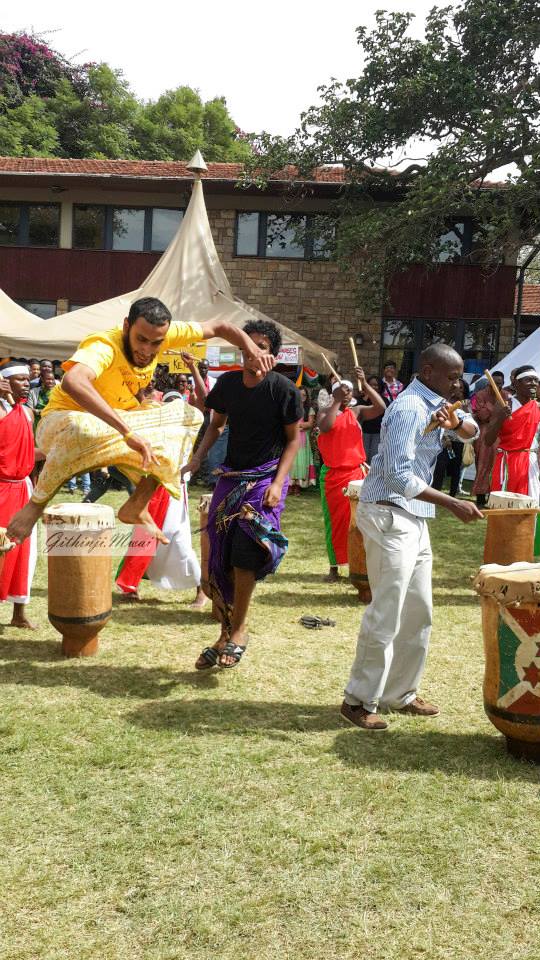
    1150856_10201254096548346_899629261_n 1002629_10201254089308165_579097901_n 1174924_10201254068987657_2039964198_n 1174926_10201254073027758_138716945_n 923500_10201254041306965_885206577_n

    By Vincent Embukane Liboso

    Photos Courtesy of Githinji Mwai

    As an events blogger, writer and one who has a little expertise up my sleeves on events, I will be honest about one thing: Daystar Nairobi campus culture week was a flop!  I love seeing a great initiative trend and take hold; that is why when I was invited to USIU (United States International University) Culture Week; I couldn’t refuse even though it was at happening concurrently with Daystar Nairobi’s.

    There was glitz and glamour in abundance at USIU culture week. At Daystar, we lacked that and we drank our sorrows to a stupor  on free Nescafe coffee. In fact, not even our students had an idea it was culture week.

    Moreover, Daystar culture week lacked the hype and the excitement. Why you ask? It is because we are doing the same things done by past leadership over and over again, expecting different results. But it never works that way!

    I will give you a clear perspective on how USIU turned their earlier low-hyped event into one of the best ever event in their history and in my history of events blogging. (more…)

  • Athi Health Awareness Week

    By Waridi Ajambo

    Daystar Compassion and Care Center (DCCC) successfully organized yet another health week in the Athi River campus from the 10th to the 14th of March 2014.

    A schedule was made to enable the smooth flow of activities during the week. HIV testing and counseling, conduction of the Tuesday chapel service, cancer screening and community outreach program.

    (more…)

  • On the day of Saint Valentine…

    I rarely celebrate the 14th February debacle. You ask why? Well I am going to play an old track and say that it is just an overrated day. Come on, you have 365 days to express your emotions. That one day isn’t going to change much. Can I let you in on a little secret? When it reaches that fateful day I usually check the box marked single; that sounds more subtle than the unnecessary details.

    So on that day I choose to go ‘wild’ with my girlfriends. I pretend that every single couple walking past me is not having as much fun as I am.

    Somebody in their right – or crazy – senses asked me to be their valentine; and yes, I pretended I was very cool about it. Then when I got to thinking all the details that entail that day, I thought why can’t we reschedule and have it some other day. That is how weird I am. But he did not expect all the flowers, poems and whatever gifts people exchange. He just wanted to hang out.

    We took a walk and talked about all the stupid and sentimental things in life. We sang love songs. I did most of the singing but he didn’t run away so I should probably start working on my album.

    Then the night came. Everyone has a bucket list. I have not done half the things in mine but I am going to tread slowly. I swore that I have to be serenaded before I bid this world adieu and now that is one check for my very long bucket list. I pray in my heart of hearts that someone somewhere is getting jealous by now because that has been my intention all along.

    The song, let us call it that for now only because it gives it a more dramatic appeal, is now one of my favorite things to listen to, I feel like I own it now. The day ended with one yellow rose, I hear it means friendship, that’s what I gained that day. See how a day that the whole world assumes is set apart for lovers took a twisted,but happy, turn in my imperfect life? That is the story of my funny valentine; one of those pieces that are needed to complete the puzzle that is me.

  • Umaskini tuuangamize au tuupunguze

    Untitled
    PHOTO COURTESY: ARON MTURI

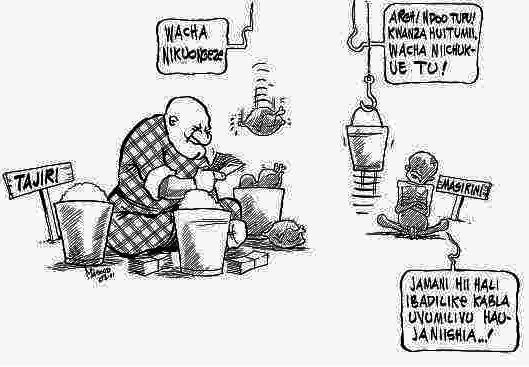
    Ni wangapi wamekuwa wakipoteza wapendwa wao kila mwaka kwa majanga yasiyoeleweka? Tume­kuwa tukijaribu juu chini kutafuta suluhisho, huku tukiambiwa kuwa kuna madaktari ambao hukesha wakitafuta dawa za kati ya magonjwa makuu yanayoangamiza binadamu. Kufikia sasa, bado watu wanatamani kupata suluhisho la jinsi watakavyopata dawa za magonjwa sugu kama vile UKIMWI…lakini la kushangaza ni kuwa hata ugonjwa wa Malaria unaweza kuti­bika, lakini kila siku, takriban watoto ELFU TATU wanaangamia. Ninavyofikiria ni kuwa, tumekuwa watu wanaojishughulisha na mengi hadi tunasahau madogo ambayo tunaweza kuyaondoa kwa haraka.

    Katika Jamii, vijana wana mengi am­bayo wanaweza kuyafanya ili kushughulikia hili tatizo la umaskini, lakini tuseme ukweli, TUMEZEMBEA! Nilifurahishwa sana na jumbe niliyoipata kutoka kwa vijana kadhaa wa chuo kikuu cha Daystar ambayo ilikuwa hivi, “Tumekualika katika mkutano wa vijana, am­bapo tutakuwa tukiongea kuhusu jinsi sisi kama vijana tunaweza kuangamiza umaskini.”

    Singetaka kukuelezeeni jinsi nilivyofika mkutanoni…nilifika mapema, na si uongo, nilitabasamu tangu hadi mwisho. Mkutano wenyewe uliongozwa na Bwana mmoja, Dan Orero, kwa kusema kuwa angependa kila mtu atoe maoni yake. Kivumbi kikaanza! Kwanza, Bwana mmoja aliamka na kusema kuwa kul­ingana na utafiti wa wataalam, imesemekana kuwa si rahisi KUUANGAMIZA umaskini. Tunaloweza kufanya ni KUUPUNGUZA… Kimya! Orero naye hakusema kitu, aliandika tu.

    Zaidi ya hayo, aliuliza kama tunapaswa kui­lalamikia serikali kuhusu kiwango cha juhudi za kuupunguza umaskini. Hili lilimfanya Bwana mmoja kusema kuwa hatupaswi kuitupia seri­kali lawama, kwani haiwezi kufanya kazi bila kushirikiana na wananchi. Kisha, mwengine aliongeza kuwa tunazo rasilimali za kutosha na pia uwezo chungu nzima, ambao tumekuwa tukiupata tangu shule ya msingi, na kuna njia ambazo tunaweza kuzitumia ili kuupunguza umaskini katika jamii.

    Karen, mmoja kati ya wengi waliokuwepo alisema kuwa wazazi wana jukumu kubwa sana katika kuhakikisha kuwa watoto wao watakuwa katika mstari wa mbele katika vita vya kupun­guza umaskini. Ili wazo hili lilete maana, Wa­zazi wana jukumu la kuwaunga mkono watoto wao katika lolote wanalotaka kufanya maisha­ni. Aliongeza kuwa watu wengi wamepata sha­hada, na wamekaa miaka kadhaa bila kazi kwa­sababu walichokifanya chuo kikuu hakiendani kamwe, na kilichokuwepo myoyoni mwao.

    Hakuna aliyenifurahisha kama bwana mmoja, Gordon Odhiambo, aliyeongea kwa lugha ya kiingereza, “let us not come to school to GET JOBS, but to GIVE BACK TO THE COMMUNITY.” Ijapokuwa mimi si gwiji wa lugha ya kiingereza, nilimwelewa na kupasua kicheko. Watu walinishangaa kwa kudhani kuwa alikuwa ameongea upuzi mtupu, bali nilicheka kwani alikuwa ameigonga akili yan­gu kwa maneno ya busara ambayo nilikuwa nimeyatamani kwa muda mrefu.

    Singependa kukueleza mengi, natumai umenielewa, lakini nitakuacha na swali amba­lo wengi wamekuwa wakijiuliza. Je, unafikiri kuwa umaskini unaweza kuangamizwa kabisa, au kupunguzwa tu?

    By: Aron Mturi

    (aronmmtunji@daystar.ac.ke)

  • How Responsible Are You?

    So we’re traveling to Nairobi—yes people, the drive from Athi to Valley Road is travelling – and the “learned” guy seated in front of me opens the window and gingerly lets loose an empty pet can of soda. I’m not perfect, far from it, but littering just gets to me. Not just because of the environmental effect but majorly the sheer impenitence lacing the perpetrator’s demeanor.

    Before you brand me a self-righteous critic, imagine a man or woman old enough to be your father or mother having to clean up after your grown-up brazen self. Whilst you may rebut my seemingly whimsical protest with the inane phrase, “but it’s their job,someone has to clean”, I could borrow words from my lecturer Mrs. Muthami saying “this is your world and there’s a limit to the abuse it can take, before it starts to cave via global warming and the calamities that come with it”. No she didn’t stop there but added, “…then you start blaming God when it’s we who have failed to take care of what God gave us custody of…”

    I won’t pull the environmental card, Wangari Maathai sung that song. Instead I’ll play the morality card. How responsible are you? My pastor says “responsibility (or lack of it) starts from our bedrooms, when we wake up in the morning” (an unspiritual statement if you ask me). It starts with us, because if we would be audacious enough to stick gum under a pew, fart in an elevator, pull more toilet paper than we require, leave taps dripping, heaters and lights on unnecessarily, double parking, overlapping, speeding in residential areas, being unnecessarily loud, smugly queuing on the express counter pushing a trolley full of shopping, and suggestively gawking at someone’s wife or husband in their presence amongst other pet peeves then we have a long way to go.

    Are we then incorrigible? Far from it, there’s hope for us yet. Gandhi said we are the change we want to see. If you want to have a responsible government and society, then be responsible yourself. Go on, turn the tap completely off, be considerate and use only what you require, for Pete’s sake do the right thing. It’ll take you 21 days to kick the old habits but before long the world around us will smile back.

    By Asutsa Govedi

    (rockyagovedi@daystar.ac.ke)

  • Hello world!

    Hallo Reader,

    Welcome to The Involvement online blog for the latest and past Involvement issues. This initiative will enable those who cannot access the print copy to read, comment, give views and opinions concerning our content.

    Happy blogging!

    Involvement Management