Blog

  • MONARCHIES OF AFRICA: Lesotho

    MONARCHIES OF AFRICA: Lesotho

    By Nyokabi Ng’ang’a

    Leshnyokabi@gmail.com

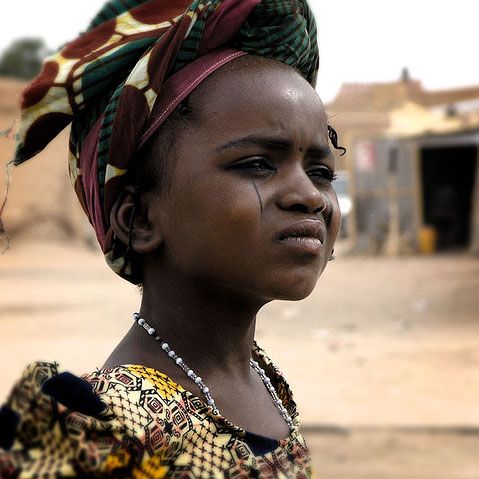
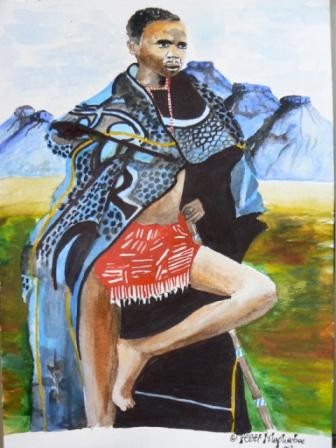
    Photo courtesy: artmajeur.com


    The Kingdom of Lesotho is an enclave within South Africa. It could be an independent country, but South Africa has played much importance in its political scene and stability where military coups are not a matter of shock.

    Lesotho could be a monarchy led by a King namely, King Letsie III, but its administration is one that takes a different turn due to the authority the Constitution has in all modes of governance. The Prime Minister of the Kingdom of Lesotho is the one in charge of the government operations, leaving the monarchical base being one that is ceremonial. The King in all his majesty is not allowed to take charge of governmental operations or intervene in any public affairs or settle any disputes whether between political factions or sections of the population as stated by King Letsie III in his interview by Al Jazeera.

    The Prime Minister, the Right Hon. Dr. Motsoahae Thomas Thabane is the one who heads all governmental operations; and also selects his Cabinet to fit into the executive arm of the government. He first became Prime Minister in 2012, but took to South Africa for asylum, with the claims that a coup was in progress to usurp his powers. This later on led to South Africa giving him a military envoy, facilitating his return to Lesotho to continue with his rulership.

    Aside from the governance stance of Lesotho, important to note is that Lesotho houses over two million people, with an estimate of the populace being 2, 125, 268 as recorded by the UN. The Major ethnic sect of Lesotho is the Basoto with its sub-groups ranging from Batluong, Bakuena, Baphuti, Matebele, Batokeng, and Batso-enang, (trading economics Website). With all the sub-groups present in the Kingdom, Sesotho and English are used as official languages that unite all persons within Lesotho.

    English: One of the official languages of Lesotho, came into play when King Moshoeshoe I, wrote to “the newly appointed governor of the cape, Sir Philip Wodehouse, suggesting that an Alliance be formed between the two territories (Basutho and Britain),” as recorded by South African History Online Website. This was done by King Moshoeshoe I when the Dutch, Voortrekkers, took advantage of the King’s hospitality by annexing a sect of the gifted land and calling it their own. Moshoeshoe then turned to the British government and his request was granted, leading to Basutoland being a British protectorate and colony in the years 1868 and 1959 respectively. Later on, Basutoland gained her independence in the year 1966 with her first Prime Minister being Jonathan Leabua, who was later deposed in the year 1986 by a military coup.

    Lesotho could be a small kingdom, but its majestic view, its resources and the love its citizens have for their indigenous culture, is a holding factor for all posterity. As reported by the South African History Online Website, Lesotho is the main supplier of water to South Africa with South Africa responding to the transaction with the supply of electricity. A small country it could be, but with an indigenous basis root, extensive land, weighty resources and beautiful culture with beautiful prints impressed on their clothing and their authentic housing structures.

    Next time you meet a Mosotho/ Basotho, don’t mind saying hi to an individual or a group with the words, Lumela and Dumelang respectively!

  • STAND BY ME

    STAND BY ME

    By Nyokabi Ng’ang’a
    Leshnyokabi@gmail.com

    Photo courtesy: YouTube.com

    Stand by me.

    At my worst, at my best:
    When the wind blows and the sun sets
    Stand by me.

    Stand by me;
    In my cries of depths,
    In my smiles of breaths,
    within greatest sorrows and huge burrows.

    Stand by me:
    When fears set while victory is at its best
    When humanity takes in insanity
    And insanity wipes of humanity.

    Lord, won’t you stand by me?

  • MPs WILL REJECT BILL THAT SEEKS TO CHARGE KENYANS FOR WHATSAPP GROUPS

    MPs WILL REJECT BILL THAT SEEKS TO CHARGE KENYANS FOR WHATSAPP GROUPS

    By Brenda Mongare

    Brendamongare171595@daystar.ac.ke

    The Bill that seeks to regulate WhatsApp and Facebook groups will be thrown out, says the National Assembly’s Committee on Information Communication Technology.

    The Bill sponsored by Malava Member of Parliament, Malulu Ijendi sought to compel administrators of Facebook and WhatsApp groups to obtain licenses from the Communication Authority of Kenya (CAK) at a prescribed fee.

    However, William Kisang, ICT committee chair, says the Bill is not implementable and will not see the light of day.

    “We should be realistic. Even if we passed the Bill it will be quashed by the courts” said Kisang.

    Godfrey Osotsi, a member of the ICT committee also disproved the Bill as he said what the Bill sought to achieve was already covered in the Computer Misuse and Cyber Crime Act passed last year by the National Assembly.

    Ostosi failed to understand how the Communications Authority of Kenya would license millions of Whatsapp and Facebook groups.

    The proposed Bill will require that WhatsApp group administrators store all the data of the users of the platform and submit the data to the authorities when required.

    Administrators will also have to ensure that members of the WhatsApp and Facebook groups are of “age of majority”. Therefore, this will lock out minors from joining or posting comments on social media platforms controlled by adults.


    Photo courtesy: https://www.express.co.uk/life-style/science-technology/932113/WhatsApp-Share-Data-UK-Facebook

  • New Education System: Competence over Competition

    New Education System: Competence over Competition

    By Aaron Kituku.
    (kaykituku@gmail.com)

    A weekend at home gave me a glimpse of what the competency-based curriculum (CBC) is all about. If skill-set is the focus of this shift in academia, then this is a blessing in disguise.

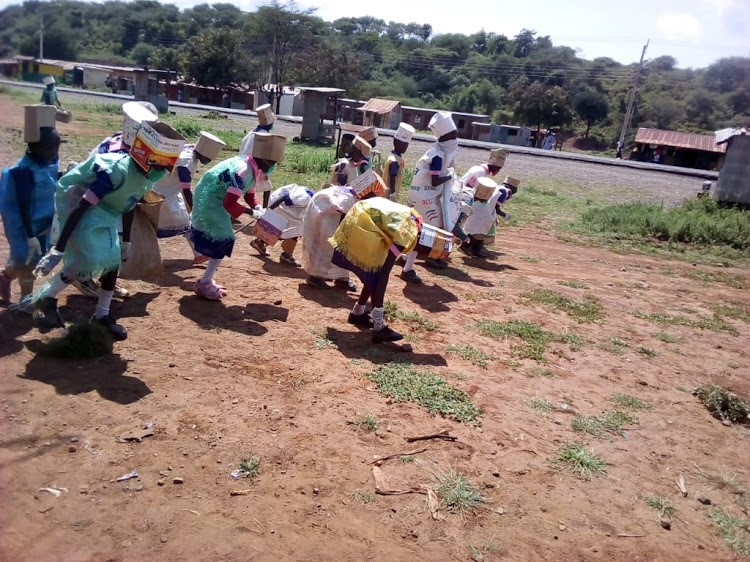
    Pupils from Rock school in Nairobi were cleaning the streets with improvised brooms, aprons, and wheelbarrows on September 5th during a class project in the new curriculum. Apart from the adorable scene of these children sweeping, the direction the new system is taking is impressive.

    The 2-6-6-3 curriculum is replacing the old, exam-oriented system, 8-4-4, which was adopted in 1985. Contrary to the traditional education system, the competency-based curriculum advocates for a progressive assessment rather than a single event of an exam, which, whether a student passes or fails, the class will move forward through to new material and assume that students will figure out concepts as the study progresses.

    As some might argue that CBC is not encouraging competition, well that’s the idea; it is mastery or proficiency-based kind of learning.

    Opposed to studying piles of notes before an exam regardless of whether you understand or not, the new system emphasizes on whether or not a student is demonstrating well-defined competencies. That is knowledge applied. That is true learning.

    Just 2 years ago I was helping my brother do his homework in math’s, science and the like, this weekend was different. Shaping a car model from a box, curving out windows and doors was his take-home. It was fun, physically engaging and a provoked creativity. At grade 2, the child is already introduced to basic literacy and numeracy skills, appropriated communication, creativity and critical thinking, hygiene, digital literacy skills, emotional, physical and spiritual development among others.

    This is not just an improvement of the 8-4-4 system, it is a complete shift in academia whereby the trainees advance after they have demonstrated proficiency in carefully defined learning areas. That is to mean that if you get over the bar faster, the shorter you take in going through the system.

    “We shall ensure that we have now 100 percent transition from primary through to secondary school.” Said President Uhuru Kenyatta during the 3rd National conference on curriculum reforms.

    Equality of learning is probably the most important detail of the new system. It accommodates Individuals who would not thrive in a traditional class. It stresses training on a person’s natural inclinations. The system has flattened the playing field for all learners.

  • Worship Night

    Worship Night

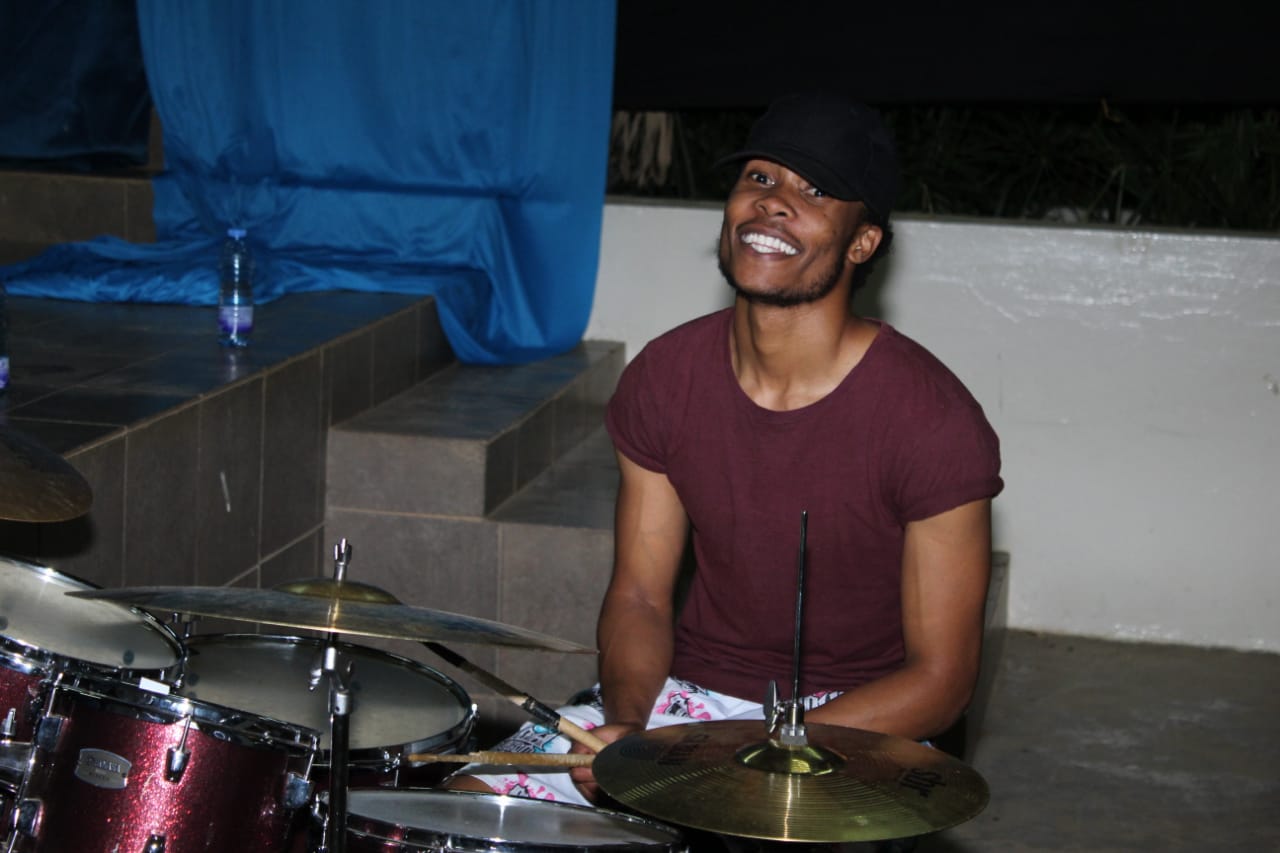
    Yesterday evening, 19th September 2019, the Worship team held a lovely and energizing worship experience at the Amphitheatre.

    Those who attended could clearly feel that the presence was God was among the congregation. Students were able to cme together and give thanks and praise to the Lord for bringing us this far and for the new semester.

    For those who missed this wonderful experience find the photos attached below.

    Photos courtesy: Joseph Gichari (Josephndungo55@gmail.com)

  • A New Dawn

    A New Dawn

    By Debbie Gitau
    debbiemumbi@gmail.com

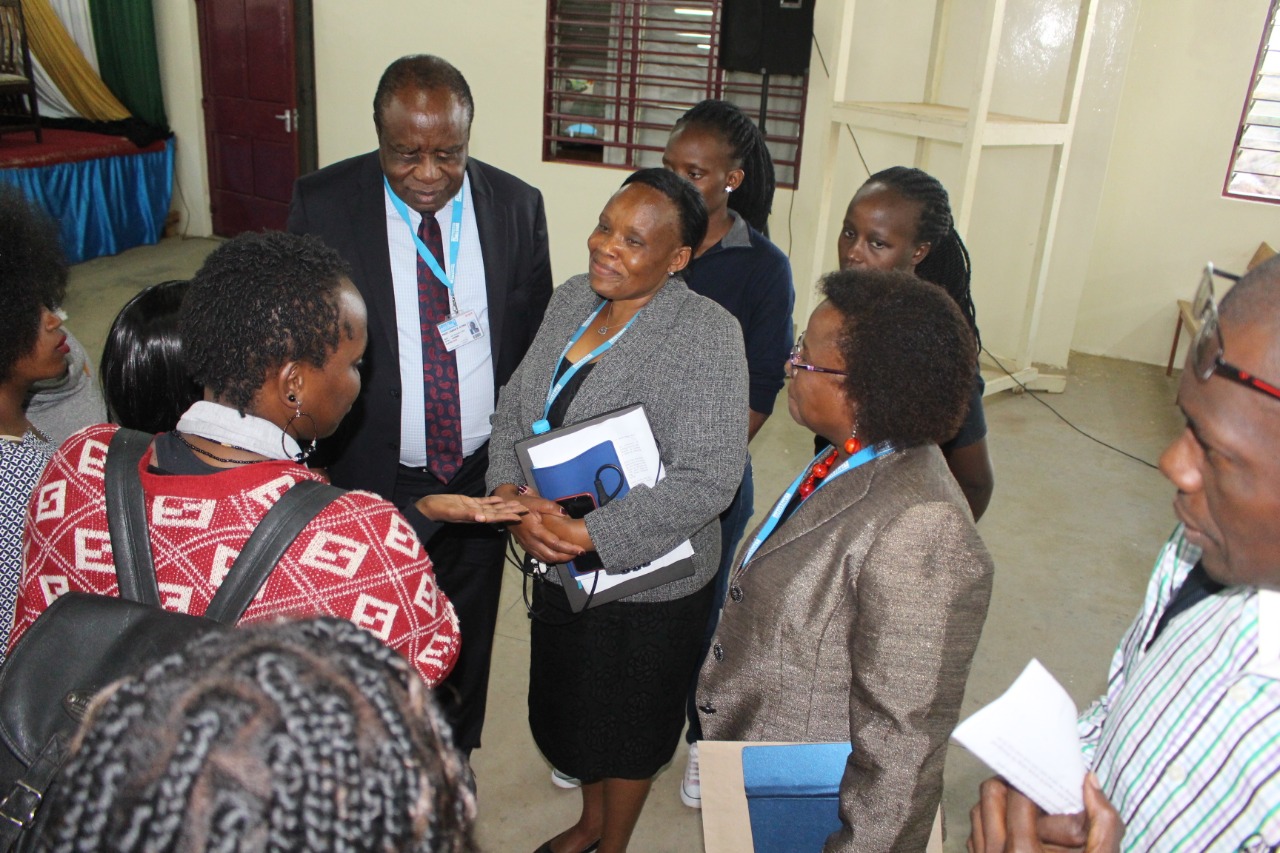
    Daystar University’s Vice chancellor, Prof. Laban Ayiro on Wednesday, 12th September, graced the first Student Baraza of the new academic year, in the wake of the new dawn.Prof. Ayiro promised that through his office, the institution will be conducting two annual barazas.

    This will be a platform to communicate the school’s grievances, understand and address the student’s dispositions, the progress, provide accountability and the way forward for the institution.In light of a joyful spirit, he began with awarding of Tracy Osogo, the recipient of the Tutu Ubuntu Scholarship by endorsing her with finances for her upkeep as she travels to 11 different countries in the next 106 days.

    In his speech, the Vice Chancellor mainly geared the students to adopt the doctrine of a strenuous life, the embodiment of vigor in effort, exploiting our potential and having the desire to strive for great things. He stressed on the worrying nature of the academic rigor of Daystarians, the timid-ness of the whole community to rise to global greatness by sacrifice and strife.

    “We have agreed this is a new dawn, I need to see some newness in the offices and my students to enjoy a new learning approach in those lecture rooms then it is a new dawn,” Professor Laban Ayiro said.

    The ongoing and future projects for the institution were also outlined. Some of the projects for the Athi River campus include building a perimeter wall, to renovate and equip the gym, building of a second borehole, and renovation of the amphitheater. The Nairobi Campus projects include expanding and equipping of the studios and library renovations. The projects will be financed mainly by resource mobilization but normal operations of the school will be financed with tuition. The Vice Chancellor hence emphasized on the need to pay tuition for the university to function normally due to the difficult financial constraints. Therefore, registered students who have not cleared out their fees and are not paying in installments nor have bursary in their accounts will be blocked.

    Students also aired out some of their grievances, which included cancellation of classes after registration, ineffectiveness of the transport system, difficult registration for new international students and lack of sport jerseys for football teams. They further suggested that the staff should go for a customer service class and creation of more awareness to specific departments like the Education.

    “I feel like the Vice Chancellor is a man of his word. So far, most of the things he has promised have been attended to or are being worked on,” Clara Ndinda, a Daystar Student said.

  • THE WOMAN BEHIND THE SPORT

    THE WOMAN BEHIND THE SPORT

    By: Valyne Laibuta

    Kalaine Kathambi is a student at Daystar University who embodies excellence. She is not only pursuing her degree in Marketing but she is also one of the most valued female players for the Daystar Hockey team. Outside school, she also plays for the Reiners Hockey Club.

    Her love for hockey began in high school when she was in form two and once she picked up that hockey stick, she has never looked back. She describes hockey as being “thrilling” and unlike other sports, hockey puts more emphasis on the skill and technique. Therefore, due to her zeal and hard work she has perfected her skills and technique on the hockey pitch, allowing her to be able to go against the boys without even breaking a sweat.

    For Kathambi, hockey is more than a hobby because it has provided her with the platform where she has been able to find herself and grow into the strong woman she is. She adds, “Hockey has become her outlet” when she has been experiencing a bad day and needs to release that negative energy. Unlike other players, she goes that extra mile such as going to train even on days that the team is not training, investing in the best hockey gear and going for a morning jog to ensure that she is at the top of her game.

    “As females, our voices are not heard,” she said, “During tournaments, 16 male teams are enrolled while only 8 female teams are enrolled”. This is one of the challenges she has faced as a female hockey player. It is saddening that female hockey players can put in the work but still not be valued as highly as men. Another challenge she has faced is the injuries she has sustained during training, matches, and tournaments. She jokingly describes the injuries she has sustained such as “having cut my lip by being hit by the ball”.

    “It was the last game I played in high school” describes Kathambi when asked about her most emotional match, “it was a goal that was meant to determine if we would make it for nationals and I could not score”. She adds that she hopes to redeem herself when she meets the goalkeeper from that last match in their upcoming match against Jomo Kenyatta University of Agriculture and Technology.

    Lastly, she concludes by urging the Ministry of Sports, culture and the Arts to invest more in hockey and encourage more high school hockey players to pursue hockey once joining universities. She hopes to see more and more people joining her to train with the Daystar Falcons.

  • NOT MY BODY

    NOT MY BODY

    By Nyokabi Ng’ang’a

    Leshnyokabi@gmail.com


    Photo courtesy: Pinterest.com


    In times of war, they lay me down

    Taking turns I mourn

    Of this body of gone.


    In times of peace, they put me aside

    Dictating frocks of long

    To cover this body of gone.


    In times of love, they put me aside

    Choosing my lover of life

    To govern my body of gone.


    In times of work, they weigh me down

    Giving tasks of long

    To focus this body of gone.


    In times of culture, they lay me down

    Mutilating my inner make,

    To make me pleasing to thine god.


    In times of birth, they cast me down

    Giving shrills of fail,

    For it’s a girl who’s been born!

  • KUNA NINI KATIKA BARABARA YA MAGADI?

    KUNA NINI KATIKA BARABARA YA MAGADI?

    C21B84F3-9D5B-4371-BC87-FD7C59550353wangukanuri181152@daystar.ac.ke

    Na: Wangu Kanuri

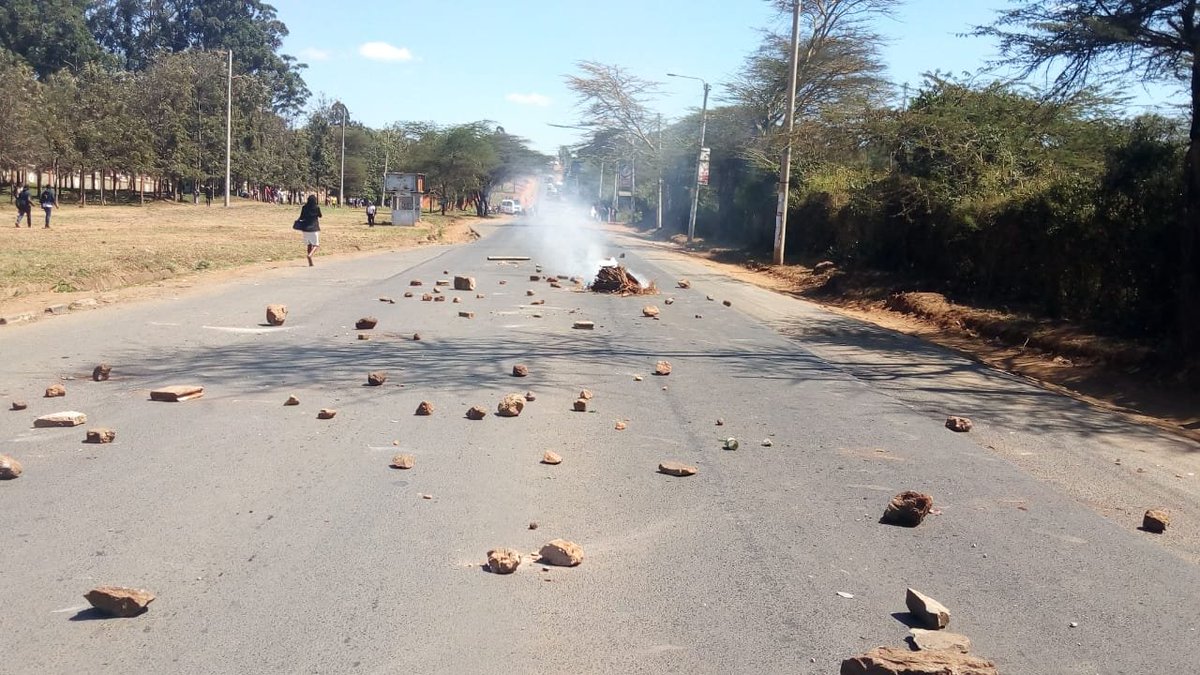
    Ilikuwa vuta nikuvute katika barabara ya Magadi baina wanafunzi wa chuo kikuu cha Multimedia na polisi. Wanafunzi wa chuo kikuu hicho waliandamana na kufunga barabara hiyo kufuatia ajali iliyomlaza mmoja wao katika hospitali kuu ya Kenyatta huku akiwa katika hali mahututi. Kamanda wa Langata bwana Gregory Mutiso aliwarai wasafiri kutumia njia mbadala wanapowatuliza wanafunzi hao waliokuwa wamekabwa koo. Ajali katika barabara hiyo zinazotamatisha maisha ya wanafunzi katika chuo kikuu hicho si jambo geni ndio maana maandamano hayo yaliyoonyesha kughadhabishwa kwa wanafunzi na madereva.

    Kwa kutaka kuchukulia haki mikononi mwao kwa mwanafunzi huyo aliye katika mwaka wake wa kwanza na ambaye wiki jana aligongwa na yu katika hali mahututi, wanafunzi hao waliokerwa walistahimili vitoa machozi ambavyo maaskari waliwarushia nao wakiwarushia mawe. Mwanafunzi huyo aligongwa na matatu iliyokuwa ikiendeshwa kwa kasi mno hapo karibu na lango la chuo hicho kikuu. Isitoshe wanafunzi hao walilalamikia polisi kwa kuchelewa kushughulika baada ya mwanafunzi huyo kugongwa.

    Uchungu uliokuwa nyoyoni mwa wanafunzi hao ulidhibitisha kuwa walikuwa wamekerwa na ajali zinazofanyika katika barabara hiyo zinazotamatisha nyoyo za wenzao huku wakikumbuka kuwa mwaka wa 2016 walipoteza wanafunzi  wawili katika barabara iyo hiyo. Zaidi ya hayo, walilalamikia kuongezewa kwa nauli kwa matatu ya tume ya Ongataline na kunyanyaswa na waendeshaji wa magari hayo.

    Japo gari hiyo iliyomgonga mwanafunzi hiyo I katika kituo cha polisi, usakaji wa dereva huyo aliyemgonga mwanafunzi huyo bado waendelea. Hali kadhalika wanafunzi watatu walikamatwa katika maandamano hayo.

  • Behind The Lens

    Behind The Lens

    Wanjiru Njoroge is a third-year student pursuing her degree in Business Logistics at Daystar University. However, there is more to her than what meets the eye. Wanjiru is a photographer focusing mostly on nature photography. Her photography Instagram page, @_rushema_, is flooded with the most breath-taking pictures of the environment and people she interacts with. This week I had the pleasure of engaging her in a conversation about her photography.

    She pays homage to her father who is a photographer too, she credits him as her inspiration for starting her photography journey. She grew up watching how he interacted with the surroundings and was able to capture the moments, she too wanted to capture her memories and the wonderful experiences she encounters.

    Wanjiru explained her fascination with photography began in 2015 and she described herself being particularly drawn to nature photography, though she has doubled in portraits and event photography. She is quoted saying “her heart has a special place for nature”, not only does nature bring her peace but also through her photography she has a platform to inspire people to take action against climate change by showing the beauty and importance of the environment through her photos. Her most notable photo series is the ‘Sunset series’ where she has been able to capture the sunset here in Athi River so beautifully.

    For Wanjiru, photography is more than a hobby and she continues to practice it because “it makes me feel calm” and allows her one her worst days to take that negative energy and to channel it into photography into positive energy. She hopes to transition to documentary series type photography by showing what life is from a day to day basis, the good and the bad moments. She encourages those who want to take up photography or are currently practicing it to do what they love and to do it to the best of their ability.

    Lastly, I asked her for the most embarrassing shoot she had and she went on to say once when working during a baby shower shoot, she was having such a lovely time and the clients were so friendly and there was so much food, that she forgot that she was supposed to be working but instead felt like part of the party.

    I had a lovely time, interviewing her and I hope that she can inspire more people to venture into photography particularly using photography to shed light on the challenging issues in our society such as climate change. Do not forget to check out her Instagram page: www.instagram.com/_rushema_/