The late President John Pombe Magufuli died while receiving treatment in hospital on March 17, 2021
Tanzanian President Dr. John Pombe Magufuli died on Wednesday at around 6pm while undergoing treatment.
This comes after he suffered of a long-term abnormal heart rhythm disease, Chronic Atrial Fibrillation, which he has lived with for over 10 years.
Vice President Samia Suluhu announced that burial preparations are underway and the country will go into a 14-day mourning period with the national flag raised on half-mast. She takes over as President- Elect of the nation, becoming the first female president in the region.
The 61-year-old was admitted at the Mzena hospital under the care of doctors from the Jakaya Kikwete Cardiac hospital in Dar es salaam.
His first admission to hospital was on March 6, at the Mzena hospital after which he was released to resume his duties as the President.
Magufuli was again rushed to Mzena Hospital on March 14 after feeling unwell.
Speculations about his where abouts got to a rise after his disappearance from the public for over two weeks. He was last seen in public on February 27, during the swearing in of a new Chief Secretary at State house in Dar es salaam.
Magufuli’s demise comes barely a year after being re-elected as Tanzania’s 5th president, following the general elections on 28th October 2020.
Samia Suluhu will be required to take over as the Head of State as per the Tanzanian constitution.
Zitto Kabwe, opposition leader said that the nation will remember him for his development of the country.
The late president Magufuli downplayed the intensity of Covid 19 and instead urged Tanzanians to pray and use steam inhalation to protect themselves from the virus. The country stopped publicizing infection numbers in April 2020, according the The New Humanitarian.
The fallen leader will be remembered for his astute leadership and his devoted fight of corruption in the country.
Education Cs George Magoha speaking at Kwale County where he received a title deed for the Kenya Coast National Polytechnic – Citizen Digital
With national examinations set to begin on Monday, Education Cabinet Secretary, George Magoha, has warned candidates against using facemasks to cheat.
This comes after the ministry of education received intelligent reports that some sly students were planning to cheat by writing answers on the inside of their face masks.
Magoha has therefore directed that facemasks be subjected to intense scrutiny and security before one can access the examination halls.
“There are some people cheating the students to write everything inside the masks. I’m going to ask all centre managers that all students must remove their masks before entering exam rooms. So, let no student waste his/her time writing things inside the mask, they’re supposed to prevent you from corona. If we catch you, we’re not going to be very merciful with you,” said Cs Magoha, while speaking in Kwale county.
He has specifically called out Migori and Kisii counties as “the headquarters of exam cheating” and has said that these two regions are on the Ministry of Education’s radar.
“I am telling you, you are planning to do certain things, and we’re watching you. Try and you will see,” said Prof. Magoha.
The Education CS has lamented that examination cheating is an unhealthy trend that candidates should avoid and that they should genuinely work hard in order to achieve excellence.
Magoha has also expressed that other cases of examination cheating, impersonations, leakages and other irregularities will not be tolerated.
Residents of Mavoko area set up roadblocks to block lorries from using the Daystar road – Alex Mwangi
Residents in Mavoko have complained about the carelessness of lorry drivers seen using the Daystar road. This comes a day after a boda boda rider was killed in an accident with a lorry, on the Devik-Daystar route.
At around 11am this morning, roadblocks were set up on the tarmac stretch to restrict lorries from passing. Members of the community demanded that the lorries be stopped from using the route, especially since they are not supposed to.
The residents and students from Daystar also noted that the lorries are usually overloaded and driven recklessly, posing a threat to the safety of pedestrians on the road.
Officer Commanding Police Post, John Mutua, was present at the road blocks and was seen to be in communication with residents.
“We are trying to sort the issue, and we have sent them to KeNHA (Kenya National Highways Authority) so that what needs to be done is understood,” said Sgt. Mutua.
OCPP Mutua removing the roadblocks to let vehicles through – Alex Mwangi
The community is also concerned over the damages the lorries cause on the newly constructed tarmac road, that was built to carry up to 10tonnes. The vehicles however, overload to weigh more than 20tonnes, despite there being a road sign indicating the weight limit.
Those responsible for constructing the road say the lorries should adhere to the weight limit to avoid destroying the tarmac.
“If they can reduce their tonnes, it would be better because we have put road signs showing the amount they should carry,” said the foreman, Dennis Odhiambo.
The boda boda riders have also expressed their dissatisfaction of sharing the route with the lorries. Apart from damaged roads, they complain about accidents that occur between lorries and riders.
Two riders have died already, and one of them was laid to rest on Saturday. Another broke his leg after colliding with a lorry.
A few lorries were turned backed today at the roadblocks however, this did not last long since the road was reopened a little while later.
Part of the Daystar stretch damaged by overloaded lorries – Alex Mwangi
In honor of black History month (February – Both Men and women ) and Women’s History Month (March- Women Only), the Involvement Newspaper will be featuring African leaders,heroes ,activists in a bid to remember their contributions towards a better Africa.
By Evelyne Syombua
(issyombua@gmail.com)
Thumbnail Photo Courtesy Pinterest.com
Funmilayo Anikulapo-Kuti was a teacher, political campaigner and was involved in women’s rights activism and traditional aristocrat . She was seen as the doyenne of female rights in Nigeria, gaining her the moniker “Lioness of Lisabi” for her political activism.
Funmilayo Ransome-Kuti, original name Frances Abigail Olufunmilayo Thomas, also called Funmilayo Anikulapo-Kuti was born on October 25, 1900, Abeokuta, Egbaland [now in Nigeria]. She was born to Yoruba parents (Chief Daniel Olumeyuwa Thomas (a returned slave) and Lucretia Phyllis Omoyeni Adeosolu of the Jibolu-Taiwo family)who were were Christians. She attended Abeokuta Grammar School (a secondary school), from 1914 to 1917 in which she was the first female.
She taught briefly at the school after which she studied in England (1919–23), where she dropped her English names and shortened her Yoruba name to Funmilayo and she discovered socialism and anti-colonialism.When she resumed teaching at Abeokuta, she married Israel Oludotun Ransome-Kuti, a clergyman and teacher, in 1925. She was the first African woman to drive a car.
Having being brought up by parents who valued education, she became associated with some of the most important anti-colonial educational movements in Nigeria and West Africa, and fought tirelessly to further women’s access to education and political representation. In reaction to the racism she encountered in Britain, she dropped her Christian name, Frances Abigail by the time of her return.
Her career in feminist activism begun in 1932 when she founded the Abeokuta Ladies Club (ALC). Membership was mostly Western-educated and working-class women and she expanded it in 1944 to include market women. In 1946 the ALC became the Abeokuta Women’s Union (AWU), and membership was expanded for it to begin working against injustice and the exploitation of market women.
At first, the AWU campaigned against price controls, which drastically limited the incomes of market women, and for fair treatment of market women by the government. The union also protested a special tax on women imposed by the local ruler, Sir Ladapo Ademola II. As from 1947 the organization led large demonstrations against Ademola’s government, which led to his temporary abdication in 1949.Greater educational opportunities for women and girls, the enforcement of sanitary regulations, and the provision of health care and other social services for women were among the union’s broader goals.Raising living standards for women and ultimately eliminating the causes of poverty was Ransome-Kuti’s intention to pursue these activities.
Over 100,000 Abeokuta women worked together to provide social welfare services and to pursue a gender-conscious agenda. The AWU expanded to the Nigerian Women’s Union (NWU) in 1949 a national organization and became known at the Federation of Nigerian Women’s Societies (FNWS) in 1953.The FNWS was dedicated to addressing the concerns of all Nigerian women and improving their position in society, including education, suffrage, health care, and other social services.
She also served several terms on the local council of Abeokuta between 1949 and 1960. Though unsuccessful, she ran for a seat in 1951 in the regional assembly as the candidate of the National Council of Nigeria and the Cameroons (NCNC), which she had helped found in 1944. The FNWS became associated with the Women’s International Democratic Federation, in 1953 and Ransome-Kuti was elected a vice president of the organization. After which she subsequently lectured in several countries on the conditions of Nigerian women. In 1959, she ran for the assembly as an independent candidate, after the NCNC rejected her bid for a second candidacy , This led to the splitting of the NCNC vote and ensured the opposing party’s victory.
The consequences for her action were expulsion from the NCNC and she formed her own party, the Commoners’ People’s Party, which was disbanded one year later. By collapsing of her CPP party one year later, her political influence in Nigeria and her following among women in Abeokuta had declined significantly.
For her to feel like she belonged to the Yoruba Culture, she changed her surname to Anikulapo-Kuti in the early 1970s . The family property in Lagos ,which Fela had transformed into a commune that he called the Kalakuta Republic, was stormed by 1,000 soldiers in 1977. She was dragged by her hair and thrown out a second-story window by the soldiers during the assault. She died of complications from her injuries the following year.
“Funmilayo Ransome-Kuti was a pioneering nationalist who fought against British colonialism and a cultural nationalist…a pioneer African feminist and a human rights activist who was tireless in her campaigns for women’s rights and for economic, political, and social justice. She was an educator who gave a voice to the voiceless and education to the uneducated.” – Oxford Dictionary of African Biography.
Plastic Pollution in Lake Victoria, Kisumu – Nation
Two teenagers in Kisumu have developed a mobile app that can help in plastic management, in order to curb pollution in Lake Victoria.
The app was developed by 15-year old Michelle Muchilwa and her 13-year old brother Jeremy, after the two witnessed the alarming drop of fishes in Lake Victoria.
The reduction is said to be because of excessive plastic waste in and around the lake region.
The app of the two teenagers is aimed towards incorporating the younger generation into the fight against pollution.
“There is a major issue in Kenya where our youth are not connected to their natural spaces,” said Michelle. “As the youth, it is our time to go out and decide what we want our future to look like. Do I want Kenya to be a place with a dead Lake Victoria or do I want it to be a country that managed to develop without destroying its natural resources?”
The application upon its release, will have an interactive interphase where the user will provide their details and also provide information on the number and type of plastic that they have collected in their specific location.
The app would also guide and direct its users to the nearest recycling plant to ensure proper waste management of the plastic collected.
The app is still in the developing stages and is set to be available on downloading sites by January 2022.
The app is hoped to help reduce the number of plastics found in Lake Victoria. Moreover, it is hoped that the development will be embraced by Kenyans to aid in the fight against plastic pollution.
TSC CEO Nancy Macharia receives her Covid-19 vaccine at TSC headquarters on March 11 – Samson Wire, The Standard
The Ministry of Health in conjunction with the Teachers Service Commission (TSC) on Thursday, launched the Covid-19 vaccination drive for teachers countrywide.
The first phase of the inoculation will include teachers who fall between the age of 50 years and above and those with underlying conditions.
The voluntary vaccination process will be conducted in the 575 centres for vaccination which include private, public and mission hospitals in all counties.
Special attention will be given to the 227,679 teachers who have been vetted and approved to administer the national examinations as either supervisors or invigilators. They are required to have undergone the vaccination process before the start of the exams.
The TSC CEO, Nancy Macharia who was the first to receive the jab said, “The government has made the right decision to protect over 330,671 public school teachers and 158,000 teachers working in private schools,”
Since the first case of Covid-19 was reported in Kenya, 41 teachers and 3 members of the TSC Secretariat have succumbed to the virus. Therefore, the roll out of the vaccine to teachers has been described as timely with the Health Ministry identifying them as frontline workers.
Dr. Willis Akhwale from the MOH says that everything is in place and he would like to assure teachers that the vaccine is safe and that it saves lives.
Daystar University is about to hold its student body elections this semester and candidates have resorted to campaigning online in order to gather support.
This is because the Daystar University Student’s Association (DUSA) elections have come at a time when online learning is dominant in the university, and only a few students are at the campuses for physical classes.
As a result of this, the elections will be conducted online so that students can vote from wherever they are.
Since elections were announced, students vying began working on their online presence, by creating WhatsApp groups and urging supporters to join. Currently, a student at Daystar right now, could be a participant in at least three different campaign groups.
Unsurprisingly, these groups also include the opposition and their supporters, who in most cases, are among the first few to join the groups when created. According to reports, the purpose of this is to spy on the competitor or try to lure their supporters to join the opposing team.
Candidates have also resorted to creating posters that contain their profile and manifestos, to share widely online. Moreover, a few campaign videos have also been posted on various groups and platforms.
Some candidates have pointed out that online campaigning has birthed cyberbullying and down talking in the campaign groups, and this has become a concern.
“Cyberbullying and keyboard warriors are a nuisance as some people always critic everything one does, but I guess that comes with leadership,” said Ian Agina, a DUSA presidential candidate.
Others however have embraced the challenge of online campaigning, despite its many shortcomings.
“This is my first time to be in politics so it has been a challenge, but I am enjoying the ride,” said Aaron Kituku, a student eyeing a seat at the Congress. “It has been a wonderful experience and a new thing for me. I’m just flowing with everything.”
Students have however pointed out that the elections have lost their vigor and are dull compared to those of other years. This could be due to the fact that the final list of approved applicants has not been shared yet, therefore candidates are reluctant to go all in while campaigning.
Previously, during election period, the campuses would be filled with posters and banners of different teams, as well as rallies here and there. For example, in the main campus, there would be times whereby candidates would campaign to students at the cafeteria during meal times.
Outgoing DUSA team during one of their campaigns in 2017, at the Nairobi Campus – Aloys Otieno
Moreover, the PAC grounds were dressed in huge banners that had pictures of candidates and their manifestos.
There would also be presidential debates held on the campuses that caused a lot of excitement among students, making the whole experience memorable.
Due to lack of elections for four years in the University, some students have graduated or are yet to graduate, without ever witnessing a physical election in Daystar. Moreover, others who have had interest in vying previously, can no longer do so since their time in the university is up.
The postponement of student elections was as a result of a strike that occurred in 2017, against poor management of the university. For a while now, the school has operated without a student body and this left many grievances unmet.
Fortunately, these grievances have made great campaign strategies for this semester’s aspiring candidates.
The news of the elections was welcomed excitedly as it signified a return to normalcy in terms of university life and campus affairs.
The elections are scheduled to take place on the 11th week of this semester, following amendments to have them earlier in order to accommodate the new trimester calendar.
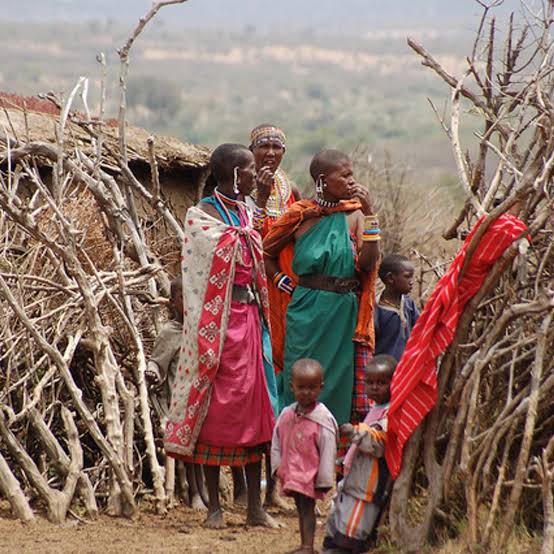
It is not inconceivable that the average Maasai man marries three women or even more. That is in fact what is expected of him, as long as he has the financial capacity and ability to cater to them and the offspring of that union. The Maasai are the most well-known and recognized indigenous ethnic group in East Africa.
Group of Maasai Men . Photo Courtesy of exploring-africa.com
They live in southern Kenya and northern Tanzania along the Great Rift Valley. Their population in Kenya is expected to be about one million and counting. Despite civilization and western cultural influences, the Maasai are widely known for clinging to their traditional way of life. It’s common to see them in their traditional dress, even in the streets of the cities.
The culture of the Maasai is mainly based on their cattle. From them, they obtain everything they need: meat, milk, and blood. Another aspect of culture among the Maasai is polygyny. They account for the majority of polygynous marriages in Kenya but from the look of things, the culture might evolve and change
The Maasai culture is predominantly patriarchal, and that is why a girl’s childhood is dominated by a strict avoidance, and fear, of her father and other men. Her marriage prospects and her family’s reputation hinge on her ability to develop an acute sense of respect. She is socialized to accept her subservience to her future husband.
This is one of the reasons for which polygyny is still practiced among the Maasai. The girl is taught to respect the man and even fear him.
Back in the day, women did not have a say in the choice of their husbands but as time goes, culture evolves. Now, a woman can choose whom she wants to marry, bearing in mind that she will be joined by another woman as the marriage journey goes on.
These women have grown up in polygynous homes and, that is what they know to be the best form of marriage. It is not essentially a practice to be abhorred, so far, there have not been major complaints.
The practice is organized and respects certain norms that have been established and followed through to date. When a young Maasai man is ripe for marriage (usually around 25 years old), he marries the lady he has been wooing (if both families have no objection). This young girl is habitually around 15 years of age and knows the fellow. Before the young man marries, he makes sure he is financially secured to look after this family that he is about to start.
This aligns with the general thought in the African society that a man is responsible for his family. He is the sole provider for his family and has to make sure nobody lacks. The upbringing of the boy child in the Maasai community ensures this is followed .
Whereas the girl is always with her mother and other ladies, learning how to cook, look good, take care of herself and her future household, the boy child is with his father, the other men, or herding cattle. He has to learn to be a man, handle disputes amongst many wives and always provide for his family no matter how large it gets.
The boy child grows up taking care of cattle and other livestock. By the time he has been circumcised and is learning the ways of marriage, his father gives him his own cattle and he begins to take care of these and multiply, such that his own family never lacks.
This is one of the reasons for which polygyny is considered good by many cultures in Africa and the world at large. Yaayai, the first wife of a Maasai polygynous marriage has been interviewed by a popular and certified youtuber on the topic of polygyny.
To the question why do the Maasai practice polygyny, she says “the Maasai have many wives because it is good… many wives bear many daughters from whose bride prices the family gets cows and this adds the family wealth.”. “I liked it a lot when the second wife came in, I was very happy. Even when the third was brought in… we live happily together… no we are not jealous of each other, we live together, cook together, take care of the children together”, she adds.
A Maasai Man and his wives. Photo courtesy of bbc.com
Whereas Yaayai welcomed her co-wives, Josephine another first wife to a Maasai man says she looked for her two co-wives. After about ten years with her husband, she found him a second wife “to help her take over “, she says. Then, a third who was strong enough “to take care of their husband, since the two of us are already tired with children”., she adds. Here, the first wife found the others and we understand that she wanted help in the chores, taking care of the children, and satisfying her husband. Her husband has to be satisfied: no matter what that entails.
Yaayai explains this further when she says “I like my husband to have other wives so that we can be together. For example, in the afternoon like now, sitting outside together with my co-wives. We talk, we spend time together, even without our husband… whatever you were raised with, that’s what becomes your truth. That is why we don’t want our husbands, only to have one wife.”
Talking about the next generation and polygyny among the Maasai is quite sad for Yaayai. “Young people don’t want to follow this tradition anymore; I can see that they will stop doing it because it shows that they don’t want to be in polygynous marriages anymore.
The world is changing… people have come to know many things and many Maasais want to dilute our culture”, she laments. There is no single definition of a happy marriage. Yaayai, Josephine together with their co-wives say they are happy in their marriages and prefer polygyny to Monogamy.
Another person from a different culture will never understand why she would share her husband with another woman. In other cultures, two men can marry and two women too.
It is the diversity of cultures that makes the world a beautiful place to live in and like Yaayai says, “whatever you were raised with, that is what becomes your truth”. Let our different truths, not disqualify another’s.
Daystar Athi River Campus main gate – Emmanuel Laguma
Two students from Daystar main campus in Athi River have tested positive for coronavirus.
According to a memo sent out to the school on Friday from the DVC Finance office, the two students have gone home to seek medical attention and their contacts traced and informed.
DVC Finance Dr. Muturi Wachira has noted negligence among members of the institution in observing Covid-19 protocols such as wearing of masks correctly, washing of hands and social distancing.
“It has been noted with great concern, that some of our students, faculty and staff are not very keen to observe the laid out Covid-19 protocols,” read the memo.
Dr. Wachira has called on the University to adhere to the Ministry of Health guidelines in order to prevent infection and spread of the virus.
The University has put in measures against Covid-19 such as sanitization stations, handwashing tanks and temperature checks. Moreover, high traffic areas such as hostels and meeting rooms are regularly fumigated.
A major fumigation exercise has been scheduled to take place this weekend at the Athi River campus.
President Uhuru Kenyatta delivering the 14th National Address on Covid-19 in the country – PSCU
President Uhuru Kenyatta has today banned all public gatherings for 30 days effective, midnight on Friday.
The president noted that the rise in cases of Covid-19 seen in the last few weeks were fueled by political gatherings.
The Head of State added that the restrictions will be extended if infections do not reduce, and apply to everyone regardless of their political or social standing.
In his national address, the President added that burials should be conducted within 72 hours of death, and funeral and wedding attendees are limited to 100 people.
The nationwide curfew has also been extended for a further 60 days, with bars and restaurants ordered to close at 9pm.
Today marks a year since the first case of COVID-19 was reported in Kenya.
The country has recently seen a sharp rise in the number of Covid-19 infections, and on Wednesday the Health ministry termed it as a third wave.
However, vaccination programs have so far been launched and over 4,000 people have received their first jabs of the Oxford-AstraZeneca vaccine.
Among those vaccinated are healthcare workers and people in uniform as they are on the frontline of battling the pandemic.
President Kenyatta in his address, lauded Kenyans for their resilience against the effects of the pandemic that greatly impacted the economy.
“As much as our nation was wounded, it remains unbowed,” said Kenyatta, “Instead of giving into the shocks of lockdowns, businesses have reengineered their business models, responding to shocks.”