Category: Features

  • How to make good leaders in the current society

    How to make good leaders in the current society

    By Raphael Mutuku

    ra4celeb20@gmail.com

    A leader is a reflection of the society he or she leads. PHOTO | Thinking Maps

    People are a clear reflection of their leaders’ actions, meaning that in a society, a leader is a picture of the people he or she is representing. Leadership should involve translating vision into reality and producing more leaders instead of followers.

    Take a look at our leaders- those chosen and those who work their way through leading positions. How they use resources is a clear reflection of the values and norms that are embraced in that particular society.

    If the society is corrupt, its leaders will definitely follow suit. We blame our leaders for being corrupt while we have embraced the vice. Corruption is being normalised, as it starts from the grassroots. Most people engage in activities such as bribery, unknowingly making corruption a norm in the society.

    The basis of corruption in reference of the Bible is the heart. “The heart is deceitful above all things…” (Jeremiah 17:9).

    The only way to better our society is to teach and embrace good virtues. Loyalty, bravery and truth lead this list. These three virtues are so important in every aspect of life. Our society has been embracing and raising deceitful and greedy people. We live in a society where it’s a man eat man affair, everybody for his own and God for us all. If we raise generations in strict observance of the three main virtues and teach them good values then we will have good leaders and a vision that will easily get actualised.

    Due to dishonesty and greed, we live in a society where resources are allocated in favor of particular people and not the citizen who needs to be served. Good leadership is one that is built in Christian values and the three main virtues.   

  • REMEMBERING DR. SOLOMON NZYUKO

    REMEMBERING DR. SOLOMON NZYUKO

    By Frank Oyosa

    f.oyosa@gmail.com

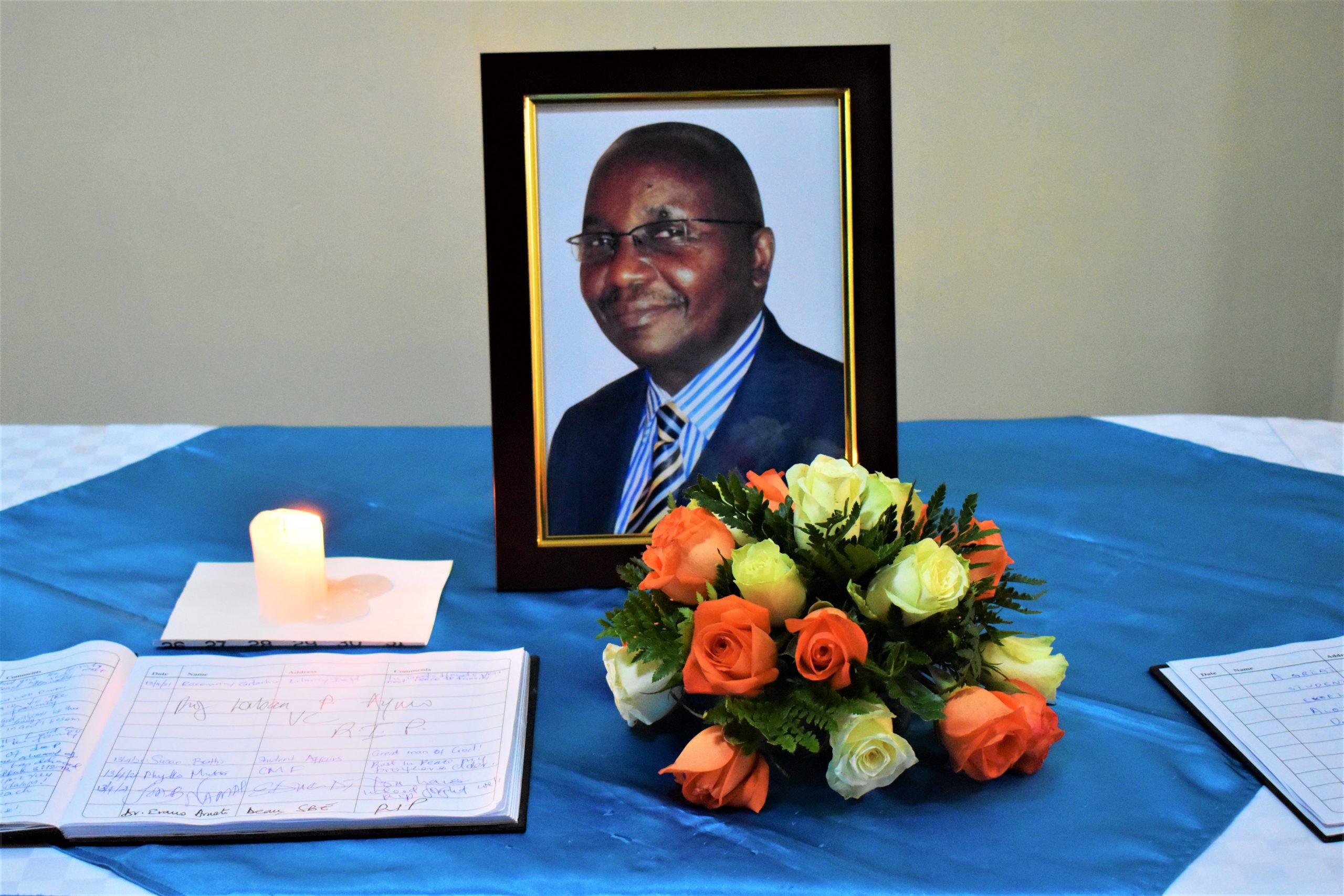
    “My relationship with Solomon was too deep to bring it out…Solomon commanded me to kneel down in my office and pray…It is Solomon who told me that excellence honors God and inspires others to be the best.” These were his subsequent words upon honoring him with an emotional vernacular chant, a sign of the deep respect and indeed personal relationship he had with the Late Dr. Solomon Nzyuko.  As he led the Daystar family during a memorial service in honor of the fallen hero, the Daystar University’s Vice-Chancellor Professor Laban Ayiro went ahead to attest that his biggest adviser and soldier, now departed, was a man who never sat at the periphery. He adamantly chose the center even in the heat of the moment. “I have lost a very close person to my center in running daystar.” He grieves despite being consoled by the words of Macbeth in the Poem “Do Not Cry For Me Today”.

    The VC Prof. Ayiro remembering Dr. Nzyuko. PHOTO | Frank Oyosa | Involvement Newspaper

    But who was this man? A man who despite his absence, the testimonies accentuate his already eloquent presence even to those who never knew him. For all it is worth, Dr. Solomon Nzyuko was a family man, an elder in the church council, a member of the Daystar University Senate, Director of the DLPDI, an accomplished scholar, a valuable researcher, and above all, a development-oriented transformative leader. Yet it is not these titles that make him a man too difficult to let go! It is the foundations he built, the change he oversaw, the people he inspired, and the lives he touched. It is the impact he has left behind and of course the contagious smile. The tributes visualize a man who tenaciously dedicated his time to leave a legacy of service to humanity. In them, you get to open your eyes to see Dr. Nzyuko for who he truly was, and how his life was a sure demonstration of what it means to live a life of purpose, with love, care, and a worthy cause to make the world a better place. 

    He established a home at Daystar in both his developmental journey as well as the Christian life. He was a devoted and dedicated Daystarian who was at peace with the University’s biblical principles, Christian values, and servant leadership ideals. He inspired many students and colleagues along the patch of Christ. “As a man of God who was deeply dependent on Christ, Solomon inspired me a lot in the way he would pray,” recollected Dr. Kennedy On’garo, Dean School of Human and Social Sciences. Equally, his commitment to students’ success compelled him to dig deep and establish the root cause of any student’s poor performance, expertly addressing it with solutions that always hid in the bible. And at home, his family had gladly learned to accept his busy schedule including late-night sessions going through students’ theses, early morning meetings with the VC, running other activities related to students’ scholarly work, and managing DLPDI’s programs among other personal errands.

    Some of the Daystar staff attending the memorial service. PHOTO | Frank Oyosa | Involvement Newspaper

    Undeniably, in a world full of ordinary people, Dr. Nzyuko chose to be extraordinary with wisdom-filled leadership. Indeed, he matched his biblical namesake. He intentionally made a decision to be a dependable person with unmatched problem-solving skills, that even in his hospital bed he would still be depended on to offer solutions. A man who never led by words but by actions. “He never told me how to love my wife; he showed me how to do it,” his brother Ben confessed.  It is this kind of leadership that saw him traverse the continent, overseeing many successful community projects he initiated. Equally, his success is attributed to his open-mindedness, embracing inclusive consultation, and objectively listening to everyone as a valuable contributor.  

    Being a man with such a legacy, it is neither shocking for the family to confess not to have any regret for who he was whatsoever nor would they ask for anything more or better from him. Despite his busy schedule, he was the best version of a husband, father, and sibling. He loved his family unconditionally and was always available whenever they needed him. His sin Enock fondly remembered the happy moments they would play scrabble as a family. “Whenever we would be getting to the tail end of the game and he is just about to place the final letters before he beats us all he would say ‘Count your losses.’” Of course, he won more often, thanks to his linguistic prowess. His superb command of the English language was the inspiration behind Enock’s communication career path. To Grace, his father was mum-dad and was always open to talk about things that otherwise seem uncomfortable for father-daughter conversations. And to Mama Miriam, he was everything else but more importantly a strong prayer partner who always empathized and knelt down with her. However, even with all the love, mediocrity, ignorance, and pretense were vocabularies he wouldn’t tolerate.

    Dr. Nzyuko’s family members being prayed for by those in attendance. PHOTO | Frank Oyosa | Involvement Newspaper

    Indeed, Dr. Nzyuko touched so many and he will forever be a part of all those he interacted with. As a faithful steward who was intentional, deliberate, and ready to serve, his strong influence and legacy will last a lifetime and the golden moments he leaves behind forever cherished. He truly lived his purpose and fulfilled what God expected of him, even though he was not finished yet owing to the many projects that were still in the pipeline.  All in all, even as he watches his people from above, his smile and companionship will be greatly missed.  And now what remains of us is to embrace his life’s lesson and say adios as we wait to be united with him in the afterlife.

  • THE MYSTERY OF RESUSCITATING A LIFESAVER

    THE MYSTERY OF RESUSCITATING A LIFESAVER

    By: Frank Oyosa

    f.oyosa@gmail.com

    Thumbnail Photo Courtesy of 1EEE Spectrum

    Like any other national adversity, the outbreak of Covid-19, brought forth the spirit of innovation and invention by various stakeholders within the country in collaborative efforts to at least decrease the diverse effects of the pandemic. In this spirit, when the government through the ministry of health expressed concern that the country is in dire need of ventilators, the spirit of local innovation was awakened triggering professional bodies as well as university students to put their best foot forward to manufacture this vital lifesaving equipment. Among these, were 16 Kenyatta University students from various schools who a few months later, their diligent efforts bore fruits upon the unveiling of the first-ever student assembled ventilator prototype in the country and probably across East and Central Africa. 

    Like a newborn baby, the unveiling of Tiba Vent as they called it was received with enthusiasm and congratulatory messages flowing left, right, and center. And as it would be expected, the government was not left behind in applauding the contribution of local stakeholders such as these for their efforts to be part of the solution. Precisely put, it appeared like the health sector’s plight had just been resolved, at least with the government promising not only their hundred percent support to the students but also to procure the machines once they were ready for the market. Of course, this was a huge motivation to many other innovators who were determined to help save humanity that indeed their input can be acknowledged and appreciated. 

    The students from medicine, pharmacy, nursing, electrical and mechanical engineering together with their lecturers had hoped to see the equipment in the hospitals within few months. Unfortunately, what this team of optimistic scholars, tutors, and the citizens were not told was that they would have to wait a little longer to see the precious machine in action. One would expect that seeing the attention with which the news was received and the desperate state in which the health sector was in at the moment, the certification process of the Tiba Vent prototype would be expedited for it and its forthcoming brothers to start saving lives. On the contrary, 1 year down the line, the ventilator remains unattended to at the approval stage gathering dust in its lifeless state within four walls of the university maternity lab where it was born. 

    Coming at a time when there were only 270 ICU beds with few having ventilators, against the surging number of emergency Covid-19 cases, it is quite a puzzle that such an effective and affordable locally manufactured lifesaving machine would take that long to be approved. And to think that the students had already guaranteed a full-fledged production unit capable of producing 50 ventilators a week! What more would the government wish for? Furthermore, it is to be remembered that the doctors did confirm the capabilities of the ventilator, and the Kenya Bureau of Standard (KEBS) affirming this. All that remained was certification by the Pharmacy and Poisons board. Why would they take their sweet time on this process that doesn’t sound too complex?

    The Tiba Vent Ventilator prototype Photo Courtesy of KU GIS Lab

    Another reason why this process ought to have been hastened is the time and financial implication it takes to import a ventilator. On a rough estimate, importing one such equipment into the country would mean several months of waiting and a budget of between 2.5 to 5 million Kenya shillings. Compare that with the time it would take for a 500,000 Kenya shillings alternative machine being produced in quantities of 50 a week to be transported from Kenyatta University to hospitals across the country. Doesn’t this raise some curiosity? Of course, it does!

    Could it be that we Kenyans just never learn or there is something deeper than that? This country has had a history of egocentric bureaucrats, and it is difficult not to imagine that the delay might be a result of self-centered individuals who want to reap big and stuff money into their pockets through corrupt deals. But then again, there is the nightmare that is double standards! You cannot be encouraging local innovations on one hand and the other hand, you are allowing the bureaucracy to hinder these innovations from serving their purpose. The CS for industrialization is on record stating that after the heights of the pandemic, Kenyans should continue to embrace the spirit of innovation. But with such things happening, how are these innovators to be encouraged? 

    The students explaining how the ventilator works Photo Courtesy of People Daily

    Let us for once think about all the students and young professionals who had been inspired by the invention of this ventilator, only to learn that 1 year down the line nothing much has come out of it. And the delay is not from the inventors but the entity tasked with licensing the equipment. I wonder what could be going through their mind at the moment. Since several other entities had tried their hand in the manufacture of this machine but backed out due to its complexity, the least the government could do was to appreciate the efforts of this team by having the product out as first as possible. Even if they do not earn from it, their hearts will be at peace by virtue that their efforts are saving lives. 

    Now the vaccine is here with us and as is our nature, we are already throwing tantrums “What is wrong with our researchers? Can’t they get into those lab coats and give us local vaccine!” Of course, most of us don’t trust what is coming from outside, and it is not that we cannot produce ours. But let us pause for a moment and think about it. If certifying a ventilator can take up to 1 year or even more, won’t the vaccine be approved when we are dealing with an alien invasion! Well, it is understandable that the ventilator and even the vaccine are both extremely delicate lifesavers that balance between life and death, but it is often said that extraordinary circumstances call for extraordinary measures. I bet the MOH relates with this quite well. Can we for once then stop acting normally as the Kenyan Government and fast-track the approval of such vital equipment.

    All said and done, the country is staring at more deadly impacts of the Covid-19 third wave having already cost us more than 50 lives within 1 month. The press briefings are back again, the lockdowns are already in effect…again and the economy does not seem like it will favor the Wanjiku any time soon. With this third wave becoming more dangerous, ferocious, and fatal, it allows the concerned parties to redeem themselves and demonstrate that indeed they not only appreciate the efforts of the student and academic institutions in the area of research but are also committed to supporting local approaches by Kenyans to save Kenyans. 

  • What Students Expect from the Congress

    By: Sumaya Hussein

    (husseinsumaya1@gmail.com)

    DUSA aspirants pose for a photo with ECD officials

    Election of the congress members, despite many challenges, was successfully held on Friday to Saturday, and winners were declared on Sunday.

    Their first order of business as the newly elected congress, will be to elect the Daystar University Students Association (DUSA) council, and this will take place on Tuesday from 10am-1pm.

    Each school in the university has entrusted the congress members to represent their interests, and this plays a big role for the members in choosing the right people to take up positions in the council.

    These positions include the DUSA Chair and Deputy Chair, Secretary General, Treasurer, the Campus secretaries and the International Student’s representative/ISADU Chair.

    Even before the election of the congress, students had several times urged aspiring candidates to act with diligence, and avoid being swayed by the different camps, once they win the election.

    This message has been further emphasized by the students after the Electoral Commission of Daystar (ECD) announced the winners of the congress.

    “It is an opportunity that you’ve been trusted with by the students and not an opportunity for you to be compromised to vote for specific rogue candidates who have appetite for power and no interests to serve the students of Daystar,” said Evans Owino, Class Representative for the School of Law, while addressing elected congress members in various campaign groups on WhatsApp.

    Mr. Owino went ahead to urge all congressmen to “act independently” and elect the best leaders for Daystar. This is just but a representation of what all students expect from the congress members.

    The new system of electoral college votes took many students by surprise, and did not sit well with most, as they still prefer voting for their leaders themselves.

    “I feel like it’s not fair. We should have been allowed to vote for our leaders because they won’t lead the conference only but the people,” said a concerned student who opted for anonymity.

    The duty of the congress therefore becomes heavier as all eyes are on them and any form of dishonesty will surely not be tolerated.

    The elections for this semester are a milestone for the university being the first election in four years, and also, the first ever election under the phase of the new dawn. Moreover, it will be the first election in Daystar that will use the electoral colleges system.

    It is therefore crucial to begin on a strong and positive note, and not one that will later compromise students of Daystar.

    Members of congress should acknowledge the trust and power bestowed on to them by students, and vote wisely for their leaders, since they are not voting for themselves, but are voting on behalf of the entire school.

  • MIRIAM MAKEBA—MUSICIAN AND ACTIVIST

    MIRIAM MAKEBA—MUSICIAN AND ACTIVIST

    In honor of Women’s History Month, the Involvement Newspaper will be featuring African Women Leaders, heroes and activists in a bid to remember their contributions towards a better Africa.

    By: Baraka Mboya

    ceasermboya@gmail.co

    Thumbnail Photo Courtesy of deezer.com

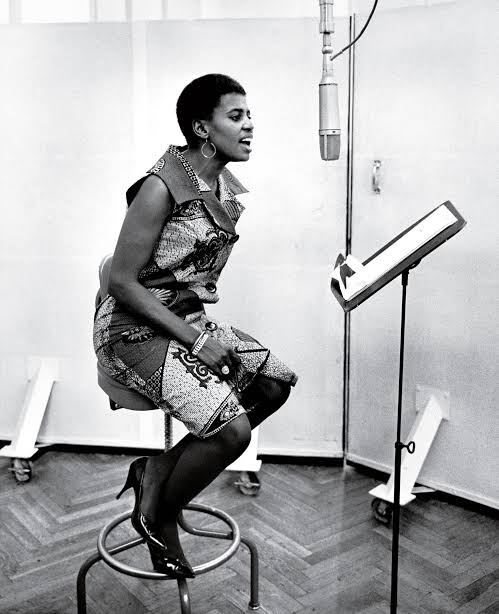
    As I sat into the night, tension rising due to late assignments and a feature due, the night was a bumpy ride. The whispers of a lazed worker soothed into my ears, till I read the feature again Miriam Makeba. Pata pata clicked and immediately the night took a turn. As a sign that this was indeed a baptized night, while I was speed reading her briefly, my eyes widened as I saw Album of the year 1965, winner. My heart raced and not a second later, I put my earphones on, turned the lights off, sank into the masterpiece “An Evening with Belafonte. 

    Miriam Makeba in studio. Photo courtesy of time.com

    Zinzile Miriam Makeba was born on 4th March 1932 in Prospect Township, Johannesburg. Her mother, a Spiritual Healer and often housemaid, was widowed when Miriam was only 5. This forced her to work as a maid at a young age. As a young girl, she realized music was in her and this gave her comfort in the poverty-stricken area. She later joined a choir and soon started showcasing her talents with local bands, achieving success in her cousin’s band; the Cuban Brothers. It was not until she joined the Manhattan Brothers in 1954, that she found a stable reputation. She toured Zimbabwe, South Africa, and Congo till 1957. After this, Makeba sang for an all-women group, the Skylarks. Makeba’s appearances in Come back Africa (1957) and King Kong (1959) solidified her career in the music industry both locally and internationally.

    From this point on, her career skyrocketed. She moved to New York in 1959, later resigning herself to exile. (It was during her exile where she met with musician Henry Belafonte, who was a force in her music career). In 1964, she got married to her King Kong co-star, Hugh Masekela. In 1966, she won at the Grammys for An Evening with Belafonte. She was the first black woman to have a top ten worldwide hit with Pata Pata. She got remarried in 1968 to militant African American Civil Rights activist Stokely Carmichael but due to embarrassment from the US government, she moved to Guinea. They later separated in 1978.

    Miriam Makeba performing. Photo Courtesy of thenationalnews.com

    She mostly toured Europe, South America, and Africa in the ’70s and ’80s. During these years she addressed the United Nations General Assembly twice, speaking out against apartheid. In 1986, she was awarded the Dag Hammarskjold Peace Prize from the Diplomatic Academy for Peace. In her biography, the 1080s were a difficult time for her, as she separated from her husband and her daughter Bongi who died under tragic circumstances. She also struggled with alcohol and cervical cancer. In 1987, she joined American folk singer Paul Simmon for a very successful Graceland tour in newly independent Zimbabwe. After Graceland, Miriam was in great demand and went on to perform for heads of state and the Pope. After 31 years in exile, she returned to South Africa and became a goodwill ambassador for South Africa to the United Nations. 

    She later released her last album Homecoming and embarked on her tour in 1998. She also got a Presidential Award in 1999 after which she announced her retirement in 2005 although she continued to perform for smaller audiences. Makeba also continued with her humanitarian work through her Zenzile Miriam Makeba Foundation, including the Miriam Makeba Rehabilitation Center for abused drugs. She also supported campaigns against drug abuse and HIV/ AIDS awareness. In 2008 at the age of 76, Makeba died of a heart attack, 30 minutes after a 30-minute performance. She will never be forgotten for the music she produced to tell the stories of what happened during apartheid. 

    (I highly recommend giving Miriam Makeba a listen. You will know why.) 

  • Adventure Time

    Adventure Time

    By Daniel Nyaga 

    (danielnyaga.dn@gmail.com)

    Thumbnail Photo Courtesy of weheartit.com

    “Daniel… Daniel!! You need to wake up and make breakfast. It’s ten o’clock.” Dad shouted as he knocked on my door.

    *Rolls over and checks the time on my phone* “Dammit it’s ten… What is wrong with you man? You have an appointment at 10:30 and, certainly, you won’t make it.”

    “Good job Daniel, “I muttered rather resigned.

    I sat there contemplating whether to get out of bed or go back to sleep. Finally, I threw back the covers and stood slouched beside the bed. “Looking hot as always,” I retorted rather sarcastically as I shuffled past the mirror and yawned my way downstairs to the kitchen to make a much-needed breakfast. Super emphasis on MUCH NEEDED HERE!!

    This is how most of my days go… They are normally between “Why do I have no control of my life?” to “I would love to have kids who are like me because I’m awesome.”

    And so after giving you a little preview of how my mornings do go, I will get to the main story.

    ”How does one become a butterfly?” Pooh asked pensively

    “You must want to fly so much that you are willing to give up being a caterpillar,” Piglet replied.

    “You mean to die?” asked Pooh.

    “Yes and no,” he answered.

    “What looks like you will die, but what if you will live on.”

    A.A. Milne.

    Butterflies are very beautiful insects… I have one in my room called Brownie (I just came up with that) and she visits once in a while. However, what draws my attention and in a way makes me relate to Butterflies is how they love to fly. They enjoy the freedom and being able to “Adventure” if I may say… They are so graceful and majestic which makes watching them quite enjoyable. I enjoy freedom! I don’t like being confined. I love to spread my “wings” and fly… It gets my creative side kicking and makes me feel alive.

    What new adventures have you had in 2021? Let me rephrase that… “What have you done that is not part of your normal daily routine?” Are you experimenting? You only live once they say. Well, you only die once as well. I urge you who is reading this to kindly go out there (Observe COVID protocols of course) and make the rest of your year count. If you’ve been doing new stuff good for you!! If not “WHAT ARE YOU WAITING FOR?”

    Enjoy a good read, go to a jazz concert, run a marathon. Be random and enjoy every day like it will be your last. “Have fun and live a little. Because you know what? People are dying for you to live every day!! Because when you know your life is in danger, that’s when you start appreciating it. Then you discover you have cancer or other terminal illnesses you start living each day like it means something.” – Anonymous

    I choose to live by this and hope you will do so as well… It will be difficult at first due to the various responsibilities we all have but with time it will be much easier. You can start by going bowling with your friends once a week and different things will come along. Have fun and invest in yourself. Be a butterfly!!

    To many more adventures,

    Daniel .M. Nyaga

  • Tom & Jerry 

    Tom & Jerry 

    By Daniel Nyaga 

    (danielnyaga.dn@gmail.com

    Thumbnail Photo Courtesy of medium.com

    Crazy how time flies huh? The year is flying quite fast. 

    Lately, I have found myself watching Tom and Jerry a lot (I always watch it I’m just trying to cover up). How I love this Cartoon! It always cracks me up so much. I remember how I would wait for it to be aired on cartoon network each day from 4:15. The highlight of my day.

    Now, hold on, I know what you are thinking, “Seriously dude aren’t you too old to watch cartoons?” The answer to that is NO!!

    1) Cartoons are very entertaining (I highly recommend them).

    2) Tom and Jerry not only entertain me but teaches me a lot about life and especially friendship.

    Don’t you just love how Tom is always trying to hunt Jerry down? However, when Tom is sick who will be there to take care of him? You guessed right, it’s Jerry!

    So here is what I pick from it…

    Never give up – Each time Tom always tries to catch Jerry and most of the time he fails. However, this doesn’t deter Tom as he is always quick to strategize and try again. Never give up! You will fall severally but always strategize and get back out there.

    Tom & Jerry always fight but when times get tough they help each other out – We will always fight with the ones we love all the time but what matters is providing emotional security to them when times get tough. Do you offer a shoulder to lean on?

    Size does not matter – Jerry always uses his mind to beat Tom. It does not matter how small or voiceless you might think you are. All that matters is how you think and what you believe you are capable of doing. SIZE DOES NOT MATTER!

    Confidence is important – I love how Jerry always walks out of his house without caring where Tom is with the main objective being getting cheese from the fridge. If we could have this confidence in our lives we could be far. Don’t worry about others or what might go wrong. Be confident that you will succeed and you too will get your “cheese”

    Have a nice month! Blessings to you all.

  • Professing the word musically!

    Professing the word musically!

    By Frank Oyosa

    f.oyosa@gmail.com

    Prof during the video shoot for Neno Litasimama. PHOTO| Lewis Mutua

    “Nashangaa na dunia, watu wengi wako mbio kutafuta vya dunia…” True to these words, the human race has been awfully blinded by the pleasures of the world so much so that respect and regard for human dignity have been thrown to the dogs. Our utterances, actions and lifestyle are fueled by personal desires, we no longer live to the glory of God but ourselves. We have entirely lost the values and ethics that differentiate us from animals and not even the loud undertones of the Golden Rule mean anything to us. Nonetheless, the lyrics that follow that powerful opening line bring out a perfect recipe for our own introspection.

    Yet even before we are done with the self-examination, in his own words prof reminds us that “Liko wazi lango la mwokozi…lango la wokovu.” And just how lucky can we be that God’s unending love has His door always open for us whenever we turn back to Him! Professor John Mugubi, the Dean School of Creative arts, Film and Media Studies, Kenyatta University, has embarked on a journey to remind us this. He seems to have seized the perfect time to pass through the door and discover the other side to profess the gospel lyrically. In his young age, having achieved all that accords him the status of a professor, he outrightly made a decision to defy the odds, go beyond the confines of his title and start another journey. A journey in to the world of prophetic music.

    Yet it is not just the words from his songs that are compelling. The ease and simplicity with which he plays around with his wide vocal range and synchronizes the lyrics into the beats is just, for lack of a better word, amazing. And that’s not just it!  As a creative, prof has mastered the art of poetic exploration, and skillfully infuses poetic language and literary elements in to his music like a pinch of salt. Not too much, yet just the right portion to make the music lyrically delicious. Following the opening line of his latest single release Neno Litasimama, prof goes on “…mungu hawampi sikio, mambo yanapo badilika, ndipo wanapo kumbuka kwamba yeye bwana mungu, yake tu ndo yadumu”

    If the truth conveyed in these words does not tick your soul, then wait till you interact with the emotions. The attachment he devotes to the lyrics does nothing else but to help add more eloquence to the already strong messages without much effort.  Whether watching the videos or just listening to the audio, you will see, hear and feel him communicate to the deepest part of your soul. Interestingly though, with his social and friendly character, unless you find him in his musical spaces, you would never imagine him on the microphone.

    Coming from a strong religious background, Prof’s spiritual engagements landed him to the back bench of the church’s choir as a deep-toned bass vocalist. For years on end, he has not only been a devoted Christian but an ardent choir member.  However, his quest for academic excellence could not permit him to explore his musical side, and it is until he felt he has got to the peak of his scholarly journey, that he decided it was time to spread wings further in a different direction.

    Prof. John Mugubi, Dean School of Creative arts, Film and Media Studies, KU

    Luckily for him, at the moment he has nothing much to lose by serving his heavenly master in the best way he can. In any case, he is one of the few professors who have attained the peak of Maslow’s Hierarch of human needs, the Self Actualization. And from the look of things, he is definitely enjoying the ride. “It feels nice and satisfying to know that I am fulfilling God’s expectations of me despite the professional life, and it becomes even more interesting to know that many people did not see this coming.” His music is available on YouTube.

    It is close to impossible to ignore prof’s music and if by any chance you are bold enough to, then you are definitely not going to ignore the reality of the words in the music. Each one of us has a responsibility to God, and that responsibility is fulfilled by our service to humanity. And just like prof, we ought to recognize our talents and make use of them to fulfil this responsibility our social, political or academic status notwithstanding.

  • Africa’s First Woman President- Ellen Johnson Sirleaf

    Africa’s First Woman President- Ellen Johnson Sirleaf

    In honor of Women’s History Month, the Involvement Newspaper will be featuring African Women Leaders, heroes and activists in a bid to remember their contributions towards a better Africa.

    By Winnie Barake

    winniemoraa6232@gmail.com

    Thumbnail photo courtesy of britannica.com

    Ellen Johnson Sirleaf (born Ellen Eugenia Johnson, 29th October 1938) is a Liberian politician who served as the 24th President of Liberia from 2006-2018.

    Sirleaf was the first elected female head of state in Africa. Sirleaf was born in Monrovia to a Gola father and Kru-German mother. She was educated at the College of West Africa and completed her education in the United States, where she studied at Madison Business College and Harvard University.

    While in college, she became a member of the Alpha Kappa Alpha sorority, and she is an honorary member of the Links Incorporated. In 1956, Ellen Johnson married James Sirleaf. They had four sons together before their divorce. She grew up as a Presbyterian, but later joined her husband’s Methodist faith. Through her sons, she has been blessed by ten grandchildren. After her stay in the United States, Ellen returned to Liberia to work in William Tolbert’s government as Deputy Minister of Finance from 1971-1974. Later she worked again in the West, for the World Bank in the Caribbean and Latin America.

    In 1979, she received a cabinet appointment as Minister of Finance, serving to 1980. After Samuel Doe seized power that year in a coup d’état and executed Tolbert, Sirleaf fled to the United States, where she worked for Citibank and then the Equator Bank. In 1985, she retuned back to Liberia to contest a senatorial seat for Montserrado County, an election that was disputed.

    At the beginning of the First Liberian Civil War in 1989, Sirleaf supported Charles Taylor’s rebellion against Doe. She helped raise money for the war and founded the National Patriotic Front of Liberia; with Taylor and Tom Woewiyu. Because of this, Doe’s government recommended that Sirleaf be banned from politics in Liberia for 30 years. But she later opposed Taylor’s handling of the war and his treatment of rival opposition leaders such as Jackson Doe.

    By 1996, the presence of Economic Community of Western African States (ECOWAS) peacekeepers led to a cessation of hostilities. The nation held the 1997 general election, where Ellen returned to Liberia to contest. She ran as the presidential candidate for the Unity Party and placed second in a controversial election, getting 25% of the vote to Charles Taylor 75%. After controversy about the results and being accused of treason, Sirleaf left Liberia and went into exile in Abidjan, Ivory Coast. After the end of the Second Liberian Civil War and the establishment of a transitional government, Sirleaf was proposed as a possible candidate for chairman of the government.

    Ultimately, Gyude Bryant, a political neutral, was chosen as chairman, while Sirleaf served as head of Governance Reform Commission. Sirleaf stood for president as the candidate of the Unity Party in the 2005 general election. She placed the second in the first round of voting behind George Weah, a former footballer. In the subsequent run-off election, Sirleaf earned 59% of the vote versus 40% for Weah, though Weah disputed the results.

    The announcement of the new leader was postponed until further election investigations were carried out. On 23rd November 2005, Sirleaf was declared the winner of the Liberian election and confirmed as the country’s next president and the first woman to be elected as president of an African country. Her inauguration took place on 16 January 2006.

    It was attended by many foreign dignitaries, including; United States Secretary of State Condoleezza Rice and First Lady Laura Bush. As Africa’s first democratically-elected female head of state, she has led Liberia through reconciliation and recovery following the nation’s decade-long civil war, as well as the Ebola Crisis, winning international acclaim for achieving economic, social, and political change.

    Recognized as a global leader for women’s empowerment, President Sirleaf was awarded the prestigious Nobel Prize for Peace in 2011. She is the recipient of The Presidential Medal of Freedom the United States’ highest civilian award—for her personal courage and unwavering commitment to expanding freedom and improving the lives of Africans.

    Her many honors also include the Grand Croix of the Légion d’Honneur, France’s highest public distinction, and being named one of Forbes’s “100 Most Powerful Women in the World.”

  • A FEMINIST LEADER: HUDA MOHAMMED SULTAN

    A FEMINIST LEADER: HUDA MOHAMMED SULTAN

    In honor of Women’s History Month, the Involvement Newspaper will be featuring African Women Leaders, heroes and activists in a bid to remember their contributions towards a better Africa.

    By Sharon Jerotich

     (jerotichsharon096@gmail.com

    Thumbnail Photo Courtesy of alchetron.com

    There are not many people whom we can confidently say have changed the course of history for any select group of people however, this one woman changed the course of history for Arabic women everywhere. When the word feminism is mentioned, her name comes to mind.

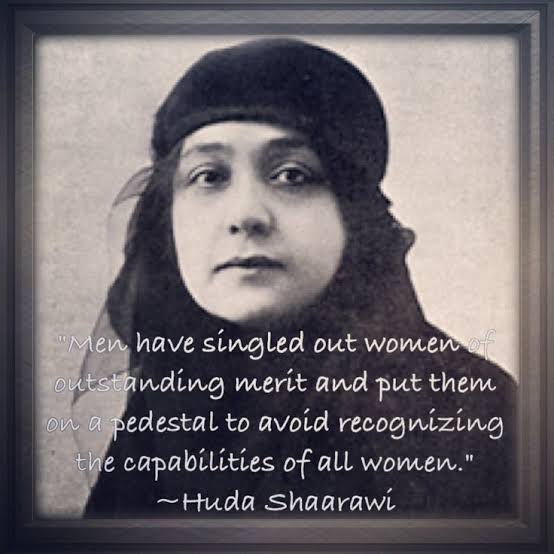
    Born on 23rd June 1879, Nour Al-Huda Mohamed Sultan started on a path that would be celebrated by women for years to come. She is a feminist leader and founded many organizations, one of them being the Egyptian Feminist Union (EFP) IN 1923. The union sought to reform laws restricting personal freedoms e.g., marriage, divorce, child custody, etc. 

    Huda was educated from an early age in Quranic Arabic and Islamic subjects; this she was taught by female instructors. She was married off to her cousin Ali Pasha Shaarawi at the age of 13. In 1908, Huda founded the first philanthropic society run by Egyptian women. They offered services to poor women and children. She believed that having women run such projects would challenge the view that women are created for men’s pleasure and in need of protection. 

    In 1919, Huda played a key role in the Egyptian revolution, leading women protestors advocating Egyptian independence from the British and the release of male nationalist leaders. 

    Her husband was elected vice president of the nationalist liberal Wafd party and kept her informed on the developments taking place during the revolution. He did this so that she would take his place in the instance he was arrested. With this information, she formed the Wafdist Women Central Committee (WWCC) in 1920 and became its first president. In 1924, she led WWCC in airing their demands, which were ignored. This led her to resignation from the committee. 

    Huda’s biggest fight was with the Harem system where women were secluded and veiled. Those who came from wealthy families had separate buildings and eunuchs who guarded them and also acted as messengers to the outside world. Women also had to go outside veiled. 

    Huda is most known for defying this rule. She once removed her veil in public and trampled on it. Women were shocked but later began to cheer; some even followed suit. 

    Although she passed away on 12th December 1947, her legacy lives on. She deserves to be celebrated for being brave and setting the stage for women all over the world. From Huda, we learn to help other women, defy traditions that are oppressive for women, learn to air our demands, and go for what we want. Nour Al-Huda Mohamed Sultan, we celebrate you!