In honor of Women’s History Month, the Involvement Newspaper will be featuring African Women Leaders, heroes and activists in a bid to remember their contributions towards a better Africa.
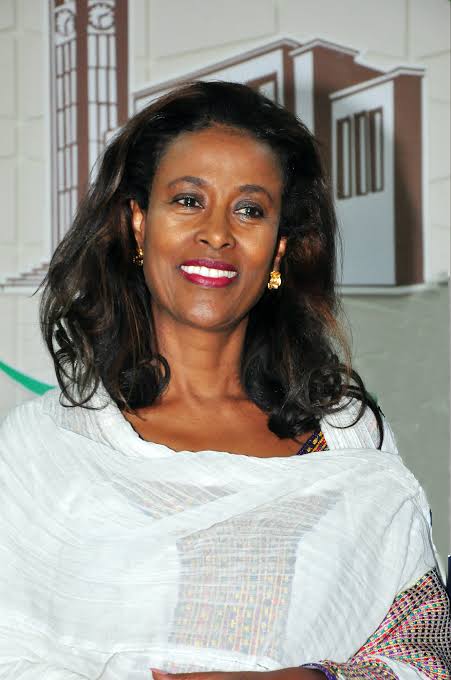
Difret, a 2014 Ethiopian film, was done in honor of this remarkable woman. Meaza Ashenafi, Ethiopia’s current Chief Justice, is a woman to be held in high esteem. Not only is she the first woman to occupy the seat of Chief Justice in her country, but also, she is the founder of the Ethiopian Women Lawyers Association (EWLA). An association created to offer legal assistance to women; and of note, managed to incept a word in Amharic- Ethiopia’s official language- to describe sexual harassment. “Wesibawi tinkosa” is the Amharic word for sexual harassment: an expression that lacked a name in the country’s lexicon, but got one courtesy of the EWLA.
Also, to empower women financially, Meaza cofounded Enat bank, an all first women’s bank in Ethiopia in 2011, where she once sat as the Chair of the bank’s board.
Revered as a human rights advocate and a progressive lawyer, Meaza while serving at the EWLA, represented a 14-year-old girl, Aberash Bekele, who was accused of killing a man who had abducted and raped her, all in the name of t’elefa (a cultural practice that allows for the kidnapping of child brides). To Meaza’s credit and that of the entire EWLA team, Aberash won the case placed against her in the court of law and consequently, t’elefa was outlawed in Ethiopia. This case still ranks momentous in Meaza’s career life and also, carries a historical significance in Ethiopia.
Photo courtesy of filmfest-frauenwelten.de
In 2018, when Abiy Ahmed became Ethiopia’s Prime Minister, Meaza Ashenafi was appointed head of the Federal Supreme Court- in other terms, as Chief Justice. She took up the position, though with her publicly placed words to the Prime Minister’s office that: “You might not be happy with the decisions I make in this position.”
Having served also as one of her country’s high court judge; the human rights adviser to the Ethiopian Constitution committee and adviser on gender and women’s rights in the capacity development division of UNECA among many other positions, it is of no doubt that still in the making, is Meaza’s history of changing the narrative of women in leadership.
In honor of Women’s History Month, the Involvement Newspaper will be featuring African Women Leaders ,heroes and activists in a bid to remember their contributions towards a better Africa.
By Kessy Thiauru
kamathithiauru@gmail.com
Thumbnail Photo Courtesy of awleadershipnarratives,wordpress.com
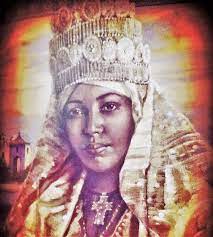
Taytu Betul was the empress of the Ethiopian Empire, under Emperor Menelik II, ruling from 1889-1913. Taytu is speculated to have been born in 1851, the third born of five children.
She is believed to have been a descendant of a prominent family as it is believed that their family had a ruling foothold in the Northern region of the Empire. It is such growing from such an aristocratic family that might have awakened the leadership abilities in her.
Although exceptional for women living in her time, Taytu was lucky to get an education. It is believed that this was an opportunity she got after her mother got remarried to an administrator.
She learned how to read and write Amharic, she learned the language, composed poetry, played chess, and played a begenna (a 10-string musical instrument). It is believed that she was also taught diplomacy, politics, and economics.
Taytu had been in three other marriages before becoming the third wife to Menelik II, the King of Shoa. She was an important asset to the king as she acted as an advisor during the making of major decisions. She is said to have used her exceptional intelligence to strengthen and extend her power through an adroit blend of patronage, political marriages, and leadership craft.
In her lifetime some of the remarkable achievements was leading the people, alongside her husband during the war against the Italians. This was after she had torn the treaty between Italians and the Ethiopians, which had intended to make Ethiopia an Italian protectorate.
When diplomacy failed to settle the conflict over the treaty, Taytu alongside her husband, the emperor marched northwards where she commanded her platoon during the war. Her presence was crucial in the Ethiopian victory at Adwa in 1896, the most significant victory of any African army during the climax of European colonialism.
She is also remembered as the founder of Addis Ababa, which till to date, is the capital city of Ethiopia. As her husband fell ill, she began to concentrate more and more power in her own hands. This eventually provoked public agitation against her and forced her into retirement.
There’s something about Antique shops that captivates me.
I guess it’s all the cool stuff they’ve got… Mostly carvings!!
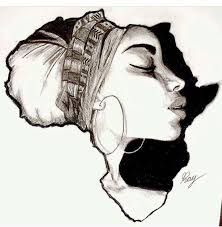
As I was walking around, this map of Africa caught my eye
And I couldn’t help but think of our beautiful continent for a moment… I hope you enjoy the piece.
Oh, my Africa!!!
How beautiful are you?
You are a blessed continent, curved out of glory.
The birds chirp each morning, singing a beautiful song
The lion roars deep in the wild, as the king of the jungle.
A land of milk and honey, where culture, heritage, and tradition are ever-flowing…
Oh, my Africa!!
You are a land of great heroes.
A land of constant opportunities.
Blessed with diversity in people…
When will you awake my dear Africa?
When, oh when will you stop subjecting us to these pains?
Oh, my Africa!!
We are a free continent yet subjected ourselves to be slaves once more.
Constantly killing our brothers and sisters…
All for the name of power!
Oh, dear…
When will you realize that this is a train that won’t stop moving?
Why be distracted by irrelevant issues without seeing you’ve got passengers determined for the journey?
Oh, my Africa!!!
You’re full of your splendor and beauty, yet this not what you portray outside.
You have become a den of hungry lions… Where the most powerful wants to enjoy the biggest chunk of the dead carcass on his own…
Stop being ignorant!!
You are the richest land for others, but hell for our mothers and children!!
Oh, my Africa!!!
When will you stop harrowing in poverty?
You have an embarrassment of talent.
You have all the arsenals to win this battle. However, you choose to walk around naked and not bothered by the shame and ridicule you bring.
You are blessed with natural resources, yet the financial benefit is claimed by outsiders. Your wildlife is breath-taking, yet you kill them in exchange for money…. When will you arise my dear?
Why eat alone when we can all share?
Wake up dear loved one!!!
Wake up!!
Oh, my Africa!!!
In War or poverty, I love you.
With democracy or forced dictatorship, I still love you.
With all the hopelessness and negativity around, my love for you still remains.
I hope you will one day reciprocate my love to you.
That selfishness will not be what rules our continent…
That love for power and money will not be an issue…
I pray that Africa may once again redeem its glorious splendor, and be viewed for the beautiful continent it is…
Where growth, brotherhood, culture, and heritage are the order of the day
Oh, my Africa!!
I was born here…
I long for the day our beauty will be admired by all.
I long for the day you will be a pillar and example to the rest of the continents.
How long will it take?
However, like a bride who waits for her groom… So will I wait for you!
The recently conducted vetting process for the DUSA Council and Congress aspirants has sparked debates over the inclusion of the outgoing council members. Article 8 of the student constitution gives a clear indication that the Electoral Commission shall conduct all activities related or incidental to an election.
The participation of the incumbent council led by Aloys Otieno raises fundamental constitutional questions, placing ECD’s eligibility and competence under scrutiny. Aloys was accompanied by two of his colleagues- Arnold Bazenge and Jonah Karanja in what presidential candidate Ian Agina termed as unfair during an interview with Involvement Newspaper.
Provisions in the constitution allow a sitting council to only participate in appointing members of the ECD, after which it resumes its official duties for the remainder of its term. Having been dormant in student affairs for over a year, the council’s sudden interest in the elections raises eyebrows.
Having chosen an electoral commission to conduct the process, it is time for the council to sit back and let it perform its duties. Let the events that led to the cancellation of the 2019 election not be repeated. Students trust the people you put in place to lead them to a new dawn- prove to them that you made the right choice.
These being the first elections since the incorporation of the new constitution, they act as a litmus test for the commission, with fair representation and equality of vote highly expected. Students expect nothing short of this- neither do we.
The commission should uphold its mandate as stipulated in the constitution, and ensure that the forthcoming elections are conducted without interference from anyone not part of it- be it students, faculty or administration.
Short midnight-black hair, sassy but a beautiful smile.
She had saccharine sweet lips which were lilac soft.
Her skin shined like a thousand splendid suns.
I admired in silent admiration afraid to utter a word…
I finally gathered the courage to speak but to my dismay,
She was brutal with her words. Completely unreceptive and unwelcoming to strangers.
She was quite feisty If I may say… Though there was just something about her that fascinated me…
Was it the puzzle of figuring her out?
Or was I just another one of her victims?
Our conversations were like an old, spiteful, English couple who would banter all day…
Constantly trying to figure her out. Toiling each day to understand what goes on in her mind.
She had built up walls that were hard to scale.
Each time I would be close to reaching the top, she would increase the feet and I would be left with the insurmountable task of getting to the other side.
Was she worth it? Why did she have some unexplainable power over me?
Was my brain disconnected from my body and my heart the base of all logic?
Days went by and our conversations became less awkward.
I would spend hours in her presence without saying a word, though it would bring happiness that couldn’t be explained.
She made me happy by just being there… We didn’t have to open our mouths, the silence often spoke more than enough…. It was beautiful!!
Time went by and all I could do was sit here waiting…
Waiting for you to notice that time is running out…
Depending on how you’d wake up or what you’d be feeling.
Each impulsive decision you made would constantly subject my heart to the constant throe of remorse…
I never stood a chance!! Unable to figure you out and understand you…
You would always change the lock to the door…
I wish you didn’t have to leave but the date is set.
Leaving me with a smile that struggles to be more than a grin.
I’ve lost a piece and it’s impossible to bring it back.
Inside I weep to conceal my pain…
For how long? I don’t know…
But In sadness I know that you will always be a close stranger!!!
It’s been four hours since I retired to bed. Why can’t I sleep? I am exhausted… engulfed by the endless thoughts running through my mind. I should be knocked out by now.
TRUST! That word pops up in my mind again.
“Hello friend, why don’t you come around often?”
“I am always here watching your every move. I don’t say much but I speak when I have to do so. If you pay attention you will always hear me. However, I need you to do something for me.”
“What’s that?” I ask.
“I need you to TRUST.”
With that, I snap back to reality. I find myself wondering, “Who was talking to me?” I should probably get some sleep.
As I turn and shut my eyes, I find myself sitting in a room. There’s a child curled up in the corner.
It is adorned with torn clothes and blood is dripping from its hands.
Fixated on the wall, it seems to be writing something.
As I attempt to see what it’s writing, my attention gets shifted to the other side of the room.
A man is sitting in the opposite corner.
He is broad–shouldered and has a charming smile. His brown almond-shaped eyes illuminate the room. “Where did he come from?” I wonder.
My train of thought gets interrupted as I notice something.
The man sitting in the corner has stood up.
His charming smile has now turned into a blank cold stare as he approaches the child with a gun in his hands.
I try to raise an alarm but I get no reaction from the child or the man. Can’t they hear me? Am I invisible? Why are they not reacting to me?
As the man gets closer, the child turns and I see something scribbled on the wall with its bloody hands.
I squint to read the words; they are not only perplexing but also as vivid as the ink used to pen them.
“When silence can only come through peace, when fear grips like a baby holding the mother’s thumb, savor it but above all TRUST!”
On Friday the 19th of March Tanzania joined WTO, some African countries, and America in making history for black and African women. On the 4th of November 2020, America made history by electing Khamala Harris, who was Biden’s running mate, as the first woman and first black woman vice president. On the 15th of February 2021, the WTO (World Trade Organization) made history by electing Nigeria’s Ngozi Okonjo Iweala as their 17th Director-General.
On Wednesday evening she was tasked with announcing the death of the late President John Magufuli to Tanzanians and now Vice-President Samia Suluhu Hassan has taken his place as the country’s head of state.
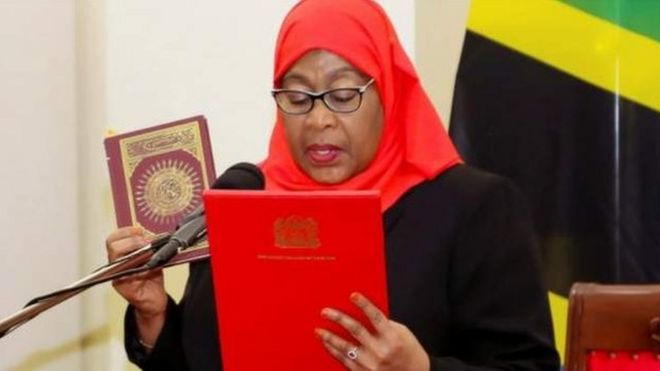
The Vice President Samia Suluhu Hassan was on Friday sworn in at a ceremony in the commercial capital Dar es Salaam before a roomful of dignitaries as Tanzania’s first female president after the sudden death of John Magufuli.
“It’s not a good day for me to talk to you because I have a wound in my heart,” said Hassan. “Today I have taken an oath different from the rest that I have taken in my career. Those were taken in happiness. Today I took the highest oath of office in mourning,” she said, after being sworn in at 10 am on Friday.
President Samia Suluhu Hassan Being Sworn In. Photo Courtesy of bbc.com
She announced 21 days of mourning for Magufuli and public holidays on March 22 and on March 25, the day the late president will be buried in her first public address as president.
“It is not the time to point fingers at each other but to hold hands and move forward to build the new Tanzania that President Magufuli aspired to,” she said, amid opposition claims about the cause of Magufuli’s death.
In 2015 she was elected as Tanzanian’s first female vice president as Magufuli’s running mate and last year she was re-elected along with him. His choice of her for a running mate in 2015 came as a surprise, leaping over several other more prominent politicians in the Chama Cha Mapinduzi (CCM) party, which has been in power in one form or another since independence in 1961. As the constitution states, she should serve out the rest of the five-year term as the President.
She joins a shortlist of women on the continent to have run their countries and currently, she becomes Africa’s only current female national leader – the Ethiopian presidency is a largely ceremonial role.
She was first elected to a public office in 2000 in her native Zanzibar as a special seat member of the Zanzibar House of Representatives and appointed a minister. At the time, she was the only high-ranking female minister in the Cabinet.
She eyed election to the National Assembly in 2010, after serving two terms, winning the vote by more than 80%. The former President Jakaya Kikwete appointed her as the minister of state for union affairs. In 2014 she came to national prominence as the vice-chairperson of the Constituent Assembly, created to draft a new constitution. She earned her plaudits through her calm demeanor in managing occasional outbreaks of pandemonium and how she dealt with some of the more outspoken members.
The Tanzanian’s affectionately know her as Mama Samia – since in the Tanzanian culture that reflects the respect she is held in, rather than reducing her to a gendered role.
When she was serving as the minister of labour, gender development and children in Zanzibar in 2005, she overturned a ban on young mothers returning to school after giving birth. The late President Magufuli insisted that a similar ban be implemented on the mainland. It is not clear whether she opposed his stance in government.
Contrary to her predecessor, her leadership style is purportedly quite different from Magufuli’s. Samia Suluhu Hassan has been described as a much more diplomatic political figure. Among her colleagues she is known for following the correct procedures and calmly managing conflicts among MPs.
“She does have good negotiation skills,” said Sarungi. “I think the fact that she’s very calm and doesn’t often show emotions but is firm, as well as the fact that she’s got a sense of humor. And of course, that contrasts very sharply with the late president, Magufuli.”
Sarungi warns against expecting too much from her this soon, “I think the expectations are huge,” she said. “Tanzanians are very eager to open up a new chapter after a very dark, controversial, and extremely divisive five-and-a-half years of John Magufuli.”
“But at the end of the day, she’s coming from a political party. The same party that gave us John Magufuli.”
For his hasty and having an intolerant approach towards policymaking the late president was dubbed “The Bulldozer”. The uncertainty of whether she will remain loyal to Magufuli’s controversial policies or push for change remains to be answered. The late President Magufuli drew criticism for banning pregnant girls from attending school and urging women to stop taking birth control pills.
Nonetheless, many Tanzanians still expressed approval and respect for the decisions Magufuli made while in office. Her first public address leaked a few clues on how she might approach her new role.
“It was too controversial in the sense that she talked about reconciliation and burying the differences,” said Sarungi. “This is a very flippant remark when there are serious issues including abuses of human rights…These are issues that she needs to start grappling within a more meaningful way.”
“Common to Daystar University, the Grivet monkey, scientifically known as Cercopithecus aethiops- meaning Ethiopian long-tailed monkey, can be easily identified through their ebony-black face.”
How they Look
Vervet Monkeys are primates predominant within the Sub-Saharan region. They have an ; Olive-green coat on their outer build and a furry white covering, with a bluish-green layering of the skin, on their torso.
Scientifically, Vervet monkeys are referred to as Chlorocebus pygerythrus. It is registered that there are six sub-species of the Vervet Monkeys in the world, with the East African region carrying the bulk of the Grivet sub-specie. Common to Daystar University, the Grivet monkey, scientifically known as Cercopithecus aethiops– meaning Ethiopian long-tailed monkey, can be easily identified through their ebony-black face.
This black hue can also be found on their tail and limb tips. However, unlike the adults, new-born Grivets, have a pink-coloration on their faces and a black coat. Generally, it takes 3-4 months, per records, for a newly born Vervet monkey to gain adult coloration. To identify a female Vervet monkey from a male Vervet monkey, one can mainly use size and reproductive organs as their two determinants.
Male Vervet monkeys are heavily built-in size weighing between 5-10kgs, whereas the females are recorded to weigh between 3-5kgs. In addition, the male Vervet monkeys can be identified through their turquoise-colored scrotum and their red phallic object, whereas the females can be identified through their two elongated mammae on their chest.
How they live
The Vervet monkeys live in troops, which consist of nearly fifty individuals. These troops are led by an Alpha male whose prowess, likeability and scrotum color are a plus in his rule. For a male to rule the troop, they have to contest for the seat and just like any other monkey troop, they have to please the leading females of the troop- who more often than not, become his harem.
In leading a troop, the Alpha male is expected to keep watch for the safety of all individuals, especially from predators main of which include: Leopards, Chimpanzees, Eagles and Hyenas, and that there are enough food grounds for everyone. The life of an Alpha male is one characterized with comfort- from the constant grooming he receives from the female Vervs -; and contestations from other male Vervs, whether from outside or inside his troop, who are in search for a troop to lead.
It is stated that the bluer the scrotum of a Vervet male monkey is, the higher are his chances of dominance in a troop. The female Vervet monkeys, on the other hand, are responsible for the grooming and nurturing the young ones of the troop. They also play a huge role in determining their troop leader.
Living routine
The daily routine of the Vervet Monkeys is characterized by eating and grooming. As omnivorous eaters, the Vervet monkeys are spoilt for choice with their food picks, ranging from tubers to cereals, vegetable crops, fruits, bird eggs and chicks. To pass time, the Vervet monkeys engage in grooming sessions, which are mainly conducted by the females of the troop. These sessions are essential in creating tight-bonds and a sense of community within the troop.
To communicate, Vervet monkeys use squeaky sounds and grunts to pass their messages to one another. These sounds relay different emotions; from the expressions of anger to the thrills of joy and grunts of pain and warning; and not forgetting, instigations of fights.
Male Vervet monkey walking Photo courtesy of animalspot.net
Important to note, as per routine and records, Vervet monkeys usually have an annual, in some cases biannual, mass mating season. This season takes place in April and June, as per given records, with the assurance of having ample food for the troop after the rainy season. Speaking of which, a stable water supply, in addition to temperate settings and dry savannah is the perfect choice of habitation for the Vervet monkeys.
How safe are they?
According to a released report by IUCN (International Union for Conservation of Nature) in 2008, the Vervets were listed as a least concern due to their widespread and stable populace. Albeit, their existence is one that is threatened due to the constant developing human-wildlife conflict.
The Vervets are closely associated to pests, as they are known for raiding people’s farms and houses hence driving many to kill, stone and even eat them. However, there are better wildlife-saving ways such as using dogs, in which one can keep them off from their homesteads and farms, aside from killing and eating them.
Fun facts
Vervet monkeys:
Can live up to 30 years.
Have the same subset and number of teeth as humans.
Have elongated canines that can approximately reach a height of 3.2 cm.
Have eyes, which are gifted with color-vision, enabling them to source out for palatable grubs and to safeguard themselves against predators.
Are diurnal in nature, implying their eyesight is impaired at night, hence they seek refuge in trees and roof tops in a measure to avert predation.
In honor of black History month (February – Both Men and women ) and Women’s History Month (March- Women Only), the Involvement Newspaper will be featuring African leaders,heroes ,activists in a bid to remember their contributions towards a better Africa.
By Evelyne Syombua
(issyombua@gmail.com)
Thumbnail Photo Courtesy Pinterest.com
Funmilayo Anikulapo-Kuti was a teacher, political campaigner and was involved in women’s rights activism and traditional aristocrat . She was seen as the doyenne of female rights in Nigeria, gaining her the moniker “Lioness of Lisabi” for her political activism.
Funmilayo Ransome-Kuti, original name Frances Abigail Olufunmilayo Thomas, also called Funmilayo Anikulapo-Kuti was born on October 25, 1900, Abeokuta, Egbaland [now in Nigeria]. She was born to Yoruba parents (Chief Daniel Olumeyuwa Thomas (a returned slave) and Lucretia Phyllis Omoyeni Adeosolu of the Jibolu-Taiwo family)who were were Christians. She attended Abeokuta Grammar School (a secondary school), from 1914 to 1917 in which she was the first female.
She taught briefly at the school after which she studied in England (1919–23), where she dropped her English names and shortened her Yoruba name to Funmilayo and she discovered socialism and anti-colonialism.When she resumed teaching at Abeokuta, she married Israel Oludotun Ransome-Kuti, a clergyman and teacher, in 1925. She was the first African woman to drive a car.
Having being brought up by parents who valued education, she became associated with some of the most important anti-colonial educational movements in Nigeria and West Africa, and fought tirelessly to further women’s access to education and political representation. In reaction to the racism she encountered in Britain, she dropped her Christian name, Frances Abigail by the time of her return.
Her career in feminist activism begun in 1932 when she founded the Abeokuta Ladies Club (ALC). Membership was mostly Western-educated and working-class women and she expanded it in 1944 to include market women. In 1946 the ALC became the Abeokuta Women’s Union (AWU), and membership was expanded for it to begin working against injustice and the exploitation of market women.
At first, the AWU campaigned against price controls, which drastically limited the incomes of market women, and for fair treatment of market women by the government. The union also protested a special tax on women imposed by the local ruler, Sir Ladapo Ademola II. As from 1947 the organization led large demonstrations against Ademola’s government, which led to his temporary abdication in 1949.Greater educational opportunities for women and girls, the enforcement of sanitary regulations, and the provision of health care and other social services for women were among the union’s broader goals.Raising living standards for women and ultimately eliminating the causes of poverty was Ransome-Kuti’s intention to pursue these activities.
Over 100,000 Abeokuta women worked together to provide social welfare services and to pursue a gender-conscious agenda. The AWU expanded to the Nigerian Women’s Union (NWU) in 1949 a national organization and became known at the Federation of Nigerian Women’s Societies (FNWS) in 1953.The FNWS was dedicated to addressing the concerns of all Nigerian women and improving their position in society, including education, suffrage, health care, and other social services.
She also served several terms on the local council of Abeokuta between 1949 and 1960. Though unsuccessful, she ran for a seat in 1951 in the regional assembly as the candidate of the National Council of Nigeria and the Cameroons (NCNC), which she had helped found in 1944. The FNWS became associated with the Women’s International Democratic Federation, in 1953 and Ransome-Kuti was elected a vice president of the organization. After which she subsequently lectured in several countries on the conditions of Nigerian women. In 1959, she ran for the assembly as an independent candidate, after the NCNC rejected her bid for a second candidacy , This led to the splitting of the NCNC vote and ensured the opposing party’s victory.
The consequences for her action were expulsion from the NCNC and she formed her own party, the Commoners’ People’s Party, which was disbanded one year later. By collapsing of her CPP party one year later, her political influence in Nigeria and her following among women in Abeokuta had declined significantly.
For her to feel like she belonged to the Yoruba Culture, she changed her surname to Anikulapo-Kuti in the early 1970s . The family property in Lagos ,which Fela had transformed into a commune that he called the Kalakuta Republic, was stormed by 1,000 soldiers in 1977. She was dragged by her hair and thrown out a second-story window by the soldiers during the assault. She died of complications from her injuries the following year.
“Funmilayo Ransome-Kuti was a pioneering nationalist who fought against British colonialism and a cultural nationalist…a pioneer African feminist and a human rights activist who was tireless in her campaigns for women’s rights and for economic, political, and social justice. She was an educator who gave a voice to the voiceless and education to the uneducated.” – Oxford Dictionary of African Biography.
It is not inconceivable that the average Maasai man marries three women or even more. That is in fact what is expected of him, as long as he has the financial capacity and ability to cater to them and the offspring of that union. The Maasai are the most well-known and recognized indigenous ethnic group in East Africa.
Group of Maasai Men . Photo Courtesy of exploring-africa.com
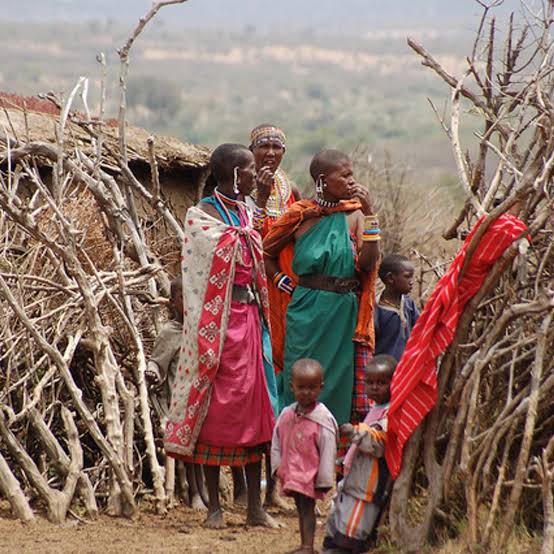
They live in southern Kenya and northern Tanzania along the Great Rift Valley. Their population in Kenya is expected to be about one million and counting. Despite civilization and western cultural influences, the Maasai are widely known for clinging to their traditional way of life. It’s common to see them in their traditional dress, even in the streets of the cities.
The culture of the Maasai is mainly based on their cattle. From them, they obtain everything they need: meat, milk, and blood. Another aspect of culture among the Maasai is polygyny. They account for the majority of polygynous marriages in Kenya but from the look of things, the culture might evolve and change
The Maasai culture is predominantly patriarchal, and that is why a girl’s childhood is dominated by a strict avoidance, and fear, of her father and other men. Her marriage prospects and her family’s reputation hinge on her ability to develop an acute sense of respect. She is socialized to accept her subservience to her future husband.
This is one of the reasons for which polygyny is still practiced among the Maasai. The girl is taught to respect the man and even fear him.
Back in the day, women did not have a say in the choice of their husbands but as time goes, culture evolves. Now, a woman can choose whom she wants to marry, bearing in mind that she will be joined by another woman as the marriage journey goes on.
These women have grown up in polygynous homes and, that is what they know to be the best form of marriage. It is not essentially a practice to be abhorred, so far, there have not been major complaints.
The practice is organized and respects certain norms that have been established and followed through to date. When a young Maasai man is ripe for marriage (usually around 25 years old), he marries the lady he has been wooing (if both families have no objection). This young girl is habitually around 15 years of age and knows the fellow. Before the young man marries, he makes sure he is financially secured to look after this family that he is about to start.
This aligns with the general thought in the African society that a man is responsible for his family. He is the sole provider for his family and has to make sure nobody lacks. The upbringing of the boy child in the Maasai community ensures this is followed .
Whereas the girl is always with her mother and other ladies, learning how to cook, look good, take care of herself and her future household, the boy child is with his father, the other men, or herding cattle. He has to learn to be a man, handle disputes amongst many wives and always provide for his family no matter how large it gets.
The boy child grows up taking care of cattle and other livestock. By the time he has been circumcised and is learning the ways of marriage, his father gives him his own cattle and he begins to take care of these and multiply, such that his own family never lacks.
This is one of the reasons for which polygyny is considered good by many cultures in Africa and the world at large. Yaayai, the first wife of a Maasai polygynous marriage has been interviewed by a popular and certified youtuber on the topic of polygyny.
To the question why do the Maasai practice polygyny, she says “the Maasai have many wives because it is good… many wives bear many daughters from whose bride prices the family gets cows and this adds the family wealth.”. “I liked it a lot when the second wife came in, I was very happy. Even when the third was brought in… we live happily together… no we are not jealous of each other, we live together, cook together, take care of the children together”, she adds.
A Maasai Man and his wives. Photo courtesy of bbc.com
Whereas Yaayai welcomed her co-wives, Josephine another first wife to a Maasai man says she looked for her two co-wives. After about ten years with her husband, she found him a second wife “to help her take over “, she says. Then, a third who was strong enough “to take care of their husband, since the two of us are already tired with children”., she adds. Here, the first wife found the others and we understand that she wanted help in the chores, taking care of the children, and satisfying her husband. Her husband has to be satisfied: no matter what that entails.
Yaayai explains this further when she says “I like my husband to have other wives so that we can be together. For example, in the afternoon like now, sitting outside together with my co-wives. We talk, we spend time together, even without our husband… whatever you were raised with, that’s what becomes your truth. That is why we don’t want our husbands, only to have one wife.”
Talking about the next generation and polygyny among the Maasai is quite sad for Yaayai. “Young people don’t want to follow this tradition anymore; I can see that they will stop doing it because it shows that they don’t want to be in polygynous marriages anymore.
The world is changing… people have come to know many things and many Maasais want to dilute our culture”, she laments. There is no single definition of a happy marriage. Yaayai, Josephine together with their co-wives say they are happy in their marriages and prefer polygyny to Monogamy.
Another person from a different culture will never understand why she would share her husband with another woman. In other cultures, two men can marry and two women too.
It is the diversity of cultures that makes the world a beautiful place to live in and like Yaayai says, “whatever you were raised with, that is what becomes your truth”. Let our different truths, not disqualify another’s.