Category: Uncategorized

  • Greenwashing Awareness

    Greenwashing Awareness


    By Sharon Victoria


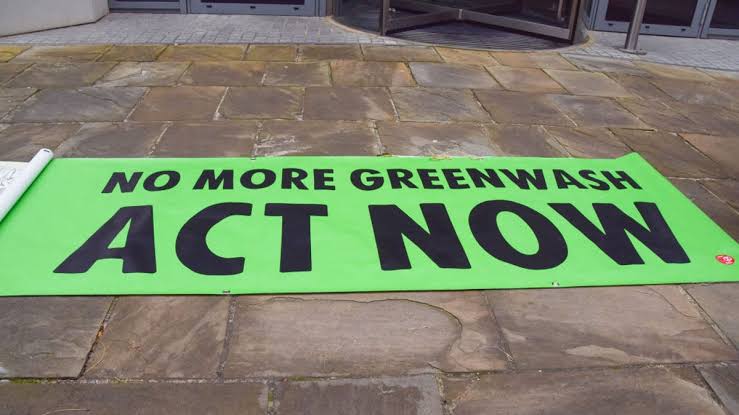
    We recently celebrated world environmental day on June 5th and it was another opportunity to celebrate and appreciate the environment around us and come up with solutions to the current environmental problems. In light of that, we shall be talking about green washing, a big environmental hazard which has been a main concern of late.


    In today’s world, environmentalism and environmental consciousness has been a hot topic of discussion that consumers are more drawn to sustainable products and companies. Due to this, companies have resulted to deceiving their consumers by green washing so as to still thrive in the market.

    Greenwashing is the practice of misleading people into believing that a company and its products are sustainable and environmentally friendly when, in reality, they are not. This is usually done by placing misleading labels that claim the products are environmentally friendly, fake claims of supporting green initiatives.


    Greenwashing has negative consequences for both the consumers and the environment. To begin with, it destroys consumer trust by manipulating them to take the sustainable route and in turn, the genuine sustainable markets face unfair competition and may also lose consumers on claims of greenwashing. The presence of these practices hinders the progress that many are trying to make so as to have a sustainable future thus derailing the plan of a better future.


    The culprits of this vice are usually either in the food industry or the fashion industry. For the food industry you can get labels showing “organic” but you will miss the ingredients used or at times they omit the toxic chemicals used. In the fashion industry, fast fashion brands may promote clothing lines made from sustainable materials, but in turn it involves excessive emission of waste and exploitation of their workers.


    To do away with greenwashing, companies need to practice transparency and accountability. Government regulations should also be strengthened and they should ensure that green claims are verified and standardized.

  • Huzuni Kwa Mama Likizoni

    Huzuni Kwa Mama Likizoni

    Na Abdul S. Shaban 

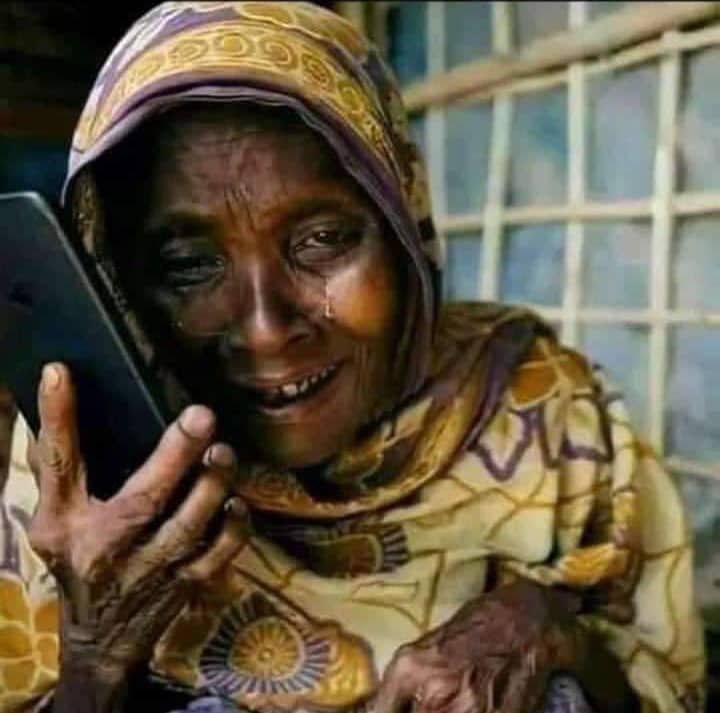
    Mwambie anipigie ni mimi mama yake! Mwambie sina simu ila nimeona picha zake kwenye simu ya kupalaza ya khamisi. Mwambie amenenepa sana ..mwambie nimeona gari lake ni zuri sana ! Ila mwambie mama yake bado naishi kwenye lile banda pamoja na kuku. Mwambie nimeumwa sana ila nikapona bila hata kutumia dawa. Mwambie Mzee Juma bado ananidai pesa zake nilizokopa ili nimlipie ada, amechukua kile kishamba nilichokuwa nakitegemea kufidia deni lake. Mwambie mimi mama yake nimebaki pekee yangu tangu baba yake afariki sina hata wa kunisogezea kuni motoni. Mwambie leo nimetamani sana nyama, zile mboga zilizoota zenyewe upenuni zimenichosha mpaka mdomo umekuwa mchungu. Mwambie wale vijana walitaka wanipige eti mimi mchawi eeh. Mwambie mama yake nimekuwa mzee sana nahesabu siku tu aje hata nishike mikono yake nimuoneshe mipaka ya nyumba yetu! Salio limeisha mwambie mama anampenda sana! Ila huku kijijini nimebaki pekee yangu wenzangu wote wameenda mjini kusherekea kwa watoto wao.

  • Issue 247

    Issue 247

    Use the link below to access the Involvement Newspaper Issue 247 which features a range of articles written by our writers to ensure that you stay informed on News within and outside Daystar.


    壯陽藥
    Xj/view?usp=drivesdk”>Click Here .

  • DUSA President Declares DUSA Secretary General Impeachment Null & Void

    By Evelyne Syombua

    The Daystar University Students Association President Walter Nalwa on 25 October declared the impeachment of the DUSA Secretary General null and void.

    Walter Nalwa issued the communication via internal memo send to all students, Dean of Students, DUSA Congress Speaker Evans Owino, DUSA Congress among others.

    “DUSA Council appreciates critiue either positie or negatie. We highly appreciate issues including agcademics, welfare, co-curricular and extra-curricular. Dragging any other students into your personal, political feuds is uncalled for. However the Secretary General appeared before the congress and apologized for the uterances prior made,” stated the memo.
    The memo was send in response to the DUSA Congress communication on the impeachment of the DUSA Secretary General send on 24 October.

    DUSA President, Nalwa indictaed in the memo that Congress did not follow the process required, ”The congress leadership did not follow the due process under article 8.13 andi article 8.1c of the DUSA constitution before planning the alleged impeachment. I therefore urge the Congress leadership to be objective and put more focus uniting and not dividing whatsoever”.

    Nalwa appealed to his fellow leaders to take care of those under their charge. The fate of the DUSA Secretary General now lies in the hands of the two parties with each holding a different view on the matter.

  • ‘HUSTLER’ CSs WORTH SH 6BN

    ‘HUSTLER’ CSs WORTH SH 6BN

    {Photo courtesy of Victor Matara}

    By Nicole Waweru

    (Email: wanjirunicole28@gmail.com)

    On Monday 17, October, the selection parliamentary committee began vetting President William Ruto’s Cabinet nominees. The nominees are; Musalia Mudavadi, the former Amani National Congress (ANC) leader with a net worth of ksh.4 billion, Justin Muturi, former speaker of the National Assembly of Kenya with a net worth of ksh.700million, Aden Duale, Garissa Township Member of Parliament (MP) with a net worth of ksh.851 million, Alfred Mutua, the former Governor of Machakos County with a net worth of kshs.420 million, and Alice Wahome, the MP of Kandara in Murang’a County with ksh.218 million.

    Shock hit Kenyans after the immeasurable wealth of these nominees was revealed in Parliament, this sparked a conversation on Twitter as many Kenyans said that the politics in Kenya is very remunerative. In as much as some had worn the lens of ‘politics being lucrative,’ others had however accredited their wealth to corruption, which is still not a surprise. Some were questioned about their past encounters with corruption scandals like Mudavadi, who was asked about the Goldenberg and Nairobi Cemetery land scams. For the Goldenberg scandal, he told the committee that he inherited the scam at the Treasury at its tail end and some of the transactions were unknown to him whereas, for the Nairobi Cemetery land scam, he said he faced a politically instigated investigation by the then Kenya Anti-Corruption Commission, (KACC) and in the end, the culprits were caught and jailed.

    Looking at the wealth attained by these Cabinet nominees, we can see that their wealth is also constituted by separate and individual ventures that they carry out outside of politics. For example, one of the nominees, Justin Muturi, says that his income comes from the pension he is earning after serving as a speaker of the National Assembly for ten years, from farming and legal consultancy. He also added that his property was acquired through bank loans and a civil servant stipend for the last 36 years of his career.

    The vetting and nomination process in Kenya is seen to be very orderly, the 12th Parliament amended the Public Approval and Parliamentary Approval Act 2011, to increase the vetting period from 14 days to 28 days. According to research from Mutai, (2022), once the Committee on Appointments receives the list of the Cabinet nominees, the clerk will be required to issue a public notice asking Kenyans with representations to submit memoranda on the nominees. With the nomination process in Kenya, once the Parliament completes the vetting which is set to end by Saturday 2:30 pm, the clerk will notify the President of the decision made within seven days of the decision. Article 152 (1) of the Constitution says the Cabinet includes the President, the Deputy President, and the Attorney-General, and not fewer than 14 and not more than 22 Cabinet Secretaries.So, the question that has been the talk on all social media handles is, “Is politics profitable?” My answer to this is yes. It is no doubt that the Members of Parliament (MPs) in Kenya are amongst the highest paid in the world relative to the size of the economy. Parliament seats are one of the most coveted positions in Kenya this is supported by the holder’s wealth and social ranking. In the years before, there has been an evident trend of those in high senior private sectors leaving, in quest of more laid-back political offices.

    As the ongoing vetting goes on, we hope that these nominees are very passionate about what they are fighting for right now, and when they are appointed, they will stick to their word and do fulfill all the promises that they have made. Their words are on record and I am sure many Kenyans will want to see them be true to their word.

  • WHO CAN BELL THE CAT ?

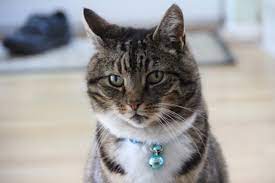
    WHO CAN BELL THE CAT ?

    (Photo courtesy of Wikipedia)

    By Caren Chelagat


    Distant river banks and closed windows are witnesses

    That pain cannot be written into lines

    You’d probably misjudge my turbulent tides

    A p0rcelain pottery it seems

    Delicate and feeble art it portrays

    Who can bell the cat?

    Who can bound chains to the cat?

    A fortitude threshold an intense pain

    Everything looming bows down in the rain

    We are tied to chains

    The cat is having to its fill

    While we are left with nothing to even quench our thirst

    Deluge of information Flowing through

    Conversations dripping too Sent by a deluge of mails

    Flipping through the mail box

    The rule had been passed through

    Each and everyone had a say through it

    But no thought was taken through

    The top head belonged to the top dogs

    As they sailed through their say throughs

    That was implemented on their orders

    The followers were just but a tip through

    To convey information to jut but get a through pass

    As they hailed to the top dogs

    Without gaining truth

    They just but followed with bitter truth through them

    But their greed for promised toppings topped it all through

    And they availed to follow it through.

  • SET FORTH IN HONOR ASPIRING TO BE UNREALISTIC.

    SET FORTH IN HONOR ASPIRING TO BE UNREALISTIC.

    By Wangui Njau

    Njaucatherine3@gmail.com

    Thumbnail Photo Courtesy of Christine Wambui

    Pageantry, reverence, honor, and bliss dawned on the blazing 12th of November 2021 in celebration of the 44th Daystar University graduation ceremony and the class of 2021.

    Graced by the presence of distinguished guests amongst them several Vice Chancellors of different universities like our former acting chancellor, Professor Kombo, now the Vice-Chancellor of St. Paul’s University, The President of the University of Northwestern, USA, Dr. Alan Cureton, The CEO of the Kenya Film Commission, a Daystar Alumni Mr. Tom Owase, few representative members of the diplomatic community and a representative Alumni’s of the graduating class 2001 amongst others.

    Rising stars shining beyond all impossibilities was the theme for the day as Daystar accoladed all the Integral parts of the university who ensure the smooth running of Daystar as a whole and the 1400 graduates with their respective diplomas, Bachelor’s, Masters, and PhD’s.

    The Vice-Chancellor professor Laban Ayiro left us with some powerful words “The people who change the world, the people who change institutions, the people who change homes are the people who, one, put God first and two, choose to be unrealistic in their approach to life,’’ said the Vice-Chancellor.

    This was the most powerful and key takeaway of the day as truly the confidence you gain or perfect at Daystar leads you to a conviction that comes with your strengths, your character, and when you set foot in a room there is precedence all around you because you are a Daystarian.

    All in all, the 44th Daystar graduation ceremony was definitely one to be revered as the speeches were illuminating and thought-provoking, it was also a celebration of not only the graduands but also the people who mould us on our day to day life, the people who ensure we have a seamless learning experience, the people who work tirelessly and perform their duties that make our lives at Daystar simpler. However, the greatest acknowledgment is to God who has brought us this far and will continue blessing everyone especially our graduates in abundance.

    To the graduating class of 2021– Go shine your light and remember you are unstoppable.

  • How To Turn A Toxic Work Environment Into A Productive And A Strong Work Relationship

    How To Turn A Toxic Work Environment Into A Productive And A Strong Work Relationship

    By Victor Seda

    (victorseda39@gmail.com)

    Thumbnail Photo Courtesy of startatbest.eu

    We all want to work in an environment that goes hand in hand with our expectations and beliefs. What about when we find ourselves in an extremely different scenario?

    A workplace comprises of people with distinct personalities. Our unique worldviews determine who we are since we think and treat one another according to this perspective. The manner in which I treat my fellow workmate matters a lot. We are living in an era where a lot of stresses exist in our world that affect us. There are people who can control and solve their personal problems, those challenges consume others until it reflects in their places of work.

    Obsessively Strict Leaders

    A self absorbed leader commanding his staff. Photo courtesy of forbes.com

    When at work, we strive to please our leaders. We all want to be the best at what we do to capture the attention of these significant people. Benefits like promotions and incentives are some of the triggers of our motivation. The same leaders that we do our best to impress are the same ones that in certain cases are narcissistic, obsessive and unrealistically strict. Such leaders always want to be heard. A situation like this interferes with communication among workers and leaders. The demand of always saying Yes to their instructions is always so high to the point of being confident with your No is like writing your letter of resignation.

    This situation might put you in a catch-22 situation whereby you do not know the right person to channel your complaints. Creating a team where you share your thoughts and experiences about the issues you face at work is key in balancing the pressure from work. It is also effective in reducing the narcissistic tendencies of the leader. This develops a sense of camaraderie. A support system that feels the same way as you do and goes through the similar challenges is beneficial in neutralizing the toxicity from work. Approach the leader as a group more often and give positive feedback about the job. Talk about the acts you feel the leader displays often and are interfering with your duties at your job. The leader will realize that his methods of leadership interfere with many people and will change progressively.

    Rumors and Negative Energy

    Coworkers gossiping about their colleague. Photo courtesy of linkedin.com

    Negative talk, gossips and rumors are also another significant signal of an uncomfortable working environment. Here, you will find high levels of insecurity among workers. Negative energy in a work place always leads to a high turnover since there will be low morale and workers will give excuses of not doing work correctly. It gets to a point whereby employees feign sickness in order to escape from duties. This is a scenario where there are no authentic friendships. In the instance of high turnover, most employees leave the job and look for another job elsewhere.

    Acknowledge that you are in an unsuitable working surrounding. This is the most important step in finding a solution to your deplorable situation at work. Actions like communicating effectively with your fellow workers, open mindedness about various issues come thereafter. This will boost the closure among workmates and there will be little to no secrets in the work atmosphere. Often you find that the remedy you have will interfere with the friendships that you have built. On the other hand, after acknowledging that there is a problem, the friendships will be broken but built again with true and genuine intentions.

    The joy of anyone is working in an accommodating place that respects the views of every employee irrespective of status economically, socially, or politically. We sometimes find ourselves in a toxic work environment, but there are ways that we can change it to be a productive and strong relationship that works best for us. There is always a solution to every challenge that faces us.

    When we look at these obstacles at work as an opportunity that can reveal our strengths and weaknesses, we can correct, polish and appreciate them so that we move forward.

  • KENYAN YOUTH: THE ULTIMATE KEY TO ERADICATE MISINFORMATION ON COVID-19 IN KENYA

    KENYAN YOUTH: THE ULTIMATE KEY TO ERADICATE MISINFORMATION ON COVID-19 IN KENYA

     By Hellen Owuor

    (hellenowuor10@gmail.com)

    The emergence of Covid-19 took many by surprise, with the new virus spreading rapidly and introducing the need for extra safety precautions at an unprecedented level. The novelty of the virus, as well as the lack of information about its nature or behavior, gave room to a cloud of misinformation and conspiracy theories that many took as gospel truth. These conspiracy theories have caused and continue to cause confusion and mistrust among people, countries, governments, and their citizens, contributing to the covid-19 infodemic. 

    One year down the line, several vaccines have been developed to prevent the spread of this pandemic. However, the widespread misinformation on covid-19 is slowing down efforts of governments and health practitioners to contain and eradicate the virus. As is the case in some countries, Kenya has seen the rise of misinformation, with many sharing some of these myths and false claims, believing them to be true. 

    For the better part of 2020 when Covid-19 hit Kenya, the country was under lockdown. This meant less interpersonal interaction, as well as an increased reliance on social media for information. According to DataReportal, the number of social media users in Kenya increased by 2.2 million from 2020. That is 11 million social media users by January 2021. With this in mind, it is safe to say that the key avenue for the distribution of misinformation about covid-19 in Kenya has been through social media.

    Social media has enabled people to access information and connect from anywhere in the world. This is beneficial, but at the same time, it has made it easy for those spreading false claims, especially with malicious intent, to reach their targets and cause harm to unsuspecting citizens, preying on fear and a lack of information on Covid-19 to drive their agenda. Spreading of misinformation begins from a specific person, group, or entity with ill-intentions to gain or harm another group for political, social, or individual gain. 

    Once false information gets into the hands of vulnerable and unknowing citizens, it only takes one click, a retweet, share or repost on social media or through a messaging app to further spread the false information, and this is difficult to undo once in motion. 

    Young people comprise the largest proportion of the population in Kenya. Out of the 11 million social media users, 70.8% are Facebook users aged 18-34 years (Statcounter). Between May 2020 and May 2021, Facebook was recorded as the most used social media platform followed by Twitter (Statcounter). On average, users aged 16-64 spend at least 3 hours per day on social media. That translates to at least 90 hours per month per person. Think of how much unverified false information may be consumed or shared in one month and the extent of damage it may cause.

    As it is, misinformation is a considerable threat to the lives and health of Kenyans, and many myths about Covid-19 spread in the country in 2020, including claims that the disease does not affect Africans because of their skin color and environment, that it only affects the rich, that it can be cured using traditional herbs, that it was made in a lab in Wuhan, China, and many more.

    The main impact of this information was apathy, with people going about their daily activities thinking that Covid-19 didn’t exist, or that it was not as serious a threat as had been claimed, thereby exposing themselves to more harm leading to a quick rise in infections and strained resources.

    Following the development and introduction of vaccines, the misinformation trend has shifted away from the origins of the disease to the vaccines themselves. Some of the most common false beliefs are that the vaccines cause infertility, they cause blood clots in everyone who receives them, that those who are vaccinated are likely to die in 2 years, that the vaccine contains a tracking microchip and many others. These myths have resulted in the hesitance of Kenyans to take vaccines. As of May 2021, Kenya was ranked number 22 in Africa for the number of administered covid-19 vaccine doses per hundred people. Compared to the highest ranking, Seychelles, which had 136.74 doses administered per hundred people, Kenya had only1.8 (Statista). It is saddening to see the power of misinformation as the covid-19 misconceptions persist, not only in rural areas but also in urban areas where there is more access to information. 

    This article is a call-to-action for the youth to fight Covid-19 misinformation, being the largest of the population, the most educated, and also the most technology-savvy, can protect themselves and others by ensuring that they can verify that any news about Covid-19 is true before sharing. They can do this by identifying and debunking false information shared online about Covid-19, as well as sharing pointers about media and information literacy with others.

    Young people can also combine their efforts with thought and opinion leaders to conduct capacity-building activities in rural areas, constantly updating the residents of new developments and debunk misinformation. To ensure success, the youth should be aware of credible sites where they can get trusted and verified information about Covid-19, such as the WHOUNICEF, and CDC. To be fully equipped at an individual level, there are also some courses and learning materials available online that they can use to learn how to identify and demystify misinformation on Covid-19 for example “Hands-On Fact-Checking: A Short Course” by the International Fact-Checking Network at the Poynter Institute and the American Press Institute.

    In this fight against misinformation, the youth should be suspicious of any information they read or hear about Covid-19 regardless of it being shared by a close friend, politician, opinion leader, or family member. Before sharing, they should take these seven steps to ensure they are not contributing to the spread of misinformation: 

    1) Check whether the source of information is credible and if other related credible sites have the same information.

    2) Confirm whether the sources contained in the texts or content are trustworthy, analyze the language used as well as the date of publishing.

    3) Check the author of the articles and their track record in their profession.

    4) For images, you can conduct a reverse image search.

    5) Keenly look at the statistics, whether the datasets are complete and corresponding.

     6) Be objective and liberal when conducting your investigations.

     7) Reach out to specialists in the field of fact-checking, for example, Piga Firimbi and Pesa Check in Kenya.

    With a commitment towards protecting Kenyans from misinformation, we will move a step further in our fight against Covid-19 as well as prepare ourselves in case of future pandemics.

    This publication was produced as part of IWPR’s Africa Resilience Network (ARN) program, administered in partnership with the Centre for Information Resilience (CIR), the International Centre for Investigative Reporting (ICIR), and Africa Uncensored. For more information on ARN, please visit the ARN site.
  • Thieves posing as Daystar students steal two bikes from businessman

    by Sumaya Hussein

    (husseinsumaya1@gmail.com)

    Student entrepreneur Noah Karuri at his bike station few meters from Daystar University, Athi River – PHOTO/Denis Mavia

    Two men stole two mountain bikes from a student with a bike hiring business using a lost student ID that belonged to another Daystar student. The two men hired bikes from Noah Karuri, the business owner, on May 25, never to be seen again.

    According to Karuri, the men looked like students and one of them resembled the picture in the student ID, which was handed over before taking the bikes as per the regulations. The two also left their mobile numbers, one a Safaricom and the other an Airtel number, before taking off at around 3pm.

    “They were new clients. I had not seen them around, so I thought they were freshmen. When they came to hire the bikes, they asked me about the requirements and I told them they had to leave their IDs, either national or student ID, and their phone numbers too,” said Karuri

    According to Karuri, the two men did not specify where they were going and how long they would take. Since they said they were headed to Mombasa Road, Karuri decided to call and check in on them after two hours. He dialed the Airtel number for the first time at around 5pm and the owner picked, saying the two were on their way back.

    “After one hour again, I called them at around six. They said they’re almost at Lukenya Getaway. But at that point I felt suspicious,” said Karuri.

    In a state of panic, Karuri took a bike to Lukenya Getaway to try and locate the men but did not see them. He went further up to Lukenya Boys High School and the result was the same. He called again at around 6:30pm, but this time, the number did not go through.

    “It was off. I couldn’t believe it,” said Karuri. “I chose to think that maybe their phone went off or something came up and they’re still coming,”

    After closing the business for the day, Karuri in the company of a friend, cycled to Mombasa Road in search of the bikes.
    “We cycled all the way to Green Park then to Devki, and we came back at around eight. We didn’t see anyone,” said Karuri.

    Going back to his records, Karuri was shocked yet again when he discovered that the other number left behind was incomplete. It had one less digit and this led him to think that the disappearance was planned.
    “It was strategic. So I was sure that something had really happened,” said Karuri.

    The following day, Karuri reported to the matter to the police, who asked him to first confirm with the university whether the student ID left behind was still valid.

    After following up on the matter, Karuri learnt that the ID belonged to a student, who misplaced it in early 2020 and replaced it two weeks later. Speaking to Involvement, the third-year Valley Road student said that he lost the ID when his wallet was stolen in Nairobi West. The student who goes by the name Trevor alone, also mentioned that he has never been to the Athi River Campus.

    After checking back with the police, Karuri learnt that the new information further complicated the mystery. He was told that there was not much that could be done since the ID used was fake and the Airtel number would be hard to trace.

    Being the first time it has happened, Karuri said that the loss affected him to a point that he couldn’t sleep or eat. He now lives in constant fear that his business might be targeted again.

    “I have had trauma every day,” said Karuri. “A lot of trauma. When someone leaves with a bike, I can’t help but wonder whether or not they will come back especially if it’s a new person”.

    The incident however, he says, has made him more vigilant and forced him to introduce stricter protocols in his business.