Use the link below to access the Involvement Newspaper issue 240 which features a range of articles written by our writers to ensure that you stay informed on News within and outside Daystar.
Use the link below to access the Involvement Newspaper issue 240 which features a range of articles written by our writers to ensure that you stay informed on News within and outside Daystar.

By Hilmelda Tenkeu
(hilmeldatenkeu@gmail.com)
Thumbnail Photo: the kora instrument Photo courtesy of theculturetrip.com

The origins of the instrument are not very clear but in the 1300s, the traveler Ibn Battuta mentioned that the women who accompanied Dugha (a prominent interpreter at the time) to perform were carrying bows that they plucked. He did not mention the number of strings, but this clearly shows the existence of harp instruments in 14th century Mali and could be the earliest written reference to the kora. The Kora is a string instrument used extensively in West Africa. It typically has 21 strings, which are played by plucking with the fingers (the thumb and index of each hand only). It is built from a large calabash, cut in half and covered with cow skin to make a resonator with a long hardwood neck.

By Evelyne Syombua

Billionaire businessman Chris Kirubi, who was also the chairman of Capital Group Limited, died of cancer in his home on Monday at 1pm.
“It is with great sadness that we announce the passing of Dr. Christopher J. Kirubi who passed away today at 1 pm at his home after a long battle with cancer fought with fortitude, grace and courage,” his family said in a statement, adding, “he was surrounded by his family.”
Kirubi who has been fighting cancer since 2016, leaves behind two children. Before the call of death, he tweeted.
“Top of the morning to you, my dear friend. It doesn’t have to be a tiring Monday. Instead, I bring to you good tidings of favour, success, achievements and happiness in the new week.” Said Kirubi. “Give yourself a go towards your success plan. Enjoy today and the rest of your week.”
“I have received the shocking news of the passing away of my friend Chris Kirubi with a lot of sadness. The cruel hand of death has robbed our nation of a patriot whose entrepreneurial spirit, hard work and determination saw him create some of our county’s largest enterprises which offer employment to thousands of our people,” mourned President Kenyatta.
Kirubi was diagnosed with colon cancer in November 2017 and he was taken to the US for treatment. At that time, he said the cancer was detected early enough to be managed successfully.
In an interview with BDLife in January 2020, Kirubi shared about his battle with cancer and his thoughts on death.
“One thing I have come to discover is that in the end, you’re alone. Your friends may love you, but eventually, you have to deal with your sickness personally. You think about the past, the things that you could have done, the things that you have not done and what you can do to compensate for things you ignored. It is a time of reflection. And prayers from friends do help a lot,” said Kirubi.
Kirubi was a director of Centum Investment Company, one of the largest investors in the group. Business seems to have ran though his blood vessels as he was the chairman of DHL Express Kenya Limited, Haco Industries Kenya Limited, Kiruma International Limited, International House Limited, Nairobi Bottlers Limited, Sandvik East Africa Limited and 98.4 Capital FM.
In addition, he was the Deputy Chairman of Bayer East Africa Limited and a non-executive director UAP Provincial Insurance Company Limited and Beverage Services of Kenya Limited.
In 2011, Forbes ranked Kirubi as the second richest Kenyan and the 31st richest man in Africa with a net worth of USD300million. However, in 2012, he was dropped from the list of the continent’s 40 richest people.
Kirubi was born in a poor family and at a young age. He worked during school holidays to support himself and his siblings after the death of his parents. He defied the rule of fate and circumstances by becoming prosperous despite his background.
By Muhanguzi Tola
tolakofa1@gmail.com

Daystar City’s Prince Kofi stole the show with a cameo performance as his second half hat trick sealed a 3-1 comeback in a mouthwatering derby played at the Mount Kenya University (MKU) grounds on June 13.
Falcons looked on course to extend their good form following yesterday’s win when Emmanuel Lorenzo’s first half strike gave them the lead in the early morning fixture against their arch rivals. The former City player’s goal was however not enough, as his former team was full of responses in the second half.
Insipid in the first, the City side returned for the second half livened up, Kofi taking advantage of two fumbles by the falcon’s keeper and a kick from the spot to punish the Athi based team. Brilliant performances by Eric Linox and Nathan Hanif, who won the penalty for his team fostered a hard-earned coveted victory.
“It was a tough game, but I am proud of Daystar City. We conceded in the first half but rallied in the second and showed heart and desire to earn a comeback win. I loved our fight as a team,” said Ken Andrews, the Daystar City team captain.
The win is their first of the season having lost two and drawn one. It also marks a comeback from yesterday’s game that saw them get thrashed 5-1 by log leaders Kenyatta University (KU), and takes the team off the bottom of the standings.
Falcons on the other hand moves below City on the log for the first time this season, each having 4 points. City however have a game in hand over their rivals, having played a game lesser.
The clash saw a number of intense moments, with City’s Kenneth Kagugo seeing red in the second half. The coaches were forced into making substitutions after Falcon’s sharpshooter Victor Atta ran into Nathan, both picking up injuries in the process.
Atta’s injury adds on to Falcon’s crisis, with forward Gian Gaile having picked one during yesterday’s 2-0 FKF win against 3K FC. Head Coach Boniface Mutuku had hinted at the possibility of having a tough day, as he insisted on the importance of both teams’ recovery after yesterday’s matches.
Falcons look to respond to the defeat when they face Al Ahly in their second game of the day.

By Nyokabi Ng’ang’a
Leshnyokabi@gmail.com
Thumbnail photo, courtesy of: Nyokabi Ng’ang’a
Many who have crossed paths with me, will know one thing if not a multitude of things about me: and that is my passion about Africa. A passion that has been nurtured by many people I’ve met in my lifetime. And with this article, I’ll share some of my aspirations and observances about the African continent and its inhabitants, in a twisted way.
Today, unlike the many days of my article writing, I won’t put much hard-inked references, if any, within this piece. As I stated and to further reinforce, this is more of an observatory or analytical piece that stems from the deepest veins of my soul.
Africa! The word itself seems recital given how much it’s used by many a people from different nations, ethnic groups, professions etc. If we were to pen down the most used words in our world today, I dare say, Africa would be one of them.
There is no day, truthfully speaking, that goes without we mentioning the word Africa. And by ‘we’ I mean us all as inhabitants of this world. If it’s not about a war that occurred recently or a coup that took place instantaneously, then it could be about the target location of our business premises or its prospects, or even, a corruption scandal that has been unearthed, and the narrative continues.
But this doesn’t mean that Africa is the only continent in mention in our lips today. Many continents are and thanks to the flow of information, today we can appreciate other nations from other continental approaches and feel free to talk about their issues, histories and intricacies from a third person’s perspective. In a similar manner, we of the African descent are enabled and empowered to speak about issues facing us as a continent though with some ‘caution’ attached to it. By this I mean, some African nations opt to have them themselves pin point their own challenges as well as successes with no ‘outsider’s help’. I believe we can identify such audacious nations within our continent, without me mentioning them.
However, worth the note, this spirit of enablement and empowerment has not touched all peoples of Africa, given the narratives of: marginalization and seclusion of some people and the divide-phenomenon evident in various sectors within our societies, such as: the digital divide; the economic divide, the geographical divide, the political divide and so on. Now, let us take a stroll to the most used phrase in Africa today: “We must unite as Africans.” Whenever I hear these words, I love to position to myself the following questions:
• Why are we uniting?
• Were we united back in the days?
• What will we achieve by uniting?
“Why are we uniting?” It’s quite obvious that people unite because of a common goal; a common purpose, which they would love to achieve.
This I would love to believe is the same line of thought where Africa is concerned. We want to unite because- as captured in the words of the African Union (an organization I hope we haven’t lost belief in)- we want “an integrated, prosperous and peaceful Africa, driven by its own citizens and representing a dynamic force in the global arena.” That’s our goal, but I ask, what’s our incentive? Let’s go back to history. The history that declares the formation of our continent as ancient yet treasurable. Giving rightful praise to all the civilizations evident in our continent before the colonialists set foot in Africa, it’s quite ascertainable and worthy of rightful-historical positioning that before colonialism waved itself into Africa, Africans were interacting with one another- without the help of anyone. In Swahili, we would say: “Waafrika walikuwa wana(ki)tangamana…” and from my linguistic leaning, I feel this Swahili phrase captures the intensity of the words I want to position, for if it were in English, the word “tangamana” would be substituted for “mix”, which carries less weightiness, for me.
Away from my linguistic leaning, what I am trying to position is that Africa was, before; before we came to know it was. In short, Africa was existing in its make, outlook, vibrancy, cultures, and oneness before we came to know that it was. “Before we came to know that it was” means before we came to the acknowledgement of the words: “Africa must unite.” The proliferation of the phrase, “We must unite as Africans,” to me, begun when African nations, through their people, were fighting for their independence. The urge and urgency to unite against colonialism and colonialists, became prevalent and necessary. To me, that is/was the incentive: “we are fighting against a common enemy: colonialism/colonialists.” That’s why I asked, earlier on: yes we are uniting, but what’s the incentive? Many answers can stream from this question, but I would love to have you answer this question by yourself. Moving on, “were we united back in the days?”.
While it’s hard to establish how in exact we were united back in the days- pre-colonial times to be precise-, one thing for sure that we can’t erase is that there was a working relationship amongst the Inhabitants of Africa. A relationship that caused people to intermarry, to trade with one another, to pay homage to one another, to fight with each other and so on. This goes to show, the narrative of unity doesn’t only lie in the face of trouble. All these aforementioned acts show that we were in unity with one another. Though this doesn’t cover the whole narrative, given that tribes fought other tribes; kingdoms raided other kingdoms and so on, but it seeks to show, we didn’t need to have a common enemy for us to know that we needed to unite. Small acts of tribute that extended a welcoming hand from one tribe to another and from one kingdom to another, show that people in Africa were seeking harmonious living- where possible- with one another.
Lastly, “what will we achieve by uniting?” For this question, I would love to leave it blank. Reason being, it’s a question that seems to have direct answers, such as: a great continental frontier, good working relations, strengthening of our economy and so on, but it requires- I tend to believe- more than a physical manifestation of this achievement. Though, all these achievements from our continental unity are truthful and certified, as such. It’s my understanding, that maybe I haven’t answered all the three questions wholly. However, onto a far-fetched thought, these three questions call for three things: understanding our present, understanding our past and understanding our future.
“Why are we uniting” is a present question seeking for past references and now and future changes; “Were we united in the past” is a question of the past, seeking for inner retrospection of our past in its entirety and truthfulness; and “what will we achieve by uniting” is a forward moving question, which seeks to solve the present and the past into the future. In summary, understanding/defending/calling for the unification of Africa requires the past, the present and the future. Too obvious of an analogy, we might state. All in all, I believe I have established the foundation and because I intend this to be a personal and personable article to you, I will close in a poem that will share my aspirations, as well as observations of my continent in a tangled way, given the length- constraint this article has:
IN 1000 WORDS
In 1000 words, we sing your praises and call you a mother of all rights Africa,
In 1000 words, we shower you with blessings and splash you with profanities oh Africa!
In 1000 words, we call you and image you rightfully Africa,
In 1000 words, we pray for you and cry for your freedom oh Africa!
In 1000 words, we understand your history Africa,
In 1000 words, we comprehend your inner mysteries oh Africa!
In 1000 words, we stand with you to watch your reclaim Africa,
In 1000 words, we desert you to have our bargain oh Africa!
In 1000 words, we cry for your Independence Africa,
In 1000 words, we tie you with restraints of all kinds oh Africa!
In 1000 words, we hope for your return Africa,
In 1000 words, you cry for our return oh Africa!
In 1000 words, we purge you Africa,
In 1000 words, you cry for yours and our consecration oh Africa!
In 1000 words, we look up to your salvation Africa,
In 1000 words you beseech your maker for a congregation oh Africa!
In 1000 words, we wish you peace Africa,
In 1000 words you seek for your inner calm oh Africa!
In 1000 words, we write our sentiments Africa,
In 1000 words, you write back in your inked-tears oh Africa!
This poem carries with it my observations as well as my aspirations, if looked into keenly. Since length is an issue, my final words as a humbled Involvement writer are:
“The reawakening we so wish to have as a continent, has already set foot. People, youths more so to this regard, have risen to the task of their calling, which is to defend their place of birth or rightful belonging. But as I love to position, there are challenges within that moving on, we will grapple with as we embark to the road of discovering the Africa we want, but that’s the fun of it.”
By Fatiha Shabir

Daystar University will continue administering blended learning where both physical and online classes will be ongoing during the May 2021 semester.
According to a memo sent to the school on Thursday by the VC Prof. Ayiro, those to resume for physical learning include nursing students, continuing diploma students, new and continuing Certificate students, and those admitted during the October 2020 and January 2021 semester.
“School of Science students taking Applied Computer Science, Biomedical Science, Environmental Health and MIS will study online,” said VC Ayiro.
New students of Diploma and Undergraduate programs will have physical learning and are to report for orientation at the Athi River campus on May 17, at 8:30am.
However, new postgraduate students will learn virtually and undergo virtual orientation on May 17 before classes officially begin on May 24.
“All new students are encouraged to read their admission letters carefully and plan early payment of both orientation and semester fees,” said Prof Ayiro.
Continuing Post-graduate students will resume blended learning as they will be allowed to attend seminars and have contact with supervisors during their thesis defences.
Ongoing students are set to begin classes on May 10 while the new Diploma and Undergraduate students will start their classes on May 24.
Since the new students will miss two weeks of the semester, their timetable will be adjusted so that they attend classes twice a week to cover the necessary classroom hours.
The Daystar community has been urged to follow all Covid-19 protocols in both campuses to ensure that everyone’s health is safeguarded.
By Sumaya Hussein

Kenya ranked 102 out of 180 countries on the Reporters without Borders (RSF) 2021, World Press Freedom Index report that was released last week. The report, published every year since 2002, evaluated the state of journalism in 180 countries and territories.
Countries ranked in the index are assigned a score calculated from data on abuses and violence against journalists during the period being evaluated. Also used were questionnaire answers completed from journalists, media lawyers, researchers and media specialists.
Norway ranked first in the index for the fifth year, running as the country with the freest press. Eritrea on the other hand was ranked the worst country in upholding press freedom. Namibia remains the top country in press freedom in Africa.
Kenya rose from position 103 in 2020 to 102 this year, though the situation in the country is still classified as “problematic”
According to RSF, “Kenya has seen a slow erosion of media freedom in recent years. The political situation and security concerns have been used since 2016 as grounds for restricting the freedom to inform.”

Today marked World Press Freedom Day 2021 and Kenya joined the world in celebrating the day whose theme is “Information as a Public Good”. The theme is a call to affirm the importance of cherishing information and exploring ways of advancing transparency and journalist empowerment.
The Media Council of Kenya (MCK) and the Kenya Editors Guild (KEG) held a series of events since last week to mark the day. This comes in the wake of muzzling, not just by state operatives and politicians, but also within media houses, with some resorting to self-censorship amid intimidation by the powerful.
This year, two ranking measures – the World Press Freedom Index 2021 and African Media Barometer publications – indicate that journalists globally continued to face multiple challenges. These include intimidation, physical or online harassment, surveillance, disappearance, threats, arbitrary arrests, assaults and lack of access to public facilities, authorities or data.
Reporters Without Borders reported that 50 journalists from around the world died in their course of duty. Their deaths were linked to investigative stories about corruption, misuse of public funds, organized crime and coverage of protests.
Nevertheless, several leaders have come out to support media freedom, and promote protection of journalists in their line of duty.
Speaking at one of the MCK events in Nairobi, National Assembly Speaker Justin Muturi said, “Media owner should pay reporters and correspondents very well then demand integrity, otherwise we risk making them captives of government and news sources.”
United Nations Secretary-General Antonio Guterres said the day is marked at a time many journalists and media workers are facing many challenges.
“In too many countries, journalists and media workers face censorship, abuse harassment, detention and even death, simply for doing their jobs. On #WorldPressFreeedomDay, I urge all governments to do everything their power to support a free, independent and diverse media,” he said in a video posted on his Twitter.
He went on to add that free and independent journalism is “our greatest ally in combating misinformation and disinformation,” he said.
by Sumaya Hussein

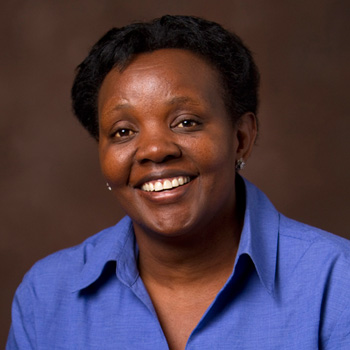
Daystar Company Limited, the trustee body that sponsors Daystar University, on April 20, 2021, appointed Dr. Florence Muindi as the fourth Chancellor of the university. Dr. Muindi will be taking over from Prof. Mary Murimi, whose term is set to end on June, 21, 2021.
According to a memo sent to the university from the VC Prof. Laban Ayiro, the company board is preparing to induct Dr. Muindi ahead of installation to office.
According to the Daystar Company by-laws, the induction should be conducted within 30 days from the date of appointment. It includes a structured introduction to the University’s strategic plan, a guided tour of the university and familiarization with the Memorandum and Articles of Association of Daystar Company, the University Charter, and the main university operating policies, plans and organizational structure. Moreover, the new Chancellor will be presented to the requirements and expectations of the office.
The quest for the fourth Chancellor began in December 2019, when the company constituted a Search Committee, to lead the process and present a short-list of three possible candidates.
The Search Committee was led by Rev. Prof. Zablon Nthamburi, a Daystar Company Limited Trustee.
Dr. Muindi was identified from among nine possible candidates in a rigorous process that lasted almost a year.
After reaching out to all University Stakeholders and para-church organizations, the committee handed over the names of four candidates to the Company board in November 2020.
Dr. Florence Muindi is the Founder and CEO of Life in Abundance (LIA) International, a non-profit and faith-based organization that partners with local churches around the world to transform lives.
She is also a medical doctor specialized in Public Health and graduated from the University of Nairobi with a Bachelor’s degree in Medicine and Surgery in 1988, and a Master’s in Public Health in 1993.
The mother of two grown sons is also a published author, ordained minister of the gospel, and a global itinerant in conferences, churches and institutions of higher learning on wholistic community development and empowerment of poor and vulnerable communities.
Dean of Students Rev. Mutinda Musyimi congratulated Dr. Muindi on her new appointment shortly after the memo was sent.
“My congratulations to Dr. Florence Muindi, the 4th Chancellor, Daystar University. May God guide her steps,” said Rev Musyimi.
By Nicholas Kweyu
Group work certainly comes in handy when one is navigating through units in their course. It presents the opportunity to divide a large mass of work into smaller manageable chunks, that can be split among members. It also allows for multiple perspectives when coming up with content because well, two heads are better than one and more of course is best.
However, these are advantages mostly in the best-case scenario- when the group is comprised of proactive members. Lucky students have been in a few groups like this, where the work simply flows between the members. Before they know it, the work is done- quite well.
In other experiences, group work tends to go the other way. This is when the group is comprised of perhaps one or two active members, and a majority of ‘joyriders’.
In such groups, the problems begin right from the beginning when deciding how to go about the work. In some cases, people are reluctant to contribute their ideas and the only responses group leaders get are “I agree” or “that’s a good idea”. In worst case scenarios, there are no responses at all.
There tend to be four types of group members when it comes to working on assigned tasks. The first are those who will do pretty good work and send it in on time (a Godsend for group leaders). The second are those who may send in work on time, but little or no effort is put into the work with blatant copy pasting and disregard to the APA style format.
Then there are those who will send their work after persistent hounding and following up by the group leaders and other members. Finally, those who, try as one might, cannot work on a deadline. Their work, if any, will be sent in way past the set deadline.
With these types of members, more often than not, it takes more time for the rest of the group to try and fix work that was shoddily done, than it would have taken doing the work yourself. Moreover, the time taken chasing after work is again time that could have been used to do the work.
These challenges move from being minor inconveniences to being potentially damaging as one progresses through their degree. In the earlier years where group work was mostly limited to single papers, such challenges were annoying but manageable. Later, when entire class projects and finals are structured as group work, the challenges become more problematic because a large portions of a student’s final grade are dependent on other people, who simply do not care about their grades the same way.
“You could just remove the names of those who did not participate,” say the lecturers. Easier said than done. How about, students get the luxury of choosing their group members instead? At this point in time, the weight of group work for final projects will push serious students to ignore their friends, and pick members they will actively work with.
Being placed in random groups is something that seems to happen more often now that we have moved to online learning. One could certainly agree that being in such groups prepares one for working with a variety of people in the world outside. However, the goals of students, especially those in their final year, are clearer now more than ever.
All in all, group work is dynamic and experiences vary depending on the type of work and the members of the group. Addressing its negative side helps us all to realize the part we can play in making group work a more efficient, enjoyable experience.
by: Sumaya Hussein
(husseinsumaya1@gmail.com)

Let’s rewind the clock back to 2019, before coronavirus. When there was no curfew, no ban on public gatherings, no wearing of masks and social distancing, and most importantly, no online learning.
It is in the evening and the day for Daystarians in Athi River is just beginning. Classes ended few hours ago and students are roaming around all over the campus.
Music can be heard coming from the PAC and the amphitheater. The last group of lecturers and day staff are just leaving.
Students are gathered in groups and others are stretched out in the pathways leading to off campus. Two DELL buses from Nairobi arrive, full of students. They are greeted by a band playing music at the PAC.
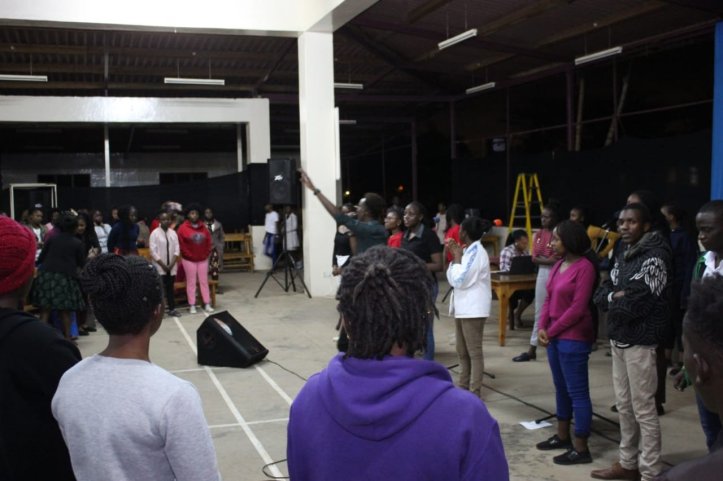
Up the Agape Library, there’s a bit of warmth and murmuring as students clock in and out of the building. The reading rooms downstairs are filled cheerful laughter from students engaging in group discussions.
At the amphitheater, the worship team is holding chapel rehearsals. The drums can be heard all the way from the Rugby pitch where teams are in practice.

The blocks in the BCC and SBE buildings are brightly lit, every classroom having few students. The ICT area is buzzing with activity. Some students are having their dinner at the restaurant while others are lined up outside the theatre to see a play that was to start an hour ago.

Down at the TV room, screams of excitement and others of disappointment burst through the windows. Students are enjoying one of those few soccer matches that end before the school gates are closed.
Offices at Hope Centre are still up and running with students coming in and out of the building. Behind it, the busiest of places in the campus at that moment; the cafeteria area. The smell of a variety of food is carried by cold winds all over the place.
In the dining hall, students are seated in groups eating and sharing memorable moments of their days. The restaurant beside it is also busy, with each table having at least two diners, tapping away on their phones.
Something is going down at the basketball pitch. It’s a dance off to break the ice before two teams face each other in a night match.

The hostels are vibrant, with light coming from every window of each building. Students are idling outside the entrances in crocks and sweatpants, listening to their favorite tunes.
On the other side of the Daystar gate, there are vehicles constantly passing on the newly built tarmac, competing with bikers and skaters for space. Student-owned vehicles are parked beside the street, each having at least 3 passengers inside.

The small hotels off campus are flooded with customers as the owners struggle to keep up with the busiest hours of the day. There’s a long line at Ideal Shop, where everyone is waiting for their turn to get a chapo smokie.
Loud music is booming from the Play Station Shops, slightly overpowering the FIFA commentary, and Mortal Kombat sound effects.
At the hostels off-campus, tenants are pitched on the balconies of Heri Homes, Wakes, Monique and Kryptons, taking in the night’s cool breeze, enjoying each other’s company.
Then came COVID-19, that stripped us of the joy of campus life, the joy of togetherness and the joy of living a normal life. Some will graduate before tasting pre-Covid life in campus again, and some will join without ever having the idea of what it was like before.

The good times however, remain in our memories, awaiting the day there will be a happy reunion and return to normalcy.