Category: Features

  • A Pan-African Vision for Online Education on Migration

    A Pan-African Vision for Online Education on Migration

    By Prof. Levi Obonyo


     No less than fifteen universities from across Africa convened in Malawi to showcase the potential of media-enhanced courses on migration and their practical applications in addressing the vast demand for higher education on the continent. This initiative is of unprecedented scope.


    The Dean of the School of Communication, Prof Levi Obonyo, was among the scholars at the three-day Blantyre meeting exploring joint efforts that could be expended towards a collaborative journalism curriculum delivery through e-learning platforms.


    The Erich-Brost Institute for International Journalism (EBI) at Dortmund University in Germany organised the e-learning conference in Malawi that focused on media coverage of migration in Africa. Dortmund University is leading a three-year EU-funded project called ‘CoMMPASS,’ aimed at developing an e-learning platform for future and practising journalists in African universities.


    Dortmund University has closely worked with the School of Communication at Daystar University. Dr Jeremiah Nganda, a faculty member in the School, will be travelling to Dortmund later this month on a fully sponsored month-long training on journalism education.


    Thanks to additional funding from the German Federal Foreign Office, the Malawi conference organisers—Prof. Dr. Susanne Fengler, Professor of International Journalism at Dortmund University and Director of the Erich-Brost Institute, and Dr. Michel Leroy, Project Manager of the Erasmus+ CoMMPASS project—brought together colleagues from all over the continent at MUBAS, the host university in Malawi’s largest city, Blantyre. Delegates came from countries as diverse as Burkina Faso, Cameroon, the Democratic Republic of Congo, Ethiopia, Ghana, Kenya, Malawi, Nigeria, Senegal, South Africa, Tanzania and Uganda.


    Over 70 journalism researchers and students from English- and French-speaking African countries participated in the three-day conference alongside representatives from Portuguese- and Kiswahili-speaking nations. The CoMMPASS online course, currently in a test phase in English in Uganda, Burkina Faso, and Malawi, will be more widely available next year in these four languages.


    Talking to Involvement newspaper, Prof Obonyo said the School of Communication will be keen to participate in a joint curriculum delivery that will expose Daystar communication students to a learning experience involving faculty and students from elsewhere in the continent and beyond.


    The statistics are telling: Today, 1.4 billion people live on the African continent. According to United Nations projections, this number will nearly double by 2050. This population growth presents enormous challenges to African education systems. By 2030, the number of children and young people under 18 is expected to increase by 170 million.


    For African nations, this surge means millions of new school and university places will be required quickly. Education is key to the continent’s recovery, which continues to lag behind other regions economically and has been particularly hard hit by global inflation. One figure highlights the scale of the problem: Approximately 100,000 students in Côte d’Ivoire pass their A-levels (baccalauréat) each year—a number nearly equal to the capacity of all the country’s universities combined, both public and private.


    However, according to studies by the Berlin Institute for Population and Development, resources for school and university education in Africa are stagnating at best and declining in some countries.


    As the German scholar Prof. Dr. Fengler noted in her keynote address, “Investing in the education of young journalists is paramount for African countries. Particularly given the rapid population growth, Africa’s often politically fragile states are being tested. Jobs and healthcare are becoming even scarcer. Meanwhile, press freedom is restricted in many African countries. Now, more than ever, African nations need a critical public debate on addressing these challenges. This will only be possible if there are enough professionally trained journalists and independent newsrooms. This is where we aim to contribute.”


    Another keynote speaker, Prof. Dr. Sisanda Bukeka Nkoala, from the University of the Western Cape, gave a remarkable speech entitled ‘Embracing Innovation in Higher Education Institutions in Sub-Saharan Africa: Challenges and Enablers’. Prof. Dr. Nkoala also serves as General Secretary of the African Journalism Education Network (AJEN). This network takes a leading interest in the issue of appropriating these new teaching tools.


    Thanks to support from the Friedrich Ebert Foundation (FES), Dr Girmachew Adugna also shed light on migration trends and the processes/initiatives aimed at regularising and securing migration on the continent. Dr Adugna belongs to the Center for Forced Displacement and Migration Studies at the University of Addis Ababa, Ethiopia.


    In addition to Prof. Fengler and Dr. Leroy, the Erich-Brost Institute was represented by Dr. Merle van Berkum, who is leading a comparative study on migration reporting in countries of origin and destination, and Johanna Mack, editorial director of the European Journalism Observatory based at Dortmund University. The Dortmund team provided conference participants with an in-depth introduction to the structures of the CoMMPASS e-learning portal, which is currently in its test phase and scheduled to go live in 2025.


    The conference also featured intensive discussions about the varying conditions for e-learning across African countries. While nations like Kenya and Nigeria are digital pioneers, already incorporating digital teaching formats, educators and students in other African countries face challenges such as high internet costs, frequent power outages, and a lack of adequate space for focused online study in cramped living conditions. The African journalism educators exchanged experiences and explored potential solutions to these issues.


    Project website: https://commpass.org, www.facebook.com/CoMMPASS.org

  • The Exceptional Illusion: The Bane Of Kenya

    The Exceptional Illusion: The Bane Of Kenya

    By Jemima Mukasa


    Kenya’s exceptionalism is more than just a national attitude, it’s a pervasive mindset that seeps into every facet of our society, from politics and education to our responses to tragedies. This belief in our unique superiority whether as individuals or as a nation creates a culture where mediocrity thrives and community bonds weaken.

    Corruption in Kenya exemplifies this exceptionalism. Those engaged in corrupt practices often view themselves as above the law, deserving of the wealth they acquire through illicit means. Over time, corruption has become a hallmark of exceptionalism in Kenya, where being corrupt is perceived as a means to rise above others. This creates a self-sustaining cycle where corruption breeds more corruption, eroding public trust and stifling the country’s development.

    The quality of Kenya’s leaders mirrors broader societal issues, reflecting a tolerance for corruption and criminality. Many officials are embroiled in serious corruption cases, facing travel restrictions and allegations of heinous crimes, sometimes even captured on camera. This troubling reality reveals a societal acceptance of mediocrity and unethical behaviour, where leadership quality mirrors the values of the populace. Curiously, there’s a strange tolerance for corruption based on superficial perceptions. The previous regime’s corruption is often viewed as more acceptable due to its leaders’ display of wealth, whereas the current administration is criticized for lacking the “aura” of affluence. This bizarre comparison highlights the depth of our exceptionalism, as judgments are often based on appearances rather than the actual impact of corruption.

    Compounding this issue is the illusion of relatability. Leaders from humble beginnings foster empathy among citizens, who see them as symbols of potential success. This belief leads to reluctance in supporting policies that could hinder these leaders, even when they engage in corruption, under the notion that they will eventually experience the consequences of their actions.

    Tribalism exacerbates the problem, with politicians exploiting tribal loyalty to appeal to the emotions and egos of their constituents. This blind loyalty prevents rational analysis, allowing leaders to spread propaganda and make empty promises that resonate more with sentiments than facts. The combination of personal ambition, tribal allegiance, and societal acceptance of corruption perpetuates a cycle where mediocrity and unethical behaviour are continually reinforced, overshadowing meaningful and systemic change.


    This exceptionalism also makes nepotism and corruption particularly pervasive. In a society where people believe they are inherently superior, it becomes easy to justify favouring family members or those from the same tribe. The notion of maintaining opportunities within a select group to uphold a sense of superiority only serves to entrench inequality and inefficiency, as merit and competence are often overlooked in favour of personal connections.


    The allure of exclusivity also explains the success of Ponzi schemes and other fraudulent ventures in Kenya. These schemes prey on the belief that one can outsmart others and be part of an exclusive group with access to hidden opportunities. In a society enamoured with the idea of exclusivity, these schemes thrive, reflecting a deeply rooted selfishness and lack of community. Instead of fostering collective progress, there is a pervasive mentality of individualism.

    A significant portion of Kenyans, particularly the youth, exhibit political apathy, believing that political matters don’t directly affect them. This indifference has allowed a failing system to persist unchecked, as those who could afford to be politically uninformed are only now realizing the dire state of affairs. By the time they decide to act, it is often too late to mend the cracks in the system. This apathy is glaringly visible during national crises. While some Kenyans protest for better systems, others remain detached, engaged in leisurely activities. This lack of empathy and communal responsibility is a direct consequence of the exceptionalism entrenched in our society.

    Disconnection is also evident in our engagement with critical issues. Instead of focusing on matters that affect our lives, we are often distracted by trivial social media debates. Politicians exploit this apathy by making absurd comparisons, such as telling Kenyans to be grateful they aren’t living in Sudan or Mozambique, as if mediocrity elsewhere justifies mediocrity here.

    The exceptionalism mindset extends to how we respond to tragedies. In a country where exceptionalism reigns, there is often little sympathy for victims, as people quickly distance themselves from misfortune, thinking, “That could never be me.” This was evident in a recent incident where a graphic video of a car accident involving Pwani University students was recorded and uploaded. Instead of offering support and compassion, people sought viral fame, showcasing a disturbing lack of empathy and community spirit.


    This belief in exceptionalism also feeds into a dangerous narrative that hard work alone can overcome systemic failures. While hard work is important, it is naïve to think that one can out-hustle a failing system. Those who succeed are often those who were already privileged, leading to a lack of understanding and support for those struggling, with the prevailing belief being that they simply didn’t work hard enough.

    Accepting that we are not as exceptional as we think we are is the first step toward remedying our situation. Kenya has always been its own greatest enemy, and it’s time to confront our shortcomings. We can begin by practicing honesty and integrity in our interactions, building trust and fostering transparency. Avoiding personalizing complaints or compliments helps maintain objectivity and focus on meaningful engagement. Striving for excellence and adapting to changing circumstances sets a positive standard that can influence our community.

    Building a stronger sense of community is also vital. Participating in local events, supporting neighbourhood initiatives, and engaging in communal activities enhance ties and foster a culture of collective responsibility. Simple acts, like greeting neighbours, joining in environmental clean-ups, and contributing to local causes, strengthen bonds and promote a supportive environment. By adopting these practices, individuals contribute to a more ethical, informed, and cohesive society, paving the way for systemic improvement and meaningful change.

  • RENEWED STRENGTH IN TRYING TIMES.

    RENEWED STRENGTH IN TRYING TIMES.

    Report by Leeroy Wuone


    On Tuesday, August 13, 2024, at the amphitheatre, Reverend Josphat Kimacia from the chaplaincy department began his sermon based on the book of Isaiah 40 in front of an enthusiastic audience of Daystar students and staff.


    “We can get weary at our places of work, you can get weary with your spouse, your parents, your siblings and they can also get very tired of you but the Lord who is everlasting will never grow tired or weary of you”, remarked Reverend Kimacia.

    “Even when you struggle with sin(s), then one day you decide to repent, and the next day you find yourself sinning and repenting again, God will never grow tired of you. He strengthens the weary and empowers the weak”, added Reverend Kimacia.

    Furthermore, Mr Kimacia continued with a light-hearted grin, “we serve a God who can grow our strength and power, an eternal God whose understanding is beyond explanation. This is a reassuring and comforting reminder, especially during exam periods and even in these trying times when our energy levels begin to drop. From January to December, God’s reign remains unchallenged. He is the same yesterday today and forever.  He requires no broad-based government since He is the government Himself.

    Moreover, he reiterated that the word of the Lord declares that the increase of His kingdom and righteous judgment will never cease. Therefore, we should anchor our souls and hearts in this truth and constantly reminding ourselves that “It is well with my soul,” even when life’s challenges press us to the point of questioning, “Is it truly well?”. “Today, we want to affirm that because we have anchored our trust in the everlasting God, it is indeed well with our souls,” Reverend Kimacia encouraged.

    Mr Kimacia also gave a comforting reminder to staff and students who were feeling overwhelmed by their responsibilities and studies that they are grafted into God, and He is in them, granting them His divine attributes. With confidence in God, even when we feel physically and mentally exhausted, we can find strength in anchoring our faith in the Lord, who never grows tired or weary.

    It’s also important to remember Isaiah 40:30, which says, “Even youths grow tired and weary, and young men stumble and fall.” This verse is relevant to situations like the recent “Nane Nane” protests, where the youth have grown weary of repeating the same actions without seeing change.

    Last but not least, Mr Kimacia firmly emphasized that those who place their hope and trust in the Lord, have an inner assurance, a firm belief that sustains them.

    Mr. Kimacia concluded his speech by wishing the students success in the exams and future endeavours, “It is my prayer that as we enter this period, we will soar on wings like eagles, we will run and not grow weary, we will walk and not faint”.


    According to Charles Spurgeon “Nothing reflects so much honour on a workman as a trial of his work and its endurance of it. So, it is with God. It honours Him when His saints preserve their integrity.


  • e-Voting: Are We Ready For This?

    e-Voting: Are We Ready For This?

    By Nelson Muthomi Ledama Mati

    As technology advances, the way we conduct elections is evolving. Electronic voting, or e-voting, has become a topic of significant debate across the globe. While some countries have embraced this modern method, others remain cautious, weighing the benefits against potential risks. This article explores the journey of e-voting, its implications for democracy, and considers whether Kenya and by extension, Africa is prepared for this digital shift.


    Electronic voting, as defined by Rene Peralta in her Britannica article titled “electronic voting,” is a form of computer-mediated voting where voters make their selections with the aid of a computer. Though the concept of e-voting predates the internet era, it was first implemented in Estonia in 2005. Around the world, its adoption varies, some countries use it for specific jurisdictions, while others employ it in smaller-scale elections.


    In India, electronic voting machines (EVMs) have been in use for years. However, recent concerns about potential hacking and insider manipulation have brought the system under scrutiny. The Indian judiciary has endorsed the EVMs, yet uncertainty remains about their future whether they will be abandoned, scaled differently, or continue as is.


    Morgan Thomas, a policy associate at the Council of State Governments, recounts the evolution of voting machines in America, “From colonial times until the late 1880s, voting in the U.S. was conducted orally, a practice known as viva voce. This changed with the invention of the Acme Voting Machine, which aimed to prevent voter fraud by allowing overseers to verify ballots against registered voters. Though it improved ballot counting, issues persisted, leading to the introduction of lever-style voting machines in 1892, which offered faster voting but faced challenges such as accessibility and lack of independent record-keeping. The Coyle machine, developed in 1961, used punch cards but was costly and privacy-invasive. The more successful Votomatic punch-card system emerged in 1965, becoming widely used until criticisms arose following the problematic 2000 presidential election in Florida, which highlighted issues with voter intent and ballot design. This prompted the Help America Vote Act of 2002, requiring states to upgrade voting equipment and improve accessibility, ultimately increasing the use of electronic voting systems.”


    Despite its advantages, the U.S. has faced challenges with electronic voting, including allegations of foreign interference and technical issues such as touch screen calibration errors. A 2021 Statista poll in France revealed that the majority of French citizens favor electronic voting, citing its time-saving benefits as a major reason. However, they also expressed concerns about its impact on political engagement.

    Turning to Kenya, the country has historically relied on secret paper ballots for voting. During President Daniel arap Moi’s era, the mlolongo system where voters lined up behind representatives holding candidates’ photos was used but eventually discarded due to allegations of vote manipulation. Under Mzee Jomo Kenyatta, voting was conducted using individual boxes for each candidate, which led to issues of ballot stuffing. Post-1974 reforms introduced transparent boxes to enhance election integrity.


    Recent advancements include electronic voter registration systems, which streamline tracking and conserve time. However, the 2022 elections exposed several issues with the IEBC Results Portal, including allegations of vote manipulation, system inefficiencies, and technical problems. Opposition leader Raila Odinga challenged the results, claiming the servers were rigged, but the courts upheld the incumbent’s victory.


    Given these challenges ranging from potential equipment theft and hacking risks to difficulties in remote areas and resistance from citizens Kenya appears unprepared for full-scale electronic voting. Training and public education on technology and e-voting’s benefits are essential before widespread implementation. The negative perceptions of e-voting, fueled by past failures in other countries, also need to be addressed.


    As various institutions experiment with e-voting, mixed reactions reflect ongoing concerns about scalability, sustainability, and integration. While Kenya and many African countries are not yet ready for e-voting, technological advancements and increased digital literacy may pave the way for its future adoption. For now, sticking to the traditional paper ballot system remains the safer option, with hopes for a more technologically integrated electoral process in the future.


    In conclusion, Kenya and much of Africa are not ready for e-voting at this stage. However, the aspiration to embrace this technology remains, as we continue to navigate the path toward modernizing our electoral systems.

  • THE HISTORY OF INVOLVEMENT AS EXPLAINED BY MRS DAMARIS KIMILU.

    THE HISTORY OF INVOLVEMENT AS EXPLAINED BY MRS DAMARIS KIMILU.

    Report by Leeroy Wuone

    Email: leeroywuone02@gmail.com


    On Monday 5th, August 2024 in a warm afternoon characterized by cheers and laughter at the lecture theatre in Athi-River campus, outgoing Shine FM and Involvement staff team were awarded for their tireless work in keeping us updated on the news and features happening around the campus and the world at large. They truly worked tireless and selflessly, we all applaud their sacrificial service.  Well done team.

    As the old team was being awarded and commended for their one-year achievements, the new team for the year 2024 was being handed over. The new team comprise of Samuel Owino who is the news Editor-in-Chief, Nafisa Najma the Nairobi Bureau Chief and Copy Editor, Joshua Ongoro is the new Managing Editor as well as the  Review Editor, Anthony Okumu is the Associate Managing Editor, Dido Halake the PR/Marketing Editor, Faith Kiuta Graphics editor, Tracy Kavai the News Editor, Helga Mbodze the Jamvi editor/Online Editor, Richard Omwango the Sports Editor, Esther Wangechi the Features Editor, Janet Wambua the Opinions Editor  and last but not least is  Benjamin Huegel who takes over as the Photography Editor.

    As the new team take over, we are confident that they will be able to deliver more than their previous counterparts. We wish the team the very best of God’s grace and strength.

    Mrs. Damaris Kimilu who is the Corporate Affairs and marketing Manager at Daystar University, during the handover ceremony was quoted saying as she commended the outgoing team that, “any Managing Editor in any leading media house and not limited to Kenya media houses would consider you for employment because you have evidence that you were involved in some work while in school”.  She continued to add that, “one of the things we do in Corporate Affairs outside of your media platforms is we decided to give captions to our reporters starting with Mr. Hannington Karanja who is the immediate former Nairobi bureau chief as an example”. This decision was welcomed with cheers and loud of applause by the people present.

    “When you are writing do not just write for Involvement only, write as well for Corporate Affairs because we will get your captions and also for Daystar connect magazine which is a serious magazine in the University. Writing will take you places because you have documented evidence that you are a reporter and a published reporter for that fact. These are advantages one should take as you step into office and if you do not others in the classroom or students who are not in the media hub are likely to take advantage of these opportunities that Involvement offer”. Opportunity favor’s the prepared, as a writer, it’s a clear indication that we should always be ready and act swiftly to grab the opportunities availed to us.

    Writers were further encouraged to work on their timelines and send their edition to Mrs. Jean Murugi’s office desk on time to prevent Corporate Affairs from doing a substandard job. “We give budget oversight on behalf of the Vice-Chancellor to Involvement and Involvement was the first student media product in the university before Shine FM. The reason why the budget line has always run with the Vice-chancellor is basically because of the historical tradition of where media houses really began”, Mrs. Damaris said.

    According to Mrs. Damaris, history and understanding the root of something is paramount to understanding its operations,’ by this she went ahead to ask the team as she giggled, whether they knew the history of the media and where it all started in Daystar”.

    After a moment of silence as we all waited to hear the genesis of Media in Daystar, Mrs. Damaris Kimilu finally broke the silence and embarked to enlighten us on the history of Involvement and generally media in the University. She mentioned, to our amusement that the current Dean of the School of Communication, Professor Levi Obonyo was an Ex-Editor in Chief while a student at Daystar University many years ago.  This was quite encouraging to the team.

    She added that, the first Involvement Editor in Chief was a Nigerian that is when it was first called the Drum Beat which was also an initiative of the office of the Vice-Chancellor, the then Principal and students led, meaning the students were writing, editing and publishing together with a small set up that was called Public Relations Office.

    Mrs. Kimilu continued, “since he who pays the piper calls the tune, we will look in the eye to see if you are following the policies in terms of the content and the things you are reporting. This is not to muzzle you, but to make sure that certain corporate risks that must be taken into account are adhered to, but we are here to support you. Make sure you go to press on time and kindly let it land on Mrs. Jean Murugi’s desk on time so she can have enough lead time to clear it before forwarding it to me.  This will also give me sufficient lead time to also give my feedback on when to proceed to press and print”.

    “An extra advantage is working with external service providers like those who print our newspapers. However, it is not easy to find support from leading media houses who have their own printing presses and can print on newsprint a newspaper tabloid that you can be proud of, that is a product that looks similar or close to where you will be working”, she said.   A newsprint is a cheap, low-quality absorbent printing paper made from coarse wood pulp and used chiefly for newspapers.

    Mrs. Kimilu further advised that Mrs. Jean Murugi will introduce the writers to the printers as well as visit the press and meet with them, she added that transport to go pick our newspapers will be organized.

    She added” we should also take note that the print edition has a sibling, the online edition and Mr. Abdul Shaban, who is ex Involvement editor in chief was at the forefront to register its own online domain “. Mr. Shaban was applauded for this pioneering move.

    Mrs. Damaris made a plea for Involvement newspaper domain to still be in the school’s main domain despite their independence. “Reason being we have jumped five positions in the webometrics ranking from position sixteen which has been very difficult moving up and currently we are on our way to position ten”, Mrs. Damaris stated.

    In conclusion the Corporate Affairs through Mrs. Damaris Kimilu promised to support where they could, be it in the planning of events, outings, whatever it is they willingly promised to support us to achieve the learning and exposure we are looking for.

    we are appreciating the support of corporate affairs department through Mrs. Damaris and look forward to working seamless as a team.


  • The Value Of Reciprocation

    The Value Of Reciprocation

    By Whitney Ngati

    In life, we often find ourselves in situations where we give generously, only to receive the bare minimum in return. It’s easy to confuse understanding with foolishness, especially when it feels like your kindness is being taken for granted. The truth is, while it’s important to help others without expecting anything in return, reciprocity is a natural part of healthy relationships. When someone helps you, it’s only fair to return the favor when they need it. This isn’t a matter of debate it’s about mutual respect.

    However, it’s crucial to recognize the difference between genuine inability to help and intentional disregard. If someone is genuinely unable to assist you when the time comes, and you can see clear evidence of their struggle, it’s important not to judge them harshly. Avoid unnecessary accusations and understand their situation. On the other hand, if they consistently fail to reciprocate without a valid reason, it may be time to reconsider the relationship. Tolerating such behavior is a choice, but remember that you deserve better.

    Approaching these situations requires discernment. For instance, if someone lacks the capability to fully help but is still making an effort, that effort should be acknowledged. Emotional support, such as empathetic listening, can be just as valuable as more tangible forms of assistance.


    It’s also essential to understand your own limits. If helping someone is causing you significant strain, it’s okay to step back. Even if someone has helped you in the past, you shouldn’t feel obligated to jeopardize your well-being to return the favor. A genuine person will understand your situation, even if they’ve offered help before.

    There are times when you may feel like someone is taking advantage of your kindness. This can leave you torn between pleasing them and standing up for your rights. If you find yourself stuck in this dilemma, it’s a sign that you may need to set clearer boundaries. Appreciating someone’s past help doesn’t mean you should let them overstep your boundaries or exploit your generosity. Always communicate your values confidently, without fear of offending others. You deserve to be treated with respect, and that includes not tolerating guilt trips or misuse of your kindness.

    In romantic relationships, balance is key. If you’re always the one initiating conversations and your partner frequently offers unrealistic excuses for their absence, it’s a red flag. Genuine love and care involve mutual effort. If someone truly values you, they will make time for you. Prioritizing your mental health sometimes means breaking free from such imbalances.

    Ultimately, never be afraid to communicate your needs and boundaries. If a person feels offended by your genuine concerns, that’s on them, not you. It’s important not to engage in harmful or uncomfortable activities just to please others. Loving yourself is a crucial step towards emotional well-being, and you are fully responsible for your own happiness.

    Engage in relationships that value reciprocity and pray for discernment in all your interactions. Self-love isn’t just about putting your needs first it’s also about treating others with kindness and respect. If someone is genuine but you’re unable to help, communicate this kindly. How they choose to respond is their responsibility. In a world filled with negativity, don’t add to it by tolerating more than you should.

  • Self-Care: Understanding Its Importance and How to Practice It

    Self-Care: Understanding Its Importance and How to Practice It

    BY WHITNEY NGATI

    When you hear the term “self-care,” what comes to mind? The concept of self-care can vary, but common themes like prioritizing yourself often emerge. Essentially, self-care is about loving yourself and prioritizing your wellbeing. It’s a broad topic that can manifest in various aspects of life, including politics, religion, romantic relationships, and family dynamics.

    The foundation of self-care is self-awareness. This means understanding your personality, including your strengths and weaknesses. By  understanding who you are, you can assess your level of self-care, whether it’s low, average, or high. This self-knowledge will better equip you to navigate life’s challenges and interactions with others.

    While caring for yourself is crucial, it doesn’t mean neglecting the well-being of those around you. Self-care is not about being self-centered; rather, it involves maintaining harmony in your relationships while prioritizing your needs. This balance requires setting strong boundaries to prevent others from taking advantage of your kindness. Just because you care for others doesn’t give them the right to cross those boundaries. Respect must always prevail.

    When discussing personality in relation to self-care, it’s important to recognize that people vary in their approach. Some individuals have high levels of self-care, while others may have average or even low levels. These differences can be innate or shaped by external factors such as traumatic experiences or the influence of the people around us.

    People with high levels of self-care are assertive. They communicate their needs and concerns without fear of being disliked. They are loyal, value authenticity, and know themselves well. They are less likely to experience depression because they actively work towards leading a healthy and fulfilling life.

    Those with average self-care may struggle to balance honesty with kindness, often sugarcoating the truth to avoid hurting others. They may feel uneasy about setting boundaries and often explain themselves to avoid being perceived as bad.

    Individuals with low or no self-care are often people-pleasers, easily exploited due to their insecurities. They frequently apologize, even when they aren’t at fault, and struggle to speak up when their boundaries are crossed. This can lead to deep internal hurt and a tendency toward laziness and carelessness.

    In addition to these categories, there are other aspects of self-care, such as spiritual, physical, and emotional self-care. Individuals with high levels of self-care tend to balance all these because they are vigilant about their overall well-being. The characteristics outlined here can help you identify where you stand in your self-care journey.

    If you find yourself in the last category, remember it is never too late to change. Identifying who you are marks the beginning of that change. It takes patience to reach a high level of self-care, as you will need to change your perception of life and possibly cut off certain individuals. You will start getting used to a new version of yourself, which might feel different. You may not realize the change until you start losing old friends and making new ones. Old friends may accuse you of pride, but this is often a sign that you’re headed in the right direction, gradually implementing the characteristics of someone with average self-care. Over time, you will move towards the high level.


    Why You Need to Love Yourself?

    1. You Are the Only One Who Knows What It Takes to Be You

    No one understands your inner world, including the challenges you have overcome. If you’ve had a bad experience and it took a while to heal, take it as a lesson and love yourself now. This can be achieved by saying no to anything that doesn’t offer peace. Embrace vigilance in your interactions.

    1. The Love You Offer Yourself Is Irreplaceable

    Unconditional love originates from within. How you love yourself cannot be compared to how someone else does, no matter how hard they try. If you reach a point of valuing yourself, you won’t tolerate the opposite from anyone, regardless of who they are. Others can only offer love and support filtered through their perspectives and limitations. They may not see your internal struggles or celebrate your victories the way you do.

    1. You Deserve Better Because You Are Special

    Never settle for the bare minimum in the name of understanding. This applies in all areas of life, not just relationships. If you settle for less, it means you are lowering your standards. The only thing you need to do is raise them. Don’t let people who can’t meet your standards make you feel like you’re asking for too much. How you see yourself determines whom you attract. You may be rejected by those who can’t meet your standards, but refusing to compromise often leads to growth. Don’t worry about the trolls; the right people will appreciate who you are.

    1. Self-Love Contributes to Mental Well-Being

    It starts with accepting both your strengths and weaknesses. Self-love helps build a positive self-image, reducing the likelihood of self-criticism. You will acknowledge your worth and do what is best for you. You’ll be better equipped to set boundaries that protect your mental health. You’ll normalize communicating your limits and create space to avoid unnecessary stress.

    1. Loving Yourself Attracts Positivity

    Self-love influences the relationships and experiences you encounter. You’ll be able to draw positive vibes and project positive energy. The right people will want to associate with you, setting a standard for how you expect to be treated. This leads to meaningful interactions and supportive networks that contribute to happiness.

    As we navigate life, embracing self-care and love can lead to personal success and fulfillment. Each of us has a unique spirit, vision, and purpose. We need to normalize cultivating a deeper understanding of who we are and what we stand for. This marks the beginning of realizing our capabilities.

    Self-care is more than just physical needs; it also involves working on our emotions and mental well-being. We  must make choices that align with our authentic selves, fostering a positive inner environment that drives us to supportive relationships and meaningful interactions. The process involves being true to ourselves and saying no to the pitfalls of people-pleasing. It’s all about valuing our worth beyond external validation.

    As we work on ourselves, we must address and overcome the barriers that hinder our growth. Challenges are inevitable, and we all face moments of doubt. You are never alone. What matters is how we respond to these challenges. Each challenge should be viewed as a stepping stone, offering growth through the lessons learned. Don’t let challenges defeat you; it is your responsibility to determine how you approach them. Together, we can cultivate a mindset that views setbacks as opportunities for growth.


    Engage with your vision and purpose by setting realistic goals and working towards them with determination. Remain true to your values and aspirations. Cut off individuals who bring negative energy into your life. Surround yourself with those who see the best in you, as they are good for your mental health. Letting go of situations that do not align with your values is a sign of strength and will help you maintain a balanced and fulfilling life.


    Embrace vulnerability, as it is a sign of emotional resilience and courage. When you allow yourself to be vulnerable, you open up to the possibility of receiving support and attracting genuine connections. Vulnerability can deepen relationships and foster empathy. Acknowledge your imperfections and accept that seeking help is a natural part of the human experience. Step out of your comfort zone and allow yourself to be seen as you truly are, without pretense. As you grow, remember that self-care and self-love require patience. Celebrate your progress, no matter how small, and be kind to yourself during setbacks. Every step you take will lead to a more meaningful existence. Honor and invest in yourself as you pave the way to a life filled with purpose and connection.


  • THE LATE DR D. RAY HOSTETTER’S ADMIRATION FOR DAYSTAR UNIVERSITY.

    THE LATE DR D. RAY HOSTETTER’S ADMIRATION FOR DAYSTAR UNIVERSITY.

    1. By Leeroy Wuone. Email: leeroywuone02@gmail.com

    Some of the outstanding things you need to know about the institution is that it was initially started by US missionaries Professor Don Smith, the late Mrs Faye Smith and the late South African politician, lawyer, author Dr S.E Motsoko Pheko.

    In 1977, the late Dr D. Ray Hostetter, Ph.D. the sixth President of Messiah college met with Professor Don Smith the co-founder of Daystar communications, Dr. Ray Hostetter was inspired by Professor Smith’s mission for Daystar leading to a transformative partnership that played a crucial role in the evolution of international institutions or Christian communication IICC in Daystar university.

    Dr. Ray Hostetter served as President of Messiah college from 1964 to 1994. Daystar University got their Charter sometimes in September 1994. His leadership was instrumental in the establishment and success of the partnership with Daystar university college, guided with the collaboration during his formative years.

    The late Professor Stephen Talitwala as the founding principal of Daystar university college, later became the first Vice Chancellor when the university transitioned into Daystar university. His vision of leadership was key in establishing the academic credibility of Daystar during his partnership with Messiah college.

    Some of the things we need to note and keep in mind, in April 1984 the partnership officially commenced leading to the launch   of a four years degree programme at Daystar University college in collaboration with Messiah college. September 29, 1994 Daystar university college was granted a charter by the government of Kenya officially becoming Daystar university, this milestone marked the conclusion of the partnership as Daystar began awarding its own degrees” he said.

    “Thank you for welcoming us to your campus, to your home, ’’said his son Curt Hostetter, who was accompanied by the wife Hoffy Steingrimsdottir. “My wife and I now reside in Reykjavic Iceland, for those who don’t know look it up later where it is” he giggled and continues “it’s a very cold place so if this is your winter that is like the hottest day for us in the summer. This is our first time at Daystar, this is our first time in Kenya, this is our first time in Africa,’’ he said.

    “My father was a Christian educator, he spent thirty years of his life as the president of a university in Grantham Pennsylvania, the United States and was dedicated to Christian education. Education was so important to him and we have many students at our campus who come from Africa and my late father thought there would be a better way to do Christian education and he set out to share his Professors with Africa so that’s how the relationship started.

    “He was very proud of his relationship with Daystar. I think one of the proudest moments was when Daystar developed a relationship with Messiah college,” said Curt.

    “He spoke so often, so fondly of this place. He was here as we have seen many pictures, he was here at the groundbreaking when you  started this campus in Athi-River, he was very proud of  that but I have to say the most proud moment of his life and his relationship with Daystar was in 1994 when  Daystar became independent, when you had your  own Charter to become your  own university.

    “The most important thing”, he said to me, “Is these young faces the students  are the most important thing in education so thank you for welcoming us to your home, thank you for welcoming us to your home campus,’’ said the late President’s son Curt Hostetter.

    The late Messiah college president, Dr. D Ray Hostetter’s life was composed of Faith, vision and promise. He fulfilled them with humility, integrity and strength and will truly be remembered as a key player in the foundations of our great university, Daystar University.

  • A DAYSTARIAN’S REPORT ON THE NANE-NANE PROTESTS.

    A DAYSTARIAN’S REPORT ON THE NANE-NANE PROTESTS.

    BY BEN HUEGEL

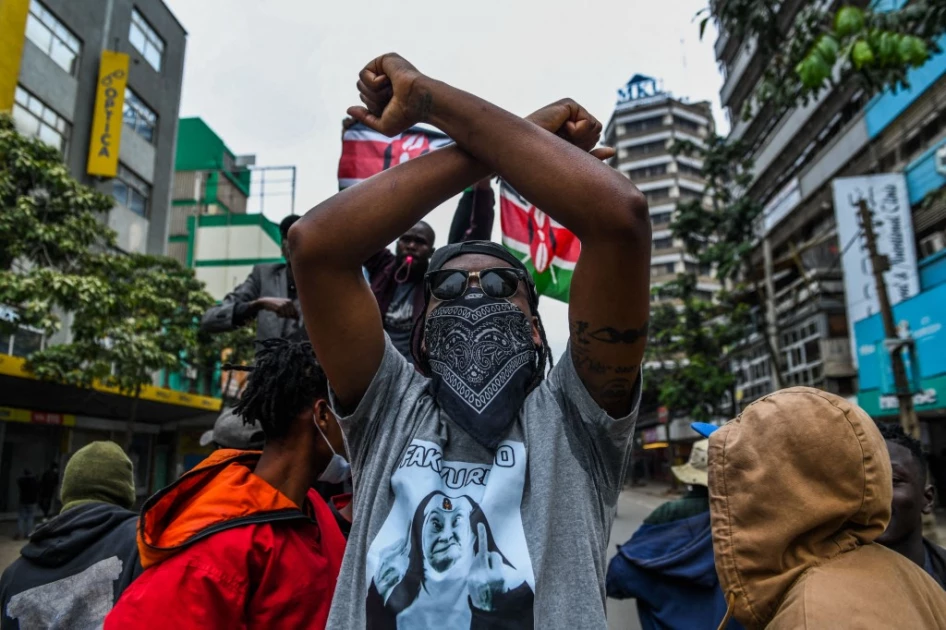
    You must stay alert. It could start in any part of the city; you’ll see it in  the distance- a small crowd forming like Elijah’s cloud fist. They may be surrounding an old man, preaching against President William Ruto and the evils of neo-colonialism. They might be a group of journalists, simply carrying out their duty as the voice of the people. Police will surround the area, shields and weapons at the ready.

    Keep your eyes and ears sharp. At any second, you’ll hear the faint sound of a metallic clip hitting the ground. Then you run. Rarely does one see where the grenade rolled off to. Run as fast as you can and hope that it’s behind you. The explosion will numb your eardrums, the chemical agent will surround you in a matter of seconds. A direct hit would tear your flesh to pieces.

    On the eighth day of the eighth month, known officially as Nane-Nane, the mother of all protests was set to take place. Police launched a full-scale assault on downtown Nairobi and, like a cornered animal, attacked anyone in sight. Scattering every small group of people.

    Speaking at the National Police Service Campus on the sixth of August, acting Inspector General Gilbert Masengeli stated, “Every Kenyan as per the law has liberty to demonstrate, picket, and assemble as per the law”. The day came, and not a single Kenyan flag or sign of Kenyan pride was displayed without severe punishment.

    Innocent civilians were also caught in the violence. Lone vendors and boda-boda drivers were beaten with clubs while going about their business. Matatus were chased off, empty of any passengers. Ubers driving in were stopped and ordered to turn around. We witnessed one policeman reach into the passenger’s window, pull out a phone, and smash it on the asphalt.

    But the police also carried out odd gestures of kindness, one of them was seen emerging from the back of the vehicle sharing his food ration and water bottle with a homeless person. Another was kind enough to push a disabled man in a wheelchair out of a small alleyway before blasting it with tear gas.

    The face of a little boy, not older than twelve, could be seen running in and out of the action. His face bore a confused look, his eyes a constant glossy red from tear gas. He wore a dirty sweater and pants two sizes too small. After a short skirmish, one of the GSU officers took him aside, placed one hand on his shoulders, and shook the boy’s hand with the other. They shared a few words, then gently escorted the boy to safety and waved him away.

    We know for certain that the police were aware of the massive media presence around them, whether these gestures were played for the camera or not, nobody knows. But they remind one of the depressing realities: that these officers are also human beings.

    Heavy police presence feels like an understatement; there were at least a dozen of them  on every corner of the city. Using any and every means they had to suppress, including ancient weaponry. On Kimathi Street, we spotted one of them using a Martini-Henry rifle. The same standard-issue rifle used by the British to conquer and subdue Africa in the late 1800’s. Here,  more than 200 years later, it was quelling demonstrators on the street named after Kenya’s most renowned freedom fighter, the Late Dedan Kimathi.

    “We would like to thank the fourth estate,” said the Inspector General in his speech on the sixth, “for the continued support they have given us.” It appears police have decided to display that warm gratitude by engaging in direct attacks on the fourth estate.

    We had gathered in Moi Avenue, a large group of journalists waiting to report on the situation. Despite the lack of protestors, more and more GSU members were arriving on the scene. A white truck unloaded heavily armed policemen in civilian clothing. Some of the journalists began talking in a low tone. “That’s the one, we know his name,” someone said “you need to watch out for the one in grey, he wants to kill.”

    No more than a minute later, the grenade clip hit the ground, and the grenade flew above my head. As if the signal had been rung, policemen from all corners turned their weapons on us in unison, firing their supply of grenades and teargas canisters. The sound was that of an artillery barrage. We ran for cover. Later, we discovered that in the confusion, they had cornered Cecilia Ngunjiri from Real Stories Media and beat her severely.

    Kennedy Obara, a freelance journalist and proud Daystar  alumnus, carried her to safety on his back. “I saw her being clobbered by police,” he said, “They were yelling at her to delete the photos she had taken. When I ran to save her, police apologized to me and said they had no idea she was a journalist.”  In their rabid enthusiasm, they must have missed the large Media Council of Kenya vest that Cecilia wore over her jacket. Multiple journalists were harassed and injured, including another Daystar alumnus by the name of Larry Madowo.

    The mother of all protests had failed to manifest. Any small group that managed to form was quickly silenced. But that did not stop the few activists and demonstrators from challenging police from morning till sundown. Kasmuel McOure presented himself and was forced to take refuge in the NMG offices to avoid arrest.

    On Kimathi Street, activist Julius Kamau stood with a placard that read “Colonialism never really ended” on one side and on the other, “poverty is the modern form of slavery”. As he quoted Martin Luther King Jr.’s dream speech, journalists and citizens gathered around to document the ordeal. The little boy with glossy eyes stood beside him and listened keenly to his elder’s remarks.

    It didn’t take long before a truck of policemen arrived, and at the feet of Dedan Kimathi’s statue, ripped his placard away and moved to arrest the activist. The boy ran for safety. Julius struggled to hold on to the metal railings but was eventually subdued and carried away. The protestor yelled, threw rocks at the car, and everyone ran for cover as the police responded. In the chaos, Julius managed to break free and pushed himself out of the moving vehicle. He picked up his crumpled placard and limped back to the statue of his revolutionary ancestor. Exhausted and hurt, he struggled to lift his fist to continue with his preaching. The little boy joined him again, lifted his fist high above Julius’s, and joined the chants of “Ruto must go!”.

    Others were not so lucky. We witnessed a young man being forced into a police truck. “What have I done?” he cried as five officers struggled to silence him “all because I love my country!?” Once in the vehicle, he emerged from the side, and as the truck was about to drive off, cried to his countrymen, “Wa Kenya! Wa Kenya!” Unmarked Black and white Subarus were spotted kidnapping whoever struck their fancy. Police claim to have arrested 174 suspects in Nairobi alone who will probably be found guilty of demonstrating, picketing, and assembling, as per the law.

    The Nane-Nane protests failed to manifest as it was anticipated. I however wish to commend the team of journalists from different media houses who endured the police chase and inhaled tons and tons of teargas.  Freedom is truly earned and as the struggle continues, they’ve earned our respect for their bravery and love for our motherland– Kenya. I believe Kenya will still see its better days ahead. A luta continua; vitória é certa!


  • Daystar University Choir Triumphs at Kenya Music Festival 2024

    Daystar University Choir Triumphs at Kenya Music Festival 2024

    By Joe Aura, aurajoe6@gmail.com

    Daystar University Choir emerged victorious at the recent Kenya Music Festival 2024, held from August 5 to 12 at Moi Girls High School in Eldoret, showcasing their talent under the theme ‘Talent Development for Growth of the Creative Economy’. Despite being newcomers, the choir made a significant impact, particularly in the Live Instrumental Accompaniment Choir category, where they performed Zilizopendwa and claimed victory over music giants Kenyatta University, known for being the first institution to offer a Bachelor of Music degree in Kenya.

    Since its inception, The Kenya Music Festival continues to celebrate the nation’s musical heritage, breaking barriers, embracing diversity, and inspiring optimism for the future. This annual event, organized by the Ministry of Education, showcases students’ talents in music, dance, and elocution.

    Daystar University’s participants excelled across various categories.  In Class 2018P – Public Speaking, Hanifa Chelagat secured first place while Victor Mumo came in third. Abdul Shaban claimed first position in Class 2515P – Arabic Verse Speaking. The choir performed remarkably in multiple categories, taking first place in Class 893 – Live Instrumental Accompaniment Choir, and sixth place in Class 894 – African Gospel Music. Additionally, in Class 1114P – Woodwind Own Choice, Ridge Abach placed second while Hanifa Chelagat finished fourth. In Class 1135P – African Drum Solo, Miriam Wambui and Abdul Shaban took fifth and sixth positions respectively. Their success earned them an invitation to perform at the 2024 Kenya Music Finalists concert, held at Moi Girls’ High School in Eldoret on August 12th, where the choir performed in Class 893 and Class 894. They were also invited to the prestigious State Concert on August 16th but will be unable to attend due to funding challenges from the university.

    Among the standout performers was Abdul Shaban, former Editor-in-Chief of The Involvement and a talented tenor saxophonist. He participated alongside alto saxophonists Hanifa Chelagat and Simon Mugoshi, Pamba on the drums, Obadiah Bahizire on the keys, Timothy Muindi on bass guitar, and other choir members singing bass, alto, and soprano. Their collective pride was in clinching the top spot in this prestigious category.

    Shaban reflected on their victory, saying, “As first-timers, we have overachieved, beating Kenyatta University and being invited to perform at the finalists’ concert is a huge accomplishment”.  The choir’s remarkable performance earned them a coveted invitation to the State Concert, although they will be unable to attend due to funding challenges. Nonetheless, the choir’s success marks a milestone in Daystar University’s musical journey and sets the stage for greater achievements in the future.

    Performance overview:

    Position 1
    1. Class 893 – Live Instrumental and Vocal Performance
    2. Class 2018 P- English Public Speaking – Hanifa Chelagat
    3. Class 2515P- Arabic Verse – Abdul Shaban
    4. Class 2315P – French Solo Verse – Salamar Adolwa
    5. Class 2415P – French Public Speaking – Lucien Dedeten

    Position 2
    1- Class 1107 , Piano Duet- Miriam Wambui and Judy Nyaga
    2- Class 114 P Bass Solo- David Oketch
    3- 1114P- Woodwind Solo- Ridge Abatch

    Position 3 
    1. Class 114 P – Bass Solo Lucien Dedeten
    2. Class 833- Original Composition – Mixed Choir

    Position 4
    1. Class 867- Equity Anthem – Mixed
    2. Class 836- Advanced Arrangement – Mixed
    3. Class 891- From Africa and Earlier- Mixed
    4. Class 1114P- Hanifa Chelagat

    Position 5
    1. Class 1135P – African Drum Solo – Miriam Wambui
    2. 814- Adaptation and arrangement- Female
    3. Class 112 P – Alto Solo

    Position 6
    1. Class 894- African Gospel Music
    2. Class 1135 P- African Drums Solo- Abdul Shaban

    Class 112P- Alto Solo -Sharon Gatete

    Class 112 P- Alto Solo- Gloria Bwamula

    Class 112P- Alto Solo- Praise Makena

    The success of Daystar University’s team at the 2024 Kenya Music Festival would not have been possible without the dedication and support of key individuals. Special appreciation goes to Mr. Moses Alubala, the Choir Director, and Mr. Muyale Inzai, the Choir Trainer, for their tireless efforts in guiding and honing the choir’s talents. Madam Jacqueline Wesonga, who managed the finances, played an essential role in ensuring the team’s logistical needs were met. We also extend our gratitude to the supporting lecturers, Madam Muthoni Njenga and Mr. Bill Rowe, whose encouragement and expertise contributed significantly to the team’s achievements.

    The Kenya Music Festival continues to showcase the country’s rich cultural diversity and artistic development, echoing the proud tradition of musical excellence that began in the early post-independence years. Artists like Fundi Konde, Daudi Kabaka, and Fadhili William used traditional folk music to promote unity and cultural pride. In the 1970s, Benga music, popularized by Daniel Owino Misiani, Joseph Kamaru and Them Mushrooms, captivated audiences with electrified guitars and modern production techniques. The 1990s saw the rise of Kapuka music, blending traditional sounds with Western influences, while artists like Eric Wainaina and Nameless resonated with the youth by addressing politics and cultural identity. By the 2000s, technology catapulted Kenyan music to global recognition, with artists like Sauti Sol, Nyashinski, and Victoria Kimani representing Kenya’s rich cultural narrative on the world stage.

    Today, Daystar University students carry this mantle forward, as their success at the Kenya Music Festival reflects the legacy of Kenya’s evolving musical landscape and their promising role in the nation’s creative future. Music remains a great way of expressing our feelings not only our culture.  It has the capacity to speak more than words and influence the emotions of the listeners.

    From the Involvement team it is kudos to Daystar university students who participated in the festivals.