Blog

  • Dealing with the rise of Teenage pregnancies in Kibera

    By Muhanguzi Tola

    tolakofa1@gmail.com

    Mary Endheri- far right, with DeshCare members during a session with the team.

    Mid last year, after measures by the government to combat the fast and vast spreading COVID 19 pandemic saw the closure of learning institutions, The New Humanitarian reported on the upsurge of teenage pregnancies.

    The rise of teenage and early pregnancies in Kenya isn’t a new discussion, only that the mitigating measures adopted consequently exacerbate this growing trend. While releasing the 2020 Kenya Certificate of Secondary Education (KCSE) results, Education CS Prof. George Magoha raised concerns over the high numbers of girls sitting exams while pregnant.

    Early last year, Mary Endheri, who hails from the Kibera slums, got into early motherhood after unexpectedly getting pregnant. Her case is one among many for young girls in the slum, and was a hard pill to swallow, forcing her to keep it to herself. With life in the slums not being favorable, she was forced into searching for a job to provide for her baby and young siblings, after her older sister lost her job.

    “My mother didn’t know of it until I was 8 months in, this enraging her. She wanted to kick me out of the house but later changed her mind, and together with my sister’s help, the two offered immense support,” recalls Mary, speaking to Desh Care International.

    It would be unwise to place the blame solely on parents- who in most cases end up on the receiving end of the society. As it may be sensible to note that poor parenting which in this case involves spending most of their time fending for their kids as compared to the time spent with them propels this trend, it is key to understand that the society shapes and molds our kids too. The values and norms embraced by our society reflect through the younger generation’s behavior.

    Having visited and interacted with young girls from this area, Desh Care International further established that poverty is also a key contributor to early pregnancies.  

    Low literacy levels in terms of inadequate education on sexuality and family planning also plays a major role. There is need for ground shifting solutions to this specific challenge. The society needs to do away with perceptions that tend to shame and stigmatize teenage mothers and instead invest in comprehensive sexual education and girl-child empowerment programs. Echoing the award winning Sauti Sol, ‘Mungu akileta mtoto, analeta sahani yake’ (God brings a child in His own time).

    It is time to throw away this system that only focuses on abstinence and employ one which informs our young girls on how to make better decisions in relation to their sexual health. The government, through CS Magoha needs to create an education system that will not only prevent early teenage pregnancies, but one which will also support young mothers further their education.

  • CDC eases mask-wearing guidelines for fully vaccinated

    by Sumaya Hussein

    (husseinsumaya1@gmail.com)

    A commuter receives a free vaccine at the Coney Island Station in Brooklyn – Photo/The Guardian

    The director of the Centre for Disease Control and Prevention (CDC) on Thursday said that fully vaccinated Americans can now participate in most outdoor activities, without wearing a mask or social distancing.

    The CDC head, Rochelle Walensky, revealed the agency’s new mask guidance during a White House briefing on coronavirus.

    “Anyone who is fully vaccinated can participate in indoor and outdoor activities, large or small, without wearing a mask or physical distancing. If you are fully vaccinated, you can start doing the things that you had stopped doing because of the pandemic.”

    However, fully vaccinated people are still required to wear their masks while using public transport including buses, trains ad airplanes. Walensky said that the CDC is continuing to review its travel policies, but did not explain reasoning behind Thursday’s announcement.

    “Right now for travel we are asking people to continue to wear their masks,” she said.

    Moreover, the CDC noted that vaccinated people should continue following the existing state, local or tribal laws and regulations on masks and social distancing, as well as policies at businesses and workplaces.

    Consequently, as of Friday morning, the rules looked very different from one state, city or county to the next.

    US President Joe Biden heralded the CDC’s announcement in an outdoor press conference hours later saying, “The CDC is saying, they have concluded that fully vaccinated people are at a very, very, low risk of getting Covid-19. Therefore, if you are fully vaccinated, you no longer need to wear a mask,” said Biden. “Let me repeat: if you are fully vaccinated, you no longer need to wear a mask.”

    Walensky also said: “We have all longed for this moment when we can get back to some sense of normalcy. Based on the continuing downward trajectory of cases, the scientific data on the performance of our vaccines and our understanding of how the virus spreads, that moment has come for those who are fully vaccinated.”

    To some, the announcement is a significant step in resuming pre-covid life, but others remain skeptical about the decision to ease the restrictions.

    Jeniffer Nuzzo, an epidemiologist at the Johns Hopkins Bloomberg School of Public Health said she expects mask-wearing to continue in transportation settings, as well as some other places open to the public, such as grocery stores.

    “I really don’t expect public settings to change that much until case numbers come down,” said Nuzzo.

  • High Court declares BBI process unconstitutional

    By Neema Oloo

    (oloojneema@gmail.com)

    Judges Teresia Matheka, George Odunga, Joel Ngugi, Jairus Ngaah and Chacha Mwita at a court in Milimani, delivering the judgment on petitions challenging the BBI – Photo/ The Standard

    The High Court on Thursday declared the BBI referendum process unconstitutional, throwing the future of the initiative into uncertainty.

    The five judges; Joel Ngugi, George Odunga, Jarius Ngaah, Teresia Matheka and Chacha Mwita, unanimously dismissed the actions of the key players of the BBI.

    The judges upheld a consolidated case by eight petitioners that the constitution bears essential features that cannot be amended. The petitioners argued that the BBI was not the will of the people, but based on the changing political and socio-economic interests.

    The court held that the BBI secretariat and steering committee failed to provide critical information to the public as outlined in the procedure to amend the constitution through a popular initiative.

    The court also said that the president cannot initiate a process to change the constitution in the pretext of promoting national unity. If allowed, it would mean he would be granted the role of promoter and referee.

    “He (president) isn’t part of parliament. He has no power under the constitution to initiate changes under the constitution since parliament is the only state organ that can consider the effecting of constitutional changes,” said the judges.

    The court further observed that the BBI steering committee was unlawful and had no legal capacity to promote constitutional changes therefore, the entire process was done unconstitutionally. They said that the president did not comply with the law when creating the committee.

    The court also added that the Bill was not printed in Swahili for the common mwananchi to read, which means those who do not understand English were left out.

    “The BBI bill cannot be subjected to a referendum before the IEBC conducts voter registration. There is no quorum at IEBC to conduct its mandate including signature verification submitted by IEBC. At the time of launch of the report, there was no legislation to guide the conduct of the referendum,” said the judges.

    The court also found that in taking the initiative to amend the constitution, the President had failed to respect, uphold and subscribe to the constitution and to the extent that he had fallen short of the leadership and integrity threshold.

    “BBI is a hybrid initiative unknown to the constitution, therefore it is our finding that the popular initiative as means to amend the constitution under article 257 of the constitution is a power reserved for Wanjiku. Neither the president nor any state organ can utilize article 257 of the constitution to amend the constitution,” the judges said.

    The judgement from the court arose out of seven cases filed against BBI.

    The main case was filed by five activists namely, economist David Ndii, Jerotich Seii, James Ngondi, Wanjiku Gikonyo and Ikal Angelei.

    They sued Attorney General Kihara Kariuku, National Assembly Speaker Justin Muturi and Speaker of the Senate Ken Lusaka, as well as the IEBC.

    The push for the BBI referendum entered the homestretch on Tuesday after Senate overwhelmingly passed the Bill, setting the stage for the last two steps.

    The House attained a rare two-thirds majority after 51 senators voted in support of the Bill, 12 against and 1 abstained.

  • Man found dead inside parked car in Kisumu

    By Aloise Munene

    (aloisestevest@gmail.com)

    Vehicle in which the man was found – Photo/ Citizen Digital

    Police officers in Kisumu are investigating the mysterious death of a 33-year-old man whose body was found on Wednesday in a stationary vehicle outside a petrol station in the Otonglo area of Kisumu.

    A security guard manning the station noticed a suspicious vehicle that seemed to have been oddly abandoned at the side of the Kisumu-Kisian road for a long period. According to the witness report recorded by Vincent Odongo, the security guard, the man was lying unconscious on his left side across from the driver’s seat to the front passenger’s seat. He raised alarm upon his discovery.

    The vehicle, a white Toyota Vitz registered KCW 646J, showed no signs of forced entry by a second party as the police found it locked when they arrived at the scene.

    The man, who was later identified as Habel Oile, was confirmed dead by detectives who broke into the vehicle.

    Preliminary investigations reveal that the car was seen parking the previous night, but the guards on duty do not recall seeing anyone alighting or boarding it.

    According to the County Police Commissioner Samuel Anampiu, the death is currently being treated as a suicide. The case’s direction was influenced by the investigation’s inability to determine whether other occupants had been in the vehicle and the discovery of a 25mm empty insecticide bottle inside the vehicle’s glove compartment.

    The body was taken to Kisumu Referral Hospital’s mortuary for post-mortem analysis.

  • Larry Madowo Hired as CNN Nairobi-based Correspondent

    By Fatiha Shabir

    (fatihashabz@gmail.com)

    Journalist Larry Madowo – Photo/ The Star

    Journalist Larry Madowo, a Daystar alumnus, has left the British Broadcasting Corporation (BBC) to take up a new position with CNN as their Nairobi-based Correspondent.

    The announcement was made on Thursday by Deborah Rayner, Senior Vice President of International Newsgathering and Managing Editor, Europe, Middle East and Africa, for CNN International.

    “From enterprise reporting in Ethiopia’s Tigray region to investigations into oil drilling in Namibia’s Kavongo Basin, via a range of cultural and business stories across dedicated programming, Africa has never been more visible on CNN’s multiple platforms,” Rayner said in a statement.

    “Larry is an experienced journalist whose expertise across politics, business, entertainment and hard news stories will play into our diverse coverage of East Africa and beyond.”

    Madowo said he enjoyed reporting from the US and around the world, but it’s a “real privilege” to return to covering Africa at such a critical time in Kenya and around the continent.

    “I have long admired CNN International’s award-winning coverage, and I’m honored to be joining such a talented team. I look forward to sharing the full spectrum of life in one of the most dynamic parts of the world with CNN’s global audiences,” said Larry Madowo.

    Madowo had until recently being serving as the BBC’s North America Correspondent in Washington, D.C., covering major U.S news stories. He is known for covering the 2020 American presidential election, the protests following the death of George Floyd and the trial of Derek Chauvin, as well as providing constant updates on the Covid-19 outbreak all over the world.

    Before joining BBC, he started at KTN then worked for NTV Kenya. His new appointment marks a return to Nairobi for the Kenyan-born Madowo.

    Larry Madowo enrolled for a Communication degree in 2006 at Daystar University at the Athi River Campus and graduated in 2014 with a Bachelor of Arts in Communication degree.  He also has a Master’s in Business and Economics Journalism from Columbia University in New York.

  • Long-Serving Ugandan President Museveni sworn into office

    Long-Serving Ugandan President Museveni sworn into office

    By Wangui Njau

    (njaucatherine3@gmail.com)

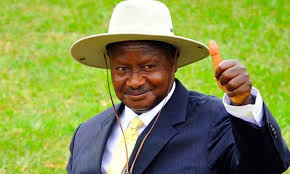
    Yoweri Museveni Sworn into office in Kololo Independence Grounds, Kampala – Photo/NBS

    Yoweri Kaguta Museveni, was on Wednesday sworn into office as Uganda’s President for a sixth term, after winning the January 14 general elections.

    The ceremony was held at the Kololo Independence Grounds in Kampala, and in attendance were African presidents including President Uhuru Kenyatta and Tanzania’s Samia Suluhu.

    President Kenyatta, who currently chairs the East African Community (EAC), was accompanied by Cabinet Secretaries Raychelle Omamo (Foreign Affairs), Peter Munya (Agriculture) and James Macharia (Transport, Infrastructure, Housing and Urban Development).

    Yoweri Museveni is Uganda’s longest serving president, as well as the fourth longest serving president in Africa. As he took the oath of office, the National Resistance Movement (NRM) leader insisted that the economy has grown in the last 35 years, hinting at its growth in the coming years.

    “The economy will be growing at the rate of between nine and ten percent in the initial years of oil production… We can achieve much higher, much faster rate of growth and I will see to that,” said Museveni.

    Security was ramped up around the capital ahead of the inauguration. This also included tight security around the home of opposition leader Robert Kyangulanyi alias Bobi Wine, who accused the government of malpractice in the election.

    The campaign period was also marred by a deadly crackdown by security forces on Wine, other opposition candidates and their supporters.

    In the run-up to the vote, local civil society groups and foreign governments questioned its credibility and transparency, after scores of requests for accreditation to monitor the election were denied.

    Museveni and his NRM Party won the January 14 polls with 5.85 million votes (58.64%), while main opposition candidate Bobi Wine and his National Unity Platform garnered 3.48 million votes (34.83%).

    The 76 year old became president when his forces seized the capital Kampala after a five-year guerrilla struggle and has won five elections since 1996. Parliament has twice changed the constitution to allow him to run, first removing a two-term limit in 2005 and then abolishing the age limit of 75 in 2017.

  • LSK President Havi eyes Westlands MP seat

    by Diana Wambui

    (dianangotho17@gmail.com)

    President of the Law Society of Kenya (LSK), Nelson Havi – Citizen TV

    The president of the Law Society of Kenya (LSK), Nelson Havi, on Tuesday showed interest in running for the Westland’s MP seat in the upcoming 2022 elections.

    In a short statement via his Twitter on Monday, the 34-year-old staunch lawyer made a shift from law to politics.

    “I have accepted the request of the people of Westlands constituency to serve them and the Nation in that capacity effective August 2022 or earlier if Parliament is dissolved,” said Havi.

    His new inclination was brought about by the residents of Westland’s constituency, who are banking on his leadership skills. The constituency has 5 wards namely Kitisuru, Karura, Kangemi and Mountain View located in the Suburban areas of Nairobi County.

    Havi went ahead to outline duties of MPs as members of National Assembly stating, “The constitution enumerates functions and duties of a member of National Assembly making laws, protecting the constitution, determining allocation of national revenue and oversight of its expenditure, reviewing conduct of state officers and oversight of state organs, infrastructural development, wealth creation and poverty alleviation at the constituency level.”

    Nelson Havi vows to check on government excesses and to serve diligently leaving no stones unturned. The outspoken lawyer has had quite a tumultuous journey in the Judiciary.

    The advocate was always a top performer throughout his primary and secondary education, and his father’s death during the 1992 post-election violence encouraged him to be a lawyer.

    The incumbent Tim Wanyonyi is serving his second term on an Orange Democratic Movement (ODM) ticket since 2013. He is currently eyeing the Nairobi gubernatorial seat in the next general elections after he shut down rumours of Bungoma bid.

    Nelson Havi will rival Arthur Mandela an award winning Kenyan vlogger of 31 years of age in the upcoming poll. Arthur Mandela alias Xtian Dela, expressed his disappointment on Twitter over lack of support from young people who he claims to be representing.

    The latter was responsible for the “Club Covid” invention in 2020 on Instagram at the helm of Covid-19, capturing young women competing in inappropriate dance contests over a cash price. He came under fire from the Directorate of Criminal Investigations (DCI) and three parents who sued him for airing explicit content and infringing on rights of teenagers.

    Whereas the future is uncertain for the two aspirants, the answer lies with the registered voters.

  • WHO classifies India variant as ‘global concern’

    By Rozanne Nthambi.

    (rozannenthambi37@gmail.com)

    A Covid-19 patient rests inside a banquet hall temporarily converted into a Covid care centre in New Delhi – AFP

    The World Health Organization (WHO) on Monday classified the Coronavirus variant first found in India, as a global “variant of concern”. The organization said studies of the variant known as B.1.617, show that it may be more transmissible than others.

    Maria Van Kerkhove, the technical lead for Covid-19 in the WHO said that the variant may also be able to evade some of the protections provided by vaccines. The shots, however, are still considered effective.

    “And as such, we are classifying this as a variant of concern at the global level,” said Maria in a press conference. “Even though there is increased transmissibly demonstrated by some preliminary studies, we need much more information about this variant in this lineage, in all of the sub lineages, so we need more sequencing, targeted sequencing to be done.”

    According to WHO, a variant can be labeled as “of concern” if it has been shown to be more contagious, more deadly or more resistant to current vaccines and treatments.

    The group however issued a clarification to their earlier remarks to state that Covid-19 vaccines “remain effective at preventing disease and death in people infected with this variant.”

    WHO Director General Tedros Adhanom attends a press conference on July 3, 2020 – CNBC

    India is in a critical place as the country is recording hundreds of thousands of new cases each day, with more than 366,000 cases reported on Monday alone. Moreover, the country is averaging about 3,879 Covid deaths per day, according to data compiled by John Hopkins University.

    WHO says the variant has already spread to more than 30 countries including the US, UK, France and Japan.

    The surge in India rose rapidly last month, overwhelming hospitals of the harders hit cities in the country.

    “This is unlike the first wave. And so I think what we’re seeing is more transmissible,” said Soumya Swaminsthan, Chief Scientist at WHO.

    The Wall Street Journal released reports saying that only 2% of India’s population have been vaccinated, out of a population of 1.4 billion people, making the country largely vulnerable.

    The WHO however does not recomment border closures, saying countries should take a nuanced assessment before imposing restrictions and disruptions to global travel.

  • Netflix prices to increase in Kenya over inclusion of VAT charge

    by Sumaya Hussein

    (husseinsumaya1@gmail.com)

    The Netflix interface on a flat screen – Photo/ Business Today

    Netflix monthly charges have increased after the company included a value added tax (VAT) charge in its billing.

    The subscription service has reviewed its rates to Ksh1,100 from Ksh950 for the standard package and Ksh1,450 from Ksh1,200 for the premium package. The new prices are set to take effect from end of May.

    “Starting May 30, a value added tax (VAT) will be included in your Netflix price,” read the company’s message to subscribers.

    Subscribers under the basic plan that goes for Ksh700 will however not be affected.

    The increasing cost of the service has been slowly pushing people out of Netflix, which some now consider a luxury.

    The Digital Service Tax (DST) came into force on January 1 and was introduced to both the Income Tax Act (ITA) and Value Added Tax Act (VAT). Both Acts prescribe that DST shall be payable by a person whose income is earned in Kenya from the provision of services through a digital market place.

    The VAT applies to supplies undertaken in the digital marketplace at the standard rate when supplied in Kenya.

    Under the ITA, businesses selling services online are expected to pay a flat tax of 1.5 per cent on the value of goods supplied and sold online, or services offered through digital platforms.

    Services and goods that fall under the ITA bracket include e-books, movies, music, games, tickets for live events and theatres and subscription-based media including news, magazines and digital content.

    Online businesses have become a target for government to widen its tax base, with the aim of lifting domestic tax revenues. The Kenya Revenue Authority (KRA) is targeting businesses and persons under the new digital taxes selling services and goods online.

    The taxman is banking on the Covid-19 disruptions that accelerated the use of online platforms to sell goods and services, and raise Ksh5 billion from the sector in the six months to June.

    The latest data from the Communications Authority (CA) shows that mobile data subscriptions in Kenya stood at 44.4 million in the second quarter of 2020.

    Factors driving the growth include increased population coverage of 3G and 4G networks, availability of affordable smartphones and data plans. Moreover, the increased consumption of e-commerce, e-government, social media and other online content have also contributed to the growth.

    Why digital taxes?

    The KRA previously stated in Techpoint Africa’s previous report that digital companies like Google and Facebook generate a lot of revenue from Kenya but do not pay taxes. On top of that, several businesses in and out of Kenya, do not remit VAT for their transactions.

    Online businesses usually have no physical structures or addresses from which they operate, making it easy to escape taxations.

    The argument for taxing the digital economy is the same in most countries of the world – digital companies defy today’s tax laws and international trade agreements.

    However, it is difficult to determine where value is being created for digital companies Netflix, for instance, has engineers in the US and partners with video production houses all over the world. Where then are Netflix’s services being produced?

  • Daystar to retain Blended Learning for May Semester

    By Fatiha Shabir

    (fatihashabz@gmail.com)

    Daystar University Athi River Campus – Photo/ Emmanuel Laguma

    Daystar University will continue administering blended learning where both physical and online classes will be ongoing during the May 2021 semester.

    According to a memo sent to the school on Thursday by the VC Prof. Ayiro, those to resume for physical learning include nursing students, continuing diploma students, new and continuing Certificate students, and those admitted during the October 2020 and January 2021 semester.

    “School of Science students taking Applied Computer Science, Biomedical Science, Environmental Health and MIS will study online,” said VC Ayiro.

    New students of Diploma and Undergraduate programs will have physical learning and are to report for orientation at the Athi River campus on May 17, at 8:30am.

    However, new postgraduate students will learn virtually and undergo virtual orientation on May 17 before classes officially begin on May 24.

    “All new students are encouraged to read their admission letters carefully and plan early payment of both orientation and semester fees,” said Prof Ayiro.

    Continuing Post-graduate students will resume blended learning as they will be allowed to attend seminars and have contact with supervisors during their thesis defences.

    Ongoing students are set to begin classes on May 10 while the new Diploma and Undergraduate students will start their classes on May 24.

    Since the new students will miss two weeks of the semester, their timetable will be adjusted so that they attend classes twice a week to cover the necessary classroom hours.

    The Daystar community has been urged to follow all Covid-19 protocols in both campuses to ensure that everyone’s health is safeguarded.